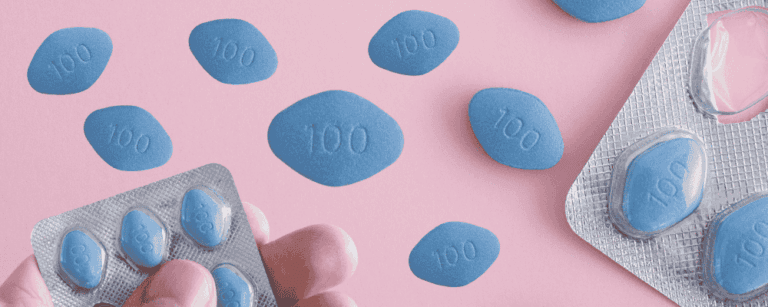
If you’ve ever wondered “viagra what does it do,” you’re not alone. Viagra is one of the most widely recognized medications used to treat erectile dysfunction (ED), helping millions of men improve their sexual health.
Interestingly, Viagra was not originally developed for this purpose. It was first studied as a treatment for heart-related chest pain. However, during clinical trials in Wales, researchers discovered an unexpected side effect—participants reported improved erections. This discovery led to the development of Viagra as a treatment for ED, making it one of the most important breakthroughs in modern medicine.
Viagra contains sildenafil, a drug that works by relaxing blood vessels and improving blood flow. It belongs to a class of medicines called PDE5 inhibitors, which are also used for other conditions, such as pulmonary arterial hypertension, under different brand names, including Revatio.
Over time, Viagra has been compared with other similar medications like Cialis and Levitra. These drugs differ in how quickly they work, how long they last, and how they interact with food, giving patients multiple treatment options.
While Viagra is effective, it is important to use it safely. It should not be taken with certain medications like nitrates, as this can cause serious health risks. Additionally, users should avoid counterfeit versions of the drug, which may be unsafe or ineffective.
In this guide, we will explain how Viagra works, what it is used for, its effects on the body, and how to use it safely, so you can make informed decisions about your health.
What Is Viagra and What Is It Used For?
Overview of Viagra (Sildenafil)
Viagra is the brand name for sildenafil, a medication that belongs to a class of drugs called phosphodiesterase type 5 (PDE5) inhibitors. It is mainly used to treat erectile dysfunction (ED), but it is also prescribed under the brand name Revatio for a condition called pulmonary arterial hypertension (PAH).
These collected medical and pharmaceutical insights provide a comprehensive profile of sildenafil. The drug works by relaxing blood vessels and improving blood flow, which helps in both sexual function and certain cardiovascular conditions.
Viagra was approved by the FDA in 1998, making it the first oral treatment for erectile dysfunction. Since then, it has become one of the most widely used and researched medications in this category.
In addition to its approved uses, ongoing research is exploring sildenafil’s potential benefits in other conditions such as Alzheimer’s disease and diabetic nephropathy. However, these uses are still under investigation and not yet widely approved.
Main Medical Uses of Viagra
Viagra is primarily used for:
- Erectile Dysfunction (ED): Helps improve blood flow to the penis, allowing men to achieve and maintain an erection during sexual activity
- Pulmonary Arterial Hypertension (PAH): Helps relax blood vessels in the lungs, improving blood circulation
Beyond these uses, sildenafil has been studied for its pharmacokinetics (how the drug moves in the body), including how quickly it is absorbed, how long it stays active, and how it is eliminated.
The medication is usually taken orally and starts working within 30 to 60 minutes, with effects lasting several hours. Proper dosage and administration are important for safe and effective results.
Safety is a key consideration when using Viagra. It can interact dangerously with medications such as nitrates, which are often used for heart conditions. This combination can cause a sudden drop in blood pressure and should be strictly avoided.
Common side effects include headache, flushing, and dizziness, while rare side effects may include vision changes or prolonged erections.
Healthcare professionals often recommend interprofessional care, meaning coordination between doctors, pharmacists, and patients, to ensure safe and effective use of sildenafil.
Finally, Viagra is often compared with other ED medications like Cialis (tadalafil) and Levitra (vardenafil). These drugs differ in how long they last, how quickly they work, and how they interact with food, allowing patients to choose the most suitable option based on their needs.
Viagra What Does It Do in the Body?
Viagra, which contains the active ingredient sildenafil citrate, is a potent and selective inhibitor of the enzyme phosphodiesterase type 5 (PDE5).
The primary way it functions in the body is by modulating the nitric oxide-cyclic guanosine monophosphate (NO-cGMP) signaling pathway, which is a critical regulator of blood vessel dilation and smooth muscle tone.
It is important to note that sildenafil does not directly cause an erection; instead, it amplifies and sustains the natural physiological response to sexual arousal. For the medication to be effective, initial sexual stimulation is required to trigger the release of nitric oxide.
How Viagra Helps with Erections
- Triggering the Cascade: Upon sexual stimulation, nerve endings and endothelial cells in the penis release nitric oxide (NO).
- Producing cGMP: This nitric oxide activates an enzyme called guanylate cyclase, which converts guanosine triphosphate (GTP) into cyclic guanosine monophosphate (cGMP).
- Muscle Relaxation: Elevated levels of cGMP act as a signal to relax the smooth muscle cells in the corpus cavernosum and the walls of the arterioles in the penis.
- Increased Blood Flow: This relaxation allows a massive increase in blood flow into the penis, filling the sinusoids and causing them to expand.
- Trapping Blood: As these sinusoids expand, they compress the veins that normally drain blood, effectively trapping blood to create and maintain a firm erection.
- The Role of PDE5 Inhibition: Normally, the PDE5 enzyme breaks down cGMP, causing the smooth muscle to contract again and the erection to subside. Viagra blocks PDE5, allowing cGMP to accumulate and keep the smooth muscle relaxed for longer.
What Happens After Taking Viagra
How Viagra Works (Mechanism of Action)
Viagra, known chemically as sildenafil citrate, is the prototype of a class of medications called phosphodiesterase type 5 (PDE5) inhibitors. Its primary mechanism of action involves the selective and potent inhibition of the PDE5 enzyme to enhance the natural physiological response to sexual stimulation
The Natural Pathway to Erection
To understand how Viagra works, it is necessary to examine the nitric oxide (NO) and cyclic guanosine monophosphate (cGMP) signaling pathway
- Release of Nitric Oxide: Upon sexual arousal, nerve impulses and endothelial cells in the penis release nitric oxide into the corpus cavernosum
- Production of cGMP: NO activates the enzyme guanylate cyclase, which converts guanosine triphosphate (GTP) into cGMP, a crucial second messenger
- Smooth Muscle Relaxation: cGMP activates protein kinase G, which triggers a series of events that lowers intracellular calcium levels
- Blood Flow and Pressure: This drop in calcium causes the vascular smooth muscles to relax, allowing blood to flood into the cavernosal sinusoids
As these tissues expand, they compress the penile veins, trapping the blood and maintaining an erection
Role of PDE5 Enzyme
The PDE5 enzyme acts as the natural termination point for this process. Its physiological role is to hydrolyze (break down) cGMP into the inactive molecule 5'-GMP.
By degrading cGMP, PDE5 allows intracellular calcium levels to rise again, causing the smooth muscle to contract and the penis to return to a flaccid state. PDE5 is the predominant phosphodiesterase found in the corpus cavernosum of the penis, as well as in the pulmonary vasculature
Viagra’s Mechanism of Action
Viagra intervenes by acting as a potent, selective, and competitive inhibitor of the PDE5 enzyme.
- Molecular Mimicry: The molecular structure of Viagra is specifically designed to mimic the guanine base of cGMP. This allows Viagra to bind to the catalytic site (specifically the "Q pocket") of the PDE5 enzyme, effectively occupying the space where cGMP would normally be degraded.
- Accumulation of cGMP: By inhibiting the enzyme that breaks down cGMP, Viagra allows this second messenger to accumulate and persist longer.
- Enhanced Relaxation: This sustained level of cGMP keeps smooth muscle relaxed and blood vessels dilated, thereby potentiating and prolonging the erection.
Critical Considerations
- Requirement for Arousal: It is important to note that Viagra is not an aphrodisiac and does not cause an erection in the absence of sexual stimulation. Because it works by preventing the degradation of cGMP, it requires the initial release of nitric oxide, which only occurs during arousal, to start the process.
- Positive Feedback Loop: Interestingly, when cGMP levels rise and bind to allosteric sites in the regulatory domain of the PDE5 enzyme, it causes a conformational change that actually increases the affinity of the catalytic site for Viagra. This unique structural interaction means that during periods of high sexual arousal, the inhibitory effect of the drug is effectively strengthened
How Sildenafil Blocks PDE5
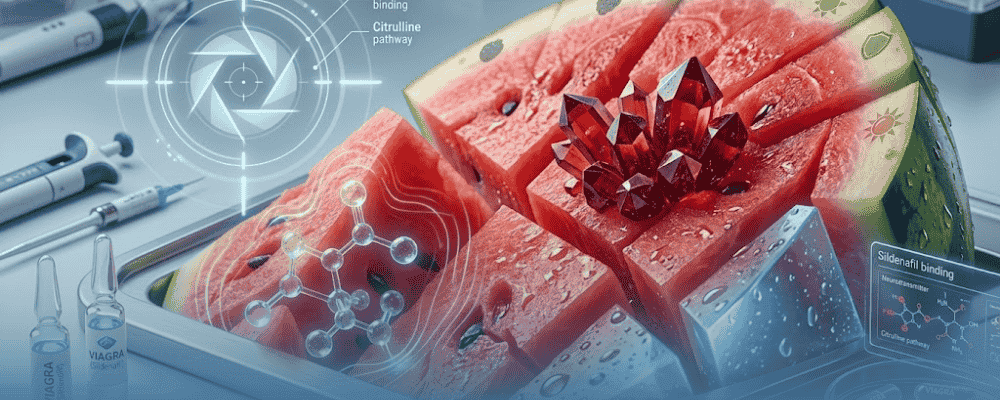
Sildenafil (the active ingredient in Viagra) blocks the phosphodiesterase-5 (PDE5) enzyme through a process of competitive inhibition, where it physically occupies the enzyme's active site to prevent the natural substrate, cyclic guanosine monophosphate (cGMP), from binding.
Its effectiveness is rooted in molecular mimicry, as sildenafil features a bicyclic pyrazolopyrimidinone core that acts as a structural isostere (a chemical mimic) of the guanine base in cGMP.
Peripheral substituents on the sildenafil molecule are strategically placed to replicate the positions of the ribose and phosphate groups of cGMP, ensuring the drug fits perfectly into the enzyme’s catalytic pocket.
The precise blockade is maintained through several key atomic interactions:
- The Glutamine Switch: Sildenafil forms a critical bidentate hydrogen bond with the invariant Gln817 residue. This interaction is a hallmark of cGMP-selective enzymes and allows sildenafil to anchor firmly within the catalytic site.
- Hydrophobic Clamping: The inhibitor is effectively "sandwiched" by hydrophobic residues, most notably participating in π-stacking interactions with Phe820. Additional stabilization is provided by a network of conserved residues, including Tyr612, His613, Val782, and Phe786.
- Hydrophobic Pockets: The ethoxyphenyl group of sildenafil orients into a small hydrophobic pocket (comprising residues such as Glu780, Ala783, and Met816), which significantly enhances binding affinity.
A defining characteristic of sildenafil’s inhibitory mechanism is the dramatic conformational change it induces in the enzyme’s structure, specifically in a segment called the H-loop (residues 660–683).
In its unliganded state, the enzyme’s active site is "open" to allow substrate access. Upon sildenafil binding, the H-loop undergoes a substantial displacement of up to 24 Å, transforming the active site into a "closed" pocket.
This transition effectively buries the inhibitor and "locks" it in place, contributing to the drug’s high potency and slow dissociation rate.
Furthermore, sildenafil binding stabilizes the α14 helix in an "outward" conformation.
While this "outward" state is typically associated with high catalytic activity, the physical presence of sildenafil in the site—combined with the closure of the H-loop—renders the enzyme catalytically inactive.
The potency of this blockade can be further enhanced by allosteric binding of cGMP at the regulatory GAF-A domain, which increases the affinity of the catalytic site for the inhibitor, thereby creating a sustained physiological effect.
Viagra Effects on the Body
Positive Effects
- cGMP Regulation: Viagra binds to the catalytic site of the PDE5 enzyme, which is responsible for the degradation of cGMP in various tissues.
- Smooth Muscle Relaxation: By preventing the breakdown of cGMP, sildenafil allows this signaling molecule to accumulate, leading to decreased intracellular calcium, the deactivation of myosin light chain kinase, and the subsequent relaxation of vascular smooth muscle.
- Dependence on Stimulation: Sildenafil has no direct relaxant effect on isolated human tissue; its action is entirely dependent on sexual stimulation to initiate nitric oxide release.
Urological and Reproductive Effects
- Erection Maintenance: Viagra enhances the inflow of blood into the corpus cavernosum and facilitates the veno-occlusive process, which traps blood within the penis to sustain an erection.
- Priapism: A rare but serious effect is priapism, a painful erection lasting longer than four hours that requires emergency medical attention to prevent permanent tissue damage.
- Fertility and Sperm: Studies in healthy volunteers indicate that single doses have no adverse effects on sperm count, motility, or morphology.
- Refractory Time: It has been shown to reduce the post-ejaculatory refractory time, allowing for a faster resumption of sexual activity.
Cardiovascular Effects
- Systemic Blood Pressure: In healthy subjects, Viagra typically causes a modest and transient decrease in blood pressure (averaging a reduction of approximately 8.4 mmHg systolic and 5.5 mmHg diastolic).
- The Nitrate Interaction: A critical safety concern is the absolute contraindication with nitrates (e.g., nitroglycerin). These drugs act synergistically to cause an unregulated accumulation of cGMP, which can lead to profound and potentially fatal hypotension.
- Serious Events: Post-marketing reports have identified rare events such as myocardial infarction (heart attack), arrhythmias, and stroke, though many of these occurred in patients with pre-existing cardiovascular risk factors.
Pulmonary Effects
- Vasodilation in the Lungs: Marketed under the name Revatio for this purpose, sildenafil relaxes blood vessels in the pulmonary arterial bed where PDE5 is highly concentrated.
- Improved Capacity: This reduces pulmonary vascular resistance and mean pulmonary artery pressure, thereby improving exercise capacity and delaying clinical worsening in patients with pulmonary arterial hypertension.
- Anti-remodeling: Emerging research suggests that sildenafil may inhibit pathological remodeling (thickening) of small pulmonary arteries by inducing cell death in overproliferative muscle cells.
Sensory and Nervous System Effects
- Visual Disturbances: Approximately 3% to 11% of patients report visual side effects, such as cyanopsia (a blue color tinge), blurred vision, or increased light sensitivity. This is caused by partial inhibition of PDE6 in the retina, an enzyme essential for phototransduction.
- NAION: A rare but irreversible condition called non-arteritic anterior ischemic optic neuropathy (NAION), which causes sudden vision loss, has been reported in temporal association with Viagra use.
- Hearing Loss: Rare cases of sudden sensorineural hearing loss, sometimes accompanied by tinnitus or dizziness, have led to mandatory FDA labeling updates.
- CNS Protection: Animal studies suggest potential neuroprotective effects, including reduced infarct size after an ischemic stroke and improved cognitive behavior, though these require further human research.
Common General Side Effects
The most frequently reported adverse reactions include headache, flushing, dyspepsia (upset stomach), nasal congestion, back pain, myalgia (muscle pain), nausea, and dizziness.
How to Take Viagra Safely
Recommended Dosage
- Typical starting dose: 50 mg
- Can be adjusted to 25 mg or 100 mg based on response
- Taken once daily, about 30–60 minutes before sexual activity
Always follow your doctor’s advice.
Tips for Best Results
- Take Viagra on an empty stomach for faster results
- Avoid heavy meals before taking it
- Limit alcohol intake
- Do not take more than one dose per day
Who Should and Should Not Use Viagra
Suitable Candidates
Viagra is suitable for:
- Men diagnosed with erectile dysfunction
- Individuals seeking medical treatment for ED
Who Should Avoid Viagra
Avoid Viagra if you:
- Take nitrate medications (for heart conditions)
- Have severe heart or liver problems
- Have low blood pressure
- Have been advised against sexual activity
How Long Does Viagra Last?
Viagra typically works for 4 to 6 hours, but this can vary depending on:
- Age
- Metabolism
- Food intake
- Overall health
It does not mean an erection lasts the entire time—only that the ability to achieve one is improved during this period.
Myths vs Facts About Viagra
- Myth: Viagra works instantly
Fact: It takes about 30–60 minutes to start working - Myth: Viagra causes automatic erections
Fact: Sexual stimulation is required - Myth: Viagra is only for older men
Fact: It can be used by men of different age groups with ED
Conclusion
To answer the question “viagra what does it do,” Viagra helps improve blood flow to the penis, making it easier to get and maintain an erection during sexual activity.
It is a safe and effective treatment for erectile dysfunction when used correctly. However, proper medical guidance is important to ensure safe use and avoid side effects.