



Abemaciclib
- Chronic Conditions
- Chronic Kidney Disease
- Contraception
- Hair Fall Control
- Hepatitis C DAAs
- OBESITY
- Uncategorized
- Chronic Care
- Men's Health & Wellness
- Personal Care
- Speciality Medicines
- Wellness & Nutrition
- Women’s Health & Wellness
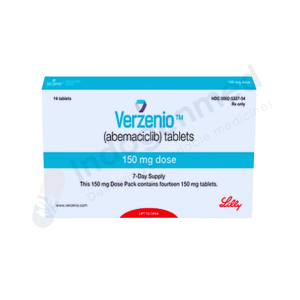
Verzenio 150 Mg Tablets
Recently Viewed Products
Table of Contents
Abemaciclib (Verzenio) is an oral, targeted anticancer medicine classified as a CDK4/6 inhibitor (cyclin-dependent kinase 4 and 6). It is commonly used in hormone receptor-positive (HR+), HER2-negative breast cancer as part of combination therapy and, in some situations, as monotherapy.
Information about the molecule
Abemaciclib was developed to block key enzymes (CDK4 and CDK6) that drive cancer cell division. It is marketed widely under the brand name Verzenio and has been approved for use in certain types of breast cancer, including early-stage high-risk disease (with endocrine therapy) and advanced or metastatic disease (alone or with endocrine therapy, depending on the clinical setting).
- Chemical structure and formula (simple overview): Abemaciclib is a small-molecule inhibitor with the molecular formula C27H32F2N8.
- Mode of action, at a glance: Many HR+ breast cancers depend on signals that push cells from the resting phase (G1) into DNA replication (S phase). Abemaciclib interferes with this process by inhibiting CDK4/6, slowing down tumor growth.
Pharmacology
Pharmacokinetics
- Absorption: Abemaciclib is taken by mouth. After an oral dose, the median time to peak blood level (Tmax) is about 8 hours.
- Bioavailability: Absolute oral bioavailability is about 45%.
- Food effect: A high-fat, high-calorie meal can slightly increase overall exposure (AUC) and may raise peak levels (Cmax), but it is generally taken with or without food, as directed by the treating team.
- Distribution: It is highly protein-bound in the blood and has a large volume of distribution, which is typical for many orally targeted therapies.
- Metabolism: Abemaciclib is mainly metabolized in the liver, primarily through CYP3A4, producing active metabolites that also contribute to the overall effect.
- Elimination: The average elimination half-life is about 18.3 hours. Most of the dose is eliminated via feces (around 81%), with a small amount in urine (around 3%), largely as metabolites.
Pharmacodynamics
Abemaciclib blocks CDK4/6 activity, reducing phosphorylation of the retinoblastoma (Rb) protein and helping prevent cancer cells from progressing through the cell cycle. In simplified terms, it presses the brakes on cell division in susceptible tumors, especially those driven by hormone signaling.
Its uses
Primary uses (clinically established)
Abemaciclib is used in HR+, HER2- breast cancer, including:
- Early breast cancer, high-risk: used with endocrine therapy to reduce the risk of recurrence in eligible patients
- Advanced or metastatic breast cancer: used with endocrine therapy (such as fulvestrant or an aromatase inhibitor) in certain settings, and sometimes used alone based on prior treatments and clinician judgment
Off-label or investigational uses
Because CDK4/6 pathways are involved in multiple cancers, research continues in other tumor types and combinations. Any off-label use should be strictly clinician-led.
How it works
Cancer cells often divide uncontrollably. CDK4 and CDK6 are like switches that help a cell move from growth to DNA replication, a necessary step before cell division. Abemaciclib inhibits these switches, helping keep susceptible cancer cells from advancing through the cycle.
Factors that can influence effectiveness include tumor biology (HR and HER2 status), prior treatments, drug interactions (especially those that strongly affect CYP3A4), and the consistency with which the treatment plan is followed.
Common side effects
Common (often manageable with monitoring and supportive care)
- Diarrhea
- Fatigue
- Nausea
- Infections (such as upper respiratory infections)
- Low white blood cells (neutropenia, leukopenia)
- Anemia
- Decreased appetite, vomiting
- Headache, abdominal discomfort
Moderate to serious risks (need prompt medical attention)
- Severe diarrhea causing dehydration or infection risk
- Significant neutropenia with fever or signs of infection
- Liver injury (rising liver enzymes)
- Blood clots (venous thromboembolism), such as deep vein thrombosis or pulmonary embolism
- Interstitial lung disease or pneumonitis (new or worsening cough, shortness of breath, chest discomfort)
When to seek urgent help: trouble breathing, chest pain, coughing up blood, one-sided leg swelling/pain, persistent high fever, severe diarrhea not controlled with advised measures, or yellowing of skin/eyes.
Available medicines for this molecule
| Brand name | Manufacturer (originator) | Dosage form | Strengths |
|---|---|---|---|
| Verzenio | Eli Lilly | Tablets | 50 mg, 100 mg, 150 mg, 200 mg |
| Abemaciclib (generic where available) | Various | Tablets | Strengths vary by country |
Clinical trials and approvals (key highlights)
- MONARCH 2 (advanced breast cancer): Abemaciclib plus fulvestrant improved progression-free survival versus fulvestrant alone (reported median PFS 16.4 vs 9.3 months, hazard ratio around 0.55).
- monarchE (early high-risk breast cancer): Adding abemaciclib to endocrine therapy improved invasive disease-free survival; early analyses reported a hazard ratio around 0.75 with better 2-year invasive disease-free survival rates compared with endocrine therapy alone.
- Regulatory updates: Eligibility criteria for early breast cancer use have evolved over time, including updates that removed certain biomarker testing requirements in specific populations, based on trial evidence and regulatory review.
Disclaimer
This content is for informational and educational purposes only and should not replace professional medical advice. Always consult a qualified healthcare provider before starting, stopping, or changing any medication.