



Afatinib
- Antibiotics
- Cholesterol Management
- Chronic Conditions
- Chronic Kidney Disease
- Contraception
- Hair Fall Control
- Hepatitis C DAAs
- Hypertension & Heart
- OBESITY
- Pulmonary Hypertension (Rx)
- Uncategorized
- Chronic Care
- Men's Health & Wellness
- Personal Care
- Speciality Medicines
- Wellness & Nutrition
- Women’s Health & Wellness
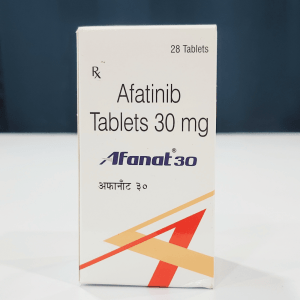
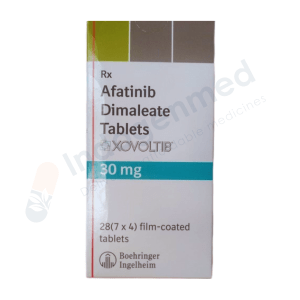
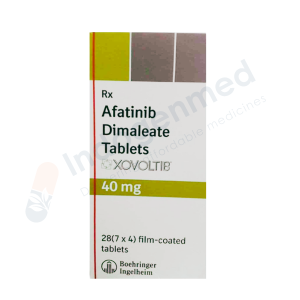
Recently Viewed Products
Table of Contents
Afatinib is an anticancer medicine mainly used to treat a specific type of lung cancer called non-small cell lung cancer (NSCLC). It is prescribed when the cancer has certain genetic changes known as EGFR mutations.
Afatinib works by slowing down or stopping the growth of cancer cells. It is a targeted therapy, not chemotherapy, meaning it focuses more on cancer cells and causes less damage to healthy cells.
This medicine should only be taken under the supervision of a cancer specialist, with regular monitoring during treatment.
Uses of Afatinib
Afatinib is used for:
EGFR mutation-positive non-small cell lung cancer (NSCLC)
Advanced or metastatic lung cancer
Patients who have not received previous EGFR-targeted treatment
Doctors usually recommend Afatinib after confirming an EGFR mutation through lab testing.
How Afatinib Works
Afatinib belongs to a group of medicines called tyrosine kinase inhibitors (TKIs).
It works by:
Blocking EGFR proteins that help cancer cells grow and multiply
Stopping signals that allow cancer cells to survive
Slowing down tumor growth and spread
By targeting specific cancer pathways, Afatinib helps control cancer more precisely.
How to Take Afatinib
Take Afatinib exactly as prescribed by your doctor
Usually taken once daily, on an empty stomach
Take it at least 1 hour before or 2 hours after food
Swallow the tablet whole with water
Take it at the same time every day
Do not crush, chew, or break the tablet.
Possible Side Effects
Some people may experience side effects, including:
Common Side Effects
Diarrhea
Skin rash or acne-like eruptions
Mouth sores
Dry or itchy skin
Loss of appetite
Tiredness
These side effects are usually manageable with medical support.
Serious Side Effects (Seek Medical Help Immediately)
Severe diarrhea leading to dehydration
Breathing problems
Eye pain or vision changes
Severe skin reactions
Always inform your doctor if side effects become severe or persistent.
Safety Precautions
Pregnancy: Not safe during pregnancy. Use effective contraception.
Breastfeeding: Not recommended during treatment.
Liver & Kidney: Regular tests may be needed.
Sun Exposure: Skin may become sensitive; use sunscreen.
Alcohol: Avoid or limit alcohol intake.
Drug Interactions
Tell your doctor about all medicines and supplements you take. Afatinib may interact with:
Certain antibiotics
Antifungal medicines
Anti-seizure drugs
Herbal products like St. John’s Wort
These interactions can reduce effectiveness or increase side effects.
Storage Instructions
Store below 30°C
Keep away from moisture and sunlight
Keep out of reach of children
Do not use expired tablets
FAQs
Q1. What is Afatinib used for?
Afatinib is used to treat EGFR-positive non-small cell lung cancer.
Q2. Is Afatinib chemotherapy?
No. It is a targeted therapy that blocks specific signals that drive cancer growth.
Q3. How long does Afatinib treatment last?
Treatment duration depends on how well the cancer responds and should be decided by the doctor.
Q4. Can Afatinib cure cancer?
Afatinib helps control cancer growth but is not considered a cure.
Fact Box
Drug Name: Afatinib
Drug Class: Targeted anticancer therapy
Category: Tyrosine kinase inhibitor
Used For: EGFR-positive NSCLC