

Agomelatine
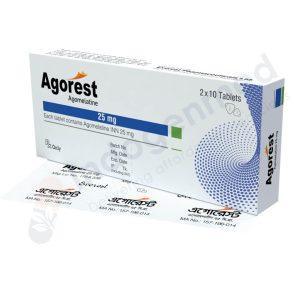
Agorest 25 mg Tablet
Recently Viewed Products
Table of Contents
Afatinib (brand name Gilotrif) is a cancer medicine used to treat non-small cell lung cancer (NSCLC) that has a specific genetic change called an EGFR mutation. This mutation helps cancer cells grow rapidly.
How does it work?
Afatinib is a tyrosine kinase inhibitor (TKI). It blocks signals that tell cancer cells to grow and divide. It does this by attaching itself strongly and permanently to proteins on cancer cells — especially EGFR, HER2, and ErbB4 — and blocking their ability to send growth signals.
Because it blocks these signals irreversibly, it can slow down or stop tumor growth.
Who is it used for?
Doctors prescribe Afatinib mainly for:
- Advanced NSCLC with certain EGFR mutations
- Cancer that has spread (metastatic)
- Some patients whose tumors have progressed after other treatments
Patients usually need a genetic test to confirm that their cancer has the right mutation.
How is it taken?
Afatinib comes as a tablet to be swallowed once a day.
It’s usually taken on an empty stomach — at least one hour before or two hours after eating.
Common side effects
Some people may experience:
- Diarrhea
- Skin rash or acne-like rash
- Dry skin
- Loss of appetite
- Nausea or vomiting
- Mouth or throat sores
These side effects are common with EGFR-targeted drugs and often come early in treatment.
Important precautions
- Doctors monitor for dehydration and skin changes during treatment.
- It can make skin more sensitive to the sun.
- Always take it exactly as your cancer specialist advises.