



Palbociclib
- Chronic Conditions
- Chronic Kidney Disease
- Contraception
- Hair Fall Control
- Hepatitis C DAAs
- OBESITY
- Uncategorized
- Chronic Care
- Men's Health & Wellness
- Personal Care
- Speciality Medicines
- Wellness & Nutrition
- Women’s Health & Wellness


Palboxen 125 Mg Capsules

Palnat 100 Mg Capsules
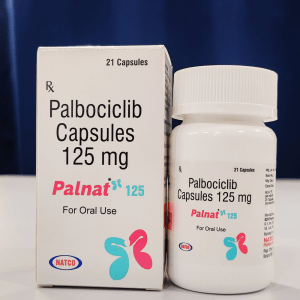
Palnat 125 Mg Capsule
Recently Viewed Products
Table of Contents
Palbociclib is an oral medication used in the treatment of a specific type of breast cancer known as hormone receptor-positive (HR+), HER2-negative breast cancer. It belongs to a group of drugs called CDK4/6 inhibitors and is often prescribed for adults with advanced or metastatic breast cancer, meaning the cancer has spread to other parts of the body. Palbociclib is commonly taken with other hormone therapies to make the treatment more effective.
Hormone receptor-positive (HR+) breast cancer cells rely on hormones like estrogen to grow. Palbociclib is designed to work particularly well for this kind of cancer, especially when the HER2 protein is absent (HER2-negative). By targeting and inhibiting the growth of cancer cells, Palbociclib helps slow or stop the spread of these cells, offering hope to patients managing their condition.
How Palbociclib Works
Palbociclib inhibits specific proteins in cancer cells, namely cyclin-dependent kinases (CDK) 4 and 6, which are essential for cell division and growth. In cases of hormone receptor-positive (HR), HER2-negative breast cancer, these proteins become excessively active, leading to uncontrolled proliferation of cancer cells. By blocking the activity of CDK4 and CDK6, Palbociclib effectively reduces the capacity of these cells to divide and grow.
This action helps slow cancer progression and limit the dissemination of cancerous cells. It is typically administered alongside hormone therapies like letrozole or fulvestrant, which focus on estrogen receptors, thereby improving its overall effectiveness. This synergistic strategy makes Palbociclib particularly potent in managing advanced or metastatic breast cancer by targeting the disease from multiple fronts, resulting in improved disease control.
The Role of CDK4 and CDK6 Proteins
Two critical proteins, CDK4 and CDK6 (cyclin-dependent kinases 4 and 6), play a crucial role in controlling the cell cycle, especially during the G1 phase. When activated, these proteins allow cells to progress from the G1 phase to the S phase, enabling DNA replication and cell division.
By targeting CDK4/6, Palbociclib inhibits explicitly (blocks) the CDK4 and CDK6 proteins. By doing so, it stops the cancer cells from progressing through the cell cycle from the G1 phase to the S phase.
When CDK4/6 is blocked, cancer cells are unable to replicate their DNA and divide, leading to a cell cycle arrest.
Why Is This Important?
By targeting CDK4/6, Palbociclib effectively slows or stops the growth of breast cancer cells, helping prevent the cancer from spreading. This targeted action makes Palbociclib a valuable treatment option for patients with advanced HR+, HER2- breast cancer, offering them a more focused approach compared to traditional chemotherapy.
Combination Therapy with Other Treatments
Palbociclib is typically not used alone and is combined with other therapies to enhance efficacy.
- Palbociclib + Letrozole (or other aromatase inhibitors)
This combination is intended for women who have not yet undergone hormone therapy for advanced breast cancer. Letrozole inhibits estrogen production, which is essential for tumor growth, and, when paired with Palbociclib, enhances treatment effectiveness. - Palbociclib + Fulvestrant
This regimen targets women whose breast cancer has progressed despite prior hormone therapy. Fulvestrant blocks estrogen’s action on tumor cells, and combining it with Palbociclib provides additional defense against tumor proliferation.
Benefits of Using Palbociclib
The primary benefits include:
- Slowing disease progression by delaying tumor growth and spread
- Enhancing hormone therapy response when used alongside hormonal treatments
- Convenient administration as an oral capsule or tablet taken at home
- Potential quality-of-life improvements by reducing symptoms and maintaining daily activities longer
Common Side Effects
Like any medication, Palbociclib may lead to side effects, though not everyone will experience them.
- Low white blood cell count (neutropenia), increasing infection risk
- Fatigue
- Nausea and vomiting
- Hair thinning
- Diarrhea
- Mouth sores
These side effects are generally manageable, and doctors may adjust dosage or recommend supportive care as needed.
Precautions
When using Palbociclib, it is essential to follow safety measures to ensure effectiveness and well-being.
- Monitoring blood cells: Regular blood tests are needed to track white blood cells, red blood cells, and platelets
- Infection awareness: Watch for fever, chills, sore throat, or other signs of infection
- Pregnancy prevention: Effective contraception is required during treatment and after the last dose
- Breastfeeding caution: Avoid breastfeeding during treatment and for at least three weeks after stopping
- Avoiding drug interactions: Inform your doctor about all medicines, supplements, and herbal products you use
- Liver function monitoring: Report symptoms such as yellowing of skin or eyes, dark urine, or severe fatigue
FDA Approval
Palbociclib, marketed under the brand name Ibrance, received FDA approval in February 2015 for the treatment of hormone receptor-positive (HR+), HER2-negative advanced or metastatic breast cancer.
- Initial Approval (2015)
Approved in combination with letrozole as initial endocrine-based therapy for postmenopausal women - Expanded Approval (2016)
Approved in combination with fulvestrant for patients whose disease progressed after endocrine therapy - Clinical Trial Basis
Approval was based on PALOMA-1, PALOMA-2, and PALOMA-3 trials, which showed significant improvement in progression-free survival