



Tenofovir Alafenamide
- Chronic Conditions
- Chronic Kidney Disease
- Contraception
- Hair Fall Control
- Hepatitis C DAAs
- OBESITY
- Uncategorized
- Chronic Care
- Men's Health & Wellness
- Personal Care
- Speciality Medicines
- Wellness & Nutrition
- Women’s Health & Wellness
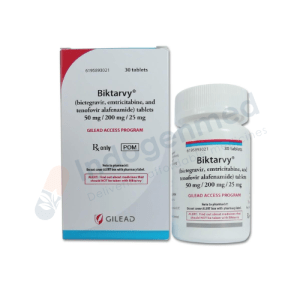
Biktarvy Tablets
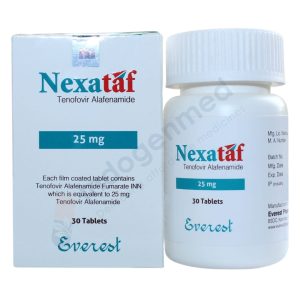
Nexataf 25 Mg Tablet
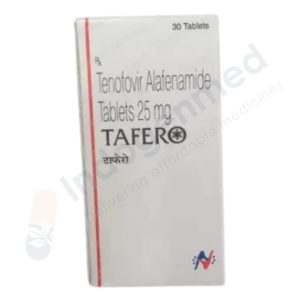
Tafero 25 Mg Tablets
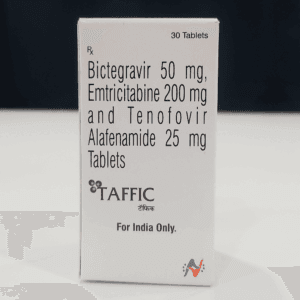
Taffic Tablet

Taficita Tablet

Tafmune Em Tablets

Taftrio Tablets
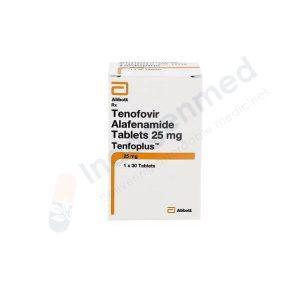
Tenfoplus 25 Mg Tablets
Recently Viewed Products
Table of Contents
Tenofovir Alafenamide (TAF) is a new medication for treating HIV-1. It is a prodrug of Tenofovir, meaning it is converted to the active form in the body. TAF works better and causes fewer side effects than the older drug, Tenofovir Disoproxil Fumarate (TDF). Its chemical formula is C19H30N5O10P, and it includes an ester group that helps it work effectively in the body.
Once inside the cells, TAF is converted to Tenofovir, which fights the virus. TAF is a key medication in HIV treatment because it is safer and more effective. It has less impact on kidney function and bone health compared to TDF, which has been a significant concern with older drugs.
How It Works
Tenofovir Alafenamide works by blocking an enzyme called reverse transcriptase, which HIV needs to make copies of itself in human cells. TAF is inactive on its own and must be changed into its active form, Tenofovir, in the body.
This change mainly occurs in lymphoid tissues, where HIV replicates. Once activated, TAF competes with natural nucleotides during viral DNA synthesis, causing the DNA strand to stop elongating prematurely. This action stops the reverse transcriptase enzyme, preventing HIV from turning its RNA into DNA. By disrupting the replication and spread of viral DNA, TAF reduces the amount of virus in the blood, helping control the infection and allowing the immune system to heal. Because of its effectiveness, TAF is an integral part of long-term HIV-1 treatment.
Effectiveness
Tenofovir Alafenamide effectively treats HIV-1 by lowering viral load and helping patients suppress the virus. It boosts the immune system by increasing CD4 cell counts. TAF needs a smaller dose than Tenofovir Disoproxil Fumarate (TDF) to achieve the same results, leading to fewer side effects on kidney function and bone density. Clinical trials show that TAF-based treatments lead to high viral suppression rates and fewer side effects than TDF, making TAF an essential part of current HIV treatment.
FDA & EMA Approval
Major global health agencies widely approve Tenofovir Alafenamide (TAF) for treating HIV-1. The U.S. Food and Drug Administration (FDA) approved TAF in November 2015 as part of combination therapies. The European Medicines Agency (EMA) and other international bodies also approved it.
These approvals show TAF’s global acceptance, supported by clinical trials that proved it works better and is safer than Tenofovir Disoproxil Fumarate (TDF).
Dosage and Administration
- Standard Dosage: Take 25 mg once a day as part of a combination HIV treatment. It is often found in fixed-dose combination tablets. Take the medicine at the same time every day and stick to the dosing schedule to keep the right amount of the drug in your system. You can take it with or without food. If it is part of a combination tablet, follow the specific instructions.
- Missed Dose: Take the missed dose as soon as you remember, unless it is nearly time for the next dose. If it is almost time for the next dose, skip the missed one. Do not take two doses at once.
Side Effects
Common Side Effects
- Nausea
- Diarrhea
- Headache
- Fatigue
Serious Side Effects
- Lactic acidosis
- Liver toxicity
- Kidney problems
- Bone density loss
Current Research and Developments on Tenofovir Alafenamide
- Ongoing Studies: Researchers are testing TAF in patients with hepatitis B and kidney problems. They are also studying its long-term effects on bone and kidney health, as well as new drug combinations to improve results.
- Future Applications: TAF is being investigated for HIV prevention (PrEP) and treatment of other viral infections like hepatitis B. Researchers aim to develop long-acting TAF formulations for easier dosing.
- Innovative Therapies: New combinations of TAF and delivery methods, such as injectables, are being developed to reduce the number of pills patients need to take and improve adherence to treatment.