

Tretinoin
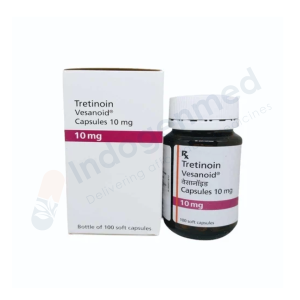
Vesanoid 10 mg Capsules
Recently Viewed Products
Table of Contents
Tretinoin, also known as all-trans retinoic acid (ATRA), is a powerful medicine used to treat acute promyelocytic leukemia (APL). It works by helping abnormal blood cells in the body become normal again. Tretinoin is unique because it targets the underlying problem in APL rather than just killing cancer cells.
How Does Tretinoin Work?
Tretinoin helps APL cancer cells mature into normal blood cells.
- The Problem in APL: APL happens because of a gene change (mutation) that makes promyelocytes stop growing properly. Instead of becoming normal white blood cells, they stay immature.
- How Tretinoin Fixes It: Tretinoin binds to a special protein in these immature cells. This changes their behavior, helping them grow into healthy cells. Once the body has more normal cells, it can fight infections and stop bleeding better.
How Is Tretinoin Taken?
Tretinoin comes in capsule form that you swallow.
- Dose: The exact dose depends on your weight and your doctor’s advice.
- Duration: Treatment usually lasts for about 1–3 months, but this can vary depending on the patient’s condition and response.
Side Effects of Tretinoin
Like all medicines, tretinoin can cause side effects. Some are mild, while others may need medical attention.
Common Side Effects
- Headache
- Dry skin or lips
- Nausea
- Mild fever
- Weakness
- Extreme tiredness
- Shivering
- Pain
- Feeling of fullness in the ears
- Rash
- Hair loss
- Constipation
- Diarrhea
- Stomach pain
- Heartburn
- Loss of appetite
- Weight loss
- Bone pain
- Dizziness
- Nervousness
- Depression
- Confusion
- Difficulty urinating
- Flushing
It is important to talk to your doctor if you notice any unusual symptoms while taking tretinoin.
Who Should Not Take Tretinoin?
- Pregnant women, as tretinoin can harm an unborn baby. Women should avoid becoming pregnant while on this treatment.
- People with allergies to tretinoin or similar medicines.
How Effective Is Tretinoin?
Tretinoin is one of the most effective treatments for APL. It is often combined with other drugs like arsenic trioxide or chemotherapy to increase its success. Many patients go into complete remission, meaning their cancer symptoms disappear.
Other Uses of Tretinoin
While tretinoin is best known for treating APL, it is also used in creams to treat skin conditions like acne and wrinkles. However, the tretinoin used for cancer treatment is different and much stronger than the skin creams.
Conclusion
Tretinoin is a remarkable medicine for people with acute promyelocytic leukemia. It works by helping immature blood cells mature into normal blood cells, making it a life-saving treatment for this rare leukemia. While it can have side effects, careful monitoring and medical care can effectively manage them. Always consult a healthcare professional for advice on using tretinoin.