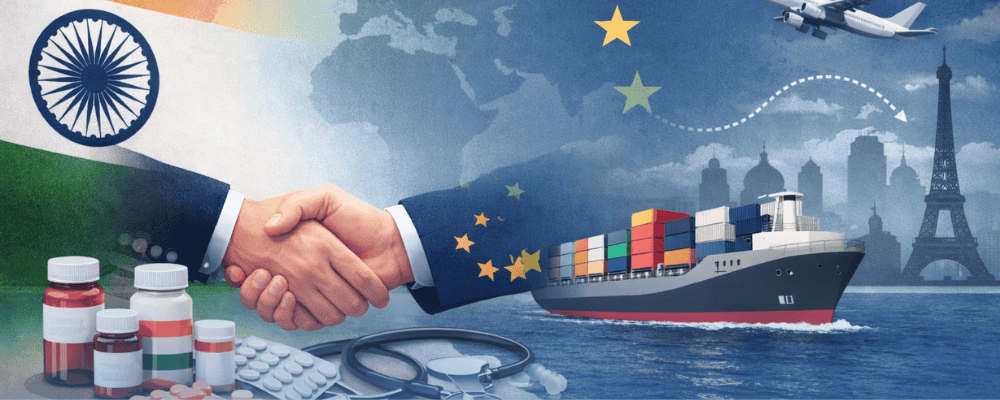
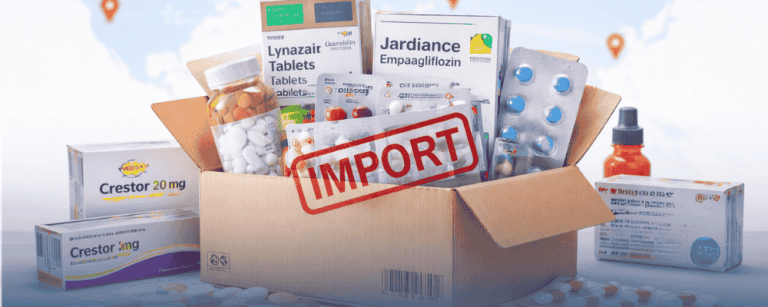
Yes, you can import medicines for personal consumption and your doctor an prescribed Medicines which is not approved in your country yet but it depends on your country’s local FDA or health authorities, every country has specific rules and regulations for medicines import rules differs by country and by medicine type ( RX prescription, controlled, biologics etc, always consult with your doctor and your local health authorities before importing medicines for personal use from another country
Myth vs fact
Myth: “If it’s not sold here, my doctor can’t prescribe it.”
Fact: In many countries, doctors may be able to request access to an unapproved medicine access pathway when there is a documented medical need and standard options aren’t suitable. Depending on the country, these pathways are often described as:
Named patient program (individual patient access)
Compassionate use program (often group access in the EU framework)
Expanded access program (U.S. FDA pathway for investigational products)
Special access scheme/program (e.g., Australia SAS; Canada SAP)
These are regulated routes with guardrails—not a guarantee that any medicine can be supplied to anyone, anywhere.
FDA Expanded Access overview — Click here
What does “unapproved” or “unlicensed” mean?
Unapproved medicine access vs off-label prescribing
- Unapproved/unlicensed medicine usually means the product does not have local marketing authorization for routine sale in your country (or is not available through routine channels).
- Off-label use means a medicine is approved locally, but a clinician uses it for a different indication/dose/population based on medical judgment.
- In most systems, access to an unlicensed medicine requires extra documentation and oversight and may involve controlled import/supply steps.
Reference (UK): Supply of unlicensed medicinal products (“specials”) — Click here
Which pathway applies to me? (simple decision guide)
If the product is investigational (still in development)
In the U.S., this typically points toward Expanded Access when a patient cannot enroll in a clinical trial and lacks satisfactory alternatives.
Reference (USA): FDA Expanded Access — Click here
If the product is approved elsewhere but not available locally
Many countries have a “named patient” style route or “specials” style framework—usually requiring clinician justification and controlled-supply steps.
Reference (UK example): Unlicensed “specials” — Click here
If access is intended for a group of patients (EU context)
EU “Compassionate Use” guidance addresses the availability of treatments for groups of patients with serious diseases who cannot be treated satisfactorily with authorized therapies; implementation is typically Member State-led.
Reference (EU/EMA): Compassionate Use overview — Click here
The main access pathways (with official sources)
Named Patient Program (individual patient access)
A “named patient program” generally refers to a clinician-led request for a specific identified patient, with a documented clinical need and required paperwork. Terminology and procedures vary by country.
Compassionate Use Program (often group-based in the EU framework)
In the EU, “compassionate use” generally refers to the provision of an unlicensed product to patients with serious conditions who cannot be treated satisfactorily with authorized therapies and who cannot enter clinical trials (Member States implement programs).
References (EU/EMA):
EMA compassionate use overview — Click here
EMA guideline (Article 83) — Click here
Expanded Access Program (United States, FDA)
The U.S. FDA’s expanded access pathway provides a framework for patients with serious or immediately life-threatening conditions to access an investigational product outside clinical trials when criteria are met.
References (USA/FDA):
- Expanded Access overview — Click here
- Expanded Access Q&A — Click here
Special Access Scheme (Australia) and Special Access Program (Canada)
- Australia (TGA SAS): Pathway for access to unapproved therapeutic goods for individual patients under a health practitioner.
Reference — Click here - Canada (Health Canada SAP): Practitioner request pathway for drugs not available for sale in Canada for serious/life-threatening conditions when conventional therapies have failed/are unsuitable/unavailable.
References — Click here
When is access typically allowed? (common guardrails)
Across many systems, exceptional access commonly requires:
- A documented medical need and serious condition (definitions vary)
- Evidence that standard treatments are unsuitable, unavailable, or ineffective
- Clinician oversight and a monitoring plan
- Patient counseling on risks/uncertainties
- Regulated supply/import steps and traceability
This is why “not sold here” does not automatically mean “impossible”—but it also does not mean “easy” or “guaranteed.”
Patient-friendly roadmap: how the process typically works
Step 1: Your doctor confirms medical necessity
Ask: “What’s the diagnosis, what standard options were considered, and why is this medicine justified for me?”
Step 2: Identify your country’s correct pathway
Examples:
- EU: Compassionate use (Member-State programs; EMA guidance)
- USA: FDA expanded access
- UK: Unlicensed “specials” framework
- Canada: SAP
- Australia: SAS
- India: personal-use import process (CDSCO)
Step 3: Prepare documentation + legal supply steps
Common documentation (varies by country and medicine type):
- Prescription (and ideally a clinician's letter stating diagnosis, dose, and justification)
- Patient ID matching consignee name
- Product details: generic name, strength, dosage form, manufacturer (when required)
- Quantity consistent with personal treatment
- Invoice/order confirmation (if shipped)
- Any required permits/certificates (especially for controlled medicines)
Step 4: Delivery, customs checks, and clinical follow-up
Even when the pathway is valid, proceed only with:
- traceable sourcing and intact packaging, and
- a clinician’s follow-up plan for safety and effectiveness.
India-specific: CDSCO personal import pathway (Forms 12A/12B)
If you are in India and need to import medicines for personal use, CDSCO provides a process for importing small quantities, including the use of Forms 12A/12B and an online portal.
References (India/CDSCO):
CDSCO “Drugs for Personal Use” — Click here
Procedure PDF — Click here
CDSCO online portal — Click here
Medicines import for personal use: examples of country rules (always verify locally)
Key point: “Personal use” is not one global rule. Countries usually treat personal imports differently depending on (1) how the medicine enters (carried in luggage vs shipped by courier/mail), (2) the medicine type (prescription, controlled, biologic/cold-chain), and (3) quantity and documentation. Even where personal import is permitted, it’s typically limited to reasonable personal-treatment quantities, requires proof of medical need, and must not be for resale.
Before you import: 5 checks that apply almost everywhere
- Check the route: Are you bringing it in your bag, or ordering it online for delivery? Some countries are stricter for postal/courier shipments than for traveller-carried medicines.
- Check the category: Controlled medicines (narcotics/psychotropics), injectables, and refrigerated biologics usually have extra rules.
- Keep it “personal use”: Large quantities may be treated as commercial import.
- Carry documentation: A prescription and/or doctor's letter helps explain why you have the medicine and how much you need.
- Keep original packaging: Intact packs with batch/expiry and clear labels reduce safety risks and customs delays.
United States (US) — FDA “personal importation” enforcement guidance
The U.S. FDA publishes information on personal importation explaining how the FDA may handle situations where individuals bring in or receive FDA-regulated products for personal use. In practice, decisions can be case-by-case, and enforcement considerations may apply.
Best practice for patients: keep documentation (prescription/doctor note) and don’t assume that “available online” means “permitted to import.”
FDA: Personal Importation — Click here
United Kingdom (UK) — bringing medicines in/out + controlled drug licences
UK guidance explains how to take medicines into or out of the UK, including what to do for medicines that contain controlled drugs. It also notes that bringing or receiving more than 3 months’ supply may result in medicines being taken away.
Best practice for patients: travel with medications in their original packaging, carry a prescription, and check controlled-drug regulations before travel or shipment.
UK: Take medicine in or out of the UK — Click here
UK: Controlled drugs personal licences — Click here
Australia — TGA Personal Importation Scheme (PIS) + Border Force checks
Australia’s TGA explains that individuals may import many therapeutic goods for personal use under the Personal Importation Scheme, provided conditions are met. Australia also has border controls that affect what can enter and what documentation may be needed.
Best practice for patients: confirm that the product is eligible under the TGA scheme, avoid large quantities, and exercise caution with controlled medicines and injectables.
TGA: Personal Importation Scheme — Click here
Australian Border Force: Medicines and substances — Click here
Canada — Health Canada personal-use guidance
Health Canada provides a detailed guidance document on bringing health products into Canada for personal use, including prescription medicines and other categories. This is useful because it clarifies how personal import is treated and what may be restricted.
Best practice for patients: keep prescription documentation, stay within personal-use limits, and avoid ordering from unverified sources.
Canada: Personal-use health products guidance — Click here
Philippines — personal-use limits and permitted channels (official circular)
The Philippines has an official DOH–FDA–Bureau of Customs circular describing how certain FDA/DOH-regulated products may be brought in for personal use, including quantity limits and permitted channels (e.g., baggage, balikbayan boxes, parcels).
Best practice for patients: check limits before shipping, keep medical documents ready, and ensure packaging/labels are complete.
Philippines: Joint Circular PDF — Click here
Germany — strict approach, especially for postal/internet orders
German Customs explains that medicines are strictly regulated and provides separate guidance for travellers and for postal consignments/internet orders. Germany is a key example of why you must distinguish between traveller-carried medicines and mail/courier shipments—postal rules can be significantly stricter.
Best practice for patients: if shipping by mail/courier, check the specific postal/import rules first; do not assume delivery is permitted.
Germany (travellers): Medicinal products & narcotics — Click here
Germany (postal/internet orders): restrictions — Click here
Country-by-country snapshot
Country/Region | What’s generally allowed (high-level) | Typical limits mentioned (where stated) | Key documents to prepare |
United States (US) | FDA describes how it handles personal importation of FDA-regulated products brought in luggage or received by mail/courier, often with case-by-case enforcement considerations. | Not a universal “right”; decisions may vary case-by-case (FDA explains enforcement approach). | Prescription + clinician letter, ID matching consignee, product details (generic name/strength), quantity consistent with personal use. |
United Kingdom (UK) | Guidance for taking medicines into/out of the UK, plus separate guidance for controlled drugs (may require a personal licence). | The UK notes that bringing/receiving more than a 3-month supply may result in it being taken away. | Prescription, doctor letter, original packaging; controlled drugs: check personal licence requirements. |
Australia | TGA outlines a Personal Importation Scheme (PIS) for importing therapeutic goods for personal use under specified conditions; Border Force also provides medicine category guidance. | Conditions apply under PIS; travellers vs shipments can differ in practice. | Prescription, doctor letter, original packaging, personal-use quantity; check whether the product category has additional restrictions. |
Canada | Health Canada provides guidance on bringing health products into Canada for personal use, including categories and restrictions. | Depends on product category and circumstances (see HC guidance). | Prescription + clinician letter, ID, original packaging, personal-use quantity, product details. |
Philippines | A DOH–FDA–Bureau of Customs circular outlines personal-use import rules, including channels (baggage/boxes/parcels) and limits. | Limits and permitted channels are defined in the circular (check the PDF for current thresholds). | Prescription/medical docs, invoice (if shipped), original packaging, quantity within circular limits. |
Germany | German Customs provides traveller guidance and separate rules for postal/internet orders; Germany is notably strict for many mailed consignments. | Postal/internet orders can be restricted; travellers vs shipments must be checked separately. | For travel: prescription + original packaging; for mail: verify postal restrictions before ordering. |
European Union (EU) – general | EU consumer guidance: no EU-wide rule for buying prescription medicines online; rules differ by country. The EU common logo helps identify legal online pharmacies where permitted. | Varies by Member State (check national register + rules). | Prescription, original packaging, verify the national online pharmacy register; avoid sellers skipping prescription checks. |
Netherlands (example EU country) | The Netherlands notes that most medicines can be brought for personal use, but Opium Act medicines may require a certificate. | Certificate requirements apply for certain controlled medicines. | Prescription + (if applicable) official certificate for Opium Act medicines; original packaging. |
France (example EU country) | French Customs: medicines should not exceed personal use corresponding to treatment duration on prescription; often referenced as up to ~3 months when no prescription. | Personal-use quantity tied to prescription/treatment duration; practical expectations described by customs. | Prescription/doctor letter, original packaging, quantity aligned with treatment duration. |
Quick “personal use” checklist
Do
Carry a prescription and (ideally) a doctor’s letter stating diagnosis, dose, and treatment duration.
Keep medicines in their original, sealed packaging, with the batch/expiry date visible.
Keep quantity consistent with personal treatment.
Verify whether the country treats shipping differently from traveller carry-in.
Don’t
Don’t order prescription medicines for delivery, assuming it’s legal just because a website offers shipping.
Don’t attempt to import controlled medicines without checking permits/certificates.
Don’t accept loose pills or packaging without batch/expiry details.
Europe: EU-wide safety principles + examples from specific countries
EU-wide: online purchase rules vary + EU common logo
EU consumer guidance states there are no EU-wide rules on buying prescription medicine online; national rules differ, and you should check each country’s national register.
References: Click here
EMA advice on buying online: Click here
What happens if customs stops a shipment?
Common reasons include:
- missing prescription/medical letter,
- quantity that looks non-personal,
- controlled medicine status,
- missing labeling/batch/expiry details.
What to do:
- provide requested documents,
- contact customs or the medicines authority if instructions are unclear,
- avoid “workarounds” that bypass legal checks.
Online medicine: what to know before you place an order
People often search for solutions via online medicine, medicines online delivery, or an online pharmacy when a product isn’t available locally. But online availability does not confirm legality or safety.
A safer way to think about online access
If your clinician believes a named patient or special access route is appropriate, the goal should be:
- verified documentation (including an online Rx prescription process where legally valid), and
- regulated supply channels, especially for an Rx pharmacy product.
Red flags for an online medicine order
Be cautious if a seller:
- claims “no prescription needed” for prescription drugs in regulated markets,
- offers “guaranteed approval” or “guaranteed delivery,”
- hides the business address or pharmacist support,
- provides poor or missing batch/expiry labeling.
Do / Don’t checklist (compliance-forward)
DO
- Do involve your clinician early and document medical necessity.
- Do keep quantities consistent with personal treatment.
- Do keep medicines in the original packaging with clear labeling and batch/expiry details.
- Do check the destination-country customs + medicines authority guidance before shipping.
DON’T
- Don’t assume a medicine is legal to import just because it’s sold online.
- Don’t import controlled medicines without the correct permits/certificates.
- Don’t proceed if labeling is unclear or packaging looks tampered with.
- Don’t rely on “guaranteed” claims—legitimate pathways have conditions.
What you can ask your clinician
Can you advise whether a named patient program or another unapproved medicine access pathway applies to my case? If so, what approvals and documents are needed, and what is the safest legal route for importing medicines for personal use (if applicable)?
How we can help
We can support patients and clinicians by:
- sharing official pathway references (country-specific),
- providing a documentation checklist for lawful requests,
- supporting traceability checks (batch/expiry, labeling consistency),
- coordinating only where permitted under local rules.
We do not replace medical advice, and we do not claim every medicine can be sourced or shipped to every country.
FAQs
Can my doctor prescribe a medicine not available in my country?
In many countries, clinicians may request access via a named patient program, special access scheme, expanded access program, or compassionate use program, depending on the product and medical need. Requirements vary widely.
Is it legal to order unapproved medicines via an online pharmacy?
Legality depends on your country and whether the order follows a regulated route. Online listings are not proof of authorization. Use clinician guidance and official country rules.
What’s the difference between compassionate use and expanded access?
They are similar concepts but operate under different regulators and rules. In the EU, compassionate use is often framed for groups of patients; in the U.S., Expanded Access focuses on investigational products outside clinical trials.
What documents does customs usually ask for?
Typically: prescription, a clinician letter, ID matching the consignee, and product details (name/strength/quantity). Controlled medicines may require extra certificates.
What if my medicine is seized or returned?
Follow customs instructions, provide documentation, and contact the destination country’s medicines authority if needed. Do not attempt to bypass the process.