Description
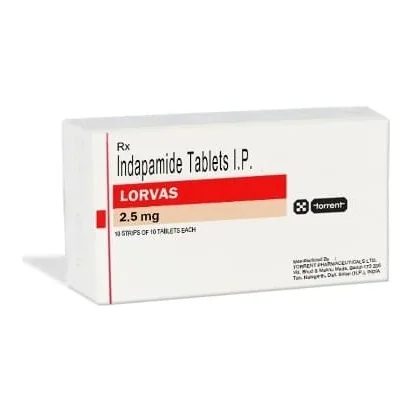
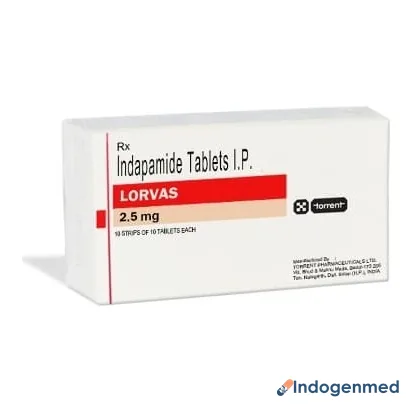
What is Lorvas 2.5 mg?
Lorvas 2.5 mg tablets contain indapamide, a thiazide-like diuretic used primarily in the management of hypertension (high blood pressure) and edema associated with heart failure. Each tablet delivers 2.5 mg of indapamide as the active ingredient. Manufactured by Cipla Ltd., Lorvas is widely prescribed across international markets as a first-line or add-on antihypertensive agent.
Indapamide belongs to the sulfonamide class of diuretics. Unlike traditional thiazides, indapamide exhibits both diuretic and direct vasodilatory properties, making it effective at reducing blood pressure through two complementary mechanisms. It is considered a long-acting agent, allowing for once-daily dosing with sustained 24-hour blood pressure control. This pharmacokinetic profile makes patient adherence considerably easier compared to medications that require multiple daily doses.
How Does Indapamide Work?
Indapamide acts primarily on the distal convoluted tubule of the kidney, where it inhibits sodium and chloride reabsorption. This leads to increased urinary excretion of sodium, chloride, and water, resulting in a reduction in circulating blood volume. The reduced blood volume decreases cardiac preload and lowers blood pressure.
Beyond its diuretic action, indapamide has a direct effect on vascular smooth muscle. It reduces peripheral vascular resistance by modulating calcium ion flux across vascular smooth muscle cell membranes. This vasodilatory effect contributes significantly to its antihypertensive action, particularly at the standard 2.5 mg dose where the diuretic effect is relatively modest compared to higher doses.
The combined diuretic and vasodilatory mechanisms differentiate indapamide from older thiazide diuretics such as hydrochlorothiazide. Studies have demonstrated that indapamide produces effective blood pressure reduction with less pronounced effects on serum potassium, glucose, uric acid, and lipid profiles, which are common concerns with traditional thiazides. This metabolic neutrality is a key clinical advantage of indapamide in long-term hypertension management.
Approved Uses and Indications
Lorvas 2.5 mg tablets are indicated for:
- Hypertension: As monotherapy or in combination with other antihypertensive agents for the management of essential hypertension in adults.
- Edema associated with heart failure: To reduce fluid retention and alleviate symptoms such as peripheral edema and shortness of breath in patients with cardiac insufficiency.
Indapamide is included in several international hypertension treatment guidelines as a preferred thiazide-like diuretic due to its favorable metabolic profile. It may be used as initial therapy in uncomplicated hypertension or combined with angiotensin-converting enzyme (ACE) inhibitors, angiotensin receptor blockers (ARBs), or calcium channel blockers in patients requiring additional blood pressure lowering. The PROGRESS trial demonstrated that indapamide-based therapy significantly reduces the risk of stroke recurrence, further supporting its clinical utility beyond simple blood pressure lowering.
Dosage and Administration
The standard adult dose for hypertension is one Lorvas 2.5 mg tablet taken orally once daily, preferably in the morning. For edema associated with cardiac insufficiency, the same dose is typically used. Tablets should be swallowed whole with water and may be taken with or without food. Taking the tablet in the morning reduces the likelihood of nocturia (nighttime urination), which can disrupt sleep.
Dose adjustments are generally not required for mild-to-moderate renal impairment, but caution is advised in patients with severe renal impairment (creatinine clearance below 30 mL/min), as diuretic efficacy may be reduced and electrolyte disturbances may worsen. Indapamide is not recommended in patients with severe renal failure or anuria.
Elderly patients may be started at the same 2.5 mg dose, with periodic monitoring of electrolytes and renal function advised. The dose should not be doubled if blood pressure control is insufficient; instead, a different antihypertensive class should be added to achieve target blood pressure. Routine dose escalation beyond 2.5 mg is not standard practice and offers limited additional antihypertensive benefit with increased electrolyte risk.
Side Effects
Indapamide is generally well tolerated. Common adverse effects include:
- Hypokalemia (low potassium) — particularly at higher doses
- Hyponatremia (low sodium), which may be more pronounced in elderly patients
- Increased uric acid levels (hyperuricemia), which may precipitate gout in susceptible individuals
- Mild increases in blood glucose, particularly in patients with pre-diabetes
- Headache, dizziness, or fatigue
- Nausea or gastrointestinal discomfort
- Muscle cramps (related to electrolyte changes)
Serious but less common adverse effects include:
- Severe hyponatremia, particularly in elderly patients or those on concomitant medications that lower sodium
- Symptomatic hypotension (low blood pressure), especially on first use or after dose changes
- QT interval prolongation (risk increased by hypokalemia, particularly when combined with other QT-prolonging agents)
- Photosensitivity reactions (rare) — patients should use appropriate sun protection
- Hepatic encephalopathy in patients with pre-existing liver disease (rare)
Patients should report persistent dizziness, muscle weakness, irregular heartbeat, or signs of dehydration to their healthcare provider promptly.
Contraindications
Lorvas 2.5 mg tablets should not be used in patients with:
- Known hypersensitivity to indapamide, sulfonamides, or any tablet excipient
- Severe renal failure (anuria or creatinine clearance below 30 mL/min)
- Severe hepatic impairment or hepatic encephalopathy
- Hypokalemia at baseline
- QT interval prolongation or concurrent use of drugs known to prolong the QT interval
Drug Interactions
Important drug interactions with indapamide include:
- Lithium: Indapamide reduces renal lithium clearance, increasing the risk of lithium toxicity. Concurrent use is generally not recommended; if unavoidable, lithium levels must be closely monitored.
- Non-steroidal anti-inflammatory drugs (NSAIDs): May reduce the antihypertensive and diuretic effect of indapamide and increase the risk of acute renal failure, particularly in volume-depleted patients or those with pre-existing renal impairment.
- Antidiabetic agents: Indapamide may impair blood glucose control in susceptible patients; doses of insulin or oral hypoglycemics may require adjustment and closer monitoring.
- Cardiac glycosides (digoxin): Hypokalemia induced by indapamide increases myocardial sensitivity to digoxin and the risk of arrhythmias. Potassium levels should be maintained within the normal range.
- QT-prolonging drugs: Concurrent use with antiarrhythmics (e.g., amiodarone, sotalol), certain antipsychotics, or other QT-prolonging agents increases the risk of potentially life-threatening ventricular arrhythmias.
- Corticosteroids: May reduce antihypertensive efficacy and both agents promote potassium loss, compounding the risk of hypokalemia.
Use in Special Populations
Pregnancy: Indapamide is generally not recommended during pregnancy. Diuretics do not prevent or treat pre-eclampsia and may reduce placental perfusion. Use only if clearly necessary and after careful benefit-risk assessment with an obstetric specialist.
Breastfeeding: Indapamide passes into breast milk. Breastfeeding is not recommended during treatment with indapamide.
Elderly patients: Elderly patients are more susceptible to electrolyte imbalances, hyponatremia, and hypotension. Regular monitoring of serum sodium, potassium, and creatinine is strongly advised in this population, particularly during initiation and after any dose change.
Pediatric use: Safety and efficacy in children have not been established. Lorvas 2.5 mg tablets are not recommended for use in patients under 18 years of age.
Monitoring Parameters
During treatment with Lorvas 2.5 mg, healthcare providers typically monitor:
- Blood pressure and heart rate at regular intervals
- Serum electrolytes (sodium, potassium, magnesium) — particularly important in the first weeks of therapy and after any dose adjustment
- Serum creatinine and urea (renal function) — before starting and periodically during treatment
- Blood glucose and uric acid — particularly in patients with diabetes or a history of gout
- ECG if QT prolongation is suspected or if the patient is on other QT-prolonging medications
Storage
Store Lorvas 2.5 mg tablets below 30°C, away from moisture and direct sunlight. Keep in the original packaging and out of reach of children. Do not use after the expiry date printed on the pack. If tablets appear damaged, discoloured, or unusual in any way, do not use them and consult a pharmacist.
References
- U.S. National Library of Medicine, DailyMed. Indapamide tablet label. Available at: https://dailymed.nlm.nih.gov/dailymed/
- U.S. National Library of Medicine, DailyMed. Indapamide tablet label (alternate). Available at: https://dailymed.nlm.nih.gov/dailymed/
- MedlinePlus, U.S. National Library of Medicine. Indapamide. Available at: https://medlineplus.gov/druginfo/meds/a688016.html
- Mayo Clinic. Indapamide (Oral Route) — Description and Brand Names. Available at: https://www.mayoclinic.org/
Reviews
There are no reviews yet.