Description
What is Mebex 100 mg?
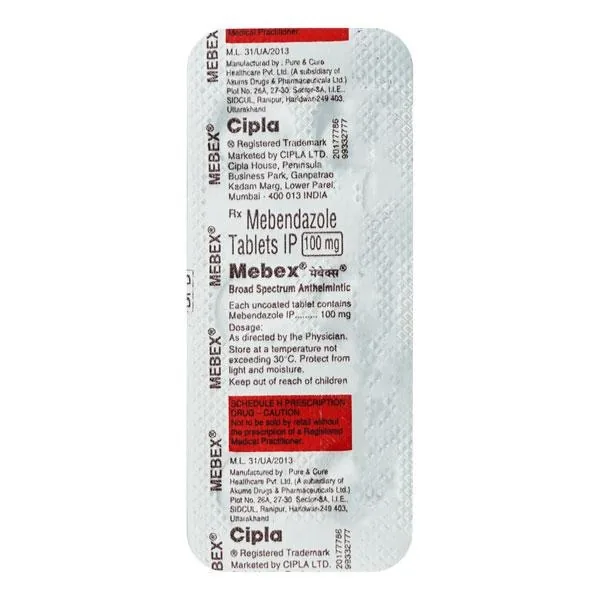
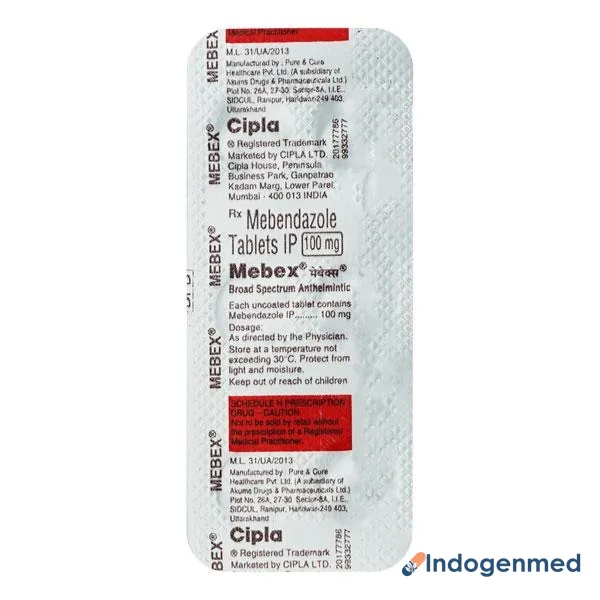
Mebex 100 mg chewable tablets contain mebendazole 100 mg as the active ingredient. Mebendazole is a broad-spectrum anthelmintic (antiparasitic) drug effective against a wide range of intestinal worm infections including pinworm (Enterobius vermicularis), whipworm (Trichuris trichiura), roundworm (Ascaris lumbricoides), hookworm (Necator americanus and Ancylostoma duodenale), and mixed helminth infections. Manufactured by Cipla Ltd., Mebex is one of the most widely used treatments for intestinal parasitic infections worldwide.
Mebendazole is included on the World Health Organization’s List of Essential Medicines and is approved by the U.S. Food and Drug Administration for the treatment of intestinal nematode infections. The chewable tablet formulation makes it particularly suitable for use in both adults and children, as it can be chewed, swallowed whole, or crushed and mixed with food.
How Mebendazole Works
Mebendazole exerts its anthelmintic effect by selectively binding to and inhibiting tubulin polymerization in intestinal worm cells. Tubulin is a structural protein essential for the formation of microtubules, which play a critical role in cell division, glucose uptake, and cellular transport in the worm. By blocking tubulin polymerization, mebendazole disrupts the formation of microtubules within the worm’s gut cells, impairs glucose absorption, and depletes the worm’s glycogen stores.
This mechanism leads to progressive immobilization and death of the susceptible helminths. The onset of worm death is not immediate — worms are typically expelled from the gastrointestinal tract within two to three days following treatment, once the drug’s inhibitory effects have caused sufficient metabolic disruption.
Mebendazole is poorly absorbed from the gastrointestinal tract, which is advantageous as it allows high drug concentrations to reach intestinal worms at the site of infection without significant systemic exposure. This poor absorption also contributes to its favorable safety profile, particularly in short-course treatment regimens.
Approved Uses and Indications
Mebex 100 mg chewable tablets are indicated for the treatment of:
- Enterobiasis (pinworm infection): Caused by Enterobius vermicularis; a single 100 mg dose is the standard treatment for this very common infection in children and adults.
- Trichuriasis (whipworm infection): Caused by Trichuris trichiura; treated with 100 mg twice daily for 3 consecutive days.
- Ascariasis (roundworm infection): Caused by Ascaris lumbricoides; treated with 100 mg twice daily for 3 days or a single 500 mg dose.
- Hookworm infections: Caused by Ancylostoma duodenale and Necator americanus; treated with 100 mg twice daily for 3 days.
- Mixed helminth infections: When more than one type of intestinal worm infection is suspected or confirmed, the 3-day regimen effectively covers multiple species.
Dosage and Administration
Dosing with Mebex 100 mg chewable tablets depends on the type of infection being treated:
- Pinworm (enterobiasis): A single 100 mg dose (one tablet). Due to the ease of re-infection and common household spread, a second dose is recommended 2 to 3 weeks after the initial dose. Household contacts and close family members are typically treated simultaneously to prevent re-infection.
- Whipworm, roundworm, hookworm, and mixed infections: 100 mg twice daily for 3 consecutive days (morning and evening). The 3-day regimen provides higher overall worm kill rates across species.
Mebex 100 mg chewable tablets may be chewed thoroughly before swallowing, swallowed whole with water, or crushed and mixed with food. Tablets may be taken with or without food. For children who have difficulty swallowing, crushing the tablet and mixing with a soft food such as applesauce or yogurt is an acceptable administration method.
The tablet is suitable for use in adults and children aged 2 years and older. For very young children under 2 years, use should be on the advice of a healthcare provider.
Side Effects
Mebendazole is very well tolerated, particularly when used in short-course regimens for intestinal infections. The majority of side effects are mild and transient:
- Abdominal pain or discomfort
- Nausea or vomiting
- Diarrhea
- Flatulence
These gastrointestinal effects are more commonly observed in patients with heavy worm burdens, as dying worms within the gut may trigger an inflammatory response. They typically resolve within a day or two without specific treatment.
Rare but more serious adverse effects, primarily associated with long-term or high-dose use (not standard short-course treatment), include:
- Elevated liver enzymes (hepatotoxicity) — rare at standard doses
- Neutropenia (low white blood cell count) — very rare
- Alopecia (hair loss) — reported with prolonged high-dose therapy
- Hypersensitivity reactions including rash and urticaria
- Stevens-Johnson syndrome — extremely rare
Patients should seek medical attention if they experience fever, unusual bruising or bleeding, yellowing of the skin or eyes, or severe skin reactions while taking mebendazole.
Contraindications
Mebex 100 mg should not be used in patients with:
- Known hypersensitivity to mebendazole or any ingredient in the tablet formulation
- Children under 1 year of age (use not established; under 2 years requires medical supervision)
Drug Interactions
At standard short-course doses for intestinal infections, clinically significant drug interactions with mebendazole are uncommon due to its poor systemic absorption. However, the following interactions are worth noting:
- Cimetidine: May inhibit mebendazole metabolism, increasing plasma concentrations. This is primarily relevant for high-dose or long-term treatment of tissue-invasive disease (e.g., echinococcosis).
- Metronidazole: Concurrent use may increase the risk of Stevens-Johnson syndrome in rare cases; this combination is best avoided.
- Carbamazepine and phenytoin: These enzyme-inducing anticonvulsants may reduce plasma mebendazole concentrations by increasing its metabolism, potentially reducing efficacy in tissue-invasive helminthiasis requiring sustained drug levels.
For standard 1-day or 3-day intestinal infection treatment, these interactions are generally not clinically meaningful given the drug’s low systemic absorption.
Use in Special Populations
Pregnancy: Mebendazole should be avoided in the first trimester of pregnancy. Animal studies have shown embryotoxic and teratogenic effects at high doses. Use in the second and third trimesters is permissible only when clearly indicated and when the potential benefit outweighs the risk, based on healthcare provider assessment.
Breastfeeding: Mebendazole is poorly absorbed systemically, so the amount that may pass into breast milk is considered minimal. Healthcare providers generally consider short-course treatment compatible with breastfeeding, but individual consultation is recommended.
Children: Mebex 100 mg chewable tablets are suitable for children aged 2 years and older. The dose for children is the same as for adults (100 mg for pinworm; 100 mg twice daily for 3 days for other infections). For children under 2 years, use should be guided by a physician.
Elderly: No specific dose adjustment is required for elderly patients. Standard dosing applies.
Renal or hepatic impairment: Due to minimal systemic absorption, no dose adjustment is required for renal impairment. Caution is advised in patients with pre-existing significant hepatic disease, as mebendazole is hepatically metabolized.
Preventing Re-infection
Successful elimination of intestinal worms with a single course of treatment can be undermined by rapid re-infection, particularly in household settings or areas of poor sanitation. Preventive measures that complement drug treatment include:
- Thorough handwashing with soap after using the toilet and before eating
- Regular cutting and cleaning of fingernails
- Washing all bed linens, towels, and clothing on the day of treatment
- Treating all household members and close contacts simultaneously to prevent re-infection cycles
- Avoiding walking barefoot in soil or sand in areas where hookworm is endemic
- Ensuring clean drinking water and properly cooked food in areas where ascariasis is prevalent
Storage
Store Mebex 100 mg chewable tablets below 30°C, away from direct heat, moisture, and sunlight. Keep in the original packaging. Store out of reach of children. Do not use after the expiry date printed on the pack.
References
- U.S. National Library of Medicine, DailyMed. Mebendazole chewable tablet label. Available at: https://dailymed.nlm.nih.gov/dailymed/
- MedlinePlus, U.S. National Library of Medicine. Mebendazole. Available at: https://medlineplus.gov/druginfo/meds/a682315.html
- Mayo Clinic. Mebendazole (Oral Route) — Description and Brand Names. Available at: https://www.mayoclinic.org/
- World Health Organization. WHO Model Formulary — Anthelmintics. Available at: https://www.who.int/


Reviews
There are no reviews yet.