Description
What is Minirin 0.1 mg?
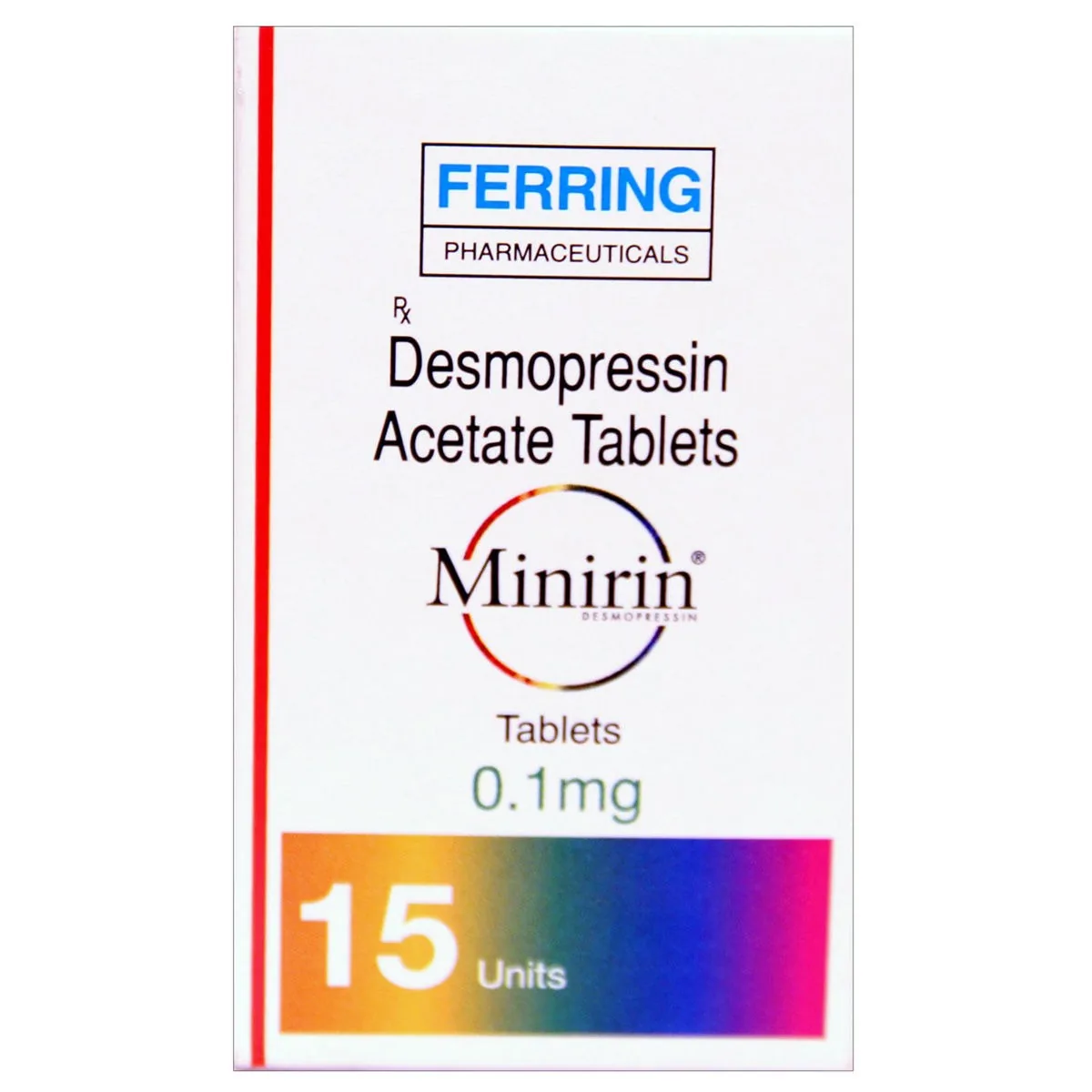
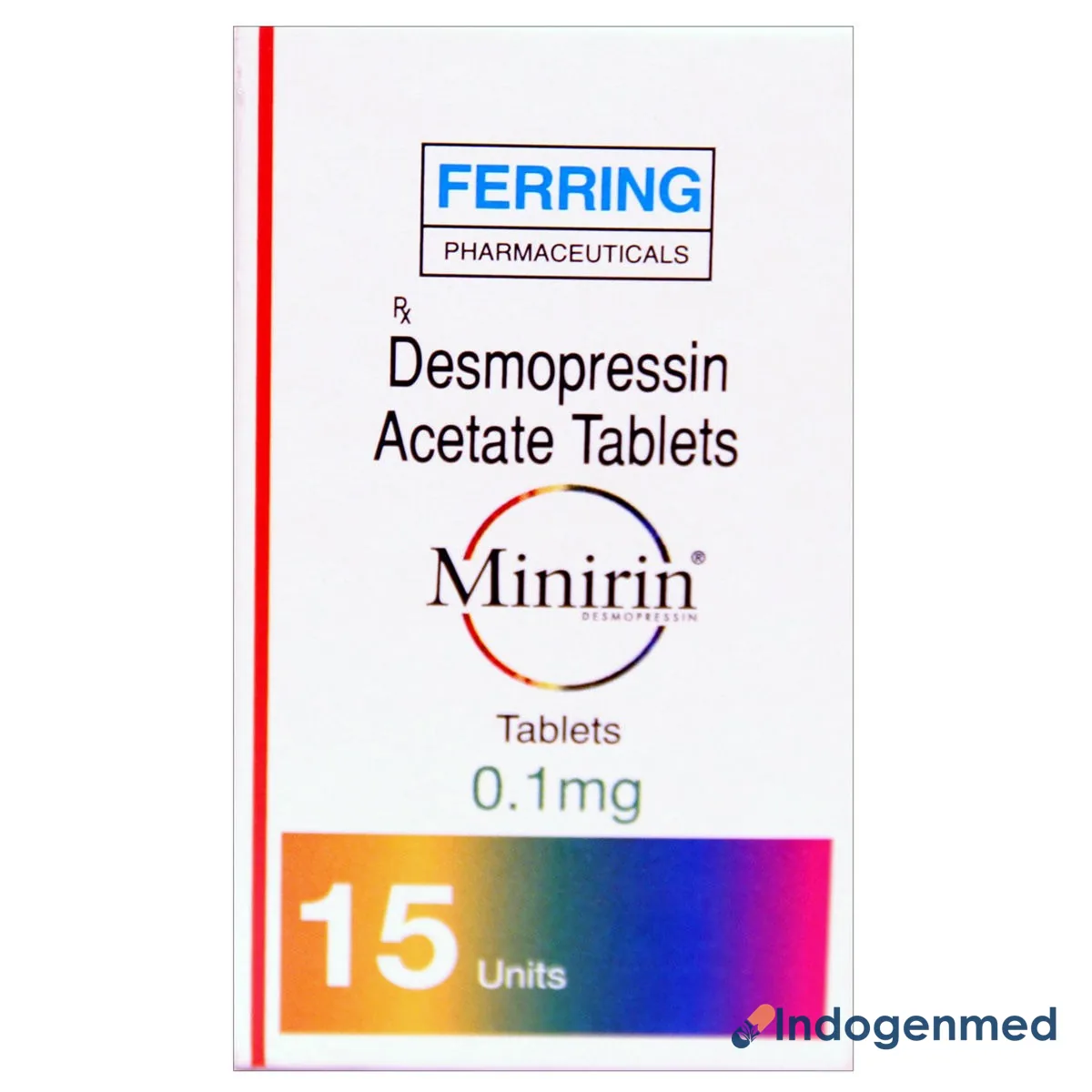
Minirin 0.1 mg tablets contain desmopressin acetate, a synthetic analogue of the naturally occurring antidiuretic hormone arginine vasopressin (ADH). Each tablet delivers 0.1 mg of desmopressin acetate. Minirin is manufactured by Ferring Pharmaceuticals and is used in the management of conditions characterized by insufficient antidiuretic hormone activity, including central diabetes insipidus and primary nocturnal enuresis (bedwetting).
Desmopressin was first synthesized in 1967 as a modified form of vasopressin. The chemical modifications — deamination at the 1-position and substitution of D-arginine for L-arginine at the 8-position — enhance its antidiuretic potency, prolong its duration of action, and significantly reduce the vasopressor activity seen with natural vasopressin. These properties make desmopressin a highly selective antidiuretic agent with a superior safety profile compared to its parent compound.
How Desmopressin Works
Desmopressin exerts its primary pharmacological effect by binding to vasopressin V2 receptors located in the collecting ducts and distal tubules of the kidney. Activation of V2 receptors triggers a cyclic AMP (cAMP)-mediated signalling cascade that promotes the insertion of aquaporin-2 water channel proteins into the luminal membrane of collecting duct cells. This dramatically increases the permeability of the collecting duct to water, allowing large amounts of water to be reabsorbed from the urinary filtrate back into the bloodstream.
The net result is a significant reduction in urine volume and a corresponding increase in urine osmolality (urine becomes more concentrated). In patients with central diabetes insipidus, where the pituitary gland fails to produce adequate endogenous ADH, desmopressin replaces the missing hormone and restores the kidney’s ability to conserve water. In patients with nocturnal enuresis, it reduces urine production during the night, lowering the likelihood of bladder overfilling and bedwetting episodes.
Unlike natural vasopressin, desmopressin has minimal binding affinity for V1a receptors (which mediate vasoconstriction), so it produces antidiuresis without clinically significant elevation of blood pressure or vasoconstriction at therapeutic doses.
Approved Uses and Indications
Minirin 0.1 mg tablets are indicated for:
- Central diabetes insipidus (CDI): To replace deficient antidiuretic hormone production caused by damage or dysfunction of the posterior pituitary or hypothalamus. Causes include pituitary surgery, head trauma, craniopharyngioma, sarcoidosis, and idiopathic CDI. Desmopressin controls the hallmark symptoms of CDI — polyuria (excessive urination, often exceeding 3–10 litres per day) and polydipsia (excessive thirst).
- Primary nocturnal enuresis (bedwetting): In children aged 5 years and older and adults where behavioral and lifestyle interventions have been insufficient. Desmopressin reduces nighttime urine output, decreasing the frequency of bedwetting episodes.
- Nocturia: In adults (particularly men) with excessive nocturnal urine production (nocturnal polyuria) contributing to frequent nighttime awakenings to urinate. Available evidence supports desmopressin for this indication in carefully selected patients.
Dosage and Administration
Dosing must be individualized and titrated under medical supervision:
Central diabetes insipidus:
Starting dose: 0.1 mg (one tablet) two or three times daily. The dose is then adjusted based on urine volume, urine osmolality, and clinical response. Typical maintenance doses range from 0.1 mg to 0.4 mg per dose, administered two or three times daily. The total daily dose is adjusted to achieve the minimum effective dose that controls symptoms.
Primary nocturnal enuresis (children and adults):
Starting dose: 0.2 mg (two Minirin 0.1 mg tablets) taken as a single dose 1 hour before bedtime. The dose may be increased to 0.4 mg if the lower dose does not produce adequate response. The tablets should be taken on an empty stomach or at least 2 hours after eating to maximize absorption and efficacy. Fluid intake must be restricted from 1 hour before the dose until 8 hours afterward to avoid the risk of water intoxication and hyponatremia.
Nocturia in adults:
Dosing is typically 0.1 mg taken 1 hour before bedtime, with fluid restriction from 1 hour before the dose until the following morning. The dose may be cautiously increased to 0.2 mg based on response and tolerability.
Side Effects
Desmopressin is generally well tolerated when used at appropriate doses with proper fluid restriction. Side effects include:
- Headache
- Nausea or abdominal discomfort
- Facial flushing
- Nasal congestion (more common with intranasal formulations)
- Hyponatremia (low blood sodium) — the most clinically important adverse effect; see below
The most serious adverse effect is hyponatremia (low serum sodium), which can occur when desmopressin-induced water retention is not balanced by appropriate fluid restriction. Excess fluid intake during desmopressin therapy leads to dilutional hyponatremia, which can manifest as:
- Headache, confusion, disorientation
- Nausea and vomiting
- Seizures in severe cases
- Loss of consciousness (in extreme cases)
Hyponatremia risk is highest in young children, elderly patients, and those who do not adhere to fluid restriction guidance. Electrolytes should be monitored regularly, especially during initiation and dose titration.
Contraindications
Minirin 0.1 mg tablets should not be used in patients with:
- Known hypersensitivity to desmopressin acetate or any excipient
- Habitual or psychogenic polydipsia (compulsive water drinking)
- Cardiac insufficiency or other conditions requiring treatment with diuretics
- Moderate to severe renal impairment (creatinine clearance below 50 mL/min)
- Hyponatremia (low blood sodium at baseline)
- Syndrome of inappropriate antidiuretic hormone secretion (SIADH)
Drug Interactions
Important interactions with desmopressin include:
- Non-steroidal anti-inflammatory drugs (NSAIDs, e.g., ibuprofen, indomethacin): May potentiate the antidiuretic effect of desmopressin, increasing the risk of hyponatremia and water retention.
- Carbamazepine, chlorpropamide, selective serotonin reuptake inhibitors (SSRIs), and tricyclic antidepressants: These agents may enhance the antidiuretic response to desmopressin, increasing the risk of hyponatremia.
- Loperamide: Has been reported to increase desmopressin blood levels approximately 3-fold; care should be taken if concurrent use is unavoidable.
- Pressor agents (e.g., adrenaline at high doses): May reduce the antidiuretic effect of desmopressin.
- Oxybutynin: May increase the antidiuretic effect when used concurrently, requiring dose adjustment and closer monitoring.
Use in Special Populations
Children: Desmopressin is approved for use in children aged 5 and older for nocturnal enuresis, and at all ages for central diabetes insipidus under medical supervision. Careful fluid restriction guidance must be communicated clearly to parents and caregivers. The risk of hyponatremia in children is significant if fluid restriction is not followed.
Elderly patients: The elderly are at increased risk of hyponatremia due to age-related changes in renal function and fluid regulation. Desmopressin should be used with caution in patients over 65. Baseline serum sodium and electrolytes should be checked before initiating treatment and monitored during therapy. Some guidelines recommend avoiding desmopressin in patients over 65 for nocturnal enuresis due to hyponatremia risk.
Pregnancy: Animal studies have not shown teratogenic effects, but controlled studies in pregnant women are limited. Desmopressin is used during pregnancy for central diabetes insipidus when the clinical need is established, under careful endocrinological supervision.
Breastfeeding: Desmopressin passes into breast milk in small amounts. The oral bioavailability of desmopressin in infants is low, and no adverse effects in nursing infants have been reported at standard maternal therapeutic doses. Use during breastfeeding is generally considered acceptable under medical supervision.
Renal impairment: Desmopressin is contraindicated in moderate to severe renal impairment (eGFR below 50 mL/min/1.73m²) due to the risk of fluid retention and hyponatremia in this population.
Monitoring Parameters
Patients receiving Minirin 0.1 mg should be monitored for:
- Serum sodium and plasma osmolality — particularly during initiation and dose adjustment
- Urine output and urine osmolality — to assess treatment response in CDI
- Blood pressure and fluid balance
- Signs and symptoms of hyponatremia (headache, confusion, nausea, lethargy, seizures)
- Renal function (serum creatinine and eGFR) prior to and during treatment
Patient Guidance on Fluid Restriction
Fluid restriction is a mandatory safety measure when using desmopressin for nocturnal enuresis or nocturia. Patients and caregivers should be clearly counselled to:
- Limit fluid intake starting 1 hour before the bedtime dose
- Avoid drinking fluids until 8 hours after the dose (until morning)
- Not drink large quantities of fluid throughout the evening before taking the tablet
- Contact their healthcare provider immediately if signs of water retention or low sodium (severe headache, vomiting, confusion) develop
Storage
Store Minirin 0.1 mg tablets below 25°C. Protect from moisture and light. Keep in the original blister or container. Store out of reach of children. Do not use after the expiry date shown on the packaging.
References
- U.S. National Library of Medicine, DailyMed. Desmopressin acetate tablet label. Available at: https://dailymed.nlm.nih.gov/dailymed/
- MedlinePlus, U.S. National Library of Medicine. Desmopressin. Available at: https://medlineplus.gov/druginfo/meds/a608010.html
- Mayo Clinic. Desmopressin (Oral Route) — Description and Brand Names. Available at: https://www.mayoclinic.org/
- National Institute of Diabetes and Digestive and Kidney Diseases (NIDDK). Diabetes Insipidus. Available at: https://www.niddk.nih.gov/

Reviews
There are no reviews yet.