Description
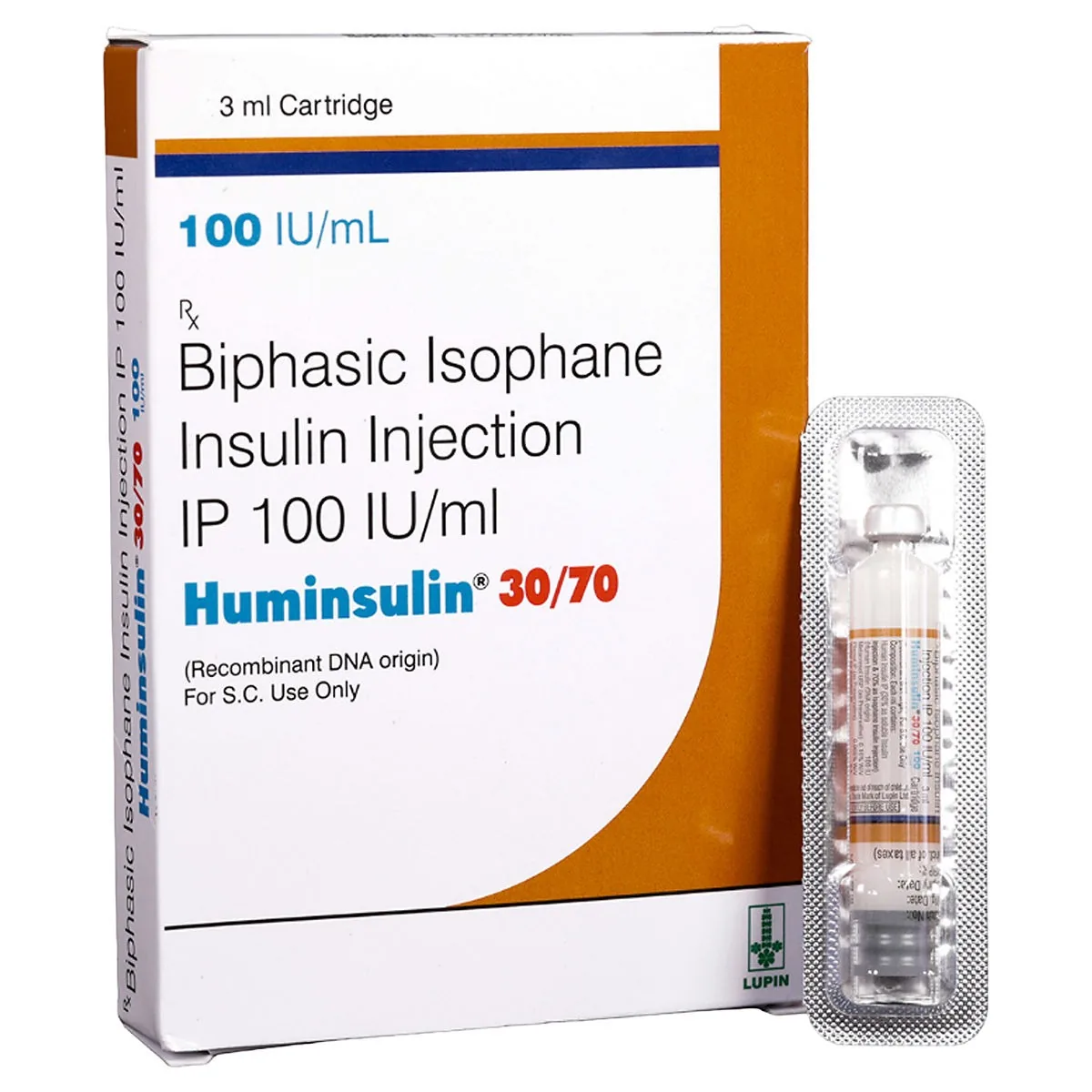
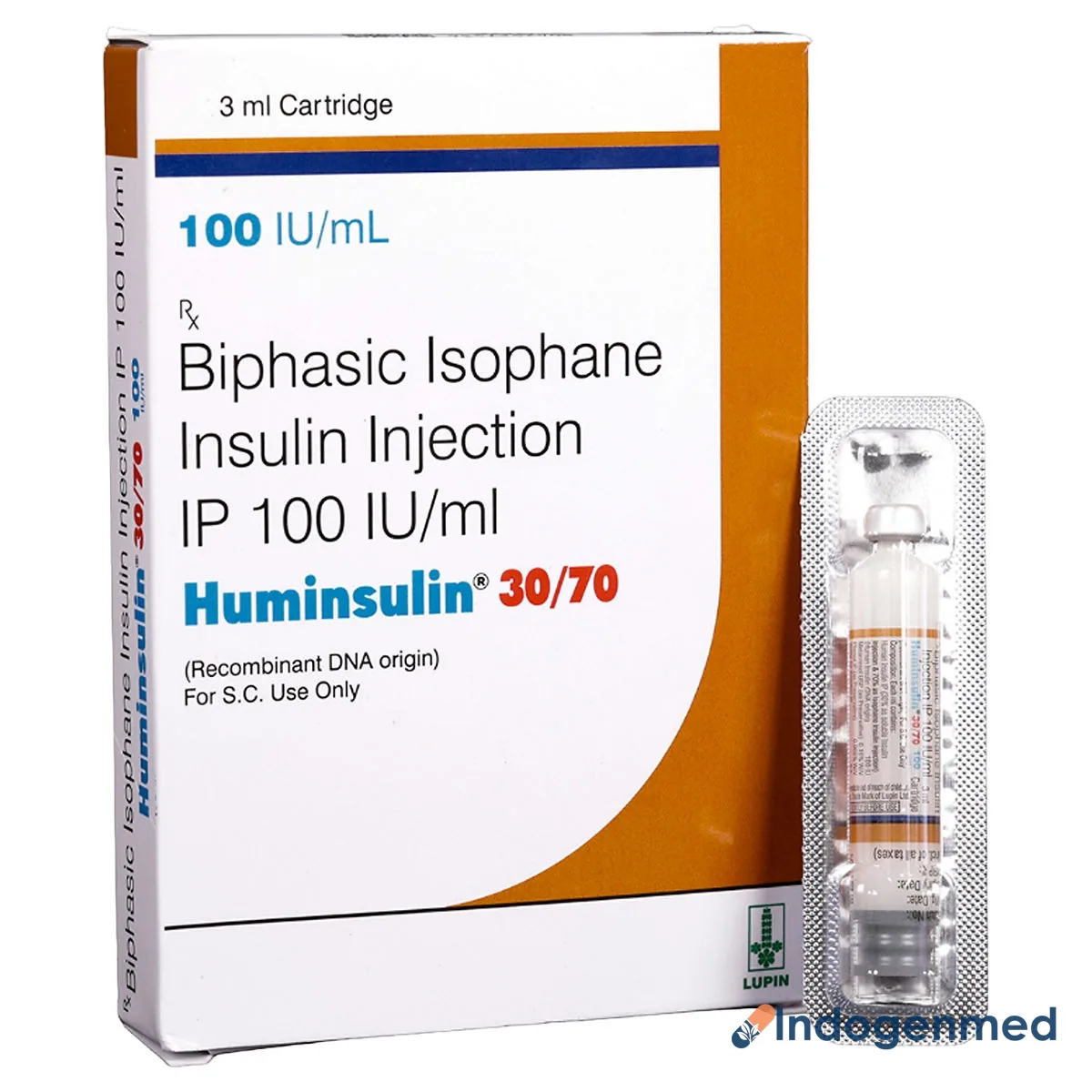
Huminsulin 70/30 100 IU
Huminsulin 70/30 100 IU is a premixed human insulin preparation combining 70% isophane (NPH) insulin and 30% soluble (regular) human insulin, available at a concentration of 100 IU/mL. This biphasic formulation provides both rapid-onset coverage for meals and prolonged basal insulin action for background glucose control, making it suitable for patients with type 1 or type 2 diabetes who require a simplified twice-daily insulin regimen.
Composition
| Component | Proportion / Strength |
|---|---|
| Soluble Human Insulin (Regular) | 30% (30 IU/mL) |
| Isophane Human Insulin (NPH) | 70% (70 IU/mL) |
| Total Concentration | 100 IU/mL |
About the Manufacturer
Huminsulin is manufactured by Eli Lilly and Company, a global biopharmaceutical company headquartered in Indianapolis, USA. Eli Lilly has been a leader in insulin research and development since the 1920s and distributes its insulin products to patients worldwide.
Mechanism of Action
Huminsulin 70/30 provides a dual-phase insulin effect. The 30% regular (soluble) fraction has a relatively rapid onset (30–60 minutes), providing post-meal glucose control for 6–8 hours. The 70% NPH fraction has a slower onset (1–4 hours) and prolonged action (up to 18–24 hours), covering the basal insulin requirement between meals and overnight. Together, these phases mimic the physiological pattern of insulin secretion in a simplified twice-daily injection.
Indications
- Type 1 diabetes mellitus (requires insulin therapy)
- Type 2 diabetes mellitus in patients who have not achieved adequate glycaemic control with oral antidiabetic agents alone or who require insulin
Dosage & Administration
- Route: Subcutaneous injection only; not for intravenous or intramuscular use
- Inject 30 minutes before a meal (usually breakfast and dinner)
- Rotate injection sites systematically (abdomen, thigh, upper arm) to prevent lipodystrophy
- Resuspend the vial or cartridge gently by rolling 10 times and inverting 10 times before use; do not shake
- Inspect the suspension before use: should appear uniformly cloudy after mixing; do not use if particulate matter or discolouration is present
- Doses are individually prescribed; typical starting doses, titration schedules, and target blood glucose levels must be set by a qualified healthcare professional
Special Populations
- Renal impairment: Insulin requirements may be reduced due to decreased renal insulin clearance; monitor blood glucose and adjust dose
- Hepatic impairment: May alter insulin metabolism; monitor closely
- Elderly: More susceptible to hypoglycaemia; use with caution and monitor more frequently
- Children: May be used under specialist supervision; dose requirements differ from adults
- Pregnancy: Insulin requirements change during pregnancy; close monitoring and dose adjustment are essential
Precautions
- Hypoglycaemia: The most common and potentially dangerous adverse effect; ensure patients and carers know the symptoms (sweating, shaking, palpitations, confusion) and treatment (fast-acting carbohydrate)
- Do not transfer between insulin types, brands, or strengths without medical supervision, as dose adjustments may be required
- Inspect injection sites regularly for lipodystrophy or localised amyloidosis; rotate sites
- Exercise, alcohol intake, and illness all affect insulin requirements; adjust accordingly
- Keep insulin away from extreme heat, cold, and direct sunlight; never freeze insulin
Contraindications
- Hypoglycaemia (do not administer during an episode of low blood glucose)
- Hypersensitivity to human insulin or any excipient in the formulation
Side Effects
- Very common: Hypoglycaemia (low blood sugar)
- Common: Local injection site reactions (redness, swelling, bruising), lipodystrophy
- Less common: Peripheral oedema (at initiation of insulin therapy), weight gain
- Rare: Severe hypoglycaemia with loss of consciousness, insulin allergy (generalised urticaria, angioedema, anaphylaxis)
Drug Interactions
- Oral antidiabetic drugs, GLP-1 agonists: Additive glucose-lowering effect; monitor for hypoglycaemia
- Beta-blockers: May mask tachycardia of hypoglycaemia and prolong hypoglycaemic episodes; use with caution
- Corticosteroids, thiazide diuretics, danazol, sympathomimetics: May increase insulin requirements
- Alcohol: May potentiate or prolong hypoglycaemia; advise patients to monitor carefully with alcohol intake
- Salicylates (high-dose aspirin), MAOIs: May enhance insulin’s glucose-lowering effect
Storage
Unopened vials/cartridges: store in a refrigerator at 2–8°C; do not freeze. In-use vials/cartridges: may be stored at room temperature (up to 25°C) for up to 28 days; keep away from direct heat and light. Keep out of reach of children. Do not use after the expiry date printed on the label.
Related Products
- Humog 150 IU Injection – human menopausal gonadotrophin (HMG) for infertility
- Glynase XL 5 Mg Tablets – glipizide for type 2 diabetes (oral)
- Glycomet SR 500 Mg Tablets – metformin sustained-release for type 2 diabetes
Frequently Asked Questions
- What is Huminsulin 70/30 used for?
- Huminsulin 70/30 is a premixed human insulin used to control blood sugar in people with type 1 or type 2 diabetes. The 70/30 ratio provides both mealtime and background insulin coverage in a single injection, usually given twice daily before breakfast and dinner.
- Why must Huminsulin 70/30 be resuspended before use?
- The NPH component settles over time, causing separation. The vial or cartridge must be gently rolled 10 times and inverted 10 times until the suspension appears uniformly cloudy. Never shake it, as this creates bubbles. Failure to mix properly may result in an incorrect dose of either component.
- When should I inject Huminsulin 70/30?
- Huminsulin 70/30 should be injected 30 minutes before a meal, typically breakfast and dinner. The 30% regular component begins working within 30–60 minutes to manage meal-related glucose rise, while the 70% NPH component gradually covers background insulin needs.
- What are the signs of low blood sugar (hypoglycaemia)?
- Symptoms include sweating, shaking, palpitations, dizziness, weakness, hunger, and confusion. If you experience these, take a fast-acting sugar source (glucose tablets, fruit juice, or sugary drink) immediately and check your blood glucose. Seek medical help if symptoms are severe or if you lose consciousness.
- Can I mix Huminsulin 70/30 with other insulins?
- Huminsulin 70/30 should not be mixed with other insulin preparations unless specifically directed by your doctor. Mixing different insulin types can alter the onset and duration of action unpredictably, increasing the risk of incorrect dosing.
References
- NHS – Isophane (NPH) Human Insulin
- MedlinePlus – Insulin Human
- FDA – Humulin 70/30 (Human Insulin) Prescribing Information
- EMA – Humulin (Human Insulin) EPAR
Disclaimer: This page is for informational purposes only and does not constitute medical advice. Insulin therapy must be prescribed and adjusted by a qualified healthcare professional. Incorrect use of insulin can cause hypoglycaemia, which may be life-threatening. Always follow your doctor’s specific dosing and monitoring instructions.





Reviews
There are no reviews yet.