Description
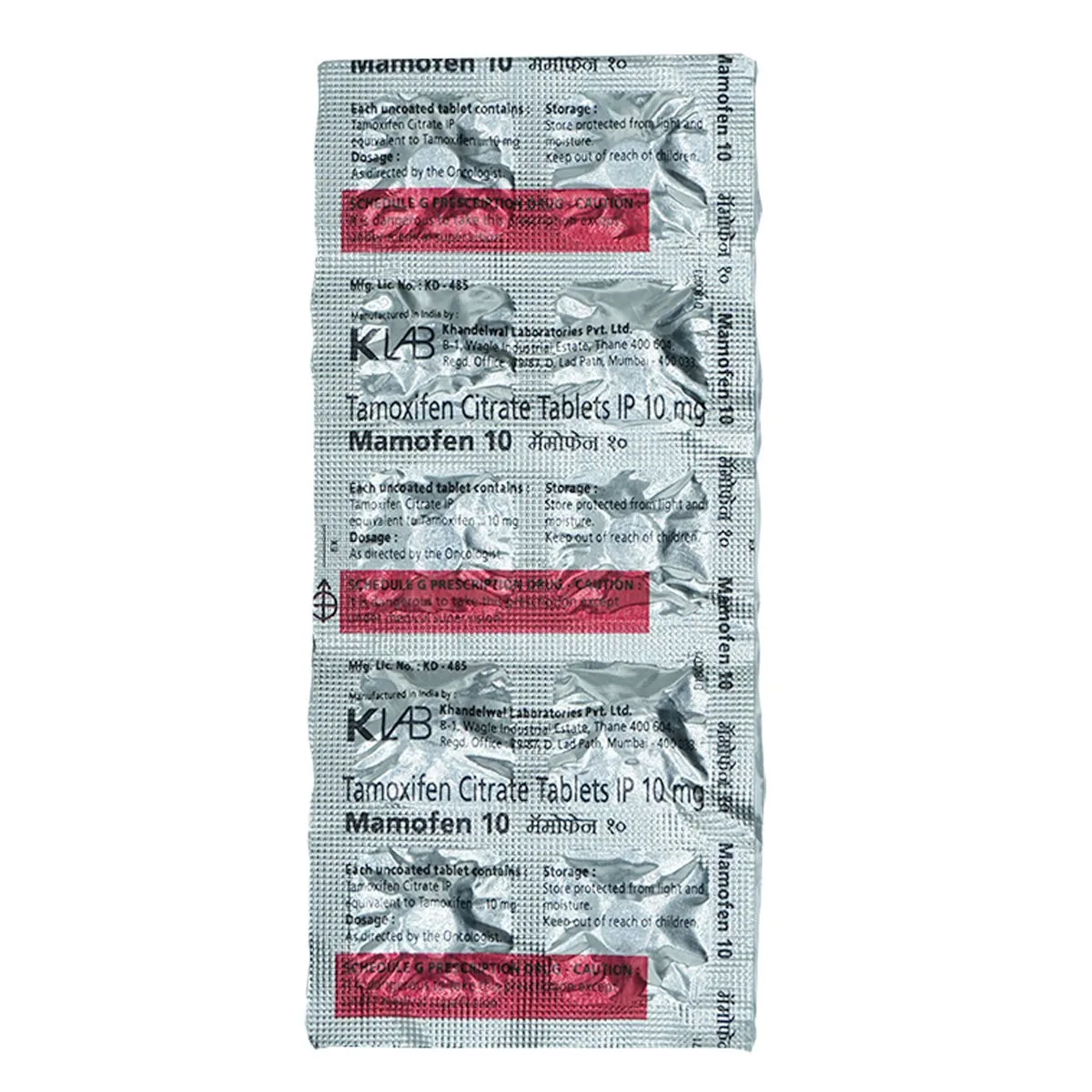
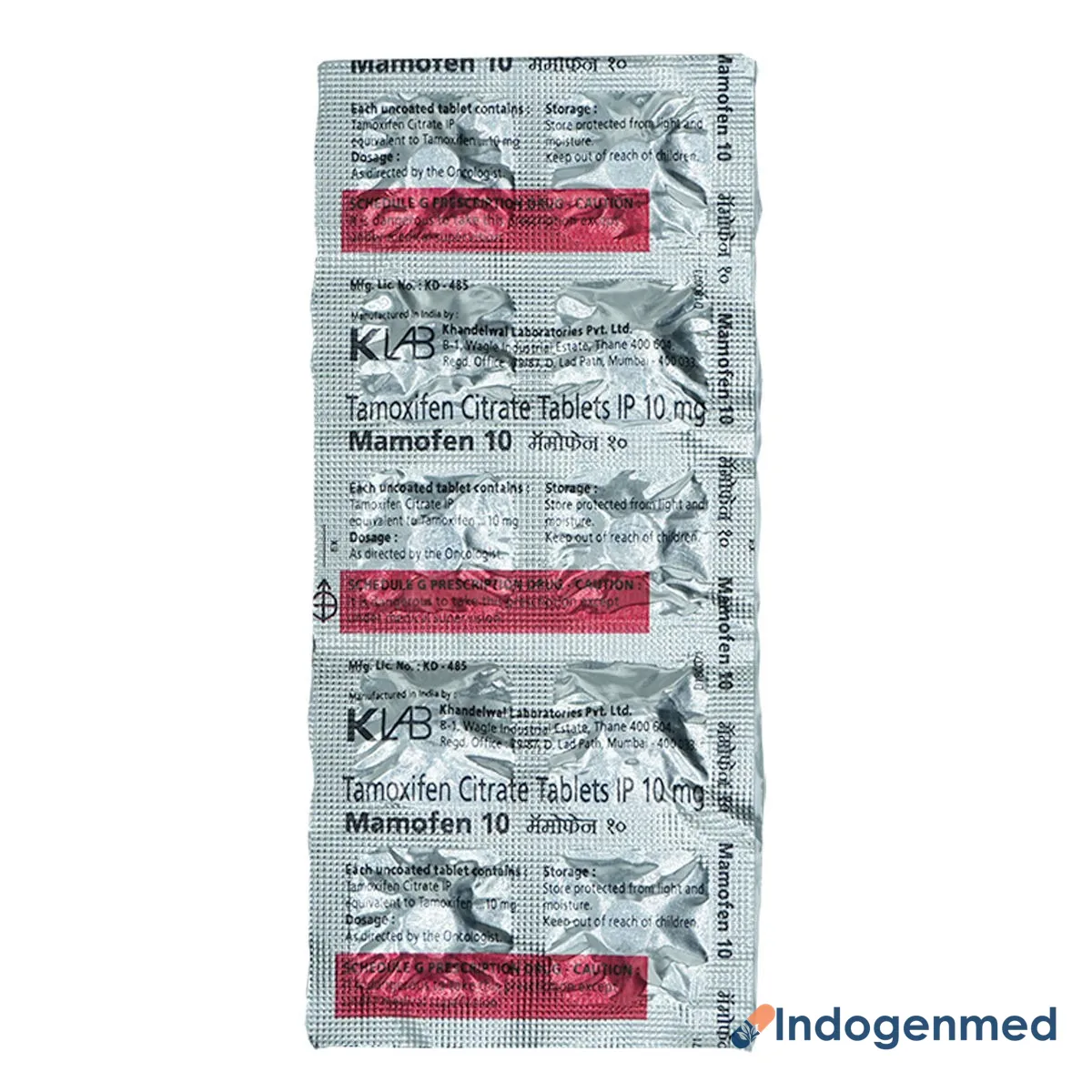
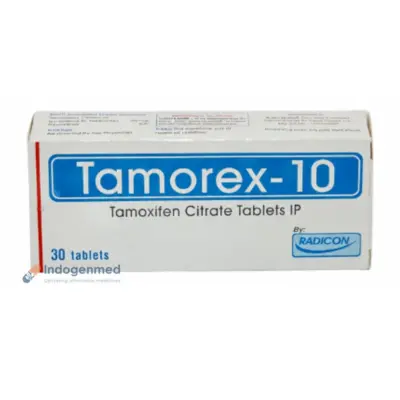
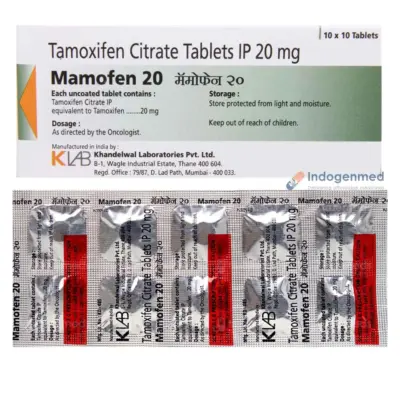
What is Mamofen 10 mg?
Mamofen 10 mg tablets contain tamoxifen citrate equivalent to 10 mg of tamoxifen base. Tamoxifen is a selective estrogen receptor modulator (SERM) with anti-estrogenic properties in breast tissue, widely used in the treatment and prevention of hormone receptor-positive breast cancer. Manufactured by Cipla Ltd., Mamofen is one of the most established tamoxifen products available internationally.
Tamoxifen has been in clinical use for over five decades and remains a cornerstone of endocrine therapy for breast cancer. It is on the World Health Organization’s List of Essential Medicines, reflecting its critical role in cancer treatment globally. The 10 mg strength is used either as a standard dose given twice daily or as part of dose-adjusted regimens determined by the treating oncologist.
How Tamoxifen Works
Tamoxifen is a prodrug that is metabolized in the liver to active compounds, primarily 4-hydroxytamoxifen and endoxifen. These metabolites bind competitively to estrogen receptors (ER) in breast tissue, blocking estrogen from activating estrogen receptor-positive (ER+) tumor cells. By occupying the estrogen receptor without fully activating it, tamoxifen acts as an estrogen antagonist in breast tissue, effectively starving hormone-dependent tumor cells of the estrogen signal needed for their growth and proliferation.
Importantly, tamoxifen does not simply block all estrogen effects throughout the body. It acts as an estrogen agonist (mimicking estrogen) in certain tissues such as bone and the endometrium. This tissue-selective activity is what defines it as a SERM. The agonist activity in bone is beneficial, as it helps maintain bone density in postmenopausal women. However, the agonist activity in the endometrium is a recognized risk factor for endometrial proliferation and, in rare cases, endometrial cancer with long-term use.
Approved Uses and Indications
Mamofen 10 mg tablets are indicated for:
- Adjuvant therapy for early breast cancer: Following surgery, radiation, or chemotherapy in patients with ER-positive early breast cancer to reduce the risk of recurrence.
- Metastatic breast cancer: As first-line or subsequent endocrine therapy in premenopausal and postmenopausal women with ER-positive metastatic disease.
- Breast cancer risk reduction: In women at high risk for breast cancer to reduce the incidence of invasive breast cancer.
- Ductal carcinoma in situ (DCIS): Following surgery and radiation to reduce the risk of invasive breast cancer in women with DCIS.
- Male breast cancer: Tamoxifen is also used in men with hormone receptor-positive breast cancer.
Dosage and Administration
For adjuvant treatment of breast cancer, the standard tamoxifen dose is 20 mg daily, which may be administered as two Mamofen 10 mg tablets taken once daily or as one tablet taken twice daily. The treating oncologist determines the optimal dosing schedule based on the patient’s specific clinical situation, tolerability, and concurrent treatments.
Standard adjuvant therapy is recommended for 5 to 10 years following primary treatment for early-stage breast cancer. Tablets should be swallowed whole with water and may be taken with or without food. It is advisable to take tamoxifen at the same time each day to maintain consistent blood levels.
If a dose is missed, it should be taken as soon as possible unless it is almost time for the next scheduled dose, in which case the missed dose should be skipped. Doses should not be doubled.
Side Effects
Tamoxifen is generally well tolerated, but a range of side effects may occur. Common side effects include:
- Hot flashes and menopausal symptoms
- Vaginal dryness, discharge, or irritation
- Nausea or gastrointestinal discomfort
- Irregular menstrual periods or amenorrhea
- Fluid retention and mild weight gain
- Mood changes, fatigue, or depression
- Hair thinning
Serious adverse effects that require prompt medical attention include:
- Endometrial cancer: Long-term use is associated with an increased risk of endometrial cancer; any abnormal vaginal bleeding should be evaluated promptly.
- Thromboembolic events: Increased risk of deep vein thrombosis (DVT) and pulmonary embolism (PE), particularly during and after surgery or periods of immobility.
- Stroke: A modestly elevated risk of stroke has been reported in some studies.
- Ocular effects: Rare cases of cataracts, corneal changes, and retinopathy have been reported, particularly with long-term use.
- Hepatotoxicity: Rare; liver function tests should be monitored if hepatic symptoms develop.
Contraindications
Mamofen 10 mg should not be used in patients with:
- Known hypersensitivity to tamoxifen or any component of the formulation
- A personal history of deep vein thrombosis or pulmonary embolism (for preventive use — may still be used in treatment settings with careful monitoring)
- Concurrent use of coumarin-type anticoagulants where INR management is not feasible
- Pregnancy (tamoxifen is teratogenic)
Drug Interactions
Clinically significant drug interactions with tamoxifen include:
- CYP2D6 inhibitors (e.g., paroxetine, fluoxetine, bupropion): These antidepressants significantly reduce conversion of tamoxifen to its active metabolite endoxifen, potentially reducing efficacy. Alternative antidepressants with less CYP2D6 inhibition (e.g., venlafaxine, citalopram) are preferred when antidepressant therapy is needed during tamoxifen treatment.
- Warfarin and coumarin anticoagulants: Tamoxifen significantly potentiates the anticoagulant effect of warfarin, increasing bleeding risk. Close INR monitoring is mandatory if concurrent use is unavoidable.
- Aromatase inhibitors: Combining tamoxifen with aromatase inhibitors does not improve outcomes and may reduce efficacy; they are generally used sequentially rather than simultaneously.
- Rifampicin and other CYP3A4 inducers: May reduce plasma levels of tamoxifen and its metabolites.
- Cytotoxic chemotherapy agents: Concurrent chemotherapy may increase the risk of thromboembolic events.
Use in Special Populations
Pregnancy: Tamoxifen is contraindicated in pregnancy. It has caused fetal harm in animal studies and may cause birth defects. Women of childbearing potential must use effective non-hormonal contraception during treatment and for at least 2 months after stopping tamoxifen.
Breastfeeding: It is not known whether tamoxifen is excreted in human breast milk. Due to the potential for serious adverse effects in nursing infants, breastfeeding should be discontinued during treatment.
Premenopausal women: Tamoxifen is effective in both pre- and postmenopausal women with ER-positive breast cancer. In premenopausal women, it is typically the first-choice endocrine agent, sometimes combined with ovarian suppression in high-risk patients.
Renal or hepatic impairment: No dose adjustment is generally required for mild-to-moderate impairment. Severe hepatic impairment may affect tamoxifen metabolism; use with caution.
Monitoring During Treatment
Patients receiving tamoxifen should be monitored for:
- Gynecological symptoms — any abnormal uterine bleeding warrants immediate investigation
- Signs of thromboembolic events — leg swelling, chest pain, sudden shortness of breath
- Visual changes — annual eye examination recommended for long-term users
- Bone density in postmenopausal women on long-term therapy
- Liver function if hepatic symptoms develop
Storage
Store Mamofen 10 mg tablets at room temperature, below 30°C. Keep away from moisture, heat, and direct light. Store in the original packaging. Keep out of reach of children. Do not use after the expiry date printed on the pack.
References
- U.S. National Library of Medicine, DailyMed. Tamoxifen citrate tablet label (10 mg / 20 mg). Available at: https://dailymed.nlm.nih.gov/dailymed/
- MedlinePlus, U.S. National Library of Medicine. Tamoxifen. Available at: https://medlineplus.gov/druginfo/meds/a682414.html
- Mayo Clinic. Tamoxifen (Oral Route) — Description and Brand Names. Available at: https://www.mayoclinic.org/
- National Cancer Institute. Tamoxifen Citrate. Available at: https://www.cancer.gov/




Reviews
There are no reviews yet.