Description
What is Mamofen 20 mg?
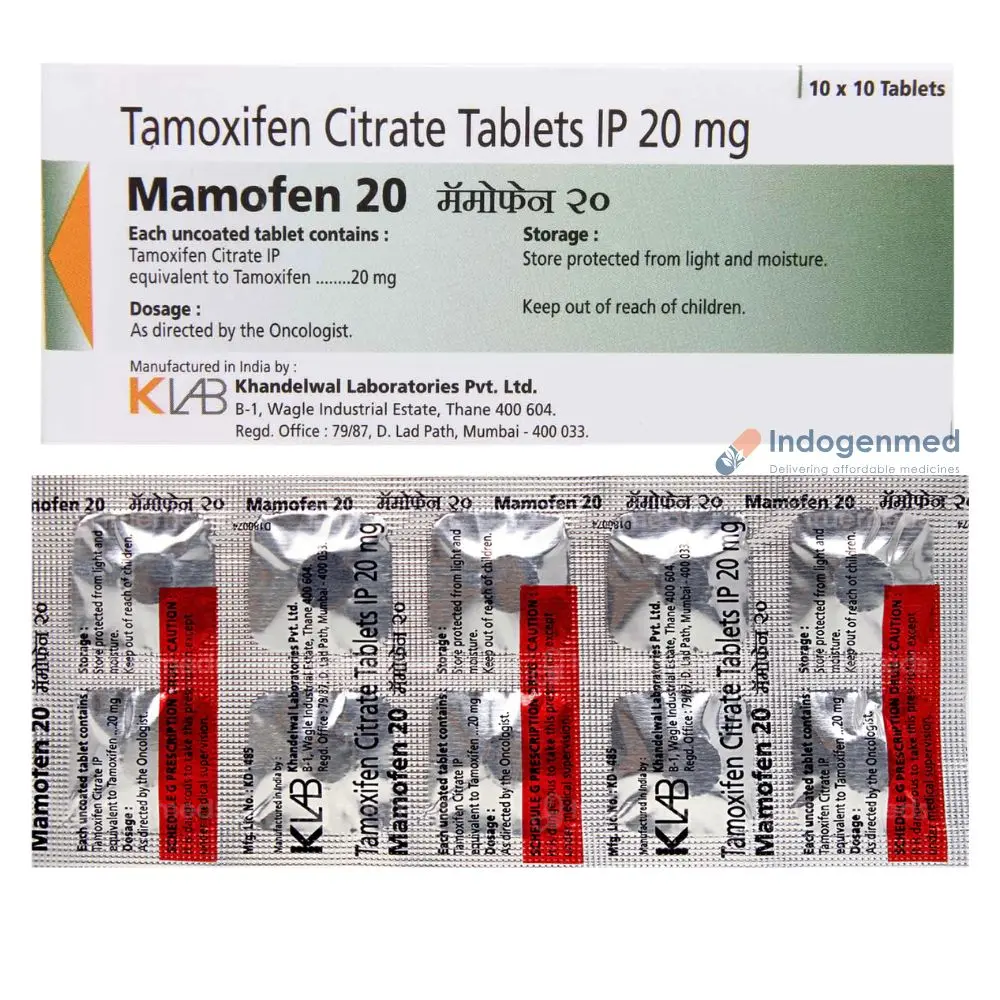
Mamofen 20 mg tablets contain tamoxifen citrate equivalent to 20 mg of tamoxifen base per tablet. Tamoxifen is a selective estrogen receptor modulator (SERM) and one of the most extensively studied and widely prescribed endocrine therapies for hormone receptor-positive breast cancer. Manufactured by Cipla Ltd., Mamofen 20 mg represents the most commonly used single-tablet maintenance dose for adjuvant and metastatic breast cancer treatment.
Tamoxifen has been a cornerstone of breast cancer management since the 1970s and continues to be listed on the World Health Organization’s List of Essential Medicines. The 20 mg daily dose is the established standard for adjuvant therapy, risk reduction, and treatment of both early-stage and metastatic ER-positive breast cancer in pre- and postmenopausal women, as well as in men.
How Tamoxifen Works
Tamoxifen is a prodrug metabolized primarily in the liver via the cytochrome P450 enzyme system, particularly CYP2D6, into its principal active metabolites: 4-hydroxytamoxifen and endoxifen. These metabolites have significantly higher affinity for estrogen receptors than the parent compound and are responsible for the majority of tamoxifen’s clinical activity.
In breast tissue, tamoxifen metabolites bind competitively to estrogen receptors (ERα and ERβ), preventing endogenous estrogen from binding and activating estrogen-dependent gene transcription. This blocks the estrogen-driven proliferative signals that sustain the growth of ER-positive breast cancer cells, leading to tumor growth arrest and, in some cases, tumor regression.
As a SERM, tamoxifen’s effects are tissue-selective. While acting as an estrogen antagonist in breast tissue, it functions as an agonist in bone (preserving bone mineral density) and the endometrium (stimulating endometrial proliferation — a recognized long-term risk). This dual behavior distinguishes tamoxifen from pure estrogen antagonists such as fulvestrant.
Approved Uses and Indications
Mamofen 20 mg tablets are indicated for the following conditions:
- Adjuvant treatment of early-stage ER-positive breast cancer: Following surgery, to reduce the risk of cancer recurrence in both pre- and postmenopausal women. Standard treatment duration is 5 to 10 years.
- Metastatic ER-positive breast cancer: First-line or later-line endocrine therapy in women and men with hormone receptor-positive, HER2-negative metastatic disease.
- Reduction of breast cancer risk: In women identified as high-risk for developing breast cancer, based on validated risk models.
- Ductal carcinoma in situ (DCIS): Following lumpectomy and radiation to reduce the risk of recurrence and contralateral breast cancer.
- Male breast cancer: As endocrine therapy in men with hormone receptor-positive breast cancer.
Dosage and Administration
The standard adult dose of tamoxifen is 20 mg per day. With Mamofen 20 mg, this is administered as one tablet taken once daily. The tablet should be swallowed whole with water and can be taken with or without food. It is recommended to take tamoxifen at the same time each day to ensure consistent drug levels in the bloodstream.
For adjuvant therapy in early breast cancer, treatment is typically continued for 5 years as standard therapy. Extended treatment to 10 years may be recommended for certain patients, particularly those with high-risk disease features, based on shared decision-making with the oncologist. Patients who switch to an aromatase inhibitor after the initial years of tamoxifen typically follow their oncologist’s guidance on timing and sequencing.
If a dose is missed, it should be taken as soon as remembered unless it is close to the time of the next scheduled dose, in which case the missed dose should be omitted. Doses should never be doubled to compensate for a missed dose.
Side Effects
Tamoxifen is generally well tolerated during long-term use. The most frequently reported side effects are related to its anti-estrogenic effects on hormonal balance:
- Hot flashes and night sweats (most common)
- Vaginal dryness, discharge, or itching
- Irregular menstrual periods or cessation of periods in premenopausal women
- Nausea, mild gastrointestinal discomfort
- Mood changes, including depression and irritability
- Fatigue and reduced libido
- Fluid retention and weight changes
Serious adverse effects that require medical attention include:
- Endometrial effects: Tamoxifen’s agonist activity in the endometrium increases the risk of endometrial hyperplasia, polyps, and endometrial carcinoma with long-term use. Any abnormal vaginal bleeding, spotting, or pelvic pain must be evaluated promptly by a gynecologist.
- Thromboembolic disease: Increased risk of deep vein thrombosis (DVT) and pulmonary embolism (PE). Risk is elevated during the perioperative period. Symptoms such as leg swelling, chest pain, or sudden breathlessness should be assessed urgently.
- Stroke: A small increased risk of ischemic stroke has been observed.
- Visual disturbances: Cataracts and, rarely, retinopathy or corneal changes have been reported with long-term use. Regular ophthalmic review is recommended.
- Liver effects: Rare cases of hepatotoxicity and hepatic steatosis have been reported.
Contraindications
Mamofen 20 mg should not be used in:
- Patients with known hypersensitivity to tamoxifen or any excipient in the formulation
- Pregnant women — tamoxifen is a known teratogen
- Patients with a history of thromboembolic events when used for risk reduction in healthy women (the benefit-risk balance differs in active cancer treatment)
- Patients on concurrent coumarin anticoagulant therapy unless close anticoagulation monitoring is feasible
Drug Interactions
Tamoxifen has several clinically important drug interactions:
- Strong CYP2D6 inhibitors (paroxetine, fluoxetine, bupropion): These agents markedly reduce the formation of endoxifen, tamoxifen’s most potent active metabolite, potentially compromising the efficacy of tamoxifen therapy. When antidepressant therapy is required, agents with minimal CYP2D6 inhibitory activity (e.g., venlafaxine, escitalopram) are preferred.
- Warfarin: Tamoxifen substantially increases the anticoagulant effect of warfarin. If concurrent use is necessary, INR should be monitored very closely and warfarin doses adjusted accordingly.
- Aromatase inhibitors (anastrozole, letrozole, exemestane): These should not be used simultaneously with tamoxifen. Sequential use — tamoxifen followed by an aromatase inhibitor — is established practice, particularly for postmenopausal women.
- CYP3A4 inducers (rifampicin, carbamazepine, St. John’s Wort): These can reduce plasma tamoxifen concentrations and reduce efficacy.
Use in Special Populations
Pregnancy: Tamoxifen is contraindicated. It is teratogenic based on animal data and clinical case reports. Women of childbearing age must use reliable non-hormonal contraception during treatment and for at least 2 months after completing therapy.
Breastfeeding: Tamoxifen should not be used while breastfeeding due to the potential for harm to the nursing infant.
Premenopausal women: Tamoxifen is effective and standard treatment in premenopausal women. The addition of ovarian suppression (by GnRH agonists such as goserelin) to tamoxifen may further reduce recurrence risk in selected high-risk premenopausal patients.
Postmenopausal women: Aromatase inhibitors are generally preferred over tamoxifen in postmenopausal women due to superior efficacy, though tamoxifen remains appropriate in patients who cannot tolerate aromatase inhibitors.
Hepatic impairment: No dose adjustment is generally required for mild-to-moderate impairment, but caution is warranted as tamoxifen is extensively metabolized by the liver.
Monitoring During Treatment
Recommended monitoring during tamoxifen therapy includes:
- Annual gynecological review with pelvic ultrasound to monitor endometrial thickness; biopsy if symptomatic or if thickness exceeds recommended thresholds
- Prompt evaluation of any abnormal vaginal bleeding
- Monitoring for signs of DVT/PE — lower limb swelling, chest pain, dyspnea
- Annual ophthalmological review for patients on long-term therapy
- Liver function tests if hepatic symptoms develop
- Bone density assessment in patients with additional risk factors for osteoporosis
Storage
Store Mamofen 20 mg tablets at room temperature, below 30°C. Protect from moisture, heat, and direct sunlight. Keep in the original pack until use. Store out of reach of children. Do not use the product after the expiry date shown on the packaging.
References
- U.S. National Library of Medicine, DailyMed. Tamoxifen citrate tablet label (10 mg / 20 mg). Available at: https://dailymed.nlm.nih.gov/dailymed/
- MedlinePlus, U.S. National Library of Medicine. Tamoxifen. Available at: https://medlineplus.gov/druginfo/meds/a682414.html
- Mayo Clinic. Tamoxifen (Oral Route) — Before Using. Available at: https://www.mayoclinic.org/
- National Cancer Institute. Tamoxifen Citrate. Available at: https://www.cancer.gov/








Reviews
There are no reviews yet.