
Description
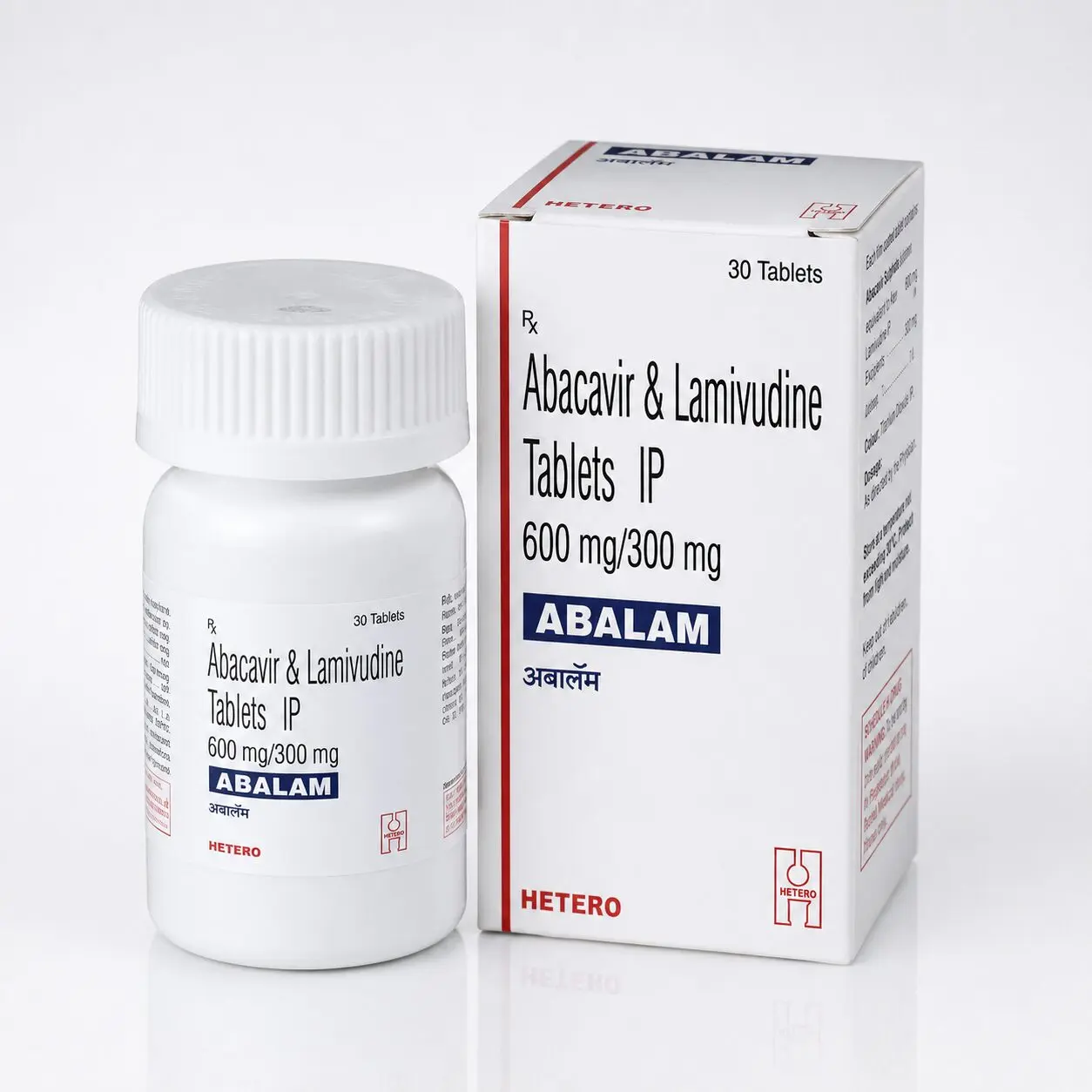
Comprehensive Guide to Abalam Tablet (Abacavir and Lamivudine)
Abalam Tablet is a prescription antiretroviral medicine manufactured by Hetero Healthcare Ltd. It contains two active ingredients:
-
Abacavir Sulfate: Equivalent to 600 mg of Abacavir
-
Lamivudine: 300 mg
Abalam is prescribed under specialist medical supervision to treat Human Immunodeficiency Virus type 1 (HIV-1) in adult and adolescent patients. It serves as a dual nucleoside reverse transcriptase inhibitor (NRTI) backbone therapy.
It must always be combined with at least one other antiretroviral medicine to lower viral load, support immune health, and reduce the risk of infections.
Quick Product Fact Sheet
| Feature | Details |
| Brand Name | Abalam Tablet |
| Active Ingredients | Abacavir (600 mg) + Lamivudine (300 mg) |
| Manufacturer | Hetero Healthcare Ltd. |
| Therapeutic Class | Antiretroviral (Anti-HIV) |
| Pharmacological Class | Nucleoside Reverse Transcriptase Inhibitors (NRTIs) |
| Form | Film-coated oral tablet |
| Standard Dose | One tablet once daily |
| Mandatory Pre-Test | HLA-B*5701 genetic blood screening |
How Abalam Tablets Works
HIV is a virus that targets and weakens the immune system, especially CD4+ T-cells. Inside a human cell, HIV uses an enzyme called reverse transcriptase to convert its viral RNA into DNA so it can multiply.
Both abacavir and lamivudine act as faulty building blocks for this process:
-
Once inside the body, the drugs are converted into active forms that mimic natural genetic materials.
-
When the virus tries to use these drugs to build its viral DNA, the drugs block the reverse transcriptase enzyme.
-
Because these false building blocks lack the chemical link needed to continue the chain, viral DNA production stops.
-
This halts viral replication and helps protect healthy immune cells.
Uses Of Abalam Abacavir & Lamivudine Tablet
Abalam Tablet is indicated for:
-
HIV-1 Infection: Used as part of combination antiretroviral therapy (cART) in adults and pediatric patients weighing at least 25 kg (55 lbs).
-
It is always taken alongside another class of anti-HIV medicine, such as an integrase inhibitor or a protease inhibitor.
Note: Abalam does not cure HIV, but daily use keeps the virus suppressed to undetectable levels in the blood.
Mandatory Safety Test: HLA-B*5701 Screening
Before taking your first dose of Abalam, your doctor must perform a genetic blood test for the HLA-B*5701 allele.
-
Why it is necessary: People who carry the HLA-B*5701 gene have a high risk of developing a severe, potentially life-threatening allergic reaction to abacavir.
-
If positive: You must not take Abalam or any medicine containing abacavir. Your doctor will choose a different treatment.
-
If negative: You can safely start the medicine, but you should still know the signs of an allergic reaction.
Dosage and Administration
Follow your doctor’s exact instructions when taking Abalam:
-
Standard Dose: Take one tablet once daily.
-
Weight Requirement: For adults and children weighing 25 kg or more.
-
Food: Can be taken with or without food. Taking it with a meal can help reduce mild stomach upset.
-
How to Take: Swallow the tablet whole with a glass of water. Do not chew, crush, or break the tablet.
-
Consistency: Take your tablet at the same time every day to maintain steady medicine levels.
-
Missed Dose: If you miss a dose by less than 12 hours, take it right away. If it is within 12 hours of your next dose, skip the missed tablet and stay on your normal schedule. Never take two tablets at once.
Potential Side Effects
Common Side Effects
-
Headache
-
Mild nausea or stomach cramps
-
Diarrhea
-
Fatigue or lack of energy
-
Dizziness
-
Trouble sleeping (insomnia)
-
Mild skin rash
Serious Allergic Reaction (Hypersensitivity Warning)
Contact your doctor or go to the nearest emergency room immediately if you develop symptoms from two or more of the groups listed below:
| Symptom Group | Warning Signs |
| Group 1 | Fever |
| Group 2 | Skin rash, redness, or hives |
| Group 3 | Nausea, vomiting, diarrhea, or severe stomach pain |
| Group 4 | Extreme tiredness, body aches, or general ill feeling |
| Group 5 | Shortness of breath, cough, or sore throat |
Critical Rule: If you stop Abalam due to an allergic reaction, never take Abalam or any abacavir medicine again. Taking it again can cause a rapid, fatal drop in blood pressure and organ failure.
Other Serious Side Effects
-
Lactic Acidosis: A buildup of acid in the blood causing deep muscle pain, rapid breathing, severe stomach pain, and extreme fatigue.
-
Liver Problems: Yellowing of the skin or eyes (jaundice), dark urine, and light-colored stools.
-
Hepatitis B Flares: If you have both HIV and Hepatitis B, stopping Abalam suddenly can cause a severe worsening of your liver condition.
Precautions & Medical Checks
| Test / Check | Recommended Frequency | Purpose |
| HLA-B*5701 Genetic Test | Before starting treatment | Screens for high allergy risk. |
| Viral Load & CD4 Count | Baseline, then every 3 to 6 months | Tracks how well the medicine is working. |
| Hepatitis B & C Screening | Before starting treatment | Checks for co-infections to prevent liver flares. |
| Liver Function Tests (LFTs) | Baseline and periodic | Checks for liver irritation or damage. |
| Kidney Function (eGFR / CrCl) | Baseline and periodic | Abalam is not recommended if kidney filtration is below 50 mL/min. |
Drug Interactions
-
Alcohol: Drinking alcohol raises the concentration of abacavir in your blood. Avoid heavy drinking to protect your liver and reduce dizziness.
-
Methadone: Abacavir may lower methadone levels in some patients, requiring dose adjustments.
-
Other Medicines with Lamivudine or Emtricitabine: Do not combine Abalam with medicines like Epivir, 3TC, Truvada, or Descovy because they contain overlapping active ingredients.
-
Heart Disease: Tell your doctor if you have a history of heart disease, high blood pressure, or smoking, as abacavir use requires careful cardiac evaluation.
Special Population Information
| Group | Recommendation |
| Pregnancy | Safe to use when prescribed by an HIV specialist. Registries show no increased risk of major birth defects. |
| Breastfeeding | Not recommended where safe formula is available, to avoid passing HIV to the baby. |
| Kidney Disease | Not recommended if creatinine clearance is below 50 mL/min because this fixed-dose tablet cannot be split. |
| Liver Disease | Not recommended in patients with moderate to severe liver impairment. |
| Children | Suitable only for children weighing at least 25 kg who can swallow solid tablets. |
Storage and Safe Handling
-
Store tablets at room temperature between 20°C and 25°C (68°F to 77°F).
-
Keep in the original container in a dry place away from heat, light, and moisture.
-
Keep out of reach of children and pets.
FAQs
Q1: Can Abalam cure HIV?
No. Abalam does not cure HIV. It suppresses the virus so your immune system stays strong and prevents the disease from progressing to AIDS.
Q2: Can I take Abalam alone?
No. Abalam contains two medicines and must always be combined with a third anti-HIV drug from a different class to prevent drug resistance.
Q3: What should I do if I forget to take my daily dose?
Take it as soon as you remember, unless it is close to your next scheduled dose. Never take two doses at the same time.
Q4: Can I drink alcohol while taking Abalam?
It is best to limit or avoid alcohol. Alcohol increases abacavir levels in the body and puts extra strain on your liver.
Medical Disclaimer
This content is for informational and educational purposes only. It is not a substitute for professional medical advice, diagnosis, or treatment. Always consult a qualified infectious disease specialist or healthcare provider before starting, stopping, or changing any medication.
References
-
U.S. Food and Drug Administration (FDA):
Epzicom (abacavir and lamivudine) Prescribing Information.
https://www.accessdata.fda.gov/drugsatfda_docs/label/2019/021652s028lbl.pdf
-
National Center for Biotechnology Information (NCBI):
Abacavir and Lamivudine Clinical Review.
-
MedlinePlus (National Library of Medicine):
Abacavir and Lamivudine Monograph.
-
Clinical Info HIV.gov (U.S. Department of Health and Human Services):
Guidelines for the Use of Antiretroviral Agents in Adults and Adolescents with HIV.




Reviews
There are no reviews yet.