Description
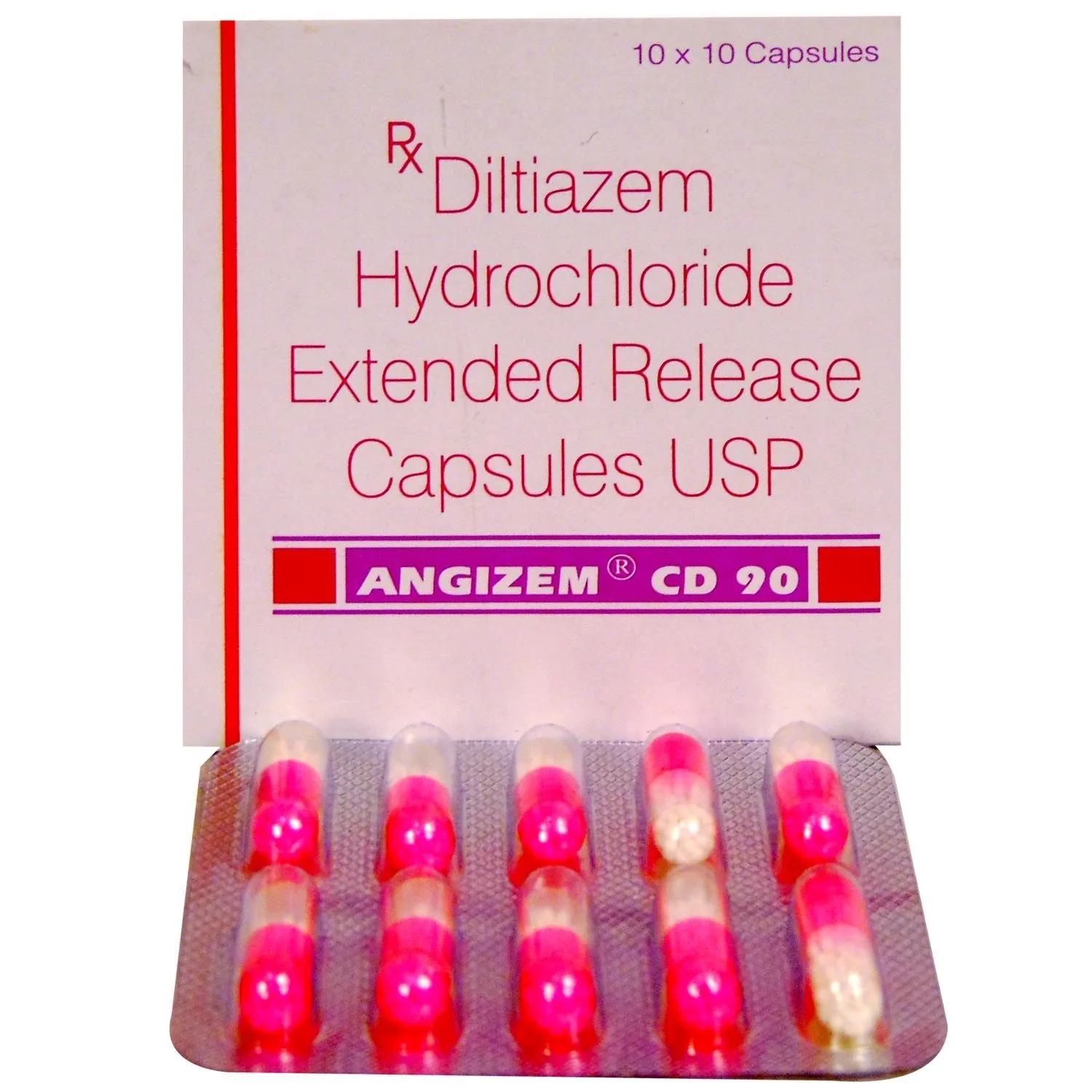
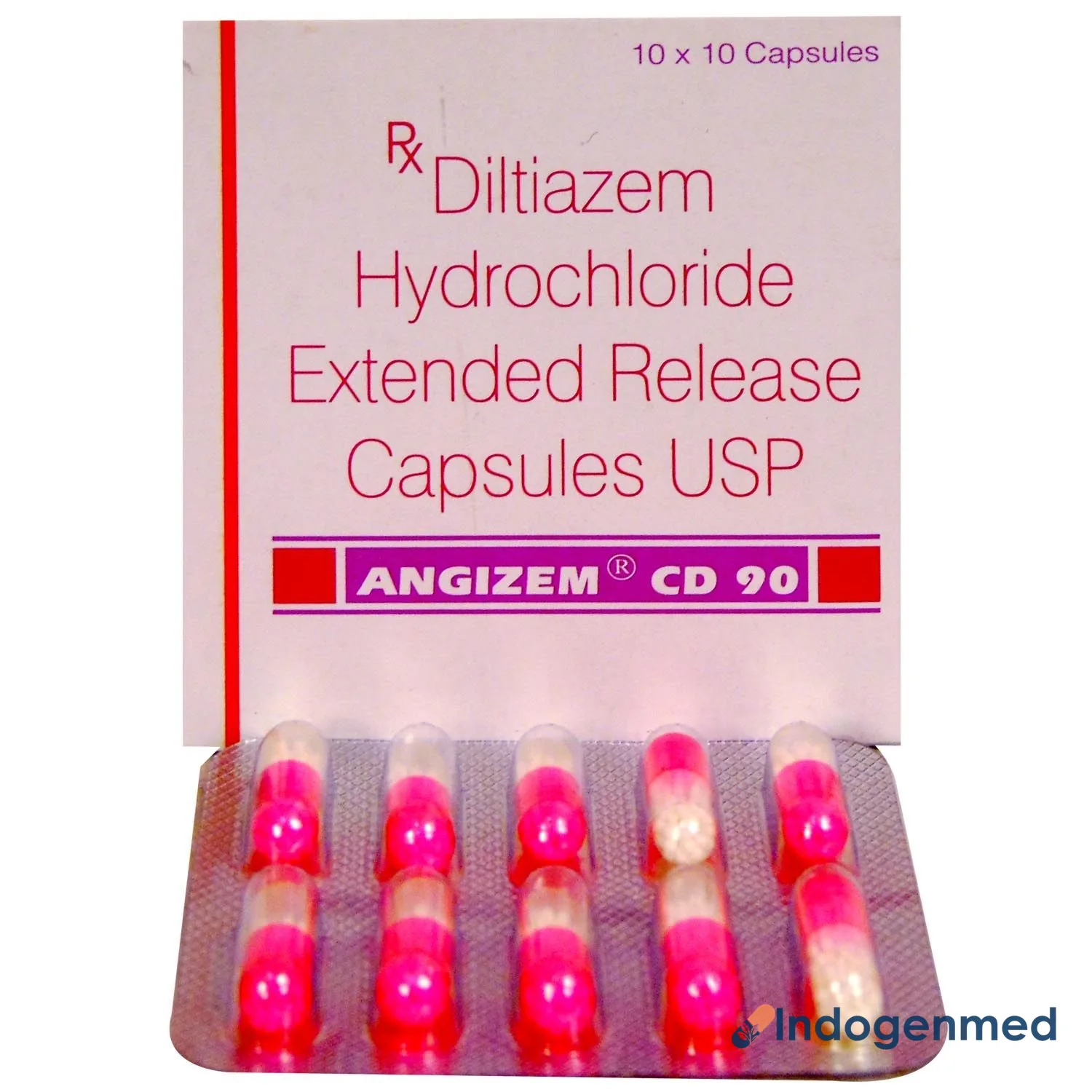
Angizem CD 90 Mg Tablets — Diltiazem Hydrochloride Controlled Delivery for Angina and Hypertension
Angizem CD 90 Mg Tablets contain Diltiazem Hydrochloride 90 mg in a controlled delivery (CD) formulation, manufactured by Cadila Pharmaceuticals Ltd. Diltiazem is a non-dihydropyridine calcium channel blocker used for the management of stable angina pectoris, hypertension, and rate control in supraventricular tachycardias including atrial fibrillation and atrial flutter. The CD (controlled delivery) formulation allows once or twice-daily dosing with sustained drug release over 12–24 hours. Angizem CD is a prescription-only medicine.
Composition
| Active Ingredient | Strength per Tablet | Drug Class |
|---|---|---|
| Diltiazem Hydrochloride | 90 mg (controlled delivery) | Non-Dihydropyridine Calcium Channel Blocker (Benzothiazepine) |
About Cadila Pharmaceuticals Ltd
Cadila Pharmaceuticals Ltd, headquartered in Ahmedabad, India, is one of India’s largest privately-held pharmaceutical companies. With WHO-GMP certified manufacturing facilities and a portfolio spanning cardiovascular, anti-infective, and central nervous system products, Cadila has established the Angizem range as a leading diltiazem product in the Indian market.
How Angizem CD 90 Works — Mechanism of Action
Diltiazem is a benzothiazepine-class calcium channel blocker that acts on voltage-dependent L-type calcium channels in cardiac and vascular smooth muscle:
- Cardiac effects: Inhibits calcium influx into sinoatrial (SA) node and atrioventricular (AV) node cells → slows heart rate (negative chronotropy) and prolongs AV nodal conduction time (negative dromotropy) → reduces ventricular rate in atrial fibrillation and terminates SVT circuits that involve the AV node
- Negative inotropy: Reduces myocardial contractility (mild effect) → decreases myocardial oxygen demand → antianginal effect
- Peripheral vasodilation: Inhibits calcium entry into coronary and peripheral vascular smooth muscle → coronary vasodilation (increases myocardial oxygen supply) + reduced peripheral vascular resistance → antihypertensive effect
- Unlike dihydropyridines (nifedipine, amlodipine): Diltiazem and verapamil (the non-dihydropyridines) have significant cardiac conduction effects in addition to vasodilation — making them suitable for rate control in atrial fibrillation but requiring caution with beta-blockers
Clinical Indications
- Stable angina pectoris: Prevention of anginal episodes caused by coronary artery disease (effort angina and vasospastic/variant angina)
- Hypertension: Management of mild to moderate hypertension, often as monotherapy or in combination with ACE inhibitors or diuretics
- Atrial fibrillation / atrial flutter — ventricular rate control: Slowing of the ventricular response rate in persistent atrial fibrillation
- Supraventricular tachycardia (SVT): Rate control and termination of AV nodal re-entry and AV re-entry tachycardias
Dosage and Administration
- Angina and hypertension: Typically 90 mg twice daily (morning and evening) or as directed. The CD formulation provides sustained 12-hour release.
- Rate control in AF: Doses and timing as directed by cardiologist.
- Swallow whole: Do NOT crush, chew, or break the controlled-delivery tablet — this destroys the sustained-release mechanism and delivers the full dose too quickly.
- Can be taken with or without food.
- Consistency: Take at the same times each day for consistent blood levels and blood pressure control.
- Gradual titration: Usually started at a low dose and increased as needed under medical supervision. Do not adjust dose without guidance.
Special Populations
- Elderly: More sensitive to hypotensive and bradycardic effects. Start at 90 mg once daily; titrate cautiously.
- Pregnancy: Limited data. Diltiazem is teratogenic in some animal models. Avoid unless absolutely necessary. Consult cardiologist and obstetrician.
- Breastfeeding: Excreted in breast milk. Avoid during breastfeeding unless no alternative; monitor infant for bradycardia and hypotension.
- Renal impairment: No significant dose adjustment needed; monitor blood pressure and heart rate.
- Hepatic impairment: Diltiazem is extensively hepatically metabolised. Significant dose reduction required in hepatic impairment; seek specialist guidance.
Precautions
- Bradycardia and AV block: Diltiazem slows conduction through the AV node. Avoid in patients with pre-existing significant bradycardia (resting HR <50 bpm), second- or third-degree AV block (without a pacemaker), or sick sinus syndrome.
- Heart failure: Diltiazem may worsen or precipitate heart failure due to its negative inotropic effect. Avoid in decompensated heart failure or ejection fraction <40%. Use with caution in stable mild heart failure under specialist oversight.
- Beta-blocker combination: Concurrent use with beta-blockers substantially increases the risk of severe bradycardia, AV block, and hypotension. This combination requires careful specialist supervision and ECG monitoring.
- Do not stop abruptly: Abrupt withdrawal in angina patients may precipitate rebound angina. Taper gradually under medical supervision.
- Blood pressure monitoring: Monitor BP and resting heart rate at initiation and after dose changes.
Contraindications
- Hypersensitivity to diltiazem or any excipient
- Severe bradycardia (resting HR <50 bpm)
- Second or third degree AV block (without pacemaker)
- Sick sinus syndrome (without pacemaker)
- Severe hypotension (systolic BP <90 mmHg)
- Decompensated heart failure
- Accessory pathway (Wolff-Parkinson-White syndrome) with pre-excitation
- Concurrent IV beta-blocker use
Side Effects
Common (≥1/100): Peripheral oedema (ankle swelling), headache, dizziness, flushing, bradycardia, constipation, nausea.
Uncommon (≥1/1,000): Hypotension, AV block (first degree), fatigue, skin rash, elevated liver enzymes.
Rare but serious: Second/third degree AV block, severe bradycardia, heart failure exacerbation, hepatotoxicity, Stevens-Johnson syndrome, erythema multiforme.
Contact your doctor promptly if you experience chest tightness worsening, an unusually slow pulse, significant swelling, or yellowing of the skin or eyes.
Drug Interactions
- Beta-blockers: High risk of severe bradycardia, AV block, hypotension, and heart failure. If combined, requires specialist oversight and ECG monitoring.
- Digoxin: Diltiazem increases digoxin plasma levels and both agents slow AV conduction — risk of AV block and digoxin toxicity. Monitor closely.
- Statins (simvastatin, atorvastatin): Diltiazem inhibits CYP3A4 → increases statin levels → myopathy and rhabdomyolysis risk. Use lowest effective statin dose; consider pravastatin or rosuvastatin (less CYP3A4-dependent).
- Cyclosporin: Diltiazem significantly increases cyclosporin levels via CYP3A4 inhibition.
- Antiarrhythmics (amiodarone, flecainide): Additive cardiac effects — increased risk of bradycardia and heart block.
- CYP3A4 inducers (rifampicin, phenytoin): Significantly reduce diltiazem efficacy.
Storage Instructions
- Store below 30°C in a dry place. Protect from direct sunlight and moisture.
- Keep out of reach of children.
- Keep in original blister packaging until use.
- Do not use past the expiry date on the pack.
Related Products
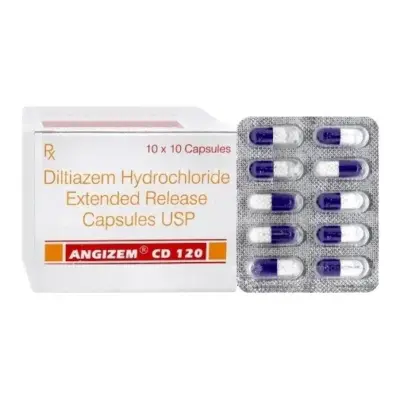
For patients requiring a higher controlled-delivery diltiazem dose, see Angizem CD 120 Mg Tablets — the 120 mg controlled-delivery formulation for patients requiring once-daily dosing or higher dose titration.
Frequently Asked Questions
What is Angizem CD 90 Mg used for?
Angizem CD 90 Mg is used to prevent angina (chest pain from the heart), lower blood pressure in hypertension, and control heart rate in conditions such as atrial fibrillation. The CD (controlled delivery) formulation releases diltiazem gradually over 12 hours, maintaining steady drug levels in the blood and reducing the need for multiple daily doses.
Can I crush or split Angizem CD tablets?
No. Angizem CD tablets must be swallowed whole. Crushing, chewing, or splitting them destroys the controlled-release mechanism and delivers the full 12-hour dose immediately, which could cause a dangerous drop in blood pressure or heart rate. If you have difficulty swallowing tablets, discuss alternatives with your doctor.
Can I take Angizem CD with my beta-blocker?
Only under strict specialist supervision. Both diltiazem and beta-blockers slow the heart rate and AV conduction. When used together, the risk of excessive bradycardia (dangerously slow heart rate), AV block, and low blood pressure is significantly increased. Never start or stop either medicine without telling your cardiologist.
How is Angizem CD 90 different from Angizem CD 120?
Both contain diltiazem in a controlled-delivery form. Angizem CD 90 delivers 90 mg per dose (typically twice daily) and is often used as an initial dose or for patients who need gradual titration. Angizem CD 120 delivers 120 mg and may allow once-daily dosing in some patients. The choice between them depends on the indication, severity, and your body’s response to the drug.
Will Angizem CD make me feel tired?
Fatigue, dizziness, and ankle swelling can occur with diltiazem, particularly at the start of treatment or after a dose increase. These effects often improve as your body adjusts. If dizziness is severe or persists, check your pulse; if your heart rate is below 50 beats per minute or you feel faint, contact your doctor promptly.
References
- NHS — Diltiazem. National Health Service, UK.
- MedlinePlus — Diltiazem. U.S. National Library of Medicine.
- FDA Prescribing Information — Diltiazem Hydrochloride. U.S. Food and Drug Administration.
- NHS — Atrial Fibrillation: Treatment. National Health Service, UK.
Disclaimer: This product information is provided for general educational purposes only. Angizem CD 90 Mg is a prescription-only medicine. It must be used only as directed by a qualified healthcare professional. This content does not constitute medical advice. IndoGenMed.org supplies this product to licensed healthcare professionals and registered pharmacies only.
Reviews
There are no reviews yet.