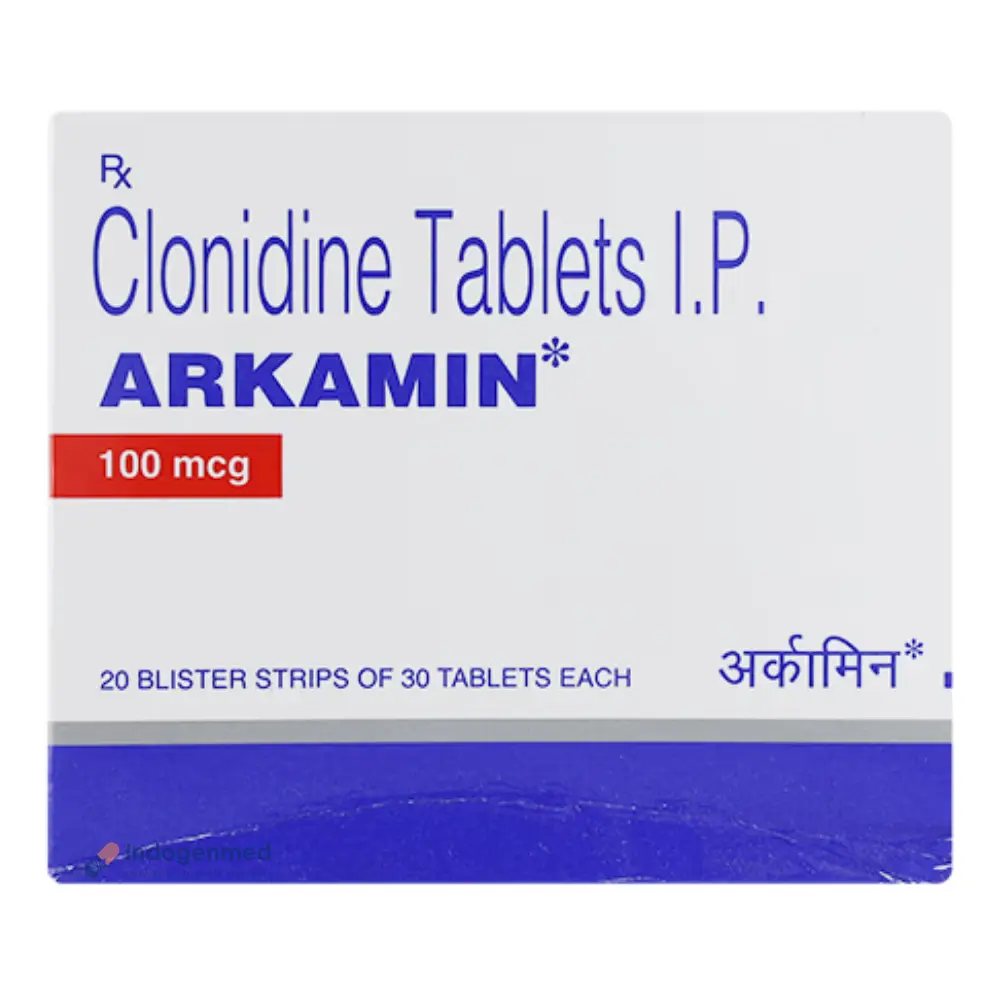
Description
Arkamin 100 Mcg Tablets — Clonidine Hydrochloride for Hypertension and Withdrawal Management
Arkamin 100 Mcg Tablets contain Clonidine Hydrochloride 100 mcg (0.1 mg) per tablet, manufactured by Torrent Pharmaceuticals Ltd. Clonidine is a centrally acting alpha-2 adrenergic agonist used in the management of hypertension, opioid and alcohol withdrawal syndrome, and certain pain conditions. Arkamin is a prescription-only medicine requiring specialist or physician supervision.
Composition
| Active Ingredient | Strength per Tablet | Drug Class |
|---|---|---|
| Clonidine Hydrochloride | 100 mcg (0.1 mg) | Central Alpha-2 Adrenergic Agonist / Antihypertensive |
About Torrent Pharmaceuticals Ltd
Torrent Pharmaceuticals Ltd, headquartered in Ahmedabad, India, is one of India’s leading pharmaceutical companies with a significant international presence across Europe, the Americas, and Asia. The company holds WHO-GMP, USFDA, and EU-GMP certifications across its manufacturing network. Torrent’s cardiovascular and CNS portfolios are among its core therapeutic areas.
How Arkamin Works — Mechanism of Action
Clonidine Hydrochloride exerts its pharmacological effects primarily through central nervous system actions:
- Central alpha-2 agonism: Stimulates presynaptic alpha-2 adrenergic receptors in the brainstem (locus coeruleus and nucleus tractus solitarius) → reduces norepinephrine release from sympathetic nerve terminals → decreased sympathetic outflow to the heart and peripheral vasculature
- Blood pressure reduction: Reduced sympathetic tone → decreased heart rate, reduced peripheral vascular resistance, and lower cardiac output → sustained antihypertensive effect
- Withdrawal management: In opioid and alcohol withdrawal, the central sympatholytic effect suppresses autonomic hyperactivity symptoms — tachycardia, sweating, agitation, piloerection, and anxiety — that result from abrupt removal of substances suppressing norepinephrine activity
- Analgesic effect: Alpha-2 receptors in the dorsal horn of the spinal cord modulate pain transmission; clonidine has demonstrated analgesic utility in certain pain conditions
Clinical Indications
- Hypertension: Management of mild to moderate hypertension, often as an adjunct to first-line antihypertensives
- Opioid withdrawal: Management of autonomic symptoms of opioid withdrawal (sweating, tachycardia, agitation, diarrhoea, anxiety) in supervised detoxification programmes
- Alcohol withdrawal: Adjunctive management of sympathetic overactivity in alcohol detoxification
- Menopausal flushing: Off-label use for management of hot flushes in menopause
- ADHD: Off-label adjunct for attention deficit hyperactivity disorder, particularly for tic suppression and sleep-related ADHD symptoms
- Pain management: Adjunct for certain neuropathic pain and perioperative pain protocols
Dosage and Administration
- Hypertension: Typically 100 mcg (1 tablet) two to three times daily. May be increased to 300 mcg/day in divided doses under medical guidance. Take with food to reduce gastrointestinal side effects.
- Opioid withdrawal: 100–300 mcg three times daily during the acute withdrawal phase under supervised detoxification. Dose and duration guided by withdrawal severity and clinical response.
- Swallow whole: Do not crush or chew modified-release preparations. Standard tablets may be taken with food.
- ⚠️ Gradual tapering required: Do NOT stop Arkamin abruptly. Sudden discontinuation causes rebound hypertension, which can be severe and potentially dangerous. Always reduce dose gradually under medical supervision.
Special Populations
- Elderly: More sensitive to hypotensive and sedating effects. Start with lower doses; monitor blood pressure and CNS effects closely.
- Pregnancy: Limited safety data. Crosses the placenta. Use only if clearly indicated; monitor neonatal blood pressure after delivery.
- Breastfeeding: Excreted in breast milk. Avoid during breastfeeding unless no alternative; monitor infant for sedation and bradycardia.
- Renal impairment: Reduce dose and increase monitoring frequency — clonidine is partly renally excreted and accumulation may occur.
- Hepatic impairment: No significant dose change needed; use with caution.
Precautions
- Rebound hypertension: The most important risk with clonidine. Missing doses or abrupt withdrawal can cause acute blood pressure surge, hypertensive crisis, agitation, and tachycardia. Patients must be warned not to stop suddenly and must have an adequate supply at all times.
- Sedation: Clonidine causes significant drowsiness, especially at initiation and with dose increases. Patients should not drive or operate heavy machinery until their individual response is established.
- Bradycardia: Clonidine slows heart rate. Use with caution in patients with pre-existing bradycardia, AV conduction block, or on rate-slowing drugs (beta-blockers, digoxin).
- Alcohol and CNS depressants: Additive CNS depression and hypotension. Avoid alcohol during treatment.
- Raynaud’s phenomenon: Peripheral vasospasm may worsen.
- Depression: May worsen or unmask depressive symptoms. Use with caution in patients with a history of depression.
Contraindications
- Hypersensitivity to clonidine or any excipient
- Sick sinus syndrome, significant AV block (without pacemaker)
- Severe bradycardia
- Concurrent use with monoamine oxidase inhibitors (MAOIs)
Side Effects
Common (≥1/100): Drowsiness, dry mouth, dizziness, fatigue, constipation, headache, skin reactions at patch site (if transdermal form), hypotension.
Uncommon (≥1/1,000): Bradycardia, Raynaud’s phenomenon, depression, vivid dreams, nausea, oedema.
Rare but serious: Severe rebound hypertension on abrupt withdrawal, AV conduction disturbances, hallucinations.
Seek medical help immediately if you experience a sudden severe rise in blood pressure, chest pain, severe headache, or vision changes after stopping clonidine.
Drug Interactions
- Beta-blockers: Concurrent use increases the risk of severe rebound hypertension if either drug is abruptly stopped. If stopping both, discontinue beta-blocker first, then taper clonidine. Also risk of additive bradycardia.
- MAO inhibitors: Contraindicated — risk of severe hypertensive reactions.
- Tricyclic antidepressants: May reduce clonidine’s antihypertensive effect by blocking alpha-2 receptors.
- Alcohol/CNS depressants/sedatives: Additive CNS depression and hypotension.
- Calcium channel blockers / other antihypertensives: Enhanced blood pressure lowering — monitor closely.
- Digoxin: Additive bradycardia and AV conduction slowing.
Storage Instructions
- Store below 30°C in a dry place, away from direct heat and light.
- Keep out of reach of children.
- Do not use past the expiry date on the pack.
Frequently Asked Questions
What is Arkamin 100 Mcg used for?
Arkamin (Clonidine 100 mcg) is primarily used for high blood pressure (hypertension). It is also widely used in supervised detoxification to ease the physical symptoms of opioid or alcohol withdrawal — particularly sweating, rapid heart rate, anxiety, and agitation. Some doctors prescribe it off-label for menopausal hot flushes or as an adjunct in ADHD management.
Can I stop taking Arkamin suddenly?
No — stopping Arkamin abruptly is dangerous. It can cause a rebound surge in blood pressure (rebound hypertension) that may be severe enough to cause a hypertensive crisis. Always reduce the dose gradually under your doctor’s supervision. Never miss doses and ensure you always have adequate supply.
Does Arkamin cause drowsiness?
Yes, drowsiness is a common side effect of clonidine, particularly when starting treatment or after a dose increase. Avoid driving or operating heavy machinery until you know how Arkamin affects you. The sedating effect is often most pronounced in the first few days and may lessen with continued use.
What is the difference between Arkamin and other blood pressure medicines?
Unlike most antihypertensives (which act on blood vessels or the heart directly), Arkamin works centrally — in the brain — to reduce sympathetic nervous system activity. This makes it useful in situations where sympathetic overactivity is a key factor, such as withdrawal syndromes. However, it is usually not a first-line antihypertensive and carries the specific risk of rebound hypertension if stopped abruptly.
Can I drink alcohol while taking Arkamin?
No. Alcohol enhances clonidine’s sedative and blood pressure-lowering effects, which can cause dangerous drops in blood pressure and excessive drowsiness. Avoid alcohol entirely during Arkamin treatment.
References
- NHS — Clonidine. National Health Service, UK.
- MedlinePlus — Clonidine. U.S. National Library of Medicine.
- FDA Prescribing Information — Clonidine Hydrochloride Tablets. U.S. Food and Drug Administration.
- NHS — Drug Addiction: Getting Help. National Health Service, UK.
Disclaimer: This product information is provided for general educational purposes only. Arkamin 100 Mcg is a prescription-only medicine. It must be used only as directed by a qualified healthcare professional. Abrupt discontinuation of clonidine carries a risk of severe rebound hypertension — never stop without medical guidance. This content does not constitute medical advice. IndoGenMed.org supplies this product to licensed healthcare professionals and registered pharmacies only.

Reviews
There are no reviews yet.