Description
What are Banocide Forte 100 Mg Tablets?
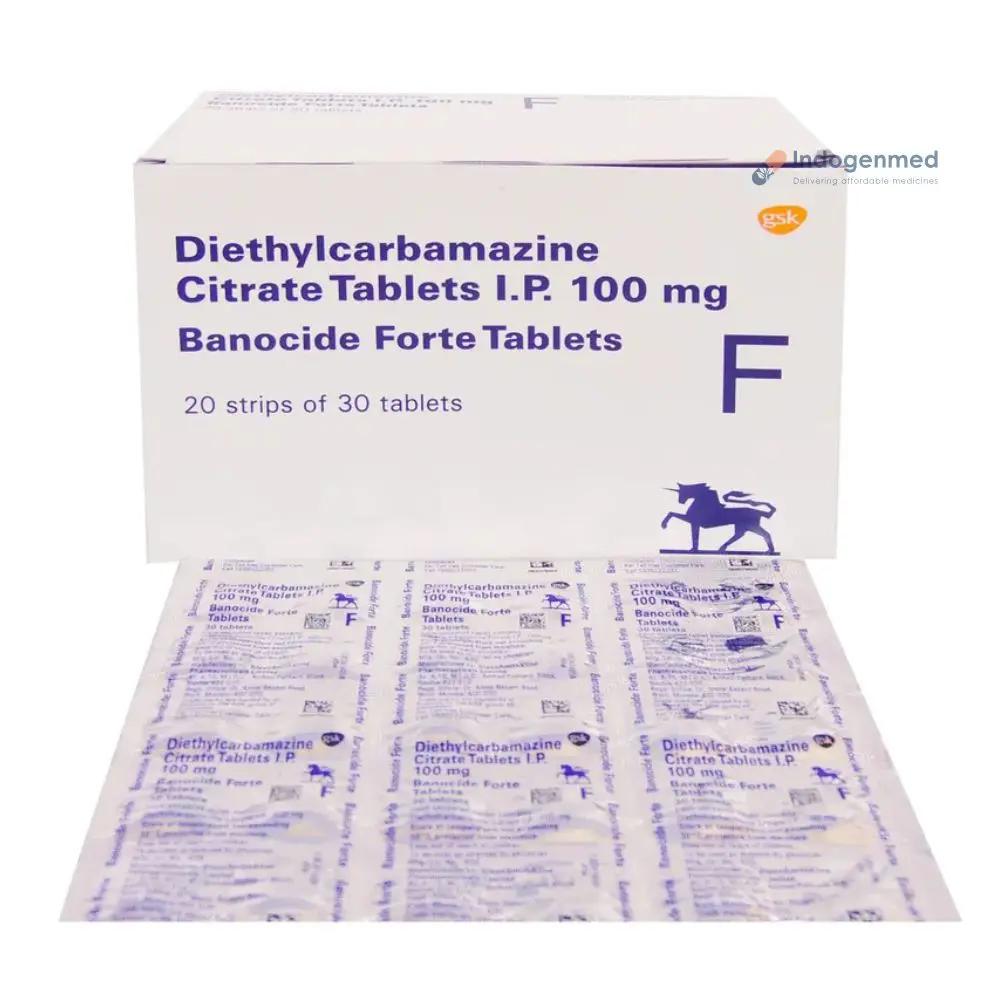
Banocide Forte 100 Mg Tablets are oral antifilarial tablets manufactured by GlaxoSmithKline (GSK), one of the world’s largest research-based pharmaceutical companies. Each tablet contains 100 mg of Diethylcarbamazine Citrate as the active ingredient. Diethylcarbamazine (DEC) is a synthetic anthelmintic agent that has been the cornerstone of filarial disease treatment worldwide for more than six decades.
Banocide Forte is primarily indicated for the treatment and control of lymphatic filariasis — a parasitic infection caused by thread-like filarial worms that damage the lymphatic system and can lead to the disfiguring condition known as elephantiasis. It is also used in the management of tropical pulmonary eosinophilia (TPE) and certain other filarial infections including loiasis. Each pack contains 10 tablets (1 strip).
Composition and Product Details
| Brand Name | Banocide Forte |
|---|---|
| Generic Name | Diethylcarbamazine Citrate |
| Strength | 100 mg per tablet |
| Dosage Form | Oral tablet |
| Pack Size | 10 tablets (1 strip) |
| Manufacturer | GlaxoSmithKline (GSK), India |
| Therapeutic Class | Antifilarial / Anthelmintic Agent |
| Prescription Required | Yes |
About GlaxoSmithKline (GSK) and the Banocide Forte Brand
GlaxoSmithKline (GSK) is a global biopharmaceutical company headquartered in London, United Kingdom, with operations in over 150 countries. GSK was formed through the merger of Glaxo Wellcome and SmithKline Beecham in 2000 and is one of the world’s leading pharmaceutical companies by revenue. Its medicines and vaccines are used by hundreds of millions of people globally, and its products are approved by the US FDA, UK MHRA, the European EMA, and other major regulatory authorities.
GSK India has a long and established manufacturing and distribution presence across the Indian subcontinent, where filarial infections are endemic in many states. Banocide Forte is GSK’s longstanding diethylcarbamazine brand that has been used in India and other filarial-endemic countries for more than six decades. It is one of the most widely recognised antifilarial medicines globally and has been used extensively in both individual treatment and mass drug administration (MDA) programmes coordinated by the World Health Organization (WHO) for the global elimination of lymphatic filariasis.
What Is Lymphatic Filariasis?
Lymphatic filariasis is a parasitic disease caused by microscopic, thread-like worms — primarily Wuchereria bancrofti (responsible for approximately 90% of global cases), Brugia malayi, and Brugia timori. The infection is transmitted through the bites of infected mosquitoes, which deposit filarial larvae (L3 stage) onto the skin. These larvae migrate into the lymphatic vessels, mature into adult worms over several months, and begin producing millions of tiny offspring called microfilariae that circulate in the bloodstream.
Over years of untreated infection, adult worms and the inflammatory response to them cause progressive damage to the lymphatic system, resulting in lymphoedema (swelling), hydrocele (scrotal fluid accumulation in men), and in severe chronic cases, elephantiasis — massive, disfiguring swelling of the limbs, genitals, or breasts. Lymphatic filariasis affects over 120 million people worldwide and is one of the leading causes of permanent disability globally. It is classified by the WHO as a neglected tropical disease (NTD).
Tropical pulmonary eosinophilia (TPE) is a distinct hypersensitivity syndrome caused by an abnormal immune response to microfilariae of W. bancrofti or B. malayi trapped in the lungs, characterised by severe nocturnal cough, wheezing, and markedly elevated blood eosinophil counts, which can lead to progressive pulmonary fibrosis if untreated.
How Banocide Forte (Diethylcarbamazine) Works
Diethylcarbamazine (DEC) exerts its antifilarial effects through several complementary mechanisms acting on both microfilariae (larval stage) and, to a lesser extent, adult worms:
- Microfilarial immobilisation and altered surface properties: DEC alters the surface membranes of microfilariae, disrupting their ability to evade the host immune system. It causes rapid immobilisation of microfilariae, rendering them vulnerable to phagocytosis by the host’s macrophages and eosinophils. This action rapidly reduces microfilaraemia (microfilariae in the blood) within hours of administration.
- Inhibition of arachidonic acid metabolism: DEC inhibits the production of arachidonic acid-derived prostaglandins within microfilariae, impairing their motility and survival. This disruption of eicosanoid biosynthesis is believed to be one of DEC’s primary microfilaricidal mechanisms.
- Enhancement of host immune clearance: DEC increases the exposure of filarial surface antigens, making the parasites more visible to the host immune system. This augments immune-mediated clearance of both microfilariae and some adult worms through opsonisation and eosinophil-mediated killing.
- Activity against adult worms: DEC also has macrofilaricidal (adult worm-killing) activity, particularly effective against W. bancrofti. This is important for long-term disease control, as reducing the adult worm burden prevents ongoing microfilariae production and new lymphatic damage.
The clinical result of treatment is a rapid and sustained reduction in blood microfilaraemia, a reduction in the frequency and severity of filarial fever and lymphangitis episodes, and, over time with repeated treatment courses, a reduction in lymphatic dysfunction and disease progression. In TPE, DEC rapidly resolves pulmonary symptoms and normalises eosinophil counts.
Indications and Uses
Banocide Forte 100 Mg Tablets are indicated for:
- Lymphatic filariasis (Wuchereria bancrofti, Brugia malayi, Brugia timori): Treatment of active infection to reduce microfilaraemia and adult worm burden, reduce filarial fever, and prevent progression of lymphoedema. Used both for individual treatment and as part of MDA programmes.
- Tropical pulmonary eosinophilia (TPE): Treatment of TPE to rapidly resolve pulmonary symptoms, reduce eosinophilia, and prevent long-term pulmonary fibrosis. Extended courses are usually required.
- Loiasis (Loa loa filariasis): Treatment of loiasis (eye worm infection, African eye worm) in areas where the infection is endemic — however, caution is essential regarding microfilarial load (see Precautions and Contraindications).
- Mass drug administration (MDA) programmes: DEC is used as part of WHO-coordinated annual MDA for the global elimination of lymphatic filariasis, typically co-administered with albendazole (and in some regions, ivermectin in place of DEC for areas co-endemic for onchocerciasis).
Dosage and Administration
Dosing must be directed by the treating physician or tropical medicine specialist, who will determine the appropriate regimen based on the type of filarial infection, microfilarial load, patient weight, and regional protocols. Banocide Forte tablets should be taken with food or after meals to reduce nausea, and swallowed whole with water.
- Lymphatic filariasis (standard treatment course): 6 mg/kg/day in three divided doses for 12 days. For a 60 kg adult, this is typically 2 tablets (200 mg) three times daily for 12 days. Some guidelines recommend starting at a lower dose for the first few days (e.g., 1 mg/kg/day on day 1, increasing progressively to 6 mg/kg/day by day 4) to reduce the risk of adverse reactions from dying parasites.
- Tropical pulmonary eosinophilia (TPE): 6 mg/kg/day in divided doses for 14–21 days. A longer course is typically required to fully suppress pulmonary eosinophilia and prevent relapse. Your physician may recommend a follow-up course if symptoms recur.
- Loiasis: 6 mg/kg/day in divided doses for 21 days. Pre-treatment assessment of microfilarial count is mandatory (see Contraindications below).
- MDA single-dose regimen: 6 mg/kg as a single annual dose (in combination with albendazole) for MDA programmes. This is a public health dosing schedule directed by programme authorities.
- Maximum dose: 6 mg/kg/day; higher doses do not provide additional benefit and increase the risk of adverse reactions.
Do not stop the course early even if you feel better. Your doctor will advise on treatment monitoring, particularly if you experience fever or systemic reactions during therapy.
Special Populations
Elderly (≥65 years)
No specific dose adjustment is routinely required in elderly patients based on available evidence, but renal function should be assessed before treatment as diethylcarbamazine is primarily eliminated by the kidneys. In patients with reduced renal function, dose reduction may be required. Start at the lower end of the dose range and monitor closely.
Renal Impairment
Diethylcarbamazine is predominantly excreted unchanged in the urine; its elimination is reduced in patients with renal impairment, leading to higher plasma concentrations. Dose reduction is required in patients with significant renal impairment. The prescribing physician should calculate the appropriate dose based on creatinine clearance or eGFR. Diethylcarbamazine should be used with great caution in severe renal failure.
Hepatic Impairment
DEC undergoes some hepatic metabolism; however, the predominant elimination route is renal. Use with caution in severe hepatic impairment. Seek specialist advice for use in patients with significant liver disease.
Paediatric Use
DEC can be used in children for the treatment of filariasis; dosing is weight-based (6 mg/kg/day), and children in endemic areas are included in WHO MDA programmes. Dose should be calculated carefully by the treating physician. The 100 mg tablet may need to be split for lower weight-based paediatric doses; scored tablets should be used where available.
Pregnancy and Breastfeeding
The safety of diethylcarbamazine in pregnancy has not been established in adequate clinical studies. DEC should be avoided during pregnancy unless the benefit clearly outweighs potential risks, particularly given the Mazzotti-like inflammatory reactions that may accompany treatment. In WHO MDA programmes, DEC is withheld from pregnant women and children under 2 years of age. It is not known whether DEC is excreted in breast milk; breastfeeding is not recommended during treatment. Consult your physician before use if pregnant or breastfeeding.
Precautions and Warnings
- Mazzotti-type reactions (parasite die-off reactions): Reactions caused by the death of microfilariae and adult worms — including fever, chills, headache, joint and muscle pain, pruritus, urticaria, lymphangitis, and lymphadenopathy — are common during the first days of treatment, particularly in patients with heavy microfilaraemia. These reactions are parasite-related rather than drug-related and generally resolve within a few days with symptomatic treatment (antihistamines, antipyretics). Patients should be warned about these reactions before starting therapy.
- Heavy Loa loa microfilaraemia — risk of encephalopathy: In patients with heavy Loa loa microfilaraemia (≥8,000 mf/mL of blood), DEC treatment can trigger severe, potentially fatal neurological complications including encephalopathy, coma, and death due to massive release of antigens from dying microfilariae causing an intense inflammatory response in the brain. This risk is particularly relevant in travellers to or residents of central and western Africa. PRE-TREATMENT ASSESSMENT of Loa loa microfilarial count is mandatory before initiating DEC in any patient from a Loa loa-endemic area. See Contraindications below.
- Co-endemicity with onchocerciasis: DEC should NOT be used in areas or patients with active onchocerciasis (Onchocerca volvulus infection, river blindness), as it can exacerbate ocular disease and cause severe Mazzotti reactions with significant eye damage. Ivermectin is used in place of DEC for MDA in onchocerciasis-co-endemic areas.
- Renal monitoring: Renal function should be assessed before treatment, as impaired renal function reduces DEC clearance and requires dose adjustment.
- Hypotension: DEC may cause transient hypotension, particularly during Mazzotti-type reactions. Monitor blood pressure in patients with pre-existing cardiovascular disease.
Contraindications
- Loa loa microfilaraemia ≥8,000 mf/mL blood — risk of life-threatening encephalopathy and death
- Active onchocerciasis (river blindness) — risk of severe Mazzotti reaction and ocular damage
- Severe renal failure — risk of DEC accumulation and toxicity
- Pregnancy — insufficient safety data; avoid unless benefit clearly outweighs risk
- Children under 2 years of age — insufficient safety data for this age group
- Hypersensitivity to diethylcarbamazine citrate or any excipient in the formulation
Possible Side Effects
Drug-Related Side Effects (Common)
- Nausea and vomiting
- Dizziness and headache
- Anorexia (loss of appetite)
- Malaise and fatigue
- Joint and muscle aches (arthralgia and myalgia)
Drug-related side effects are generally dose-dependent and mild to moderate. Taking tablets with food reduces gastrointestinal discomfort.
Parasite Die-Off (Mazzotti) Reactions — Common in Heavy Infections
- Fever and rigors (chills)
- Pruritus (itching) and urticaria (hives)
- Lymphadenopathy (swollen lymph nodes) and lymphangitis (inflamed lymph vessels)
- Scrotal or limb swelling
- Skin rashes
Mazzotti-type reactions are caused by the host immune response to dying parasites and are expected during treatment, particularly in the early days of therapy. They typically resolve within a few days. Symptomatic treatment with antihistamines and antipyretics is usually sufficient. Report severe or persistent reactions to your physician.
Rare but Serious
- Encephalopathy (in patients with heavy Loa loa microfilaraemia) — medical emergency; seek urgent medical attention immediately
- Severe hypotension — particularly in patients with heavy microfilaraemia and cardiovascular compromise
- Severe ocular reactions — in patients with onchocerciasis (see Contraindications)
Report any unexpected, severe, or unusual symptoms to your physician or the nearest emergency facility immediately.
Drug Interactions
- Albendazole: Diethylcarbamazine and albendazole are co-administered in WHO-recommended MDA regimens and are not known to have clinically significant adverse pharmacokinetic interactions. However, combination treatment increases the breadth of antiparasitic coverage, and any adverse reactions should be monitored.
- Ivermectin: DEC and ivermectin are not typically co-administered due to the risk of severe reactions in patients with Loa loa; co-administration in Loa loa-endemic areas requires specialist supervision.
- Antihistamines and corticosteroids: May be co-prescribed to manage Mazzotti-type reactions during DEC treatment; no pharmacokinetic interaction is expected.
- Antihypertensives: DEC may transiently lower blood pressure through haemodynamic effects during die-off reactions; patients on antihypertensive medication should be monitored for additive hypotensive effects.
- Renal elimination interactions: Drugs that compete for or inhibit active renal tubular secretion may increase DEC plasma concentrations; use with caution.
Related Tropical Medicine and Antiparasitic Products on IndoGenMed
IndoGenMed stocks a range of products relevant to tropical medicine and antiparasitic treatment. For comprehensive management of lymphatic filariasis and related tropical infections, your physician may also consider:
- Albendazole — commonly co-administered with DEC in WHO MDA programmes for lymphatic filariasis elimination; search IndoGenMed for available albendazole products.
- Ivermectin — used in MDA programmes in onchocerciasis-co-endemic areas (in place of DEC); search IndoGenMed for available ivermectin products.
Please consult your physician or tropical medicine specialist regarding the most appropriate treatment regimen for your condition and region.
Storage Instructions
- Store below 25°C in a cool, dry place away from direct sunlight and moisture
- Keep tablets in the original blister strip until use
- Store out of reach of children and pets
- Do not use tablets after the printed expiry date
- Do not store in a bathroom or near a sink where humidity is high
Frequently Asked Questions
Q: What is lymphatic filariasis and how does Banocide Forte help?
A: Lymphatic filariasis is a parasitic disease caused by microscopic worms transmitted through mosquito bites that damage the lymphatic system, potentially causing severe swelling, elephantiasis, and disability over time. Banocide Forte (diethylcarbamazine) kills the larvae (microfilariae) circulating in the bloodstream and the adult worms living in the lymphatic vessels. By reducing the parasite burden, it helps prevent or slow progression of lymphatic damage and reduces the episodes of fever and inflammation associated with active infection. It does not reverse existing lymphoedema, but it is important for stopping further damage.
Q: Why do I feel worse when I start taking Banocide Forte?
A: It is common to experience fever, chills, itching, swollen lymph nodes, and general flu-like symptoms in the first days of Banocide Forte treatment — particularly if you have a heavy microfilarial load in your blood. This is known as a Mazzotti-type reaction and is caused by your immune system responding to the large number of parasites dying simultaneously. It is not an allergic reaction to the drug itself. These symptoms usually improve within 2–5 days as the initial microfilaraemia is cleared. Antihistamines and paracetamol can help manage these reactions. Always let your doctor know if the symptoms are severe or do not settle.
Q: Is Banocide Forte safe for people living in Africa?
A: Diethylcarbamazine carries a serious risk in people from parts of central and western Africa where Loa loa (the African eye worm) is endemic. In patients who carry large numbers of Loa loa microfilariae in their blood (≥8,000 per mL), DEC can cause severe brain inflammation (encephalopathy) that can be fatal. For this reason, a pre-treatment blood test to count Loa loa microfilariae is essential for anyone from or who has lived in Loa loa-endemic areas before starting DEC. If the count is high, alternative treatment approaches should be used under specialist supervision. In areas where only lymphatic filariasis (not Loa loa) is endemic, DEC is generally safe when used as directed.
Q: How long does it take for Banocide Forte to work?
A: Banocide Forte rapidly kills microfilariae circulating in the blood, and blood microfilarial counts typically fall dramatically within the first 24–48 hours of treatment. This rapid clearance is why Mazzotti-type reactions occur early in the course. However, some microfilariae may persist or repopulate if adult worms survive, which is why repeat treatment courses are often needed for long-term control. In tropical pulmonary eosinophilia, pulmonary symptoms and eosinophil counts typically improve substantially within the first week of treatment, with full response over 2–3 weeks.
Q: Can Banocide Forte cure filariasis permanently?
A: A single treatment course of DEC significantly reduces the parasite burden and alleviates symptoms, but it may not permanently eliminate all adult worms from the lymphatic vessels, particularly in long-standing or heavy infections. Long-term control typically requires repeated annual or biannual treatment courses, especially in areas with ongoing transmission. In areas under WHO-supervised MDA programmes, annual treatment of the entire at-risk population is the strategy being used to eliminate lymphatic filariasis as a public health problem. Your physician will advise on the appropriate treatment plan based on your clinical situation and the endemicity of your region.
References
- World Health Organization (WHO). Lymphatic filariasis. WHO.int. Available at: https://www.who.int/news-room/fact-sheets/detail/lymphatic-filariasis
- Centers for Disease Control and Prevention (CDC). Lymphatic filariasis — Resources for Health Professionals. CDC.gov. Available at: https://www.cdc.gov/parasites/lymphaticfilariasis/health_professionals/index.html
- Centers for Disease Control and Prevention (CDC). Loiasis — Resources for Health Professionals. CDC.gov. Available at: https://www.cdc.gov/parasites/loiasis/health_professionals/index.html
- Ottesen EA. Lymphatic filariasis: treatment, control and elimination. Advances in Parasitology. 2006;61:395–441.
- World Health Organization (WHO). Preventive chemotherapy in human helminthiasis: coordinated use of anthelminthic drugs in control interventions: a manual for health professionals and programme managers. WHO. 2006. Available at: WHO.int
Reviews
There are no reviews yet.