Description
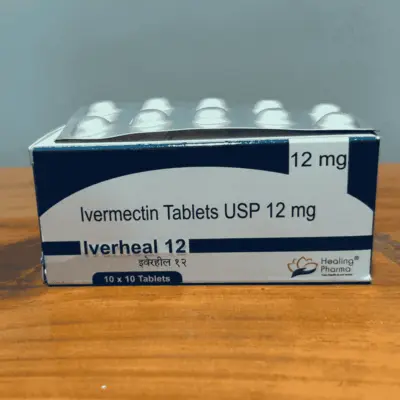
What Is Ivecop 12 mg Tablet?
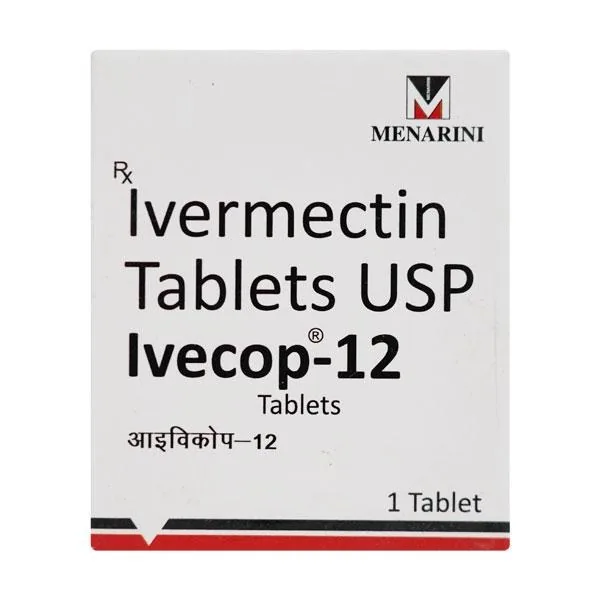
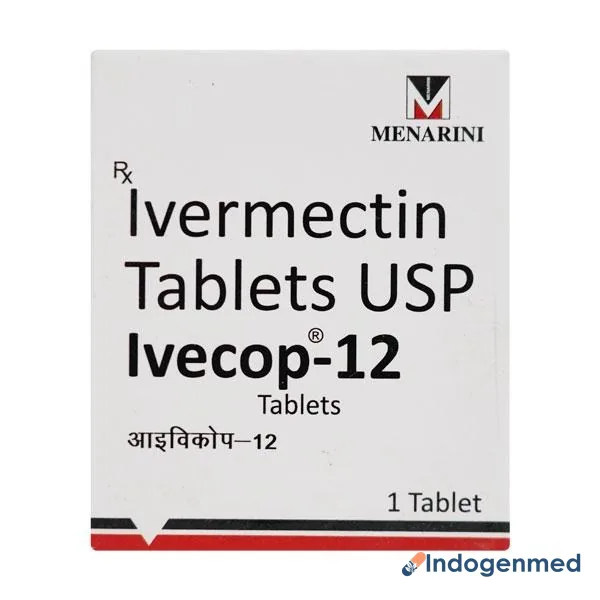
Ivecop 12 mg Tablet contains ivermectin 12 mg, a broad-spectrum antiparasitic agent belonging to the avermectin class of macrocyclic lactone compounds. Ivermectin was originally derived from the soil bacterium Streptomyces avermitilis and has been used in human medicine since the 1980s, earning the 2015 Nobel Prize in Physiology or Medicine for its discoverers. The 12 mg single tablet dose is widely used for the treatment of onchocerciasis (river blindness), intestinal strongyloidiasis, and other parasitic infections including scabies (at weight-adjusted dosing), lymphatic filariasis (in mass drug administration programmes), and cutaneous larva migrans. Ivermectin is included on the WHO Model List of Essential Medicines. The 12 mg formulation provides a convenient single-dose option for adult patients in the typical weight range for onchocerciasis and strongyloides treatment (body weight approximately 65–84 kg using the standard 150 mcg/kg dosing schedule). Ivermectin acts selectively on invertebrate neuromuscular targets absent in mammals, explaining its wide safety margin in humans at therapeutic doses.
Mechanism of Action
Glutamate-Gated Chloride Channel Activation
Ivermectin’s primary mechanism involves selective, high-affinity binding to glutamate-gated chloride ion channels (GluCl channels) found in invertebrate nerve and muscle cells. These channels are unique to invertebrates — they are absent in mammals, insects, and other arthropods that lack the specific GluCl subunit configuration targeted by ivermectin. Binding of ivermectin to these channels causes them to open irreversibly (or in a prolonged fashion), leading to increased permeability of the cell membrane to chloride ions. The resulting influx of chloride ions hyperpolarises the nerve or muscle cell, causing paralysis of the parasite’s pharyngeal and somatic muscle activity.
Selective Invertebrate Toxicity
The selectivity of ivermectin for parasitic organisms over human hosts is based on two factors: first, GluCl channels (the primary target) do not exist in mammals; second, ivermectin has very low affinity for mammalian GABA-gated chloride channels (which are related but distinct). Ivermectin does not readily cross the intact mammalian blood-brain barrier at therapeutic doses (the P-glycoprotein efflux pump actively exports ivermectin from the central nervous system). This explains why neurotoxicity is primarily a risk in individuals with compromised blood-brain barrier function (e.g., certain genetic variants of P-glycoprotein efflux transporter) or in animals with absent P-glycoprotein (such as collies carrying the MDR1 gene mutation).
Effects on Parasites
In nematodes (roundworms such as Onchocerca volvulus and Strongyloides stercoralis), ivermectin causes paralysis of the pharyngeal pumping mechanism, preventing feeding and causing death through starvation. In microfilariae (larval stages), ivermectin causes paralysis and enhanced immune-mediated killing, reducing microfilarial skin and eye burdens. Ivermectin is microfilaricidal (kills the larval stage) rather than macrofilaricidal (it does not reliably kill the adult worms), which explains why repeat annual dosing is required for onchocerciasis control.
Indications
- Onchocerciasis (river blindness): Single oral dose of ivermectin 150 mcg/kg body weight, repeated every 6–12 months. Ivermectin reduces skin and ocular microfilarial loads, thereby preventing or slowing the progressive visual impairment that characterises advanced onchocerciasis. It does not kill adult worms, so long-term repeated dosing is required in endemic areas. Ivermectin is the cornerstone of the WHO Onchocerciasis Control Programme and large-scale community mass drug administration (MDA) programmes.
- Intestinal strongyloidiasis: Ivermectin 200 mcg/kg orally once daily for 1–2 days is the preferred first-line treatment for intestinal Strongyloides stercoralis infection. Ivermectin is superior to albendazole for strongyloidiasis and has replaced thiabendazole as the drug of choice. In hyperinfection syndrome or disseminated strongyloidiasis (a severe potentially fatal complication in immunocompromised patients), ivermectin is essential and may need to be continued for extended courses until larval clearance is confirmed.
- Scabies: A single oral dose of ivermectin 200 mcg/kg, repeated after 1–2 weeks, is effective for the treatment of classical and crusted (Norwegian) scabies. Oral ivermectin is particularly useful for crusted scabies (where topical treatment alone may fail) and for treatment of outbreaks in institutional settings. Topical permethrin cream remains a commonly used alternative for classical scabies.
- Lymphatic filariasis: Ivermectin is used in combination with albendazole (or diethylcarbamazine) in WHO MDA programmes for lymphatic filariasis elimination in regions where onchocerciasis is not co-endemic.
- Cutaneous larva migrans: Ivermectin 200 mcg/kg as a single oral dose is effective for the treatment of cutaneous larva migrans caused by dog or cat hookworm larvae (Ancylostoma spp.).
- Loiasis: Ivermectin reduces Loa loa microfilaraemia, though it must be used with extreme caution (see warnings) in areas where loiasis is co-endemic with onchocerciasis due to the risk of serious neurological adverse events in individuals with high L. loa microfilarial loads.
Dosage and Administration
Onchocerciasis: 150 mcg/kg as a single oral dose, repeated every 6–12 months. Approximate weight-based tablet dosing using 3 mg tablets: 15–25 kg (1 tablet), 26–44 kg (2 tablets), 45–64 kg (3 tablets), 65–84 kg (4 tablets = one 12 mg tablet), 85 kg+ (5 tablets or dose by weight).
Strongyloidiasis: 200 mcg/kg once daily for 1–2 days. For a 60 kg adult: 12 mg per day for 1–2 days. For hyperinfection syndrome, extended courses (until two negative stool examinations) are used under specialist guidance.
Scabies: 200 mcg/kg as a single dose, repeated after 1–2 weeks. For a 60 kg adult: 12 mg as a single dose.
Administration: Ivermectin tablets should be taken on an empty stomach with water, at least 30 minutes before food. Food (particularly high-fat meals) substantially increases systemic absorption of ivermectin (by 2.5-fold in some studies), which may increase both efficacy and adverse effects; fasting administration provides more consistent and predictable pharmacokinetics.
Renal impairment: No dose adjustment required. Ivermectin and its metabolites are primarily excreted in faeces (over 90%); renal excretion is minimal.
Hepatic impairment: Ivermectin is extensively hepatically metabolised via CYP3A4; it should be used with caution in severe hepatic impairment. No formal dose adjustment guidance exists for hepatic impairment.
Elderly patients: No specific dose adjustment required. Standard weight-based dosing is used; older patients may have altered pharmacokinetics and should be monitored.
Contraindications
- Known hypersensitivity to ivermectin or to any excipient in the formulation
- Meningitis or any condition associated with increased blood-brain barrier permeability — ivermectin may penetrate the CNS in these circumstances, causing neurotoxicity
- Children under 15 kg body weight — safety and efficacy have not been adequately established; WHO recommends against use below 15 kg
Warnings and Precautions
Mazzotti Reaction (Onchocerciasis)
In patients with onchocerciasis, rapid killing of microfilariae triggers a systemic inflammatory reaction known as the Mazzotti reaction — an immune-mediated response to dying parasite antigens. Symptoms include fever, headache, dizziness, somnolence, pruritus, skin rash, urticaria, oedema, lymphadenopathy, arthralgia, and hypotension. These effects occur within the first 24–48 hours of treatment and are generally self-limiting. Symptomatic treatment with antihistamines and analgesics is appropriate; severe reactions may require corticosteroids. The reaction is not an allergic response to ivermectin itself.
Serious Neurological Events in High-Density Loa loa Co-infection
In regions of Central and West Africa where Loa loa (loiasis) is endemic alongside onchocerciasis, rare but serious neurological adverse events — including encephalopathy, coma, and death — have been reported following ivermectin administration in individuals with very high L. loa microfilarial blood densities (>30,000 mf/mL). Pre-treatment screening for L. loa microfilaraemia is recommended in co-endemic areas before MDA programmes. Treatment should be deferred or dose-adjusted in individuals with high-density L. loa microfilaraemia.
Blood-Brain Barrier Integrity
Ivermectin does not normally cross the intact mammalian blood-brain barrier at therapeutic doses, due to active efflux by P-glycoprotein. However, in conditions that compromise blood-brain barrier integrity (bacterial meningitis, viral encephalitis, severe malaria) or in individuals with genetic P-glycoprotein variants resulting in reduced efflux capacity, ivermectin may penetrate the CNS and cause neurotoxicity. Ivermectin should be used with caution or avoided in patients with active CNS infections or significant neurological disease.
Pregnancy
Ivermectin crosses the placenta. Animal reproductive studies have demonstrated fetotoxicity at high doses. Ivermectin is generally not recommended for use during the first trimester of pregnancy. WHO guidelines for MDA programmes exclude pregnant women, particularly in the first trimester. The benefit-risk balance may favour treatment in certain circumstances (e.g., life-threatening hyperinfection strongyloidiasis in pregnancy) under specialist guidance.
Breastfeeding
Ivermectin is excreted in human breast milk in low concentrations. It is generally considered compatible with breastfeeding in infants over 15 kg body weight, but caution is advised for neonates and very young infants (under 3 months).
Adverse Effects
- Mazzotti reaction (onchocerciasis-specific): Fever, headache, dizziness, pruritus, urticaria, oedema, myalgia, arthralgia, hypotension — immune-mediated, occurs 24–48 h post-dose, self-limiting
- Common (non-Mazzotti): Headache, dizziness, somnolence, fatigue, nausea, diarrhoea, abdominal pain
- Less common: Elevated liver enzymes (transient), peripheral oedema, vision disturbance (rare), tachycardia
- Rare (serious): Severe neurological events (encephalopathy, ataxia, seizures, coma) — primarily reported in Loa loa co-infection with high microfilaraemia, or with compromised blood-brain barrier; anaphylaxis (very rare)
Drug Interactions
CYP3A4 Inhibitors and Inducers
Ivermectin is metabolised primarily by CYP3A4 in the liver. Strong CYP3A4 inhibitors (ketoconazole, itraconazole, ritonavir, clarithromycin) may increase ivermectin plasma concentrations, potentially increasing adverse effects. Strong CYP3A4 inducers (rifampicin, carbamazepine, phenytoin) may reduce ivermectin plasma concentrations, potentially reducing efficacy. No specific dose adjustments are established for these interactions; monitor closely.
P-glycoprotein Interactions
Ivermectin is a substrate of P-glycoprotein efflux transporter. Drugs that inhibit P-glycoprotein (e.g., quinidine, verapamil, amiodarone) may increase ivermectin systemic and CNS exposure by reducing efflux transport. This interaction is particularly relevant for CNS toxicity risk.
Warfarin
Elevated INR and increased anticoagulant effect have been reported with concurrent ivermectin use. The mechanism may involve CYP2C9 inhibition or other pharmacokinetic interactions. Monitor INR closely when ivermectin is administered to patients on warfarin.
Alcohol
Alcohol consumption may increase ivermectin bioavailability and CNS adverse effects. Patients should be advised to avoid alcohol on the day of ivermectin dosing.
Storage
Store Ivecop 12 mg Tablets at room temperature (below 30°C) in a dry place away from moisture and direct light. Keep in the original packaging until use. Store out of reach of children. Do not use after the expiry date printed on the pack.
Related Products
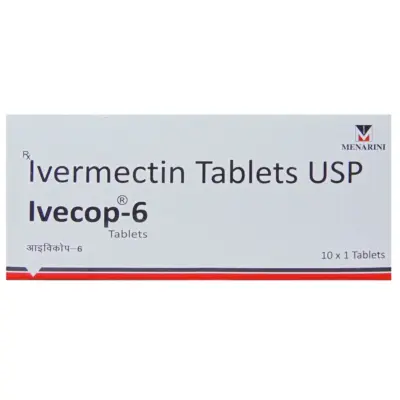
- Ivecop 6 mg Tablets (Ivermectin 6 mg — lower strength for weight-adjusted paediatric and adult dosing)
- Albendazole 400 mg Tablets (alternative broad-spectrum antiparasitic; first-line for intestinal nematodes and combination therapy in MDA programmes)
References
- DailyMed. Ivermectin tablets — prescribing information (Stromectol). U.S. National Library of Medicine. Available at: https://dailymed.nlm.nih.gov/dailymed/
- MedlinePlus. Ivermectin. U.S. National Library of Medicine. Available at: https://medlineplus.gov/druginfo/meds/a607069.html
- Mayo Clinic. Ivermectin (Oral Route). Available at: https://www.mayoclinic.org/
- Electronic Medicines Compendium (EMC). Ivermectin 3 mg tablets — Summary of Product Characteristics. Available at: https://www.medicines.org.uk/emc/
- World Health Organization. Ivermectin — model prescribing information: drugs used in parasitic diseases. WHO Essential Medicines. Available at: https://www.who.int/
Reviews
There are no reviews yet.