Description
What Is Lariago 500 mg Tablet?
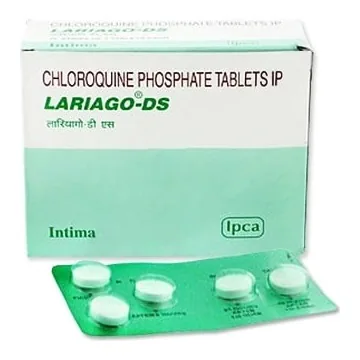
Lariago 500 mg Tablet contains chloroquine phosphate 500 mg, equivalent to chloroquine base 300 mg. Chloroquine is a 4-aminoquinoline antimalarial and antirheumatic agent that has been in clinical use for over 70 years. The 500 mg phosphate salt (300 mg base) formulation represents the standard adult dose used for malaria treatment and prophylaxis, as well as for the treatment of extraintestinal amoebiasis and rheumatological conditions (rheumatoid arthritis and systemic lupus erythematosus). Chloroquine acts by accumulating within the acidic food vacuole of the malaria parasite, where it interferes with haem polymerisation and causes toxic haem accumulation, killing the parasite. It is included on the WHO Model List of Essential Medicines. While resistance has substantially limited its utility against Plasmodium falciparum malaria in most of the world, chloroquine remains effective against Plasmodium vivax, Plasmodium malariae, and Plasmodium ovale in many regions, and continues to serve as a first-line treatment option in areas where chloroquine-sensitive malaria strains predominate. Doses are expressed as chloroquine phosphate salt weight (e.g., 500 mg) or as chloroquine base (e.g., 300 mg); always clarify which is intended, as the two values differ by a factor of approximately 1.67.
Mechanism of Action
Haem Polymerisation Inhibition
During the erythrocytic stage of malaria, the parasite (Plasmodium spp.) digests host haemoglobin within its acidic food vacuole as a source of amino acids. This process releases large quantities of toxic free haem (ferriprotoporphyrin IX), which the parasite normally detoxifies by polymerising it into an insoluble, non-toxic crystalline form called haemozoin (malaria pigment). Chloroquine, as a weak base, concentrates in the acidic food vacuole by ion-trapping (reaching concentrations up to 100-fold higher than plasma), where it binds to free haem and inhibits its incorporation into haemozoin. The resulting toxic haem accumulation destroys the parasite’s food vacuole membrane and leads to parasite death.
Additional Mechanisms
Chloroquine also intercalates into parasite DNA, inhibiting DNA and RNA synthesis. At higher concentrations, it disrupts lysosomal function and inhibits various pH-dependent enzymes. In rheumatological conditions, chloroquine’s accumulation in lysosomes of immune cells impairs antigen processing and presentation, reduces pro-inflammatory cytokine production (TNF-α, IL-1, IL-6), and decreases toll-like receptor (TLR) signalling — mechanisms that explain its anti-inflammatory and immunomodulatory efficacy in rheumatoid arthritis and systemic lupus erythematosus.
Resistance Mechanisms
Chloroquine resistance in P. falciparum is primarily mediated by mutations in the PfCRT (Plasmodium falciparum chloroquine resistance transporter) gene — particularly the K76T mutation — which allows the parasite to efflux chloroquine from the food vacuole before it reaches toxic concentrations. Resistance has spread globally since it first emerged in Southeast Asia and South America in the late 1950s and is now widespread in sub-Saharan Africa and most malarious regions. P. vivax resistance to chloroquine (mediated by different mechanisms) has also emerged in Papua New Guinea, Indonesia, and parts of South America, though chloroquine-sensitive P. vivax remains common elsewhere.
Indications
- Uncomplicated malaria treatment (chloroquine-sensitive strains): Chloroquine is first-line therapy for uncomplicated malaria caused by chloroquine-sensitive P. vivax, P. malariae, P. ovale, and P. knowlesi. It is also used for P. falciparum malaria in the rare areas where this species remains chloroquine-sensitive (Central America west of the Panama Canal, parts of the Caribbean, and limited areas of the Middle East). Always confirm current local chloroquine resistance patterns before prescribing.
- Malaria prophylaxis: Chloroquine 500 mg (300 mg base) once weekly, beginning 1–2 weeks before travel to a malarious area and continuing for 4 weeks after departure. Restricted to areas with chloroquine-sensitive malaria; not recommended for travel to chloroquine-resistant P. falciparum endemic areas, where alternative prophylaxis (atovaquone-proguanil, doxycycline, or mefloquine) is preferred.
- Extraintestinal amoebiasis: Chloroquine is used as an adjunct to metronidazole for amoebic liver abscess, as it concentrates in liver tissue at high levels relative to plasma (liver-to-plasma ratio of 200–700:1), providing therapeutic concentrations against Entamoeba histolytica trophozoites in hepatic lesions.
- Rheumatoid arthritis: Chloroquine (or the preferred hydroxychloroquine) is a disease-modifying antirheumatic drug (DMARD) used as monotherapy or in combination with other DMARDs. Onset of antirheumatic effect is slow (2–6 months).
- Systemic lupus erythematosus (SLE): Chloroquine or hydroxychloroquine is a cornerstone of SLE management, reducing disease flares, organ damage accrual, mortality, and thrombotic risk. Long-term use is recommended for most patients with SLE.
Dosage and Administration
Uncomplicated malaria treatment (chloroquine-sensitive species): The WHO recommended treatment schedule for adults:
- Day 1: Chloroquine phosphate 1000 mg (600 mg base) — i.e., 2 tablets of 500 mg
- Day 2: Chloroquine phosphate 500 mg (300 mg base) — i.e., 1 tablet
- Day 3: Chloroquine phosphate 500 mg (300 mg base) — i.e., 1 tablet
- Total course: 2500 mg phosphate (1500 mg base) over 3 days
For P. vivax and P. ovale malaria, follow chloroquine with primaquine (to eradicate liver hypnozoites and prevent relapse) after checking G6PD status.
Malaria prophylaxis: Chloroquine phosphate 500 mg (300 mg base) orally once weekly. Begin 1–2 weeks before entering a malarious area; continue for 4 weeks after leaving. Take on the same day each week.
Extraintestinal amoebiasis (amoebic liver abscess): Chloroquine phosphate 1000 mg (600 mg base) daily for 2 days, then 500 mg (300 mg base) daily for 2–3 weeks, in combination with metronidazole.
Rheumatoid arthritis / SLE: Chloroquine phosphate 250–500 mg daily (150–300 mg base); hydroxychloroquine is generally preferred for long-term use due to a lower risk of retinal toxicity.
Administration: Chloroquine tablets should be taken with food or milk to reduce gastric adverse effects. Tablets may be crushed for patients who cannot swallow them whole.
Renal impairment: Chloroquine is renally excreted; dose reduction is recommended in significant renal impairment. Consult current prescribing guidelines for specific dose adjustments.
Hepatic impairment: Use with caution in hepatic impairment; chloroquine is hepatically metabolised to active metabolites.
Contraindications
- Known hypersensitivity to chloroquine, hydroxychloroquine, or other 4-aminoquinolines
- Pre-existing retinal or visual field changes attributable to 4-aminoquinolines
- Porphyria (all types) — chloroquine can precipitate acute porphyria attacks
- Myasthenia gravis — chloroquine may exacerbate neuromuscular blockade
- Epilepsy — chloroquine lowers the seizure threshold (use with extreme caution if benefit outweighs risk)
- Psoriasis — chloroquine may precipitate severe psoriatic flares
Warnings and Precautions
Retinal Toxicity (Chloroquine Retinopathy)
The most important long-term risk of chloroquine use is irreversible retinal toxicity (chloroquine maculopathy). Chloroquine accumulates in melanin-containing tissues including the retinal pigment epithelium and can cause progressive, potentially irreversible bull’s-eye maculopathy with central scotoma and visual acuity loss. The risk increases substantially with:
- Cumulative dose exceeding 460 g chloroquine base (after which annual ophthalmological screening is mandatory)
- Daily dose exceeding 2.3 mg/kg chloroquine base
- Duration of use exceeding 5 years
- Renal impairment (impaired drug excretion)
- Pre-existing macular disease
Ophthalmological examination (including visual fields and macular OCT) should be performed before starting long-term chloroquine therapy and annually after 5 years (or earlier in high-risk patients). Chloroquine should be stopped immediately if any retinal changes are detected. Retinopathy may progress even after stopping the drug.
Cardiac Toxicity
Chloroquine prolongs the QT interval and may cause potentially fatal ventricular arrhythmias (torsades de pointes) particularly at high doses or in patients with pre-existing cardiac conduction defects. Electrocardiographic monitoring is recommended in patients with cardiac disease and those receiving other QT-prolonging drugs. Avoid chloroquine in patients with pre-existing QTc prolongation (>500 ms).
G6PD Deficiency
Chloroquine can cause haemolytic anaemia in patients with glucose-6-phosphate dehydrogenase (G6PD) deficiency. While chloroquine is not an absolute contraindication in G6PD deficiency, monitoring for haemolysis is advisable, particularly at higher doses or during prolonged treatment. G6PD testing is essential before prescribing primaquine (used for P. vivax radical cure).
Hypoglycaemia
Chloroquine stimulates insulin secretion from pancreatic beta cells and can cause clinically significant hypoglycaemia, particularly in patients who are fasting, in patients with malaria (who often have baseline impaired glucose regulation), and in patients with diabetes on insulin or sulphonylureas. Monitor blood glucose in at-risk patients.
Psychiatric Effects
Chloroquine and related drugs may cause neuropsychiatric adverse effects including anxiety, depression, nightmares, psychosis, and suicidal ideation, though these are more frequently reported with mefloquine. Any neuropsychiatric symptoms during chloroquine therapy should prompt review and consideration of discontinuation.
Adverse Effects
- Common: Nausea, vomiting, abdominal discomfort, diarrhoea, headache, dizziness, pruritus (particularly in Black African patients — a dose-dependent, non-allergic side effect), skin pigmentation changes (long-term)
- Less common: Rash, urticaria, alopecia (reversible), bleaching of hair pigment, tinnitus, visual blurring, accommodation difficulties
- Long-term / serious: Retinal maculopathy (irreversible — see warnings), cardiomyopathy (rare, long-term high-dose use), skeletal myopathy (rare, long-term), peripheral neuropathy (rare), agranulocytosis (rare), aplastic anaemia (rare)
- Cardiovascular: QT prolongation, potentially fatal arrhythmias at high doses
- Severe overdose: Hypotension, seizures, cardiovascular collapse, respiratory arrest — chloroquine overdose is a medical emergency with a narrow margin between therapeutic and toxic doses
Drug Interactions
QT-prolonging drugs: Additive QT prolongation with antiarrhythmics (amiodarone, sotalol), antipsychotics (haloperidol, quetiapine), antibiotics (azithromycin, moxifloxacin), and other antimalarials (halofantrine). Avoid combinations or monitor ECG closely.
Antacids and kaolin: Reduce chloroquine absorption — separate administration by at least 4 hours.
Ampicillin: Chloroquine reduces ampicillin bioavailability — separate by 2 hours.
Ciclosporin: Chloroquine increases ciclosporin plasma levels — monitor ciclosporin concentrations and renal function.
Mefloquine: Increased risk of seizures when combined; avoid concurrent use.
Insulin and oral hypoglycaemics: Enhanced hypoglycaemic effect — monitor blood glucose.
Praziquantel: Chloroquine reduces praziquantel bioavailability and should not be used concomitantly for schistosomiasis.
Vaccines (live): Chloroquine may impair immune response to oral typhoid vaccine (Ty21a) and intradermal rabies pre-exposure prophylaxis. Separate oral typhoid vaccination from chloroquine by at least 24 hours; complete rabies pre-exposure series before starting chloroquine where possible.
Storage
Store Lariago 500 mg Tablets at room temperature (below 30°C) in a dry place, away from moisture and direct light. Keep in the original blister pack until use. Store out of reach of children. Do not use after the expiry date printed on the packaging.
Related Products
- Lariago DS Tablet (Chloroquine phosphate — higher strength tablet formulation)
- Hydroxychloroquine 200 mg Tablets (preferred 4-aminoquinoline for long-term rheumatological use — lower retinal toxicity risk)
References
- DailyMed. Chloroquine phosphate tablets — prescribing information. U.S. National Library of Medicine. Available at: https://dailymed.nlm.nih.gov/dailymed/
- MedlinePlus. Chloroquine. U.S. National Library of Medicine. Available at: https://medlineplus.gov/druginfo/meds/a682318.html
- Mayo Clinic. Chloroquine (Oral Route). Available at: https://www.mayoclinic.org/
- Electronic Medicines Compendium (EMC). Chloroquine phosphate 250 mg tablets — Summary of Product Characteristics. Available at: https://www.medicines.org.uk/emc/
- World Health Organization. Guidelines for the treatment of malaria, 3rd edition. WHO. Available at: https://www.who.int/

Reviews
There are no reviews yet.