Description
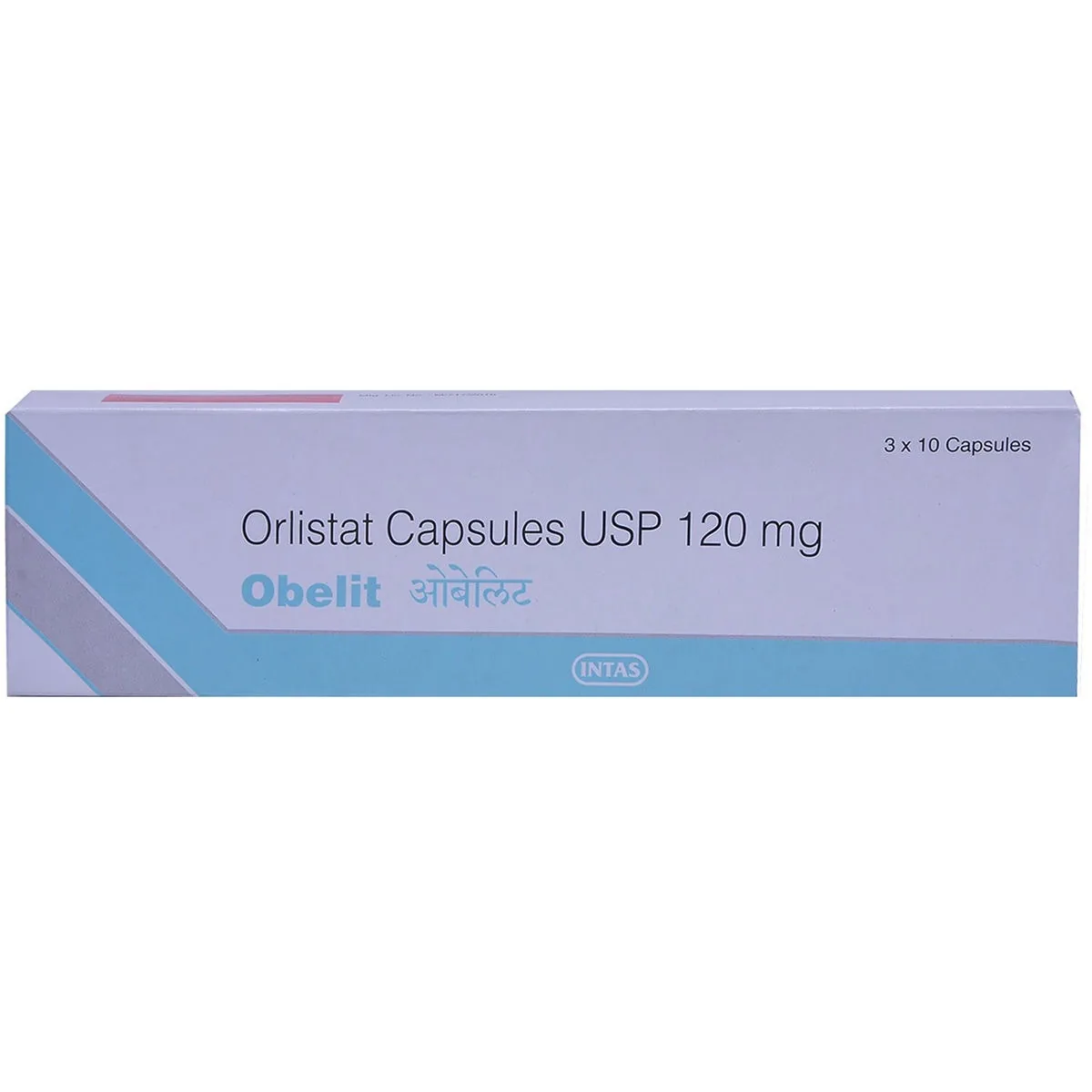
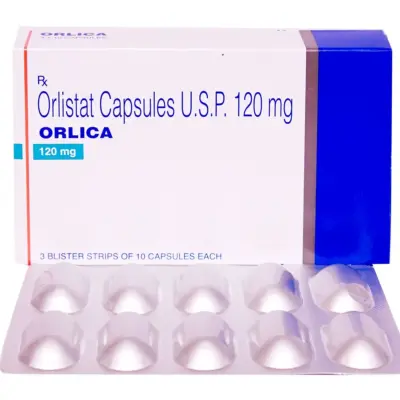
Obelit 120 Mg Tablets – Orlistat 120 mg
Obelit 120 Mg Tablets contain orlistat 120 mg, a gastrointestinal lipase inhibitor indicated as an adjunct to a reduced-calorie diet and exercise programme for the management of obesity and overweight. Orlistat works entirely within the gastrointestinal tract and is not absorbed into the bloodstream in meaningful quantities, making it one of the few weight-management medicines to act locally in the gut rather than centrally in the brain.
Orlistat 120 mg (Obelit 120) is the prescription-strength formulation and is prescribed for adults and adolescents aged 12 years and above with a body mass index (BMI) of 30 kg/m² or above, or 28 kg/m² or above in patients with weight-related comorbidities such as type 2 diabetes, hypertension, or dyslipidaemia.
Mechanism of Action
Dietary fats (triglycerides) cannot be absorbed across the intestinal wall in their native form. They must first be hydrolysed into free fatty acids and monoglycerides by pancreatic lipase and gastric lipase enzymes secreted into the gastrointestinal lumen.
Orlistat is a synthetic derivative of lipstatin, a natural lipase inhibitor produced by Streptomyces toxytricini. It forms a covalent, stable bond with the active serine residue of gastric and pancreatic lipases, thereby irreversibly inactivating these enzymes. Without functional lipases, dietary triglycerides pass through the intestinal tract undigested and unabsorbed, and are excreted intact in the faeces.
At the therapeutic dose of 120 mg taken three times daily with each main meal, orlistat inhibits dietary fat absorption by approximately 30%. This reduction in caloric intake from fat creates a sustained caloric deficit that, combined with dietary modification, contributes to weight loss.
Importantly, orlistat does not affect the absorption of carbohydrates, proteins, or fat-soluble vitamins directly — but because fat is not absorbed, the fat-soluble vitamins A, D, E, and K that would normally be transported with dietary fat are also partially lost. Supplementation with a daily multivitamin is therefore recommended during orlistat therapy.
Indications
- Obesity management: As an adjunct to a reduced-calorie diet in adults with BMI ≥30 kg/m²
- Overweight with risk factors: In patients with BMI ≥28 kg/m² who have at least one obesity-related comorbidity (type 2 diabetes, hypertension, dyslipidaemia)
- Weight maintenance: Prevention of weight regain following initial weight loss
- Adolescents: Approved for patients aged ≥12 years as an adjunct to lifestyle modification
Orlistat is used as part of a comprehensive obesity management programme that includes dietary changes, increased physical activity, and behaviour modification. It is not a substitute for lifestyle intervention.
Dosage and Administration
- Standard dose: 120 mg (one tablet) taken three times daily, immediately before, during, or up to 1 hour after each main meal containing fat
- If a main meal is missed or contains no fat, the orlistat dose for that meal may be omitted — taking orlistat without a fat-containing meal provides no benefit and can be skipped
- Duration: Typically reviewed at 3 months; if weight loss is <5% of initial body weight after 12 weeks on a full programme, treatment should be reconsidered
- Swallow tablets whole with water
- Multivitamin supplementation: Take a multivitamin containing fat-soluble vitamins (A, D, E, K) once daily, at bedtime or at least 2 hours after orlistat
Pharmacokinetics
Orlistat acts locally within the gastrointestinal lumen. Systemic absorption is minimal — less than 1% of the administered dose is absorbed into the bloodstream. The drug does not undergo significant systemic metabolism. The small amount that is absorbed is rapidly cleared in the bile and faeces. Because orlistat’s mechanism of action is local (inhibition of intestinal lipases), its pharmacological effect is not dependent on systemic plasma concentrations.
The unabsorbed orlistat and the undigested dietary fat it prevents from being absorbed are both excreted in faeces. This is the basis for the characteristic gastrointestinal side effects of orlistat — oily or fatty stools, oily spotting on underclothing, and increased bowel urgency — particularly when high-fat meals are consumed.
Expected Weight Loss
In clinical trials, patients taking orlistat 120 mg three times daily combined with a reduced-calorie diet lost significantly more weight than those on diet alone:
- After 1 year: orlistat-treated patients lost approximately 9–10% of initial body weight, compared with 5–6% in placebo groups
- Weight loss with orlistat is gradual (0.5–1 kg/week) and proportional to dietary fat intake; patients who continue to consume a high-fat diet see greater GI side effects without proportionally greater weight loss compared with those who maintain a low-fat diet
- Orlistat also significantly reduces the risk of progression from impaired glucose tolerance to type 2 diabetes in overweight patients
Contraindications
- Known hypersensitivity to orlistat or any excipient
- Chronic malabsorption syndrome (e.g., Crohn’s disease with significant small bowel resection, coeliac disease not controlled with diet)
- Cholestasis (impaired bile flow) — orlistat depends on bile for access to lipases; efficacy is reduced and hepatic safety is uncertain
- Pregnancy and breastfeeding
- Children under 12 years
- Organ transplant recipients taking ciclosporin (significant pharmacokinetic interaction)
Precautions and Warnings
- Fat-soluble vitamin deficiency: Daily multivitamin supplementation with fat-soluble vitamins A, D, E, and K is essential. Vitamins should be taken at bedtime or at least 2 hours after orlistat
- Hepatic effects: Rare cases of serious hepatic injury (some fatal) have been reported post-marketing. Patients should report symptoms of liver disease (jaundice, dark urine, right upper quadrant pain, fatigue); discontinue and assess immediately if suspected
- Renal oxalate nephropathy: Orlistat may increase urinary oxalate excretion, increasing the risk of kidney oxalate stones, particularly in patients with existing renal disease. Adequate hydration should be maintained
- Hypothyroidism medications: Orlistat may reduce the absorption of levothyroxine; administer levothyroxine 4 hours apart from orlistat and monitor thyroid function
- Anticonvulsants: Orlistat may reduce absorption of some anticonvulsants (valproate, lamotrigine); monitor seizure control carefully
- Warfarin: Reduced vitamin K absorption may affect INR; monitor anticoagulation
- Diabetes: As patients lose weight on orlistat, antidiabetic medications (e.g., insulin, sulphonylureas) may need dose reductions to prevent hypoglycaemia
- Rectal bleeding, severe or prolonged gastrointestinal symptoms: Report to a physician; may indicate a more serious GI condition
Drug Interactions
- Ciclosporin: Orlistat significantly reduces ciclosporin absorption (by up to 30%). Avoid concomitant use or allow at least 3 hours between doses; monitor ciclosporin levels closely
- Warfarin: Reduced vitamin K absorption may increase anticoagulant effect; monitor INR
- Antiepileptic drugs (valproate, lamotrigine): Potential for reduced absorption; monitor seizure frequency
- Levothyroxine: Reduced absorption; separate administration by at least 4 hours
- Fat-soluble vitamins (A, D, E, K): Co-administration leads to reduced absorption; take vitamins at bedtime or ≥2 hours after orlistat
- Amiodarone: Possible reduction in amiodarone plasma levels; monitor cardiac function and rhythm
Adverse Effects
- Very common (GI — dose- and diet-dependent): Oily spotting on underwear, oily or fatty stools, increased defecation urgency, oily discharge, flatus with discharge, liquid stools, faecal incontinence. These are the direct result of unabsorbed dietary fat in the colon and are more pronounced with high-fat meals
- Common: Abdominal pain or discomfort, rectal pain, nausea, diarrhoea, tooth and gingival disorders (reported in clinical trials)
- Uncommon: Anxiety, fatigue, headache, menstrual irregularity, urinary tract infection
- Rare/Serious: Hepatitis and serious hepatic injury; renal oxalate nephrolithiasis; pancreatitis; rectal bleeding
The GI side effects are the mechanism of action made manifest — they signal that the drug is working (fat is being excreted rather than absorbed). They typically subside as patients adapt their diet to lower fat intake, usually within the first 4 weeks of treatment.
Storage Instructions
- Store below 25°C in a cool, dry place
- Keep in original packaging, away from moisture and direct light
- Keep out of reach of children
- Do not use after the expiry date printed on the pack
Frequently Asked Questions
What happens if I eat a high-fat meal while taking Obelit 120?
The more dietary fat you consume, the more fat orlistat prevents from being absorbed — and the more excess fat is excreted in your stools. This means high-fat meals cause more pronounced gastrointestinal side effects (oily stools, urgency, discharge). The drug acts as an automatic deterrent to high-fat eating: dietary fat should ideally be distributed evenly across meals and kept at approximately 30% of total calorie intake.
Do I need to take a vitamin supplement with Obelit?
Yes. Because orlistat prevents fat absorption, the fat-soluble vitamins A, D, E, and K that would normally travel with dietary fat are also partially lost. A daily multivitamin should be taken at bedtime or at least 2 hours before or after orlistat.
How long should I take orlistat?
Treatment duration depends on response. If you have not lost at least 5% of your initial body weight after 12 weeks of treatment alongside dietary and lifestyle changes, your doctor will likely reassess whether orlistat is appropriate for you.
Can Obelit 120 be taken if I have type 2 diabetes?
Yes, with caution. As you lose weight, blood glucose control often improves, and your antidiabetic medication (insulin or sulphonylurea doses) may need to be reduced to prevent hypoglycaemia. Blood sugar should be monitored more closely during the initial weeks of orlistat treatment.
References
- U.S. Food and Drug Administration. Xenical (orlistat) capsules – prescribing information. Available at: https://www.accessdata.fda.gov/drugsatfda_docs/label/2009/020766s026lbl.pdf
- National Library of Medicine – DailyMed. Orlistat capsule. Available at: https://dailymed.nlm.nih.gov/dailymed/search.cfm?labeltype=all&query=orlistat
- MedlinePlus (U.S. National Library of Medicine). Orlistat. Available at: https://medlineplus.gov/druginfo/meds/a601244.html
- Torgerson JS, et al. XENical in the prevention of diabetes in obese subjects (XENDOS) study. Diabetes Care. 2004;27(1):155–161.

Reviews
There are no reviews yet.