
Description
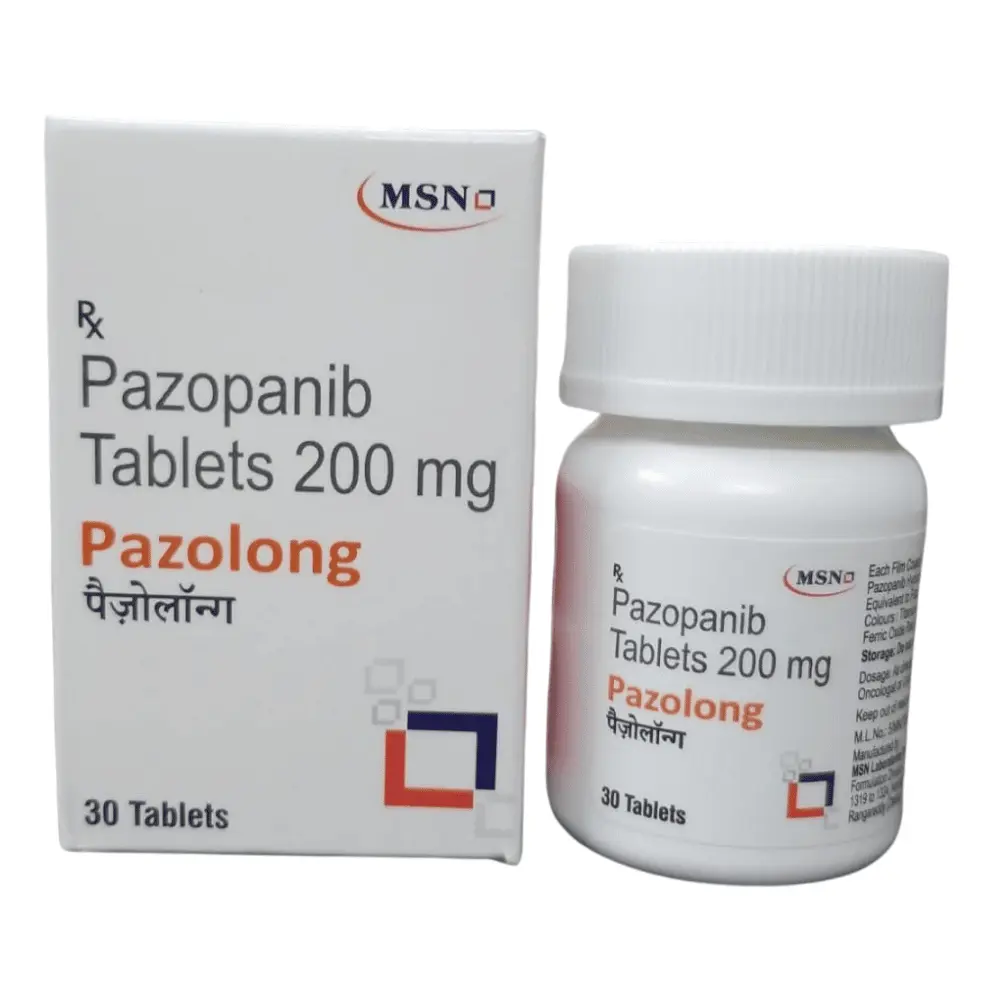
Comprehensive Patient & Clinician Guide to Pazolong 200mg Tablet (Pazopanib Hydrochloride)
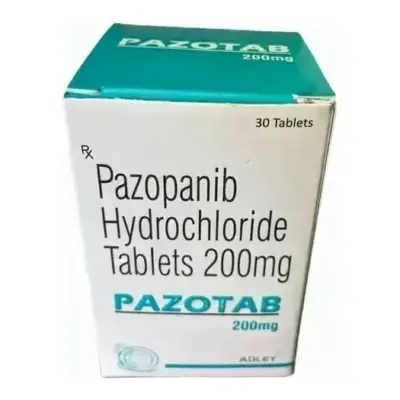
Pazolong 200mg Tablet is an advanced targeted anti-cancer medication classified as a multi-targeted receptor tyrosine kinase (RTK) inhibitor. Manufactured by MSN Laboratories, each film-coated tablet contains 200 mg of pazopanib (as pazopanib hydrochloride).
Pazolong 200mg is prescribed under specialist oncologist supervision to treat adult patients diagnosed with advanced renal cell carcinoma (kidney cancer) and specific subtypes of advanced soft tissue sarcoma.
Unlike conventional chemotherapy that indiscriminately damages rapidly dividing cells throughout the body, Pazolong is designed for precision anti-angiogenesis—inhibiting the growth of new blood vessels that solid tumors require to receive oxygen and essential nutrients.
Molecular Pharmacology & Mechanism of Action
Solid tumors depend on an uninterrupted blood supply to expand beyond a few millimeters. When tumor cells experience low oxygen (hypoxia), they secrete signaling proteins that bind to receptors on nearby endothelial cells, initiating new blood vessel formation—a process termed tumor angiogenesis.
Pazopanib enters cells and binds to the intracellular adenosine triphosphate (ATP)-binding pocket of multiple receptor tyrosine kinases:
-
Vascular Endothelial Growth Factor Receptors (VEGFR-1, VEGFR-2, VEGFR-3): Inhibits endothelial cell proliferation, migration, and vascular permeability.
-
Platelet-Derived Growth Factor Receptors (PDGFR-$\alpha$, PDGFR-$\beta$): Blocks pericyte recruitment and vascular mural cell stabilization.
-
Stem Cell Factor Receptor (c-KIT): Inhibits signaling pathways essential for cellular survival and growth.
-
Fibroblast Growth Factor Receptors (FGFR-1, FGFR-3): Suppresses secondary angiogenic pathways.
By simultaneously blocking these receptors, Pazolong starves the tumor microenvironment of oxygen and nutrients, halting tumor growth and inducing cell death (apoptosis).
Approved Therapeutic Indications
Pazolong 200mg Tablet is indicated for adult patients in specific clinical oncological settings:
-
Advanced or Metastatic Renal Cell Carcinoma (aRCC): Prescribed as a first-line treatment for advanced kidney cancer or as a second-line option following disease progression after prior cytokine therapy.
-
Advanced Soft Tissue Sarcoma (aSTS): Indicated for adult patients with advanced soft tissue sarcoma who have previously received chemotherapy (e.g., anthracyclines) or whose disease has progressed.
-
Clinical Limitation: Safety and efficacy have not been established in gastrointestinal stromal tumors (GIST) or liposarcomas (adipocytic sarcomas).
-
Standard Dosage and Administration Guidelines
Pazolong 200mg must be administered strictly according to your oncologist’s prescription.
Standard Dosage Protocols
-
Standard Daily Dose: The standard adult starting dose is 800 mg taken orally once daily (taken as four 200mg tablets together at the same time each day).
-
Role of the 200mg Strength: The 200mg tablet allows for precise dose adjustments:
-
First Step-Down: Reduction to 600 mg daily (three 200mg tablets).
-
Second Step-Down: Reduction to 400 mg daily (two 200mg tablets).
-
Minimum Therapeutic Dose: Reduction to 200 mg daily (one 200mg tablet) for patients experiencing specific toxicities or with moderate baseline liver impairment.
-
The Strict Empty-Stomach Requirement
Pazolong must be taken on an empty stomach:
-
Take your dose at least 1 hour before a meal, OR
-
Wait at least 2 hours after a meal before taking your tablets.
Why is this strict window essential? Taking pazopanib with food—especially high-fat or high-calorie meals—can double or triple the amount of drug absorbed into your bloodstream.
This unpredictable surge significantly raises the risk of severe liver damage, high blood pressure, and heart rhythm complications.
Administration Checkpoints
-
Swallow Whole: Swallow tablets whole with a full glass of water. Do not chew, crush, split, or dissolve the tablets, as this breaks the film coating and causes dangerous spikes in absorption.
-
Missed Dose Instructions: If you miss a dose by more than 12 hours, take it as soon as you remember. If your next dose is due in less than 12 hours, skip the missed dose and resume your regular schedule the following day. Never take a double dose.
Potential Side Effects & Clinical Management Strategies
Because Pazolong targets vascular signaling throughout the body, side effects across several organ systems may occur.
Common Adverse Reactions
| Organ System | Common Symptoms | Clinical Management |
| Gastrointestinal | Diarrhea, nausea, vomiting, decreased appetite, altered taste (dysgeusia). | Drink plenty of fluids with electrolytes. Eat small, frequent meals. Antidiarrheal medications (e.g., loperamide) may be prescribed. |
| Dermatological | Hair color changes (depigmentation/whitening), skin lightening, dry skin, skin rash, hand-foot skin reaction. | Use gentle, fragrance-free moisturizers. Wear soft footwear. Hair lightening is temporary and typically reverses after therapy ends. |
| Cardiovascular | Hypertension (high blood pressure). | Monitor blood pressure at home weekly. Standard oral antihypertensives are commonly co-prescribed. |
| Systemic | Fatigue, weakness, weight loss, headache. | Schedule rest periods and engage in light physical activity if cleared by your doctor. |
Serious Adverse Reactions (Require Immediate Emergency Care)
-
Severe Hepatotoxicity (Boxed Warning): Pazopanib can cause severe, potentially fatal liver injury.
-
Symptoms: Yellowing of the skin or eyes (jaundice), dark brown or tea-colored urine, right-sided upper stomach pain, severe nausea, or unusual fatigue.
-
-
QT Prolongation & Cardiac Arrhythmias: Can alter the electrical timing of the heart, predisposing patients to ventricular arrhythmias.
-
Symptoms: Palpitations, chest tightness, dizziness, lightheadedness, or sudden fainting.
-
-
Hemorrhagic Events: Increased risk of internal or mucosal bleeding.
-
Symptoms: Coughing up blood, dark or tarry stools, heavy nosebleeds, or unexpected bruising.
-
-
Gastrointestinal Perforation & Fistulas: Rare tears in the stomach or intestinal wall.
-
Symptoms: Sudden, severe abdominal pain accompanied by fever and chills.
-
-
Arterial & Venous Thrombosis: Risk of blood clots (DVT, pulmonary embolism, heart attack, or stroke).
-
Symptoms: Unilateral leg pain/swelling, sharp chest pain, sudden shortness of breath, or facial drooping/weakness.
-
Precautions & Mandatory Safety Monitoring Protocols
To ensure safety, your medical team will require regular lab tests and physical assessments:
| Test Parameter | Recommended Frequency | Clinical Rationale |
| Liver Function Tests (ALT, AST, Bilirubin) | Baseline, then every 2 weeks for the first 9 weeks, then monthly thereafter | Detects serum transaminase elevations early to prevent severe chemical hepatitis or liver failure. |
| Blood Pressure Monitoring | Baseline, weekly for the first 6 weeks, then at every clinic visit | Ensures hypertension is controlled with antihypertensives as needed. |
| Thyroid Function (TSH / Free T4) | Baseline, then every 4 to 6 weeks | Checks for drug-induced hypothyroidism, which can contribute to fatigue and weight changes. |
| ECG & Serum Electrolytes (K+, Mg2+, Ca2+) | Baseline and periodic | Monitors for QTc prolongation and maintains electrolyte balance. |
| Urinalysis (Proteinuria) | Baseline and periodic | Checks for protein leakage caused by renal vascular changes. |
Surgical & Healing Warnings
-
Impaired Wound Healing: Because Pazolong halts new blood vessel growth, it significantly interferes with wound repair. Stop taking Pazolong at least 7 days before elective surgery. Do not resume therapy for at least 2 weeks after surgery, and only once surgical incisions have fully healed.
Drug Interactions & Special Population Guidelines
Pazopanib is metabolized in the liver primarily by the CYP3A4 enzyme and requires an acidic stomach environment for proper dissolution.
Key Interactions
-
Strong CYP3A4 Inhibitors (e.g., Ketoconazole, Clarithromycin): Slow the breakdown of pazopanib, causing drug levels to spike and increasing toxicity. Avoid co-administration.
-
Strong CYP3A4 Inducers (e.g., Rifampin, Phenytoin, Carbamazepine, St. John’s Wort): Accelerate pazopanib metabolism, lowering drug levels and reducing anti-cancer efficacy. Avoid concurrent use.
-
-
Management: Avoid PPIs and H2-blockers. If acid relief is needed, use short-acting antacids spaced at least 2 hours before or 2 hours after your Pazolong dose.
-
-
Grapefruit & Seville Oranges: Must be avoided entirely, as they inhibit CYP3A4 and raise drug levels to toxic amounts.
Special Population Safety Guidelines
-
Pregnancy (Strictly Unsafe): Pazolong causes fetal harm and pregnancy loss. Females of childbearing potential must confirm a negative pregnancy test before starting therapy and use effective contraception during treatment and for at least 2 weeks after the final dose. Male patients with female partners of childbearing potential must use condoms during treatment and for at least 2 weeks after the last dose.
-
Lactation: Breastfeeding is contraindicated during treatment and for at least 2 weeks after the final dose.
-
Pediatric Use: Safety and effectiveness have not been established in patients under 18 years of age.
Storage, Handling, and Quality Compliance
-
Storage Conditions: Store Pazolong 200mg Tablets at room temperature between 20°C and 25°C (68°F to 77°F). Keep the container tightly closed in a dry place away from heat, direct light, and moisture.
-
Safe Handling: Keep out of reach of children and pets. Caregivers should wash their hands thoroughly after handling the tablets.
-
Manufacturing Standards: Manufactured by MSN Laboratories, Pazolong is produced in facilities compliant with WHO-GMP and ISO quality standards to ensure chemical purity, uniform dissolution, and consistent dosing.
Frequently Asked Questions (FAQs)
Q1: Why did my doctor prescribe the 200mg tablet instead of the 400mg strength?
The 200mg strength allows for flexibility in dosing. Whether you take four 200mg tablets to achieve the standard 800mg daily dose or use them to step down to 600mg, 400mg, or 200mg daily, this strength helps your oncologist customize your dose based on your liver function and personal tolerance.
Q2: Why has my hair turned lighter or white while taking Pazolong?
Hair and skin lightening (depigmentation) is a common, harmless side effect of pazopanib. It occurs because the drug blocks receptor pathways (such as c-KIT) that are involved in melanin pigment production. Hair color generally returns to normal after the medication is stopped.
Q3: Can I take Pazolong with morning tea, coffee, or milk?
No. Pazolong must be swallowed with plain water on a completely empty stomach—at least 1 hour before eating or drinking anything other than water, or 2 hours after your last meal or snack.
Q4: What should I do if my blood pressure rises after starting Pazolong?
High blood pressure is a known, manageable effect of anti-angiogenic therapies. Check your blood pressure weekly at home and share the log with your care team. In most cases, your oncologist can prescribe standard oral blood pressure medications to keep your readings in a safe range without needing to discontinue your cancer therapy.
Medical Disclaimer
This clinical guide is strictly for educational and informational purposes and should not replace professional medical advice, diagnosis, or treatment. Always consult a qualified oncologist or healthcare professional before initiating, modifying, or halting any cancer therapy or prescription medication.
References
-
National Center for Biotechnology Information (NCBI):
-
StatPearls Review: Pazopanib Pharmacology, Indications, and Clinical Applications. https://www.ncbi.nlm.nih.gov/books/NBK557622/
-
PMC Clinical Studies: Pazopanib in Advanced Renal Cell Carcinoma and Soft Tissue Sarcoma Management. https://pmc.ncbi.nlm.nih.gov/articles/PMC3234149/
-
-
U.S. Food and Drug Administration (FDA):
-
VOTRIENT (pazopanib) Prescribing Information & Black Box Warnings. https://www.accessdata.fda.gov/scripts/cder/daf/index.cfm?event=overview.process&ApplNo=022465
-
-
MedlinePlus Drug Information (US National Library of Medicine):
-
Pazopanib Monograph & Patient Safety Guidelines. https://medlineplus.gov/druginfo/meds/a610013.html
-
-
Electronic Medicines Compendium (EMC):
-
Pazopanib Film-Coated Tablets Summary of Product Characteristics (SmPC). https://www.medicines.org.uk/emc/product/572/smpc
-


Reviews
There are no reviews yet.