Description
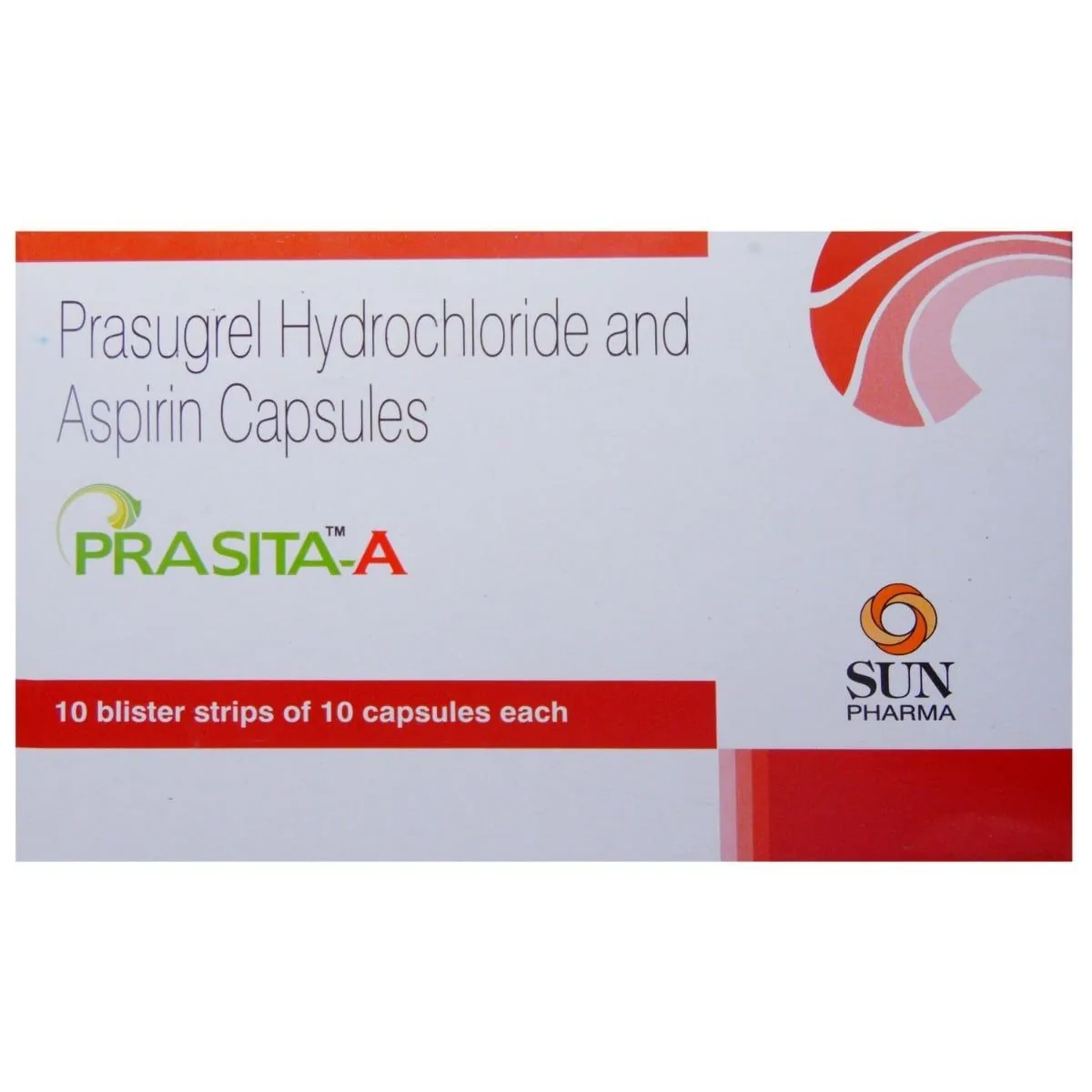
Prasita 10 Mg Tablet — Prasugrel Hydrochloride 10 mg
Prasita 10 Mg Tablet contains prasugrel hydrochloride 10 mg (equivalent to prasugrel base 10 mg), a third-generation thienopyridine P2Y12 adenosine diphosphate (ADP) receptor antagonist antiplatelet agent, manufactured by Sun Pharmaceutical Industries Ltd. Prasugrel is indicated for the prevention of atherothrombotic events in patients with acute coronary syndrome (ACS) — including unstable angina, non-ST-elevation myocardial infarction (NSTEMI), and ST-elevation myocardial infarction (STEMI) — who are managed with percutaneous coronary intervention (PCI). Prasugrel achieves faster, more consistent, and more potent platelet inhibition than clopidogrel, the second-generation thienopyridine it was developed to improve upon. This superior efficacy is due to its pharmacokinetic profile: prasugrel is a prodrug with more efficient hepatic conversion to its active metabolite (requiring only one CYP-dependent oxidation step versus two for clopidogrel), resulting in lower inter-patient variability and near-elimination of the clopidogrel non-responder phenomenon caused by CYP2C19 polymorphisms. The 10 mg maintenance dose is the standard dose used in the pivotal TRITON-TIMI 38 trial, in which prasugrel reduced major adverse cardiovascular events (MACE) compared to clopidogrel but with a significant increase in major bleeding. Accurate patient selection — excluding those with prior stroke/TIA, body weight <60 kg, and age ≥75 years unless high-risk — is essential for safe use.
Composition
- Prasugrel hydrochloride 10 mg per tablet (equivalent to prasugrel base 10 mg)
- Excipients: mannitol, microcrystalline cellulose, croscarmellose sodium, hypromellose, magnesium stearate, Opadry film coating
Prasugrel HCl (C20H21FN2O3S·HCl; MW 445.9 Da) is a thienopyridine; structurally similar to but pharmacokinetically superior to clopidogrel due to a simplified bioactivation pathway.
Mechanism of Action
- Prodrug bioactivation: Prasugrel is an inactive prodrug. After oral absorption, it undergoes rapid hydrolysis in the intestine by esterases to form a thiolactone intermediate, which is then oxidised in the liver by a single CYP-dependent step (primarily CYP3A4 and CYP2B6, with minor contributions from CYP2C9 and CYP2C19) to yield the active thiol metabolite (R-138727)
- Superiority over clopidogrel in bioactivation: Clopidogrel requires two sequential CYP-dependent oxidation steps (CYP2C19 obligatory for the second step) to produce its active metabolite. The CYP2C19 loss-of-function polymorphism (affecting ~25–30% of Caucasians, ~50–60% of East Asians) substantially reduces clopidogrel activation — the clinical basis of “clopidogrel resistance.” Prasugrel’s simpler one-step activation (not CYP2C19-dependent) bypasses this polymorphism, resulting in predictable, consistent platelet inhibition across all patients
- Irreversible P2Y12 receptor blockade: The active thiol metabolite irreversibly binds to the cysteine residues (Cys17 and Cys270) of the platelet P2Y12 ADP receptor. This permanently blocks ADP-mediated platelet activation via the Gi signalling pathway for the remaining life of the platelet (~7–10 days). The receptor blockade prevents: ADP-triggered glycoprotein IIb/IIIa conformational activation, fibrinogen binding, and platelet aggregate stabilisation
- Onset of action: Active metabolite detectable within 15–30 minutes of a loading dose; near-maximal platelet inhibition (>80% IPA) achieved within 1–4 hours of the 60 mg loading dose — substantially faster than clopidogrel (which may take 12–24 hours for peak effect)
Pharmacokinetics
| Parameter | Detail |
|---|---|
| Oral absorption | >79% absorbed; Tmax of active metabolite: ~30 minutes (peak within 1 hour of loading dose); not significantly affected by food |
| Prodrug hydrolysis | Intestinal esterases → thiolactone intermediate; rapid and complete; not subject to genetic polymorphism |
| Hepatic oxidation | Single CYP step (CYP3A4, CYP2B6 primary); CYP2C19 genotype does NOT meaningfully affect prasugrel activation (critical distinction from clopidogrel) |
| Plasma protein binding (active metabolite) | ~98% |
| Half-life (active metabolite) | ~7 hours; pharmacodynamic effect persists ~7–10 days (platelet lifespan) |
| Excretion | ~68% urine; ~27% faeces (as inactive metabolites); <1% active metabolite excreted unchanged |
| Degree of platelet inhibition | >80% inhibition of platelet aggregation (IPA) with 10 mg maintenance dose; more than 1.5–2× greater than standard 75 mg clopidogrel |
Uses of Prasita 10 Mg Tablet
- Acute coronary syndrome (ACS) — primary indication: Prevention of atherothrombotic events (cardiovascular death, non-fatal MI, non-fatal stroke) in patients with ACS (UA, NSTEMI, STEMI) managed with PCI. Prasugrel is used as dual antiplatelet therapy (DAPT) in combination with aspirin. The TRITON-TIMI 38 trial (N=13,608) demonstrated that prasugrel 10 mg maintenance dose reduced MACE by 19% relative risk reduction versus clopidogrel 75 mg at 15 months, at the cost of a 32% increase in major bleeding
- STEMI (primary PCI): Particularly beneficial in STEMI patients undergoing primary PCI, who have the greatest absolute benefit from rapid, potent platelet inhibition. Faster onset than clopidogrel is especially valuable in this urgent setting
- Stent thrombosis prevention: Prasugrel’s superior platelet inhibition reduces early and late stent thrombosis compared to clopidogrel; preferred in patients at high stent thrombosis risk (long stents, bifurcation lesions, small vessels, prior stent thrombosis on clopidogrel)
Dosage and Administration
| Phase / Patient | Dose | Notes |
|---|---|---|
| Loading dose (ACS/PCI initiation) | 60 mg as a single loading dose | Given as early as possible after diagnosis or at PCI; achieves rapid platelet inhibition |
| Maintenance dose (standard) | 10 mg once daily (Prasita 10 mg) | Always in combination with aspirin 75–150 mg; continue for up to 12 months post-ACS/PCI |
| Low body weight (<60 kg) | Consider 5 mg once daily maintenance | Increased bleeding risk at 10 mg in low-weight patients; 5 mg may be used (not formally approved in all countries, but recommended by ESC guidelines) |
| Elderly ≥75 years | Generally avoid; if benefit outweighs risk — consider 5 mg once daily | TRITON-TIMI 38 showed no net clinical benefit in patients ≥75 years; increased bleeding risk |
| Prior stroke or TIA | Contraindicated — do NOT use prasugrel | Significant excess risk of intracranial haemorrhage observed in TRITON-TIMI 38 in this subgroup |
Administration: Take Prasita 10 Mg Tablet once daily at the same time each day, with or without food. Swallow whole with water. Always co-administered with aspirin. If a dose is missed, take it as soon as remembered on the same day; do not double the dose the next day. Never discontinue without consulting a cardiologist — abrupt cessation increases risk of stent thrombosis and myocardial infarction.
Side Effects
- Bleeding (major concern): The most significant risk — increased frequency compared to clopidogrel. Major bleeding events (TIMI major): 2.4% prasugrel vs. 1.8% clopidogrel in TRITON-TIMI 38. Life-threatening bleeding: 1.4% vs. 0.9%. Fatal bleeding: 0.4% vs. 0.1%. Sites: GI, genitourinary, skin, intracranial. The increase in bleeding risk (particularly fatal and life-threatening) partially offsets prasugrel’s superior cardiovascular protection in selected patients (prior stroke/TIA, low body weight, elderly)
- Bruising and ecchymosis: Common; related to platelet inhibition
- Epistaxis: Frequent; mild; persistent nosebleeds require attention
- Thrombotic thrombocytopenic purpura (TTP): Very rare but serious; can be fatal; seek immediate medical attention if fever, neurological symptoms, or microangiopathic haemolytic anaemia occur after starting prasugrel
- Hypersensitivity reactions: Including angioedema; rare
Precautions and Warnings
- Surgical procedures — perioperative management: Prasugrel must be discontinued at least 7 days before elective surgery (e.g., coronary artery bypass graft — CABG) due to irreversible platelet inhibition and consequent surgical bleeding risk. If CABG is required urgently, fresh platelet transfusions can partially restore haemostasis but carry their own risks
- Patient identification before prescribing: Three subgroups with net harm or no net benefit in TRITON-TIMI 38 require careful consideration — (1) patients with prior stroke or TIA: contraindicated; (2) patients <60 kg body weight: use 5 mg; (3) patients ≥75 years: use with caution or avoid unless high-risk STEMI
- Aspirin dose and bleeding: Maintain aspirin at the lowest recommended dose (75–100 mg) to minimise additive bleeding risk; avoid high-dose aspirin with prasugrel
- Do not switch from prasugrel to clopidogrel mid-course without cardiology guidance: Switching antiplatelets can create a brief window of reduced platelet inhibition, increasing stent thrombosis risk
Drug Interactions
| Drug / Class | Interaction | Clinical Action |
|---|---|---|
| Anticoagulants (warfarin, heparin, DOACs: rivaroxaban, apixaban, dabigatran) | Additive bleeding risk; triple therapy (antiplatelet + antiplatelet + anticoagulant) substantially increases major bleeding | Use only when clearly indicated (e.g., AF + ACS/stent); minimise duration of triple therapy to 1–4 weeks per ESC guidance; consider PPI co-prescription |
| NSAIDs (including COX-2 inhibitors) | Additive GI bleeding risk | Avoid NSAIDs with prasugrel + aspirin; use paracetamol for analgesia if needed |
| PPIs (omeprazole, esomeprazole) | Minimal clinically relevant interaction (unlike clopidogrel, prasugrel activation is not CYP2C19-dependent, so PPIs do not significantly reduce its efficacy) | PPIs recommended with prasugrel + aspirin for GI protection; no need to avoid omeprazole as with clopidogrel |
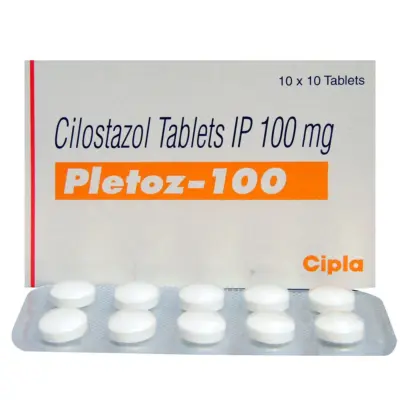
| Cilostazol (Pletoz) | Additive antiplatelet effect; triple antiplatelet therapy | Use only under specialist guidance with careful bleeding risk assessment |
| Fibrinolytics (alteplase, tenecteplase) | Increased bleeding if prasugrel given within 24 hours of fibrinolytic | Avoid prasugrel within 24 hours of systemic thrombolysis |
Contraindications
- Prior stroke or transient ischaemic attack (TIA) — absolute contraindication (net harm demonstrated in TRITON-TIMI 38)
- Active pathological bleeding (peptic ulcer, intracranial haemorrhage)
- Severe hepatic impairment
- Hypersensitivity to prasugrel or any excipient
- Pregnancy — insufficient safety data; potential foetal harm
Storage Instructions
- Store below 30°C in a dry place, away from moisture and direct sunlight
- Keep in original blister pack
- Keep out of reach of children
- Do not use after the expiry date printed on the pack
Related Products
The following IndoGenMed products are frequently used alongside or in related clinical contexts to Prasita 10 Mg Tablet:
- Pletoz 100 Tablet (Cilostazol 100 mg) — PDE3 inhibitor antiplatelet and vasodilator; used for peripheral arterial disease and intermittent claudication; different mechanism from prasugrel (PDE3/cAMP vs P2Y12/ADP); sometimes used together in specialist post-PCI regimens
- Pletoz 50 Mg Tablet (Cilostazol 50 mg) — lower-dose cilostazol; used as starting dose for claudication therapy in patients also requiring antiplatelet drugs; clinically related antiplatelet context
- Omesec 20 Capsule (Omeprazole 20 mg) — PPI gastroprotection; recommended alongside dual antiplatelet therapy (DAPT) in patients at GI bleeding risk; particularly important when prasugrel is used with aspirin
- Olvance 40 Tablet (Olmesartan 40 mg) — ARB antihypertensive; frequently co-prescribed in ACS patients with hypertension managed on DAPT; relevant to the cardiovascular polypharmacy context of post-ACS patients
- Pangraf 0.5 mg Capsule (Tacrolimus 0.5 mg) — calcineurin inhibitor immunosuppressant; relevant for the small but important group of cardiac transplant patients who may also have atherothrombotic disease requiring antiplatelet management alongside their immunosuppression
References
- DailyMed (FDA). Prasugrel Tablets — Prescribing Information. Available at: https://dailymed.nlm.nih.gov/dailymed/search.cfm?labeltype=all&query=prasugrel
- MedlinePlus (U.S. National Library of Medicine). Prasugrel. Available at: https://medlineplus.gov/druginfo/meds/a609004.html
- Wiviott SD, Braunwald E, McCabe CH, et al. Prasugrel versus clopidogrel in patients with acute coronary syndromes (TRITON-TIMI 38). N Engl J Med. 2007;357(20):2001–2015. PubMed PMID: 17982182. Available via: https://pubmed.ncbi.nlm.nih.gov/17982182/
- Jernberg T, Payne CD, Winters KJ, et al. Prasugrel achieves greater inhibition of platelet aggregation and a lower rate of non-responders compared with clopidogrel in aspirin-treated patients with stable coronary artery disease. Eur Heart J. 2006;27(10):1166–1173. PubMed PMID: 16621870. Available via: https://pubmed.ncbi.nlm.nih.gov/16621870/
- Mayo Clinic. Prasugrel (Oral Route) — Precautions. Available at: https://www.mayoclinic.org/drugs-supplements/prasugrel-oral-route/precautions/drg-20066547
Reviews
There are no reviews yet.