


- Acne
- Anemia Medicines
- Anesthesia
- Antibiotic Medicines
- Antiemetic
- Antiviral
- Arthritis
- Bile Duct Cancer
- Blood Cancer
- Bone & Joint
- Bone Cancer
- Brain Cancer
- Breast Cancer
- Cancer Inhibitors
- Cervical Cancer
- Chemotherapy Medicines
- Chronic Care
- Chronic Conditions
- Colorectal Cancer
- Diabetes
- Endometriosis
- Epilepsy
- Erectile Dysfunction
- Gastroenterology
- Heart Medicines
- HIV & PrEP
- Hormonal Imbalance
- Hypertension Medicines
- Kidney Cancer
- Kidney Medicines
- Liver Cancer
- Lung Cancer
- Lymphoma
- Men's Health & Wellness
- Multiple Myeloma
- Multiple Sclerosis
- Neurology
- Oncology
- Ovarian Cancer
- Pain Management
- Pancreatic Cancer
- Prostate Cancer
- Psychiatric Care
- Pulmonary Hypertension (Rx)
- Respiratory Care
- Sexual Wellness
- Skin Cancer
- Skin Care
- Thyroid Cancer
- Transplant & Immunology
- Wellness & Nutrition
- Гиперактивный мочевой пузырь
- Добавки для здоровья
- Женское
- Иммунитет и Антиоксиданты
- Контрацепция
- Контроль выпадения волос
- Личный уход
- Мужское здоровье и благополучие
- Ожирение
- Оз
- Остеопороз
- Питание для конкретных состояний
- Противогрибковые средства
- Прямые противовирусные препараты от гепатита С
- Специализированные лекарственные средства
- Тромбоцитопения
- Фит
- Хроническая болезнь почек

Таблетка Taffic

Recently Viewed Products
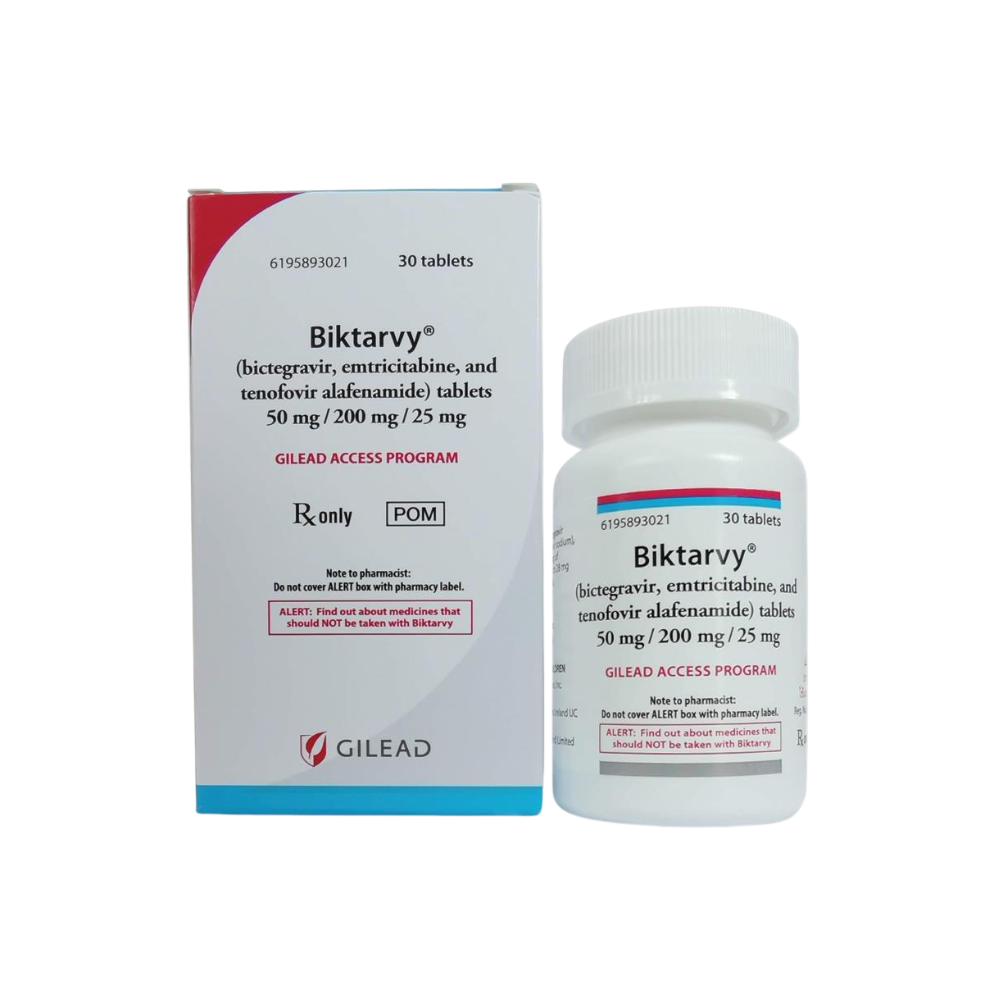
What is Bictegravir? Bictegravir is a potent, next-generation integrase strand transfer inhibitor (INSTI) with a high barrier to resistance. Approved by the US FDA in 2018, it is formulated exclusively as a component of the single-tablet, once-daily regimen Biktarvy, which combines Bictegravir (50 mg), Emtricitabine (200 mg), and Tenofovir Alafenamide (25 mg). This combination is a primary recommended regimen for the treatment of HIV-1 infection in both treatment-naive and virologically suppressed patients. Bictegravir’s clinical value lies in its high antiviral potency, minimal side effect profile, and structural design that makes it effective against HIV strains containing resistance mutations to first-generation integrase inhibitors (such as raltegravir and elvitegravir). Mechanism of Action Integrase is a vital HIV-1 enzyme responsible for integrating the viral DNA (transcribed from viral RNA) into the host cell genome. This integration is essential for viral replication and the establishment of persistent infection. The integration process occurs in two main steps: 3′-processing in the cytoplasm and strand transfer in the nucleus. Bictegravir acts by selectively binding to the active site of the HIV-1 integrase enzyme. It chelates the divalent metal ions (magnesium) required for the catalytic activity of the enzyme, blocking the strand transfer step of viral DNA integration. By preventing the viral DNA from integrating into the host chromosome, Bictegravir halts the replication cycle of HIV-1 and prevents the creation of new viral particles. Pharmacokinetics & Clearance Following oral administration, Bictegravir is rapidly absorbed, with peak plasma concentrations (Cmax) achieved within 2 to 4 hours post-dose. It can be taken with or without food, as food does not cause clinically significant changes in its absorption or overall exposure. Bictegravir is highly bound to human plasma proteins (> 99%), and its distribution is restricted primarily to the vascular compartment. Bictegravir is metabolized in the liver via both cytochrome P450 CYP3A4 and UGT1A1 enzymes, with both pathways contributing to its clearance. This dual metabolic pathway minimizes the risk of drug-drug interactions, as moderate inhibition of one pathway can be compensated for by the other. The terminal plasma elimination half-life of Bictegravir is approximately 17 hours, supporting once-daily dosing. Elimination occurs primarily through feces (60%, mostly as metabolites) and urine (35%, as metabolites). Clinical Indications & Dosage Bictegravir is indicated as a complete regimen for the treatment of HIV-1 infection in adults and pediatric patients weighing at least 14 kg. It is used as a first-line therapy in patients with no antiretroviral treatment history, or to replace a current stable antiretroviral regimen in patients who are virologically suppressed (HIV-1 RNA < 50 copies/mL) with no history of treatment failure or known mutations associated with resistance to the active components. The standard dosage is one combination tablet (containing 50 mg Bictegravir, 200 mg Emtricitabine, and 25 mg Tenofovir Alafenamide) taken orally once daily, with or without food. No dose adjustments are required in patients with mild or moderate hepatic impairment, or in patients with renal impairment (creatinine clearance > 30 mL/min). Warnings & Safety Profile Bictegravir has a favorable safety profile, with most side effects being mild and self-limiting. However, clinicians must monitor for specific warnings: Severe Acute Exacerbation of Hepatitis B: Patients co-infected with HIV-1 and HBV must be tested for chronic Hepatitis B before starting therapy. Discontinuing Bictegravir/Emtricitabine/TAF can lead to severe acute exacerbations of HBV, requiring close clinical and laboratory monitoring for several months after stopping treatment. Immune Reconstitution Inflammatory Syndrome (IRIS): A inflammatory response to indolent or opportunistic infections that can occur during the initial phase of antiretroviral treatment. Drug Interactions: Co-administration with drugs that are strong inducers of both CYP3A4 and UGT1A1 (such as rifampin or St. John’s wort) is contraindicated as it can significantly reduce Bictegravir plasma concentrations, leading to virologic failure. Co-administration with polyvalent cation-containing antacids (containing aluminum, magnesium, or calcium) should be spaced to avoid binding and reduced absorption of Bictegravir. Frequently Asked Questions What are the most common side effects of Bictegravir? The most common side effects reported in clinical trials include mild headache, diarrhea, nausea, fatigue, and abnormal dreams. These symptoms usually occur during the first few weeks of therapy and resolve on their own. Can Bictegravir be taken with supplements or antacids? Bictegravir can bind with polyvalent cations (such as iron, calcium, magnesium, or aluminum) in supplements and antacids, reducing its absorption. It should be taken at least 2 hours before or 6 hours after antacids containing these minerals.
