Description
<![CDATA[
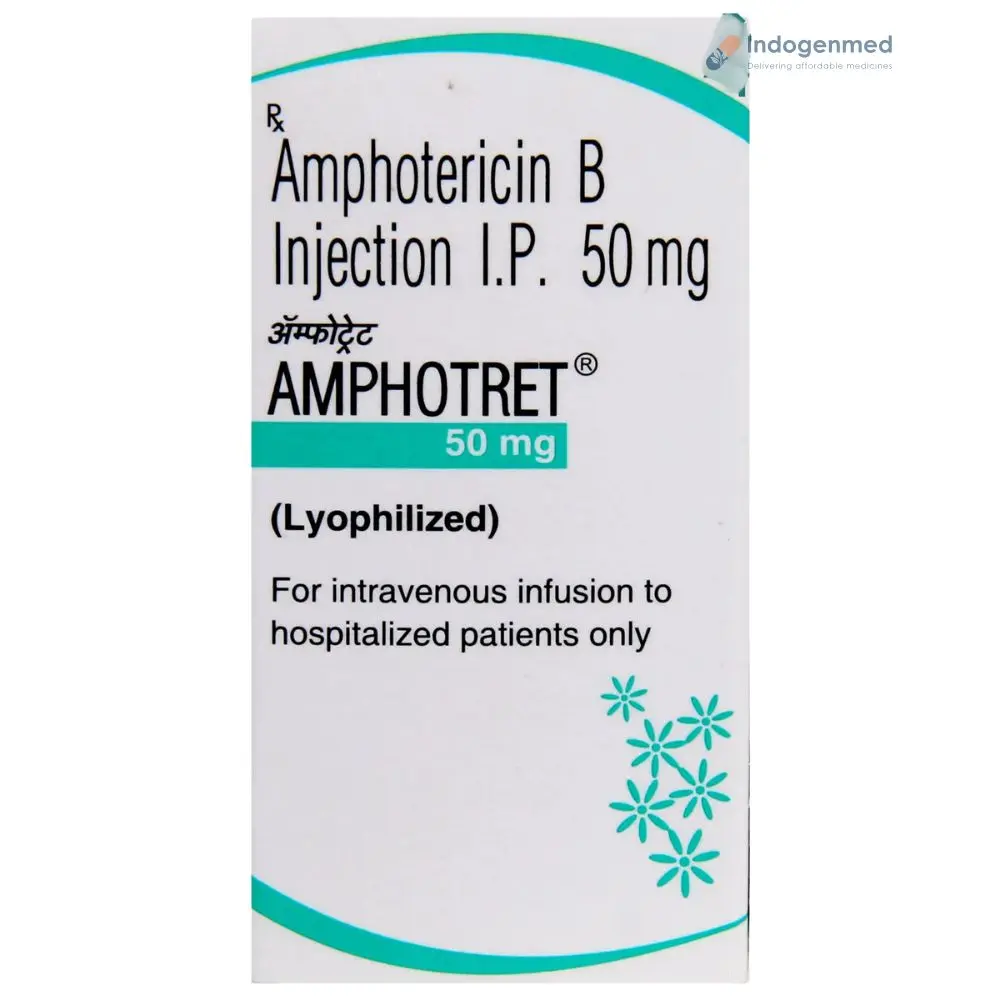
Amphotret 50 Mg Injection
Amphotret 50 Mg Injection contains amphotericin B in a lipid-based formulation designed to treat serious systemic fungal and parasitic infections. Amphotericin B remains one of the most effective antifungal agents available and is used for life-threatening fungal infections, particularly in immunocompromised patients. The lipid formulation reduces the nephrotoxicity associated with conventional amphotericin B while maintaining antifungal efficacy.
Composition
| Active Ingredient | Strength |
|---|---|
| Amphotericin B (lipid complex formulation) | 50 mg per vial |
About the Manufacturer
Amphotret is manufactured by Bharat Serums and Vaccines Limited (BSV), an Indian pharmaceutical company specialising in injectables, plasma products, and critical care medicines. BSV is known for producing affordable specialist medicines for hospital use in India and international markets.
Mechanism of Action
Amphotericin B binds ergosterol in fungal cell membranes, creating pores that cause leakage of intracellular ions and metabolites, ultimately leading to cell death. The lipid formulation allows the drug to be preferentially delivered to sites of fungal infection, reducing exposure to renal tubular cells and thereby decreasing nephrotoxicity compared with conventional amphotericin B deoxycholate.
Indications
- Invasive aspergillosis in patients refractory to or intolerant of conventional therapy
- Cryptococcal meningitis
- Candida infections – disseminated candidiasis, candidaemia
- Mucormycosis (zygomycosis)
- Visceral leishmaniasis (kala-azar)
- Empirical antifungal therapy in febrile neutropenic patients
Dosage & Administration
- Administered by slow intravenous infusion only; not for intramuscular or subcutaneous injection
- Systemic fungal infections: 3–5 mg/kg/day IV depending on indication and severity
- Visceral leishmaniasis: 1–3 mg/kg/day IV on days 1–5, day 14, and day 21 (or as per local protocol)
- Reconstitute with sterile water for injection and further dilute in 5% dextrose; do not use saline
- Infuse over 2 hours; a test dose is recommended before the first infusion
Special Populations
- Renal impairment: Monitor renal function closely; dose adjustment may be needed in severe impairment
- Hepatic impairment: No specific dose adjustment established; use with caution
- Elderly: Use with caution; increased risk of renal toxicity
- Children: Used in paediatric patients at weight-adjusted doses under specialist supervision
- Pregnancy: Use only if the potential benefit outweighs the risk; avoid if possible
Precautions
- Monitor renal function (serum creatinine, electrolytes including potassium and magnesium) regularly during therapy
- Infusion-related reactions (fever, rigors, chills) are common; pre-medication with paracetamol, antihistamines, or hydrocortisone may be required
- Ensure adequate hydration before and during infusions to reduce nephrotoxicity
- Avoid concomitant nephrotoxic drugs where possible
- Blood counts should be monitored; anaemia is common with prolonged use
Contraindications
- Hypersensitivity to amphotericin B or any component of the formulation
- Not indicated for non-invasive fungal infections (e.g. oral or vaginal thrush) where safer alternatives are available
Side Effects
- Very common: Infusion-related reactions (fever, rigors, chills, nausea), hypokalaemia, hypomagnesaemia, elevated serum creatinine
- Common: Anaemia, headache, hypotension, hepatic enzyme elevation
- Less common: Cardiac arrhythmias (related to electrolyte disturbances), thrombophlebitis at infusion site
- Rare: Acute renal failure, anaphylaxis, neurotoxicity
Drug Interactions
- Nephrotoxic agents (aminoglycosides, ciclosporin, tacrolimus): Additive nephrotoxicity; avoid concurrent use or monitor renal function intensively
- Corticosteroids and ACTH: May increase hypokalaemia risk; monitor potassium levels
- Digoxin: Hypokalaemia induced by amphotericin B increases the risk of digoxin toxicity
- Antifungal azoles (fluconazole, itraconazole): Possible pharmacological antagonism; clinical significance is debated
Storage
Store unreconstituted vials at 2°C–8°C (refrigerated). Do not freeze. Reconstituted and diluted solutions should be used within the timeframe specified in the product label. Keep out of reach of children.
Related Products
- Zocon DT 100 Mg Tablets – fluconazole for fungal infections
- Sebifin 1% W/W 10 Gm Cream – topical antifungal
- Emeset 8 Mg Tablets – ondansetron for infusion-related nausea
Frequently Asked Questions
- What is Amphotret 50 Mg Injection used for?
- It is used to treat serious systemic fungal infections such as aspergillosis, cryptococcal meningitis, candidiasis, mucormycosis, and visceral leishmaniasis.
- How is Amphotret 50 Mg given?
- It is given only by slow intravenous infusion in a hospital setting by trained healthcare professionals. It is not suitable for injection by other routes.
- Why is a lipid formulation used?
- The lipid formulation reduces the risk of kidney damage (nephrotoxicity) compared with conventional amphotericin B while maintaining antifungal effectiveness.
- What are the most common side effects?
- Infusion-related reactions such as fever, chills, and rigors are very common. Electrolyte imbalances (low potassium and magnesium) and reduced kidney function are also frequently seen.
- Can Amphotret be taken at home?
- No. It is a hospital-only medicine that requires professional administration, monitoring of kidney function and electrolytes, and management of potential infusion reactions.
References
- NHS – Fungal Infections
- MedlinePlus – Amphotericin B Injection
- EMA – Amphotericin B Lipid Complex Product Information
- FDA – Amphotericin B for Injection Prescribing Information
Disclaimer: This page is provided for informational purposes only and does not constitute medical advice. Amphotret 50 Mg Injection is a specialist hospital medicine that must only be administered by qualified healthcare professionals. If you have questions about your treatment, speak to your doctor or clinical pharmacist.
]]>

Reviews
There are no reviews yet.