Description
What Is Aciloc 300 mg Tablets?
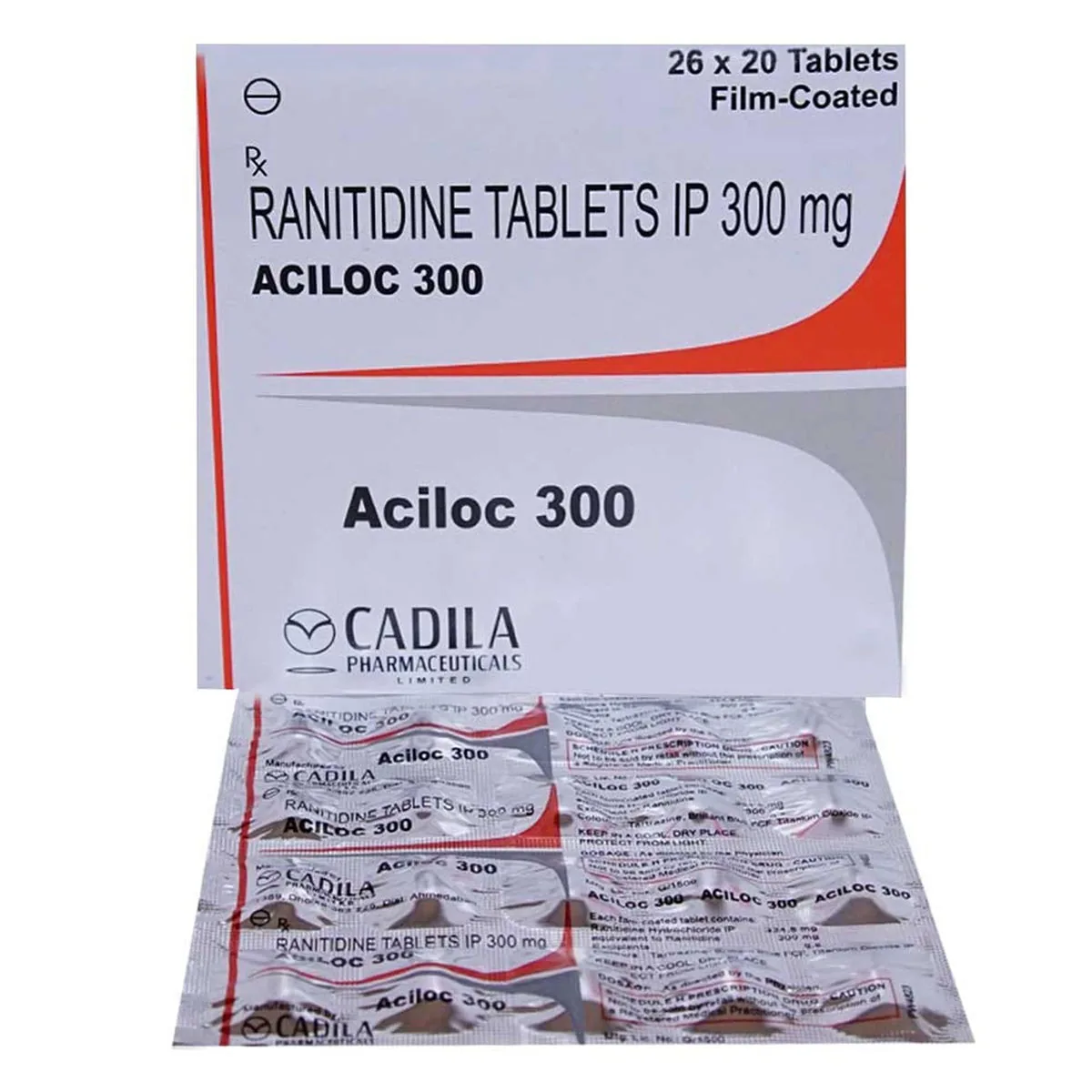
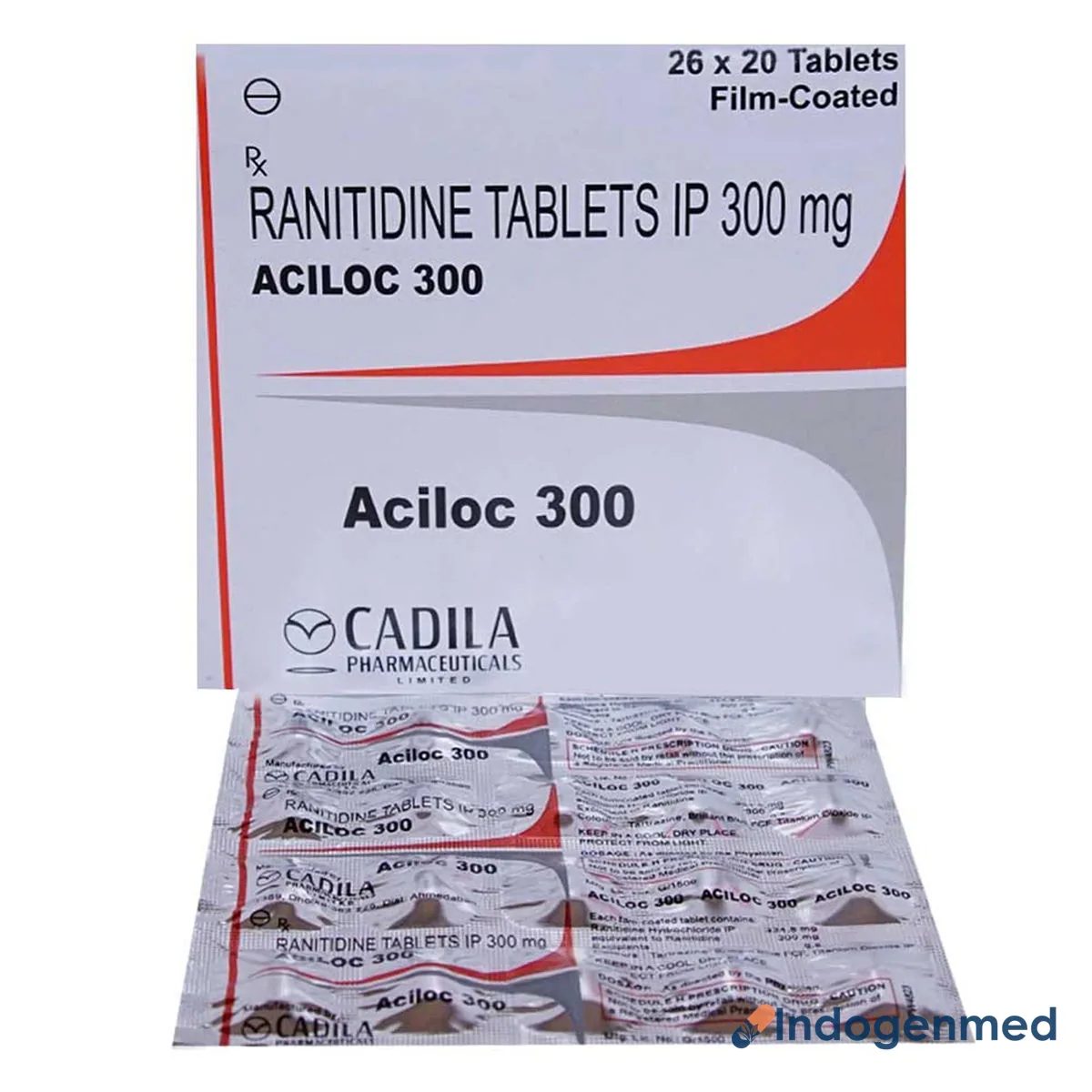
Aciloc 300 mg Tablets contain ranitidine hydrochloride equivalent to ranitidine 300 mg per tablet. Aciloc is manufactured by Cadila Healthcare (Zydus Cadila), one of India’s major pharmaceutical companies, and provides the same active ingredient — ranitidine — as other H₂-receptor antagonist (H₂ blocker) formulations. Ranitidine works by selectively blocking histamine H₂ receptors on gastric parietal cells, thereby reducing gastric acid secretion. The 300 mg once-daily bedtime dose is a well-established regimen for peptic ulcer healing, harnessing the clinical importance of nocturnal acid suppression.
As an H₂ blocker, ranitidine occupies an important position in the management of acid-related gastrointestinal disease. It is effective for active duodenal and gastric ulcers, gastro-oesophageal reflux disease (GORD), and hypersecretory conditions such as Zollinger-Ellison syndrome. Compared with the first-generation H₂ blocker cimetidine, ranitidine is more potent, has a longer duration of action, and causes far fewer drug interactions due to minimal cytochrome P450 inhibition. Compared with proton pump inhibitors (PPIs), ranitidine produces a less complete and shorter-duration acid suppression but has a faster onset of action and is well-suited to on-demand use and overnight acid control.
Important regulatory context: In 2020, the U.S. FDA requested withdrawal of all ranitidine products from the US market due to N-nitrosodimethylamine (NDMA) contamination concerns — NDMA being a probable human carcinogen that accumulates in ranitidine at increased temperatures and over time. Similar actions were taken in many other countries, including by India’s CDSCO. Where ranitidine products remain available in international markets, prescribers and patients should be informed of this history. Alternative H₂ blockers such as famotidine do not share this structural NDMA risk. The pharmacological information in this description reflects ranitidine’s well-characterised clinical profile as historically used in millions of patients worldwide.
Mechanism of Action
Ranitidine’s ability to reduce gastric acid secretion is a consequence of its selective, competitive blockade of H₂ receptors on gastric parietal cells. This mechanism is well-established and has been extensively validated in clinical and pharmacological research.
The Gastric Acid Secretory Pathway
Gastric acid (HCl) is produced by parietal cells in the oxyntic glands of the gastric corpus and fundus. Acid secretion is driven by the final common effector, the H⁺/K⁺-ATPase (the proton pump), which actively transports hydrogen ions into the gastric lumen in exchange for potassium. The parietal cell receives stimulatory signals from three receptor systems: (1) muscarinic M₃ receptors activated by vagal acetylcholine (stimulated by anticipation of food and food ingestion); (2) gastrin receptors (CCK-B type) activated by gastrin secreted from G cells in the antral mucosa in response to luminal protein and distension; and (3) histamine H₂ receptors activated by histamine released by enterochromaffin-like (ECL) cells in the fundic mucosa. These three pathways interact and amplify each other — gastrin and acetylcholine not only directly stimulate parietal cells but also trigger ECL cell histamine release, which then acts on adjacent parietal cells. The result is that histamine acts as a critical amplifier of all secretory pathways, making H₂ receptor blockade an effective way to suppress total acid output.
How Ranitidine Inhibits Acid Secretion
Ranitidine competes with histamine for binding at parietal cell H₂ receptors. By occupying these receptors, it prevents histamine from activating adenylyl cyclase — the enzyme that generates cyclic AMP (cAMP) from ATP. Reduced cAMP means less activation of protein kinase A and consequently less stimulation of the H⁺/K⁺-ATPase proton pump. The net effect is a dose-dependent suppression of gastric acid output. Ranitidine 300 mg suppresses basal (fasting, interdigestive) acid output by approximately 70% and meal-stimulated acid output by approximately 60–70%. Nocturnal acid suppression is particularly robust because overnight acid secretion is predominantly histamine-driven (vagal tone is reduced during sleep, and no food intake means no gastrin release), so H₂ blockade is especially effective during this period.
Structural and Pharmacological Advantages Over Cimetidine
Ranitidine is a furan-ring compound, structurally distinct from the imidazole-ring structure of cimetidine. This structural difference has important pharmacological consequences: ranitidine has approximately 4–10 times the potency of cimetidine at the H₂ receptor. More importantly, ranitidine lacks the significant affinity for cytochrome P450 enzymes (particularly CYP1A2, 2C9, 2C19, 3A4) that makes cimetidine a clinically significant enzyme inhibitor. Cimetidine can substantially increase plasma levels of drugs such as warfarin, phenytoin, theophylline, and propranolol through CYP inhibition; ranitidine at standard doses does not cause this. Ranitidine is also not antiandrogenic — unlike cimetidine, it does not bind to androgen receptors, and gynaecomastia and impotence are rare at therapeutic doses.
Indications
- Active duodenal ulcer — acute healing and prevention of relapse
- Active benign gastric ulcer — healing, typically over 8 weeks
- Gastro-oesophageal reflux disease (GORD/GERD) — symptom relief and healing of reflux oesophagitis
- Zollinger-Ellison syndrome — high-dose acid suppression in hypersecretory states
- Stress ulcer prophylaxis — in critically ill patients at risk of stress-related mucosal damage
- Pre-operative aspiration prophylaxis — to reduce gastric acidity prior to general anaesthesia
- Symptomatic acid-related dyspepsia and heartburn
Dosage and Administration
Active duodenal or gastric ulcer: The standard regimen with Aciloc 300 mg is one tablet at bedtime daily. For duodenal ulcer, four weeks of treatment is typically sufficient (the majority of uncomplicated duodenal ulcers heal within four weeks); if healing is incomplete, treatment may continue for a further four weeks. For gastric ulcer, eight weeks is recommended, with endoscopic confirmation of healing at the end of treatment.
Alternative regimen: 150 mg twice daily (morning and evening) achieves equivalent healing rates; the once-nightly 300 mg approach is simpler and may improve adherence.
Maintenance of healed duodenal ulcer: 150 mg at bedtime, long-term. Maintenance therapy significantly reduces recurrence rates in patients with frequently relapsing or complicated ulcer disease.
GORD: 150 mg twice daily or 300 mg at bedtime for 6–12 weeks. For severe or erosive oesophagitis, 300 mg twice daily may be used for up to 12 weeks.
Zollinger-Ellison syndrome: Starting dose 150 mg three times daily, with upward titration as required. Doses up to 6 g/day have been administered safely in extreme cases.
Renal impairment: Ranitidine is primarily eliminated by the kidney. In moderate-to-severe renal impairment (creatinine clearance below 50 mL/min), reduce dose to 150 mg once daily. The drug is dialysable; administer the dose after dialysis sessions.
Hepatic impairment: Ranitidine is predominantly renally excreted; hepatic impairment alone does not require dose adjustment. Combined hepatorenal impairment warrants caution and potentially lower doses.
Elderly: No routine dose adjustment; renal function should be assessed in elderly patients, particularly for long-term use.
Administration: Swallow tablets whole with water. Can be taken with or without food. The bedtime dose is ideally taken 30–60 minutes before retiring to maximise nocturnal acid suppression.
Contraindications
- Hypersensitivity to ranitidine, other H₂ receptor antagonists, or any formulation excipient
- Acute porphyria (ranitidine can precipitate acute porphyric attacks)
Warnings and Precautions
NDMA and Regulatory Withdrawal
All ranitidine products were subject to a voluntary market withdrawal in the United States in April 2020, following FDA’s conclusion that NDMA levels in ranitidine are unacceptable. The CDSCO in India also issued relevant guidance. The issue is intrinsic to the ranitidine molecule and cannot be resolved by manufacturing process changes. Patients who were previously managed on ranitidine are now typically maintained on famotidine (an H₂ blocker without NDMA risk) or on proton pump inhibitors, depending on their clinical indication. Prescribers should be guided by current local regulatory and formulary recommendations.
Exclusion of Malignancy
Symptomatic relief from ranitidine does not exclude the possibility of gastric carcinoma. Any patient presenting with dyspepsia and alarm symptoms — weight loss, persistent vomiting, dysphagia, haematemesis, melaena, iron-deficiency anaemia, or palpable epigastric mass — should undergo endoscopic evaluation before initiating or continuing H₂ blocker therapy.
Confusion in Elderly and Renally Impaired Patients
Ranitidine crosses the blood-brain barrier to a limited degree, but accumulation in patients with reduced renal clearance (elderly patients, those with CKD) can produce CNS effects: confusion, restlessness, agitation, and rarely hallucinations. These effects are reversible with dose reduction or discontinuation. The 300 mg daily dose should be used with caution or reduced to 150 mg in patients with significant renal impairment.
Adverse Effects
- Common: Headache, dizziness, nausea, diarrhoea or constipation, abdominal discomfort
- Less common: Rash, pruritus, fatigue, mild reversible elevation of serum transaminases
- Rare: Hepatitis (reversible, any pattern); blood dyscrasias including thrombocytopenia and agranulocytosis; anaphylaxis; confusion and other CNS effects (especially in renally impaired or elderly patients); bradycardia (IV injection only); gynaecomastia or impotence (rare at standard doses; more likely with high doses or prolonged use); alopecia (reversible on stopping)
Drug Interactions
Ranitidine at therapeutic doses has minimal CYP450 enzyme inhibitory activity and therefore carries a much smaller drug interaction risk than cimetidine. Key interactions remain worth noting:
Drugs Dependent on Gastric Acidity for Absorption
Agents whose oral bioavailability depends on a low gastric pH include ketoconazole, itraconazole, posaconazole, atazanavir, delavirdine, and some iron preparations. Elevated gastric pH from ranitidine can reduce their absorption substantially. These drugs should ideally be administered at least 2 hours before ranitidine, or an alternative acid-suppression strategy considered.
Warfarin
Modest pharmacokinetic interaction possible. Some patients may show slight increases in prothrombin time (INR) with ranitidine, though this is clinically significant in only a minority of cases. Monitoring INR is prudent when commencing or ceasing ranitidine in patients established on warfarin.
Metformin
Both ranitidine and metformin are substrates and inhibitors of OCT2 renal tubular transport. Co-administration may modestly increase metformin exposure. The interaction is not of major clinical significance at standard doses, but should be noted in patients receiving high-dose metformin or with borderline renal function.
Antacids
High-dose antacids administered concurrently may reduce ranitidine absorption slightly. If antacids are used for immediate symptom relief alongside Aciloc, separate the doses by at least 1–2 hours.
Storage
Store Aciloc 300 mg Tablets at room temperature, below 25°C, in a dry location away from direct sunlight and moisture. Store in the original blister pack until use. Keep out of the reach of children. Do not use after the expiry date printed on the outer carton. NDMA accumulation is enhanced by elevated temperatures and prolonged storage; keeping tablets in cool, dry conditions and using within the expiry date minimises this risk.
Related Products
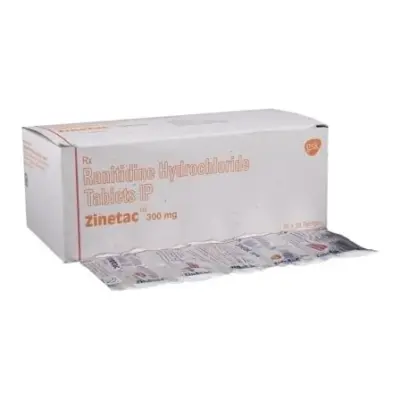
- Zinetac 300 mg Tablets (Ranitidine 300 mg — GSK brand, same active ingredient)
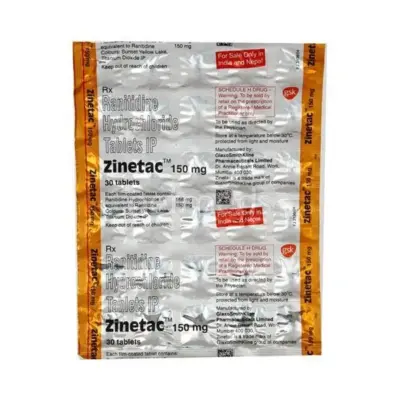
- Zinetac 150 mg Tablets (Ranitidine 150 mg — standard twice-daily strength)
- Voltaflam 50 mg Tablets (Diclofenac — NSAID that may require gastric protection)
- Acamprol 333 mg Tablets (Acamprosate — alcohol dependence, may coexist with acid-related disease)
References
- DailyMed. Ranitidine hydrochloride tablets — prescribing information. U.S. National Library of Medicine. Available at: https://dailymed.nlm.nih.gov/dailymed/
- MedlinePlus. Ranitidine. U.S. National Library of Medicine. Available at: https://medlineplus.gov/druginfo/meds/a601106.html
- Mayo Clinic. Ranitidine (Oral Route) — Before Using. Available at: https://www.mayoclinic.org/
- U.S. Food and Drug Administration. FDA updates and press announcements on NDMA in Zantac (ranitidine). FDA.gov. Available at: https://www.fda.gov/drugs/drug-safety-and-availability/fda-updates-and-press-announcements-ndma-zantac-ranitidine
- Howden CW, Jones DB, Peace KE, Burget DW, Hunt RH. The pH threshold for ulcer healing and the role of nocturnal acid suppression. Digestive Diseases and Sciences. 1988;33(9):1163–1168. PMID: 3402868
Reviews
There are no reviews yet.