Description
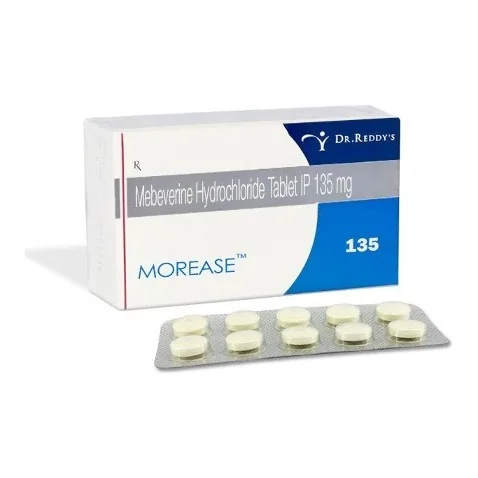
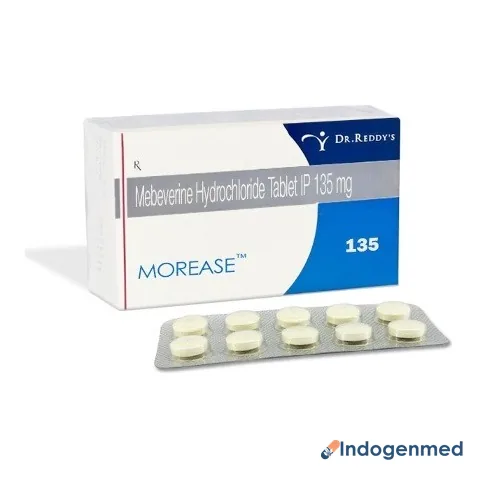
What Is Morease 135 mg Tablets?
Morease 135 mg Tablets contains mebeverine hydrochloride 135 mg, an antispasmodic agent used to relieve symptoms of irritable bowel syndrome (IBS) and other conditions associated with intestinal smooth muscle spasm. Mebeverine is a musculotropic antispasmodic — it acts directly on the smooth muscle of the gastrointestinal tract to reduce painful spasm and cramping without the anticholinergic side effects (dry mouth, urinary retention, blurred vision) that are associated with older antispasmodics such as atropine or hyoscine. This makes mebeverine well tolerated and suitable for long-term symptomatic management of IBS and related functional bowel disorders.
IBS affects up to 15% of the global population and is characterised by recurrent abdominal pain, bloating, and altered bowel habits (diarrhoea, constipation, or both). The abdominal pain and cramps in IBS are substantially driven by abnormal smooth muscle motility and hypersensitivity of the gut. Mebeverine directly targets this abnormal motility without influencing the autonomic nervous system, making it one of the most widely prescribed first-line treatments for IBS-related spasm in Europe, the UK, and many other regions. It is available as conventional 135 mg tablets (taken three times daily) and as modified-release capsules (200 mg, twice daily) — Morease 135 mg is the conventional immediate-release formulation.
Mechanism of Action
Direct Smooth Muscle Relaxation
Mebeverine acts directly on smooth muscle cells of the gastrointestinal wall, reducing their contractility without affecting normal gut motility. Unlike anticholinergic antispasmodics, mebeverine does not block muscarinic receptors — instead, it exerts its effect through dual mechanisms at the cellular level: blockade of fast sodium channels (reducing depolarisation of smooth muscle) and inhibition of calcium influx (reducing the activation of contractile proteins). The result is targeted relaxation of overactive or hypertonic gut smooth muscle, reducing painful spasm and cramp without abolishing the normal peristaltic contractions required for healthy bowel function.
No Systemic Anticholinergic Effects
Because mebeverine’s action is musculotropic (directly on smooth muscle) rather than neurotropic (via nerve blockade), it does not have the systemic anticholinergic effects seen with atropine-class drugs. Patients do not experience dry mouth, reduced gastric secretion, tachycardia, urinary hesitancy, or visual disturbances — side effects that limit the tolerability of anticholinergic antispasmodics, especially in elderly patients. This selectivity is a clinically important advantage for long-term IBS management.
Gut-Selective Activity
Mebeverine is rapidly absorbed from the gastrointestinal tract and extensively metabolised during first-pass hepatic metabolism (and partially in the gut wall), generating inactive metabolites that are excreted renally. The result is negligible systemic levels of active drug, which explains the excellent tolerability profile and absence of systemic effects outside the gastrointestinal tract.
Indications
Irritable Bowel Syndrome (IBS)
Mebeverine is a first-line antispasmodic for the symptomatic treatment of IBS. It is indicated for the relief of abdominal pain and spasm, bloating and discomfort, and changes in bowel habit associated with IBS. National guidelines (including NICE in the UK) recommend mebeverine as a first-line antispasmodic option for IBS symptoms.
Functional Bowel Disorders
Beyond IBS, mebeverine is used for other functional gastrointestinal conditions characterised by intestinal smooth muscle spasm — including functional dyspepsia with cramping, spastic colon, and abdominal discomfort associated with organic bowel conditions (e.g., diverticular disease) where smooth muscle spasm contributes to symptoms.
Post-Procedure Bowel Spasm
Mebeverine may be used to manage intestinal spasm following colonoscopy, barium enema, or abdominal surgery, where bowel spasm contributes to post-procedure discomfort.
Dosage and Administration
Adults and adolescents (≥18 years): One tablet (135 mg) three times daily, taken 20 minutes before meals. This timing is recommended to maximise the effect on post-meal intestinal motility.
Duration: Mebeverine is typically used for initial periods of 4–6 weeks, with reassessment of symptom response. Long-term use is common for IBS, which is a chronic condition; it is considered safe for extended use as there is no evidence of tolerance, dependence, or significant long-term toxicity.
Children under 10 years: Not recommended — safety and efficacy not established.
Elderly: No dose adjustment required. The absence of anticholinergic effects makes mebeverine well suited to older patients who may be intolerant of atropine-class drugs.
Renal or hepatic impairment: No specific dose adjustment is recommended in the SmPC, as mebeverine is extensively metabolised to inactive compounds; however, use with caution in severe hepatic impairment.
Administration: Swallow tablets whole with a glass of water. Taking 20 minutes before meals ensures the drug is present in the gut wall when meal-stimulated colonic activity begins. Do not crush or chew tablets.
Contraindications
- Known hypersensitivity to mebeverine hydrochloride or any excipient in the tablet formulation.
- Children under 10 years of age.
- Paralytic ileus or other conditions where bowel motility should not be further reduced.
Warnings and Precautions
Diagnosis before treatment: Abdominal symptoms should be fully investigated before attributing them to IBS and commencing mebeverine therapy. Symptoms such as rectal bleeding, unexplained weight loss, nocturnal pain, or a family history of colorectal cancer or inflammatory bowel disease require further evaluation before IBS is diagnosed. Mebeverine treats functional spasm — it should not be used in undiagnosed inflammatory bowel disease or colorectal cancer.
Porphyria: Mebeverine should be used with caution in patients with acute porphyria, as it may potentially trigger acute attacks in susceptible individuals.
Pregnancy and breastfeeding: No adequate human data exist for mebeverine use in pregnancy. Animal studies have not shown teratogenicity. Use only when clearly necessary, and avoid during the first trimester when possible. It is unknown whether mebeverine passes into breast milk; caution is advised during breastfeeding.
Lactose content: Mebeverine 135 mg tablets contain lactose. Patients with rare hereditary galactose intolerance, the Lapp lactase deficiency, or glucose-galactose malabsorption should not take this medicine.
Adverse Effects
Mebeverine is generally very well tolerated. Its adverse effect profile is notably cleaner than anticholinergic antispasmodics:
- Common (1–10%): Hypersensitivity reactions including skin rash, urticaria, angioedema have been reported rarely in post-marketing surveillance, but are uncommon overall.
- Rare: Exanthema (skin eruption), anaphylactoid reactions (very rare).
- Unlike anticholinergic antispasmodics: no dry mouth, no constipation, no urinary retention, no tachycardia, no blurred vision.
Drug Interactions
Mebeverine has a very limited pharmacokinetic interaction profile due to its extensive first-pass metabolism to inactive metabolites. No significant clinically relevant drug interactions have been identified in the SmPC or in post-marketing experience. Mebeverine does not inhibit or induce cytochrome P450 enzymes at clinical doses. It can be co-administered safely with antidiarrhoeal agents, laxatives, antacids, and most other medications commonly taken by IBS patients. No specific interactions with anticoagulants, oral contraceptives, or cardiovascular medications have been reported.
Storage
Store below 25°C in a cool, dry place away from direct sunlight and moisture. Keep in original packaging with foil intact until use. Keep out of reach of children. Do not use after the expiry date printed on the packaging.
Related Products
For IBS patients who also experience functional dyspepsia or upper gastrointestinal discomfort alongside colonic spasm, a combined therapeutic approach addressing both upper and lower gut symptoms may be needed. For patients with IBS who have identified specific food triggers — particularly in traveller’s diarrhoea or antibiotic-associated diarrhoea — Mebex 100 mg Tablets (mebendazole) addresses co-existing parasitic infection that can mimic or worsen IBS symptoms in endemic regions. Patients with concurrent musculoskeletal pain and IBS, who often seek topical analgesics alongside gut symptom management, may also find Moov 30 gm Cream useful for associated back or abdominal wall discomfort.
References
- Electronic Medicines Compendium (EMC). Mebeverine Hydrochloride 135 mg Tablets — Summary of Product Characteristics. Available at: https://www.medicines.org.uk/emc
- National Library of Medicine MedlinePlus. Mebeverine. Available at: https://medlineplus.gov
- National Institute for Health and Care Excellence (NICE). Irritable bowel syndrome in adults: diagnosis and management. Clinical guideline CG61. Updated February 2015. Available at: https://www.nice.org.uk/guidance/cg61
- Drossman DA. Functional Gastrointestinal Disorders: History, Pathophysiology, Clinical Features and Rome IV. Gastroenterology. 2016;150(6):1262-1279. PubMed PMID: 27144617
- Mayo Clinic. Irritable Bowel Syndrome — Diagnosis and Treatment. Available at: https://www.mayoclinic.org/diseases-conditions/irritable-bowel-syndrome

Reviews
There are no reviews yet.