Description
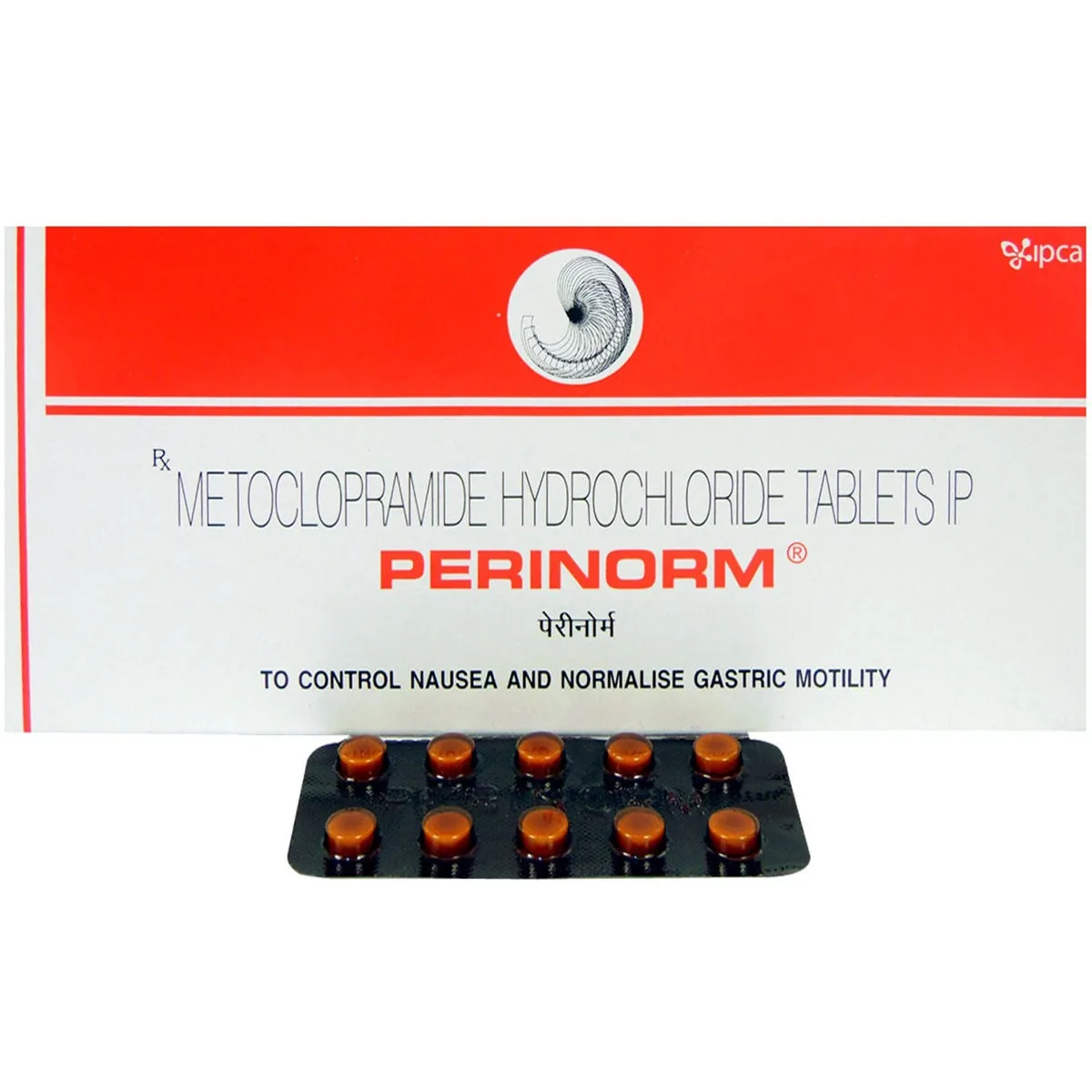
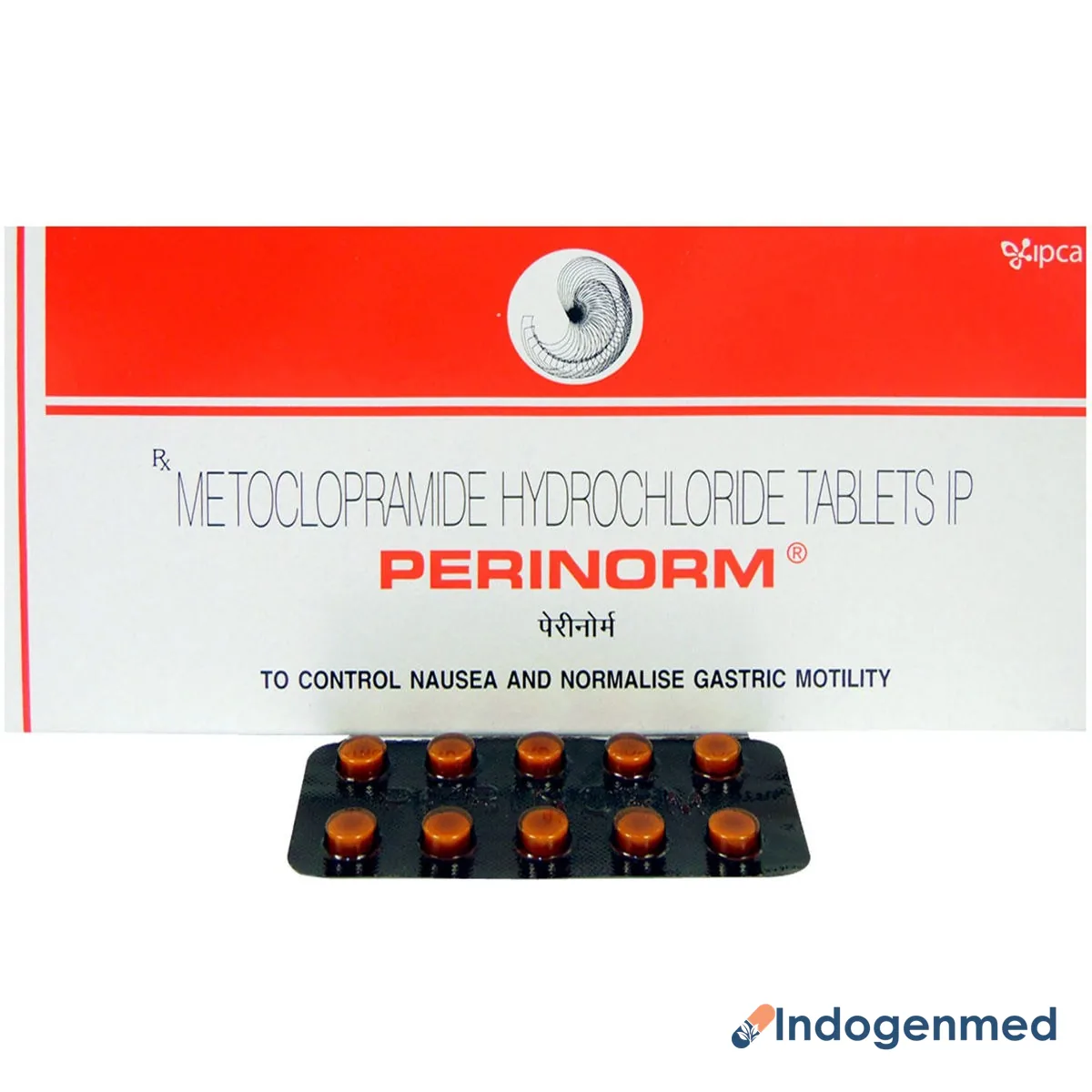
Perinorm Tablet — Metoclopramide Hydrochloride 10 mg
Perinorm Tablet contains metoclopramide hydrochloride 10 mg, a dopamine D2 receptor antagonist and prokinetic antiemetic manufactured by IPCA Laboratories Ltd. Metoclopramide was the first prokinetic agent to be widely used clinically and remains an important medicine for the symptomatic relief of nausea and vomiting, delayed gastric emptying, and upper gastrointestinal dysmotility. It acts by blocking dopamine D2 receptors in the chemoreceptor trigger zone (CTZ) of the area postrema, the central nucleus of the solitary tract, and in the enteric nervous system, producing both central antiemetic and peripheral prokinetic effects. At higher doses, metoclopramide also has weak antagonistic activity at serotonin 5-HT3 receptors (contributing to antiemetic efficacy) and agonist activity at 5-HT4 receptors (contributing to prokinetic effects). The critical distinction of metoclopramide from newer prokinetics such as mosapride is that metoclopramide does cross the blood-brain barrier and blocks central dopamine receptors, which is responsible for its extrapyramidal side effects (EPSEs) including acute dystonic reactions, akathisia, tardive dyskinesia, and hyperprolactinaemia. These CNS effects limit the duration of therapy and require careful patient selection. Perinorm Tablet is used for nausea and vomiting of various aetiologies, gastroparesis, as antiemetic prophylaxis during chemotherapy, and to facilitate radiological procedures.
Composition
- Metoclopramide hydrochloride 10 mg per tablet (equivalent to metoclopramide base ~8.9 mg)
- Excipients: lactose, starch, microcrystalline cellulose, magnesium stearate, talc
Metoclopramide HCl (C14H22ClN3O2·HCl; MW 354.25 Da) is a substituted benzamide; structurally related to procainamide.
Mechanism of Action
- Central dopamine D2 blockade (antiemetic effect): Metoclopramide blocks D2 receptors in the chemoreceptor trigger zone (CTZ) in the area postrema and in the nucleus tractus solitarius (NTS) of the brain stem. The CTZ lacks a full blood-brain barrier; D2 blockade here suppresses vomiting triggered by systemic stimuli (drugs, uraemia, hepatic failure, chemotherapy). The NTS receives afferent vagal signals from the GI tract; D2 blockade here suppresses nausea arising from gut stimulation
- Peripheral prokinetic effect (gastric emptying promotion): Dopamine normally inhibits acetylcholine (ACh) release from myenteric plexus neurons. By blocking D2 receptors in the enteric nervous system, metoclopramide disinhibits ACh release, enhancing coordinated antral contractions, increasing lower oesophageal sphincter (LOS) tone, relaxing the pylorus, and augmenting peristaltic waves — collectively accelerating gastric emptying and improving antroduodenal coordination
- 5-HT4 agonism: At therapeutic doses, some agonist activity at 5-HT4 receptors contributes to prokinetic effects by further promoting ACh release from myenteric neurons (similar to mosapride’s primary mechanism, but secondary for metoclopramide)
- 5-HT3 antagonism at higher doses: At doses ≥1 mg/kg (chemotherapy antiemetic dosing), metoclopramide exhibits 5-HT3 receptor antagonism in the vomiting centre and GI tract, contributing substantially to antiemetic efficacy against cisplatin-induced emesis
Pharmacokinetics
| Parameter | Detail |
|---|---|
| Oral bioavailability | ~65–95% (some first-pass variation; well absorbed) |
| Time to peak (Tmax) | 1–2 hours (oral); faster onset with IV/IM administration |
| Plasma protein binding | ~30% |
| CNS penetration | Readily crosses the blood-brain barrier; responsible for central antiemetic and extrapyramidal side effects |
| Metabolism | Hepatic; CYP2D6 and CYP3A4 involved; sulphate and glucuronide conjugates; CYP2D6 poor metabolisers have higher plasma levels |
| Elimination half-life | 5–6 hours; allows dosing every 6–8 hours |
| Excretion | ~85% urine (unchanged drug + metabolites) |
| Renal impairment | Accumulation occurs; reduce dose by 50% in severe renal impairment (CrCl <40 mL/min) |
Uses of Perinorm Tablet
- Nausea and vomiting: Acute nausea and vomiting due to drugs (chemotherapy at standard doses), post-operative nausea, nausea associated with uraemia, hepatic disease, and migraine; antiemetic of choice in acute migraine management when given 10 minutes before the oral analgesic (metoclopramide restores gastric emptying that slows drug absorption during migraine attacks)
- Diabetic and idiopathic gastroparesis: Accelerates gastric emptying, improves symptoms of fullness, early satiety, nausea, bloating, and upper abdominal discomfort. Use is limited to 5-day acute treatment courses due to tardive dyskinesia risk with long-term use (FDA black box warning beyond 12 weeks)
- Gastro-oesophageal reflux disease (GERD): Increases LOS pressure and accelerates gastric emptying; adjunctive to PPIs in patients with symptoms related to delayed gastric emptying; not for primary GERD therapy
- Post-operative and drug-induced nausea: Prophylaxis and treatment; IV or IM formulation used perioperatively; oral Perinorm for mild post-operative nausea
- Facilitation of small bowel intubation and radiological GI studies: Accelerates intestinal transit to facilitate nasojejunal tube placement and small bowel imaging procedures
- Symptomatic relief in anti-tuberculosis and immunosuppressant therapy: Nausea associated with rifampicin, isoniazid, pyrazinamide, tacrolimus, cyclosporine, and other drugs with significant emetogenic potential
Dosage and Administration
| Indication | Dose | Notes |
|---|---|---|
| Nausea / vomiting (adults) | 10 mg up to three times daily | Maximum 30 mg/day; short courses; take 30 minutes before meals |
| Gastroparesis (acute symptom relief) | 10 mg four times daily, 30 min before meals and at bedtime | Maximum 5-day courses; limit cumulative exposure; specialist supervision for longer use |
| Migraine-associated nausea | 10 mg orally 10–15 minutes before analgesic | Improves analgesic absorption by normalising gastric emptying |
| Renal impairment (CrCl <40 mL/min) | 5 mg three times daily (50% dose reduction) | Accumulation risk; monitor for EPSE |
| Elderly (>65 years) | Start with 5 mg; increase cautiously | High risk of EPSE and tardive dyskinesia; use with particular caution |
Administration: Take Perinorm Tablet 30 minutes before meals for prokinetic effect; swallow whole with water. The 10 mg dose applies to adults. Do not exceed 30 mg/day or 0.5 mg/kg/day. Limit treatment duration to the shortest course necessary, particularly in elderly patients. Discontinue immediately if any involuntary movements occur.
Side Effects
- Extrapyramidal side effects (EPSEs): Acute dystonic reactions (oculogyric crisis, trismus, torticollis) — particularly in children and young adults; akathisia (motor restlessness); parkinsonism with long-term use. All EPSEs occur because of central dopamine D2 blockade in the basal ganglia
- Tardive dyskinesia (TD): The most feared long-term complication; repetitive involuntary movements (orolingual, truncal); may be irreversible. Risk increases with duration of treatment and cumulative dose. FDA black box warning: avoid use >12 weeks
- Hyperprolactinaemia: D2 blockade in the pituitary removes dopamine’s inhibitory control of prolactin release; causes galactorrhoea, amenorrhoea, gynaecomastia, and sexual dysfunction
- Drowsiness, fatigue: Common; related to CNS D2 blockade
- Neuroleptic malignant syndrome (NMS): Very rare but life-threatening; rigidity, hyperthermia, autonomic instability, elevated CK
- Cardiovascular: QT prolongation (more significant with IV; rare with oral); bradycardia; ventricular arrhythmias with IV rapid infusion
Precautions and Warnings
- Duration limitation: Do not use for more than 5 days for acute nausea/gastroparesis unless specialist-supervised. The FDA black box warning (US) and European Medicines Agency restrictions both limit use to short courses to reduce tardive dyskinesia risk
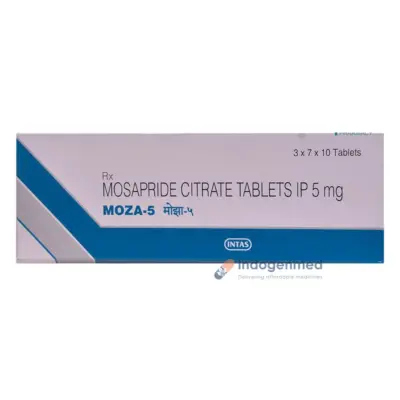
- Not interchangeable with mosapride: Mosapride (Moza 5 Tablet) is a selective 5-HT4 agonist that does NOT cross the blood-brain barrier and does NOT cause extrapyramidal effects or hyperprolactinaemia — it is a safer alternative for long-term prokinetic use in eligible patients
- Phaeochromocytoma: Contraindicated — metoclopramide can trigger hypertensive crisis by releasing catecholamines from the tumour
- Epilepsy: Use with caution — may lower seizure threshold
- Parkinson’s disease: Contraindicated — D2 blockade worsens Parkinsonian symptoms
- Pregnancy: Generally considered acceptable when clinically essential; neonatal EPSEs have been reported with use near term
Drug Interactions
| Drug / Class | Interaction | Clinical Action |
|---|---|---|
| Anticholinergics (atropine, hyoscine) | Antagonise metoclopramide’s prokinetic effects | Avoid concurrent use for GI motility indications |
| Opioid analgesics | Opioids reduce gastric motility; metoclopramide’s prokinetic effect may be reduced; opioids may also reduce metoclopramide absorption | Monitor prokinetic efficacy; may need dose adjustment |
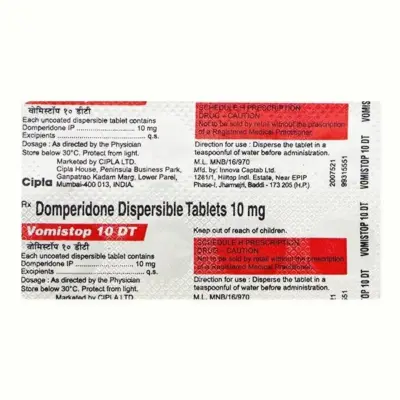
| Levodopa / dopamine agonists | Mutual antagonism; metoclopramide reduces efficacy of dopaminergic drugs | Avoid in Parkinson’s disease patients; use domperidone (peripheral-only D2 blocker) if prokinetic needed |
| CNS depressants (alcohol, benzodiazepines, sedatives) | Additive sedation | Warn patients; avoid driving and operating machinery |
| Tacrolimus, cyclosporine | Accelerated gastric emptying may increase absorption of these critical-margin immunosuppressants | Monitor trough levels of tacrolimus/cyclosporine if metoclopramide is added or stopped |
| QT-prolonging drugs (antiarrhythmics, antipsychotics, fluoroquinolones) | Additive QT prolongation risk (primarily IV metoclopramide) | Use with caution; baseline ECG in high-risk patients |
Contraindications
- GI obstruction, perforation, or haemorrhage (prokinetic effect is dangerous)
- Phaeochromocytoma (risk of hypertensive crisis)
- History of tardive dyskinesia or other drug-induced movement disorders
- Parkinson’s disease (D2 blockade worsens symptoms)
- Epilepsy or seizure disorders (may lower seizure threshold)
- Hypersensitivity to metoclopramide or any excipient
- Patients who have received metoclopramide and had EPSEs previously
Storage Instructions
- Store below 30°C, in a dry place, away from direct light and moisture
- Keep in original packaging
- Keep out of reach of children
- Do not use after the expiry date printed on the pack
Related Products
The following products on IndoGenMed are frequently used in clinical contexts related to Perinorm Tablet:
- Moza 5 Tablet (Mosapride 5 mg) — selective 5-HT4 agonist prokinetic; preferred over metoclopramide for long-term prokinetic use as it does not cause extrapyramidal effects or hyperprolactinaemia; suitable for chronic gastroparesis management
- Omesec 20 Capsule (Omeprazole 20 mg) — PPI; frequently co-prescribed with metoclopramide for GERD and gastroparesis with associated acid reflux
- Pangraf 0.5 mg Capsule (Tacrolimus 0.5 mg) — immunosuppressant; metoclopramide used for tacrolimus-associated nausea; note interaction: metoclopramide may increase tacrolimus absorption — monitor troughs
- Mucinac 600 mg Tablet (N-Acetylcysteine) — antioxidant antimucolytic; may be prescribed alongside prokinetics in patients with chronic airway disease and GERD-related symptoms
- Mycobutol 1000 mg Tablet (Ethambutol 1000 mg) — anti-TB agent; Perinorm is frequently used for nausea during anti-TB therapy, particularly during the high-pill-burden intensive phase
References
- DailyMed (FDA). Metoclopramide Hydrochloride Tablets — Prescribing Information. Available at: https://dailymed.nlm.nih.gov/dailymed/search.cfm?labeltype=all&query=metoclopramide
- MedlinePlus (U.S. National Library of Medicine). Metoclopramide. Available at: https://medlineplus.gov/druginfo/meds/a684035.html
- Pasricha PJ, Pehlivanov N, Sugumar A, Jankovic J. Drug Insight: from disturbed motility to disordered movement — a review of the clinical benefits and medicolegal risks of metoclopramide. Nat Clin Pract Gastroenterol Hepatol. 2006;3(3):138–148. PubMed PMID: 16511544. Available via: https://pubmed.ncbi.nlm.nih.gov/16511544/
- Bateman DN. Clinical pharmacokinetics of metoclopramide. Clin Pharmacokinet. 1983;8(6):523–529. PubMed PMID: 6362951. Available via: https://pubmed.ncbi.nlm.nih.gov/6362951/
- Mayo Clinic. Metoclopramide (Oral Route) — Side Effects. Available at: https://www.mayoclinic.org/drugs-supplements/metoclopramide-oral-route/side-effects/drg-20064815
Reviews
There are no reviews yet.