
Description
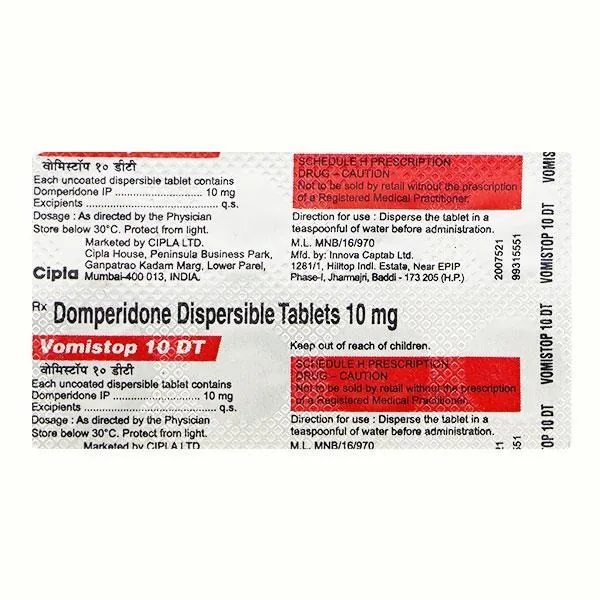
Vomistop 10 mg Tablets — Domperidone for Nausea and Vomiting
Vomistop 10 mg tablets contain domperidone, a dopamine D2 and D3 receptor antagonist used in the management of nausea, vomiting, and symptoms of gastroparesis. Domperidone acts peripherally at the chemoreceptor trigger zone (CTZ) and in the upper gastrointestinal tract, making it an effective antiemetic and prokinetic agent. Unlike metoclopramide, domperidone has limited penetration across the blood-brain barrier, which reduces the incidence of central nervous system adverse effects such as extrapyramidal reactions. Domperidone is available in many countries for the short-term relief of nausea and vomiting and for the management of symptoms of delayed gastric emptying.
Mechanism of Action
Domperidone exerts its antiemetic effect primarily by blocking dopamine D2 receptors at the chemoreceptor trigger zone (CTZ), located in the area postrema of the medulla oblongata. The CTZ lies outside the blood-brain barrier, which allows peripherally acting drugs like domperidone to influence it. By antagonising dopamine at the CTZ, domperidone suppresses the dopamine-mediated signals that trigger nausea and vomiting.
In the gastrointestinal tract, domperidone blocks peripheral dopamine receptors in the stomach and duodenum. Dopamine normally inhibits acetylcholine-mediated smooth muscle contraction in the gut. By blocking this inhibitory effect, domperidone enhances gastric motility, accelerates gastric emptying, coordinates antroduodenal contractions, and reduces gastro-oesophageal reflux. These prokinetic effects are beneficial in conditions such as gastroparesis and functional dyspepsia, where delayed gastric emptying produces symptoms of fullness, bloating, early satiety, nausea, and vomiting.
Domperidone does not cross the blood-brain barrier to a clinically significant degree at standard doses. This distinguishes it from metoclopramide, which readily enters the CNS and is associated with significantly higher rates of extrapyramidal reactions, including tardive dyskinesia with prolonged use.
Clinical Indications
Domperidone 10 mg is used for the symptomatic relief of nausea and vomiting, regardless of aetiology, including nausea and vomiting associated with chemotherapy, radiotherapy, levodopa and dopamine agonist therapy in Parkinson’s disease, and functional gastrointestinal disorders. It is also used to manage symptoms of gastroparesis — delayed gastric emptying — which produces postprandial fullness, epigastric discomfort, nausea, and vomiting.
In Parkinson’s disease management, domperidone has a specific role as the preferred antiemetic. Many antiemetics — including prochlorperazine and metoclopramide — are dopamine antagonists that enter the CNS, where they can worsen Parkinson’s symptoms and cause severe extrapyramidal reactions. Domperidone, with its peripheral selectivity, is the antiemetic of choice for managing the nausea and vomiting caused by dopaminergic antiparkinsonian medications, without compromising their central therapeutic effects.
Dosage and Administration
The usual adult dose for nausea and vomiting is domperidone 10 mg taken orally three times daily, before meals. The recommended maximum dose is 30 mg per day. The European Medicines Agency (EMA) reviewed domperidone in 2014 and issued updated recommendations: the lowest effective dose should be used, treatment duration should be limited (generally no more than one week for nausea and vomiting unless under specialist supervision), and the maximum daily dose should not exceed 30 mg in adults. Domperidone should be taken 15–30 minutes before meals for prokinetic effect.
In hepatic impairment, domperidone should be used with caution; it is contraindicated in moderate to severe hepatic impairment since domperidone is extensively metabolised in the liver. No dose adjustment is required in renal impairment for short-term use, but frequency should be reduced with severe renal impairment.
Cardiovascular Safety — QT Prolongation
The most significant safety concern with domperidone is its potential to prolong the QT interval on the electrocardiogram, which can predispose patients to serious arrhythmias, including torsades de pointes — a potentially fatal ventricular arrhythmia. The risk is dose-related and increased by drug interactions.
The 2014 EMA review concluded that the benefits of domperidone outweigh its risks only when used at the lowest effective dose (10 mg up to three times daily in adults) for the shortest duration, and only in patients without pre-existing cardiac risk factors. Domperidone is contraindicated in patients with known QT prolongation, electrolyte imbalances (hypokalaemia, hypomagnesaemia), and those taking other QT-prolonging medications.
Contraindications
Domperidone is contraindicated in patients with known hypersensitivity to domperidone, in patients with prolactin-releasing pituitary tumours (prolactinomas), in conditions where stimulation of gastric motility could be harmful (gastrointestinal haemorrhage, mechanical obstruction, or perforation), in moderate to severe hepatic impairment, and in patients with pre-existing cardiac conditions associated with QT prolongation. It is contraindicated with concomitant use of CYP3A4 inhibitors that also prolong the QT interval.
Drug Interactions
Domperidone is metabolised primarily by CYP3A4 in the liver. Potent CYP3A4 inhibitors — including azole antifungals (ketoconazole, fluconazole, itraconazole), macrolide antibiotics (erythromycin, clarithromycin), HIV protease inhibitors (ritonavir, lopinavir), and certain antidepressants — significantly increase domperidone plasma concentrations and are contraindicated in combination with domperidone due to the additive risk of QT prolongation. Drugs that also prolong the QT interval (antiarrhythmics, some antipsychotics, certain antibiotics) should not be combined with domperidone.
Adverse Effects
At standard doses, domperidone is generally well tolerated. The most commonly reported adverse effects include dry mouth, headache, and gastrointestinal disturbances. Because domperidone can cross into the pituitary through the incomplete blood-brain barrier in that region, it can elevate prolactin levels. This may cause galactorrhoea (inappropriate lactation), gynaecomastia, and menstrual irregularities with prolonged use. Extrapyramidal reactions (such as acute dystonic reactions) are rare with domperidone but have been reported, particularly in children.
Use in Pregnancy and Lactation
The safety of domperidone in human pregnancy has not been established in controlled trials. Animal studies have shown reproductive toxicity at high doses. Domperidone is excreted in breast milk; concentrations in breast milk are low, but due to the potential for QT prolongation, its use during breastfeeding should be carefully considered and medical guidance sought. The prescribing decision should weigh clinical need against potential risks.
References
- MedlinePlus (US National Library of Medicine). Domperidone. Available at: medlineplus.gov
- Mayo Clinic. Domperidone (Oral Route) — Proper Use. Available at: mayoclinic.org
- European Medicines Agency. Assessment report — domperidone-containing medicinal products. EMA/465229/2014. Available at: ema.europa.eu
- Barone JA. Domperidone: a peripherally acting dopamine2-receptor antagonist. Annals of Pharmacotherapy. 1999;33(4):429–440. PubMed PMID: 10332535.
- Tack J, Talley NJ. Functional dyspepsia — symptoms, definitions and validity of the Rome III criteria. Nature Reviews Gastroenterology and Hepatology. 2013;10(3):134–141. PubMed PMID: 23381190.





Reviews
There are no reviews yet.