Description
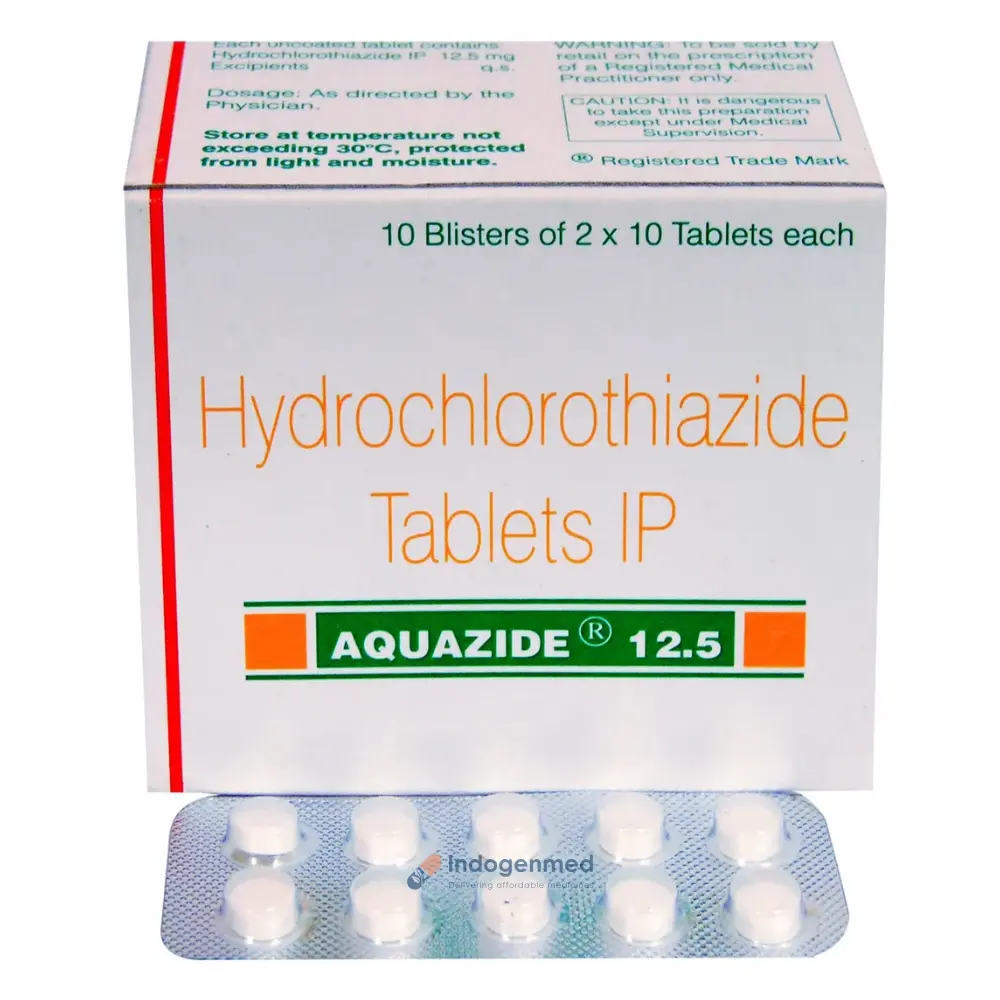
Aquazide 12.5 Mg Tablets — Hydrochlorothiazide Thiazide Diuretic for Hypertension and Oedema
Aquazide 12.5 Mg Tablets contain Hydrochlorothiazide (HCTZ) 12.5 mg per tablet, a thiazide diuretic used for the management of hypertension and fluid retention (oedema) associated with heart failure, cirrhosis, and renal conditions. At 12.5 mg, this is the lowest standard dose of hydrochlorothiazide, offering blood pressure reduction with a reduced risk of metabolic side effects compared to higher doses (25–50 mg). Aquazide is a prescription-only medicine.
Composition
| Active Ingredient | Strength per Tablet | Drug Class |
|---|---|---|
| Hydrochlorothiazide | 12.5 mg | Thiazide Diuretic / Antihypertensive |
How Aquazide Works — Mechanism of Action
Hydrochlorothiazide acts on the distal convoluted tubule (DCT) of the nephron in the kidney:
- Na/Cl co-transporter inhibition: Blocks the sodium-chloride symporter (NCC) in the DCT → reduces sodium and chloride reabsorption → increased excretion of Na⁺, Cl⁻, and water in urine → reduction in plasma volume
- Blood pressure reduction: Initial BP lowering is due to reduced circulating volume; with long-term use, peripheral vascular resistance decreases (mechanism not fully established), contributing to sustained antihypertensive effect
- Oedema reduction: Increased urinary sodium and water excretion mobilises accumulated extravascular fluid in oedematous states
- Calcium reabsorption: Unlike loop diuretics, thiazides increase calcium reabsorption in the DCT — a beneficial effect in osteoporosis and in conditions such as hypercalciuria
Clinical Indications
- Hypertension: First-line or adjunct antihypertensive, either as monotherapy in mild hypertension or in combination with ACE inhibitors, ARBs, or calcium channel blockers for more resistant hypertension
- Oedema: Management of fluid retention in heart failure, nephrotic syndrome, hepatic cirrhosis with ascites, and corticosteroid- or oestrogen-induced oedema
- Idiopathic hypercalciuria: Reduces urinary calcium excretion and is used to prevent calcium oxalate kidney stones
- Nephrogenic diabetes insipidus: Paradoxical reduction in urine output in selected patients
Dosage and Administration
- Hypertension: 12.5 mg once daily in the morning. May be increased to 25 mg once daily if BP response is inadequate after 4 weeks.
- Oedema: 12.5–50 mg daily in one or two divided doses, as directed by the prescriber. Dose adjusted based on diuretic response and electrolyte levels.
- Take in the morning: To avoid disturbing sleep with nocturnal diuresis.
- Can be taken with or without food.
- Regular monitoring: Serum electrolytes (especially potassium, sodium, magnesium), renal function, and blood glucose should be checked periodically.
Special Populations
- Elderly: More susceptible to electrolyte disturbances and postural hypotension. Start at 12.5 mg; monitor closely.
- Pregnancy: Thiazides cross the placenta and may cause foetal electrolyte disturbances and neonatal thrombocytopenia. Generally avoided in pregnancy; use only if no alternative exists.
- Breastfeeding: Excreted in breast milk; may suppress lactation at higher doses. Avoid if possible.
- Renal impairment: Reduced efficacy when eGFR <30 mL/min/1.73m². Avoid in severe renal impairment.
- Hepatic impairment: Use with caution in cirrhosis — thiazides may precipitate hepatic encephalopathy through electrolyte disturbance. Monitor closely.
Precautions
- Hypokalaemia: Thiazides increase urinary potassium loss. Monitor serum potassium; consider potassium supplementation or potassium-sparing co-therapy in patients at risk (those on digoxin, those with arrhythmias, or at higher doses).
- Hyponatraemia: Can cause dangerous low sodium, particularly in elderly patients. Monitor sodium levels.
- Hyperuricaemia: Thiazides reduce renal uric acid excretion → may precipitate acute gout in susceptible patients. Use with caution in patients with gout or high baseline uric acid.
- Blood glucose: Thiazides may impair glucose tolerance. Monitor blood glucose in patients with diabetes or pre-diabetes; insulin/oral hypoglycaemic dose adjustment may be required.
- Lipid profile: Thiazides may modestly increase LDL cholesterol and triglycerides at higher doses (less of a concern at 12.5 mg).
- Photosensitivity: Hydrochlorothiazide is associated with an increased risk of non-melanoma skin cancer with long-term use and sun exposure. Advise sun protection.
- Sulfonamide allergy: HCTZ is a sulfonamide derivative. Use with caution in patients with sulfa allergy.
Contraindications
- Hypersensitivity to hydrochlorothiazide, sulfonamides, or any excipient
- Anuria or severe renal impairment (eGFR <30 mL/min)
- Refractory hypokalaemia or hyponatraemia
- Severe hepatic impairment
- Symptomatic hyperuricaemia or acute gout
- Addison’s disease
Side Effects
Common (≥1/100): Increased urinary frequency, hypokalaemia, mild hyponatraemia, elevated uric acid, elevated blood glucose, dizziness (especially on standing), mild nausea.
Uncommon (≥1/1,000): Acute gout attack, hypomagnesaemia, postural hypotension, skin photosensitivity, impotence.
Rare but serious: Severe hyponatraemia (can cause confusion, seizures), severe hypokalaemia (cardiac arrhythmias), acute pancreatitis, blood dyscrasias (thrombocytopenia, agranulocytosis), severe skin reactions (Stevens-Johnson syndrome, toxic epidermal necrolysis), acute angle-closure glaucoma.
Seek medical help promptly if you develop muscle cramps, irregular heartbeat, confusion, reduced urine output, or a severe skin rash while taking Aquazide.
Drug Interactions
- Digoxin: Hypokalaemia from HCTZ increases digoxin toxicity risk. Monitor potassium and digoxin levels closely.
- ACE inhibitors / ARBs: First-dose hypotension may occur; beneficial combination for hypertension when managed carefully.
- NSAIDs (ibuprofen, naproxen): Reduce HCTZ’s antihypertensive and diuretic effects; increase risk of acute kidney injury.
- Lithium: Thiazides reduce lithium excretion → lithium toxicity risk. Monitor lithium levels closely.
- Corticosteroids / ACTH: Additive potassium loss.
- Antidiabetic drugs: HCTZ may impair glucose control; adjust antidiabetic doses as needed.
- Cholestyramine / colestipol: Reduce HCTZ absorption — take HCTZ at least 1 hour before or 4–6 hours after these agents.
Storage Instructions
- Store below 30°C in a dry place. Protect from light and moisture.
- Keep out of reach of children.
- Do not use past the expiry date on the pack.
Frequently Asked Questions
What is Aquazide 12.5 Mg used for?
Aquazide (Hydrochlorothiazide 12.5 mg) is primarily used to lower blood pressure in hypertension and to reduce fluid retention (oedema) in conditions such as heart failure. At 12.5 mg, it is the lowest standard dose and is often preferred to minimise metabolic side effects (electrolyte disturbances, raised blood sugar, raised uric acid) while still providing meaningful blood pressure reduction.
When should I take Aquazide?
Take Aquazide once daily in the morning, with or without food. Taking it in the morning means the diuretic effect (increased urination) occurs during the day and does not disturb sleep.
Can I take Aquazide if I have diabetes?
Hydrochlorothiazide can slightly raise blood sugar levels and reduce the effectiveness of some diabetic medications. If you have diabetes and are prescribed Aquazide, your doctor will monitor your blood glucose more closely and may need to adjust your diabetes treatment. Do not stop Aquazide without consulting your doctor first.
Is Aquazide safe for long-term use?
Hydrochlorothiazide has been used safely for hypertension for decades. Long-term use is generally well tolerated at 12.5 mg. Regular monitoring of electrolytes (potassium, sodium), renal function, and blood glucose is recommended. Long-term users should also practise sun protection, as HCTZ has been associated with an increased risk of skin cancer with cumulative UV exposure.
What foods or drinks should I avoid while taking Aquazide?
Avoid excessive alcohol, which can enhance blood pressure lowering and cause dizziness. Maintain adequate hydration but avoid excessive fluid restriction. Eating potassium-rich foods (bananas, oranges, potatoes, leafy greens) can help counter the potassium-lowering effect of thiazides. Discuss any significant dietary changes with your doctor.
References
- NHS — Hydrochlorothiazide. National Health Service, UK.
- MedlinePlus — Hydrochlorothiazide. U.S. National Library of Medicine.
- FDA Prescribing Information — Hydrochlorothiazide Tablets. U.S. Food and Drug Administration.
- NHS — High Blood Pressure (Hypertension). National Health Service, UK.
Disclaimer: This product information is provided for general educational purposes only. Aquazide 12.5 Mg is a prescription-only medicine. It must be used only as directed by a qualified healthcare professional. This content does not constitute medical advice and must not be used to self-diagnose or self-treat. IndoGenMed.org supplies this product to licensed healthcare professionals and registered pharmacies only.
Reviews
There are no reviews yet.