Description
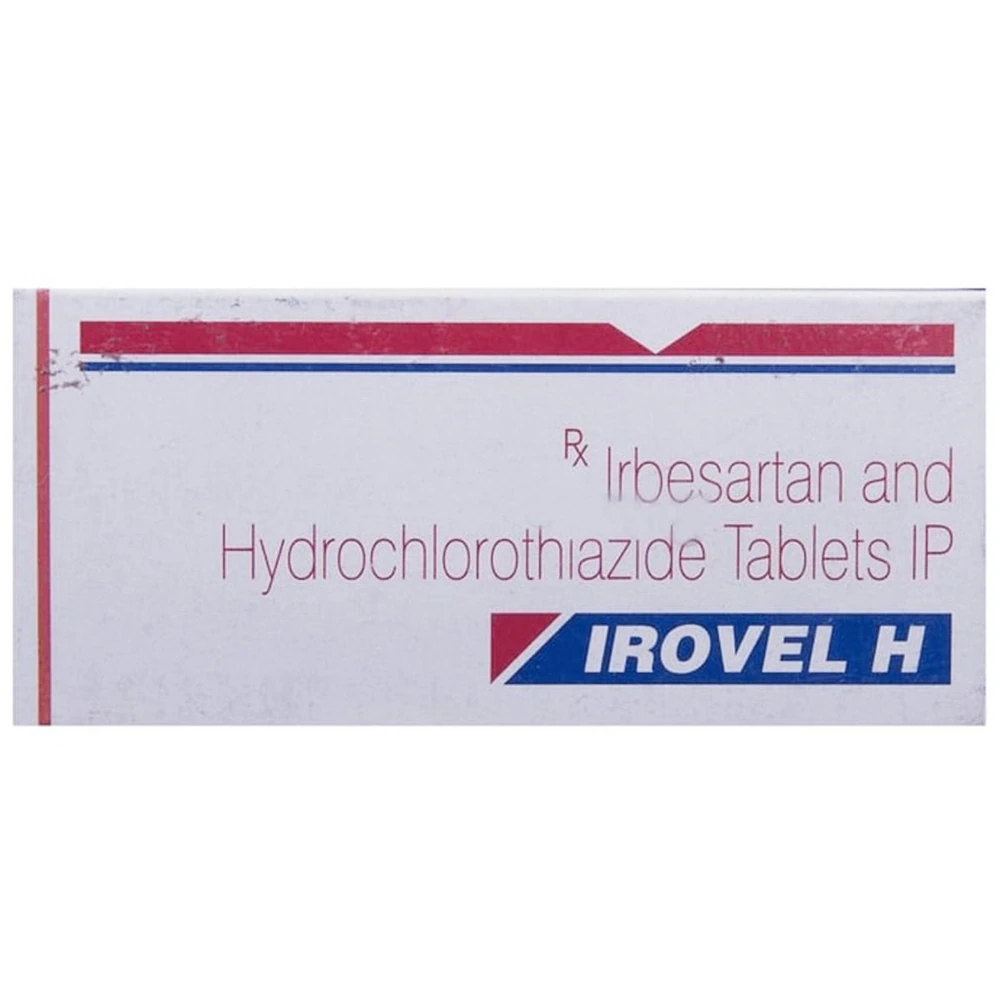
Irovel H 150/12.5 Mg Tablets – Irbesartan and Hydrochlorothiazide
Irovel H 150/12.5 Mg Tablets are a fixed-dose combination containing Irbesartan 150 mg and Hydrochlorothiazide 12.5 mg. This combination is used for the treatment of hypertension (high blood pressure) in adult patients whose blood pressure is not adequately controlled by either agent alone. Irbesartan belongs to the angiotensin receptor blocker (ARB) class of antihypertensives, while hydrochlorothiazide is a thiazide diuretic. Together, these two complementary mechanisms deliver additive blood pressure reduction with the convenience of a single daily tablet. The combination is well established in clinical practice and is approved for use in many countries including those following guidelines from the European Society of Cardiology and the Joint National Committee.
Composition
Each film-coated tablet contains:
- Irbesartan – 150 mg
- Hydrochlorothiazide – 12.5 mg
- Excipients: microcrystalline cellulose, lactose monohydrate, croscarmellose sodium, hypromellose, magnesium stearate, titanium dioxide
How Irovel H Works
Irbesartan is a selective, non-peptide AT₁ angiotensin II receptor antagonist. Angiotensin II is the primary vasoactive hormone of the renin-angiotensin-aldosterone system (RAAS). By competitively blocking the AT₁ receptor, irbesartan prevents angiotensin II from binding and exerting its vasoconstrictive and aldosterone-stimulating effects. This results in vasodilation, reduced peripheral resistance, decreased aldosterone secretion, decreased sodium and water retention, and ultimately a sustained reduction in blood pressure. Unlike ACE inhibitors, irbesartan does not inhibit the conversion of angiotensin I to angiotensin II and does not affect bradykinin metabolism, thereby avoiding the cough that is commonly associated with ACE inhibitors.
Hydrochlorothiazide (HCTZ) acts on the distal convoluted tubule of the nephron to inhibit the sodium-chloride co-transporter, increasing urinary excretion of sodium, chloride, and water. This reduction in plasma volume lowers cardiac preload and reduces blood pressure. The diuretic effect also partially activates the RAAS, an effect that is counterbalanced by the concurrent use of irbesartan, making the combination particularly well-suited pharmacologically. HCTZ additionally promotes calcium reabsorption, which may have modest benefits for bone density.
Uses of Irovel H 150/12.5 Mg
- Essential hypertension: Treatment of adults with hypertension not adequately controlled by irbesartan or HCTZ monotherapy alone.
- Combination antihypertensive therapy: As initial combination therapy in patients where blood pressure is significantly above target and dual therapy is considered appropriate from the outset.
- Cardiovascular risk reduction: Long-term blood pressure control to reduce the risk of stroke, myocardial infarction, heart failure, and kidney damage associated with uncontrolled hypertension.
- Diabetic nephropathy (irbesartan component): Irbesartan has demonstrated renoprotective benefits in patients with type 2 diabetes and nephropathy; the combination provides blood pressure control in this high-risk population.
Dosage and Administration
- Usual adult dose: One tablet (Irbesartan 150 mg / HCTZ 12.5 mg) once daily.
- May be titrated up to Irbesartan 300 mg / HCTZ 12.5 mg or 300 mg / HCTZ 25 mg if blood pressure remains above target.
- Swallow whole with water; may be taken with or without food.
- Administer at the same time each day for consistent effect.
- Elderly patients: No dose adjustment is generally required; however, monitor renal function and electrolytes more closely.
- Renal impairment: Use with caution; avoid if severe renal impairment (eGFR <30 mL/min/1.73 m²) due to the HCTZ component.
- Hepatic impairment: Use with caution; irbesartan is metabolised hepatically.
Side Effects
- Common: Dizziness, fatigue, nausea, headache, hyperkalaemia risk (monitor potassium), orthostatic hypotension (especially on first dose or after dose increase).
- HCTZ-related: Hypokalaemia, hyponatraemia, hyperuricaemia (may precipitate gout), increased blood glucose, photosensitivity reactions, hypomagnesaemia.
- Irbesartan-related: Hyperkalaemia (particularly in renal impairment or with concurrent potassium-sparing agents), transient rise in serum creatinine at initiation.
- Serious (rare): Angioedema, acute renal failure, severe hypotension (especially in volume-depleted patients), blood dyscrasias.
Precautions and Warnings
- Pregnancy — BLACK BOX WARNING: Irbesartan (and all ARBs) are absolutely contraindicated in pregnancy. Direct renin-angiotensin system blockade during the second and third trimesters can cause foetal renal dysplasia, oligohydramnios, neonatal renal failure, skull hypoplasia, and death. Discontinue immediately if pregnancy is confirmed.
- Volume/salt depletion: Correct dehydration or hypovolaemia before initiating therapy to avoid severe first-dose hypotension.
- Bilateral renal artery stenosis: RAAS blockade in patients with bilateral renal artery stenosis may precipitate acute renal failure; avoid use.
- Electrolyte monitoring: Monitor serum potassium, sodium, and creatinine at baseline and periodically during treatment.
- Diabetes: HCTZ may impair glucose tolerance; monitor blood sugar in diabetic patients; insulin or oral hypoglycaemic dose adjustments may be needed.
- Gout: HCTZ raises serum uric acid; use with caution in patients with gout or hyperuricaemia.
- Systemic lupus erythematosus: Thiazide diuretics may trigger or exacerbate SLE.
Drug Interactions
- Potassium supplements / potassium-sparing diuretics (spironolactone, amiloride): Increased risk of hyperkalaemia when combined with irbesartan; monitor potassium closely.
- NSAIDs (ibuprofen, naproxen): May attenuate antihypertensive effect and increase risk of renal impairment; avoid regular combined use.
- Lithium: Thiazides reduce renal lithium clearance, increasing risk of lithium toxicity; monitor lithium levels.
- Antidiabetic agents: HCTZ may increase blood glucose, requiring adjustment of insulin or oral antidiabetics.
- Other antihypertensives and vasodilators: Additive blood pressure lowering; adjust doses when combining.
- Cholestyramine / colestipol: Reduce absorption of HCTZ; take Irovel H at least 1 hour before or 4 hours after these agents.
Contraindications
- Pregnancy (second and third trimester — absolute contraindication)
- Severe hepatic impairment or cholestasis
- Severe renal impairment (eGFR <30 mL/min/1.73 m²) or anuria
- Refractory hypokalaemia or hypercalcaemia
- Hypersensitivity to irbesartan, hydrochlorothiazide, sulphonamide derivatives, or any excipient
- Concurrent use with aliskiren in patients with diabetes or renal impairment (eGFR <60 mL/min/1.73 m²)
Storage Instructions
Store below 30°C in a dry place away from direct sunlight and moisture. Keep in the original blister packaging until use. Keep out of reach of children. Do not use after the expiry date printed on the pack.
Related Products
- Januvia 25 Mg Tablets – Sitagliptin for type 2 diabetes management
- Lefumide 20 Mg Tablets – Leflunomide for autoimmune conditions
- Levoflox 750 Mg Tablets – Levofloxacin broad-spectrum antibiotic
References
- MedlinePlus. Irbesartan. U.S. National Library of Medicine. medlineplus.gov
- MedlinePlus. Hydrochlorothiazide. U.S. National Library of Medicine. medlineplus.gov
- Mayo Clinic. Irbesartan and Hydrochlorothiazide (Oral Route) – Description and Brand Names. mayoclinic.org
- electronic Medicines Compendium (eMC). CoAprovel 150mg/12.5mg Film-coated Tablets – Summary of Product Characteristics. medicines.org.uk/emc
Reviews
There are no reviews yet.