Description
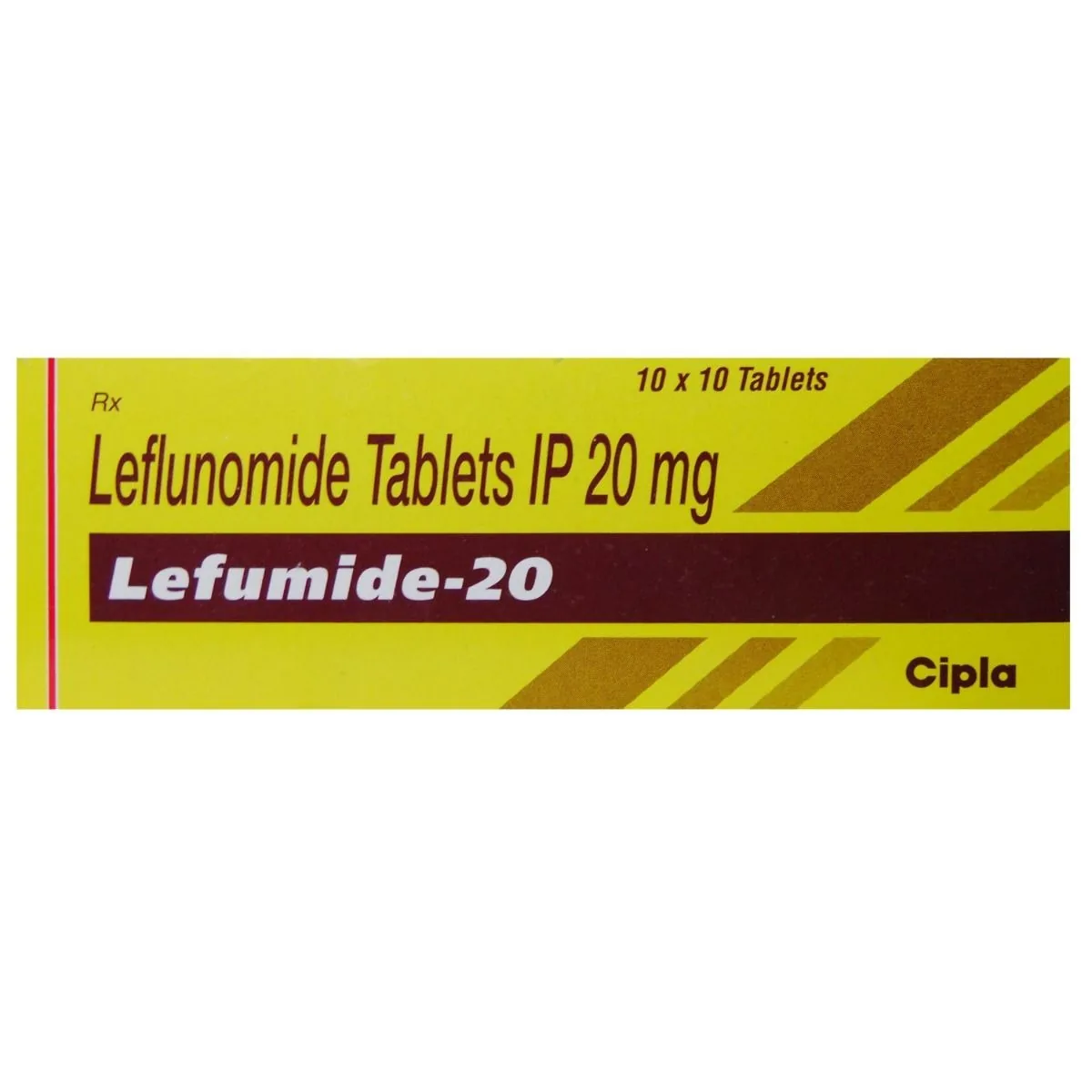
Lefumide 20 Mg Tablets – Leflunomide 20 Mg for Rheumatoid Arthritis
Lefumide 20 Mg Tablets contain Leflunomide 20 mg, a disease-modifying antirheumatic drug (DMARD) used in the treatment of active rheumatoid arthritis (RA) in adults. Leflunomide belongs to the isoxazole class and exerts its therapeutic effect primarily through inhibition of pyrimidine synthesis in activated lymphocytes — the same lymphocytes that drive the autoimmune joint destruction characteristic of RA. As a DMARD, leflunomide reduces not only the signs and symptoms of active disease (joint pain, swelling, morning stiffness) but also slows the progression of structural damage to joints as demonstrated on X-ray. It is an effective alternative to methotrexate and may be used as monotherapy or, with careful monitoring, in combination with other DMARDs.
Composition
Each film-coated tablet contains:
- Leflunomide 20 mg
- Excipients: lactose monohydrate, maize starch, povidone, croscarmellose sodium, magnesium stearate, hypromellose, macrogol 8000, titanium dioxide, yellow ferric oxide
How Leflunomide Works
Leflunomide is a prodrug that is rapidly and completely converted in the gut wall and plasma to its active metabolite, teriflunomide (A77 1726). Teriflunomide inhibits the mitochondrial enzyme dihydroorotate dehydrogenase (DHODH) — a rate-limiting step in the de novo synthesis of pyrimidines (uridine monophosphate). Rapidly dividing cells, such as activated T- and B-lymphocytes mounting an autoimmune response, are dependent on this pathway because they cannot rely solely on the salvage pathway for pyrimidine supply. By starving these cells of uridine precursors, leflunomide suppresses lymphocyte proliferation and thereby reduces the cytokine cascade (TNF-α, IL-1, IL-6) that drives synovial inflammation and joint erosion in RA.
Teriflunomide has a very long half-life of approximately 1–4 weeks due to extensive enterohepatic recirculation. This means steady-state plasma concentrations take months to reach without a loading dose. A 3-day loading dose regimen (100 mg daily) is used to achieve therapeutic levels quickly; the standard maintenance dose of 20 mg daily then maintains those levels. Because of this prolonged half-life, teriflunomide can persist in the body for up to two years after stopping leflunomide unless an accelerated washout procedure is performed using cholestyramine or activated charcoal.
Uses of Lefumide 20 Mg Tablets
- Active rheumatoid arthritis (RA): To reduce signs and symptoms and to retard structural joint damage — the primary licensed indication.
- Psoriatic arthritis: Used off-label in some guidelines for psoriatic arthropathy, though evidence is less robust than for methotrexate.
- Disease modification: Radiographic slowing of joint space narrowing and erosion in RA over 1–2 years of treatment.
Dosage and Administration
- Loading dose: Leflunomide 100 mg once daily for 3 days (reduces time to reach steady-state plasma levels of teriflunomide).
- Maintenance dose: Leflunomide 20 mg once daily (this formulation).
- May be taken with or without food.
- Monitor liver function tests (LFTs) and full blood count (FBC) before starting and at regular intervals (every 4–8 weeks for the first 6 months, then every 3 months).
- Monitor blood pressure at baseline and periodically — hypertension is a known adverse effect.
Side Effects
- Common: Diarrhoea, nausea, abdominal pain, elevated liver enzymes (ALT/AST), headache, dizziness, alopecia (hair thinning), rash, hypertension.
- Serious — hepatotoxicity: Leflunomide can cause severe hepatotoxicity including rare cases of fatal liver failure. Regular LFT monitoring is essential; withhold or discontinue if ALT rises >3× the upper limit of normal.
- Bone marrow suppression: Anaemia, leucopenia, thrombocytopenia — monitor blood counts regularly.
- Peripheral neuropathy: Cases have been reported; discontinue if suspected.
- Severe skin reactions: Stevens-Johnson syndrome and toxic epidermal necrolysis have been reported rarely.
- Pulmonary effects: Interstitial lung disease has been reported, particularly in patients with pre-existing lung disease.
Precautions and Warnings
- Hepatic impairment: Contraindicated in moderate-to-severe hepatic impairment. Avoid in patients with significant alcohol intake.
- Immunosuppression: Increases susceptibility to serious infections including opportunistic infections; screen for tuberculosis before initiating.
- Washout procedure: Due to the very long half-life of teriflunomide, an accelerated washout with colestyramine (8 g three times daily for 11 days) or activated charcoal (50 g every 12 hours for 11 days) is required before switching to another DMARD, before surgery, or in the event of serious adverse effects.
- Teratogenicity — CRITICAL: Leflunomide is highly teratogenic (FDA Category X). Women of childbearing potential must use reliable contraception during treatment and until plasma teriflunomide levels are confirmed below 0.02 mg/L after washout. Pregnancy must be excluded before starting. Men wishing to father children should also undergo washout.
Drug Interactions
- Methotrexate: Combination increases risk of hepatotoxicity — requires very close monitoring of LFTs if used together.
- Warfarin: Leflunomide may increase INR; monitor closely when used with anticoagulants.
- Rifampicin: An enzyme inducer that increases peak plasma levels of teriflunomide — use with caution.
- Live vaccines: Avoid during leflunomide therapy due to immunosuppressive effect.
- CYP2C9 substrates: Teriflunomide inhibits CYP2C9; may increase levels of drugs metabolised by this enzyme (e.g. warfarin, phenytoin, tolbutamide).
Contraindications
- Pregnancy and in women of childbearing potential who are not using reliable contraception
- Severe hepatic impairment
- Severe immunodeficiency states (e.g. AIDS)
- Serious infections
- Moderate-to-severe renal impairment (limited data)
- Hypersensitivity to leflunomide or its metabolites
Storage Instructions
Store below 25°C in a dry place away from direct sunlight and moisture. Keep in the original packaging. Keep out of reach of children. Do not use after the expiry date printed on the carton. Avoid storing in humid environments such as bathrooms.
Leflunomide Versus Methotrexate in Rheumatoid Arthritis
Methotrexate has long been considered the anchor DMARD for rheumatoid arthritis, but leflunomide represents an effective alternative — particularly for patients who cannot tolerate methotrexate’s side effects (nausea, mouth ulcers, folate-related toxicity) or who have contraindications such as renal impairment or significant alcohol use. Head-to-head trials, including the multinational MN301 study, demonstrated that leflunomide and methotrexate produced comparable reductions in joint tenderness scores, swollen joint counts, and C-reactive protein (CRP) levels at 12 months. Radiographic progression (measured by Sharp-van der Heijde score) was similarly retarded by both drugs. Leflunomide has the advantage of once-daily oral dosing without the need for weekly injections or folate supplementation, though it carries its own distinct toxicity profile — hepatotoxicity and teratogenicity being the primary concerns. In practice, rheumatologists may switch between agents, combine them under close monitoring, or use leflunomide as the bridge when transitioning between biologics. Leflunomide’s prolonged washout requirement (due to teriflunomide’s enterohepatic recirculation) must be planned for in advance whenever a treatment change is anticipated.
Related Products
- Januvia 25 Mg Tablets – Sitagliptin for type 2 diabetes (frequently co-managed with RA)
- Imuran 50 Mg Tablets – Azathioprine for immunosuppression and autoimmune conditions
- Lamitor 200 Mg Tablets – Lamotrigine for CNS conditions (sometimes co-prescribed in complex autoimmune patients)
References
- MedlinePlus. Leflunomide. U.S. National Library of Medicine. medlineplus.gov
- Mayo Clinic. Leflunomide (Oral Route) – Description and Brand Names. mayoclinic.org
- FDA Drug Label. Arava (Leflunomide) Tablets – Prescribing Information. U.S. Food and Drug Administration. accessdata.fda.gov
Reviews
There are no reviews yet.