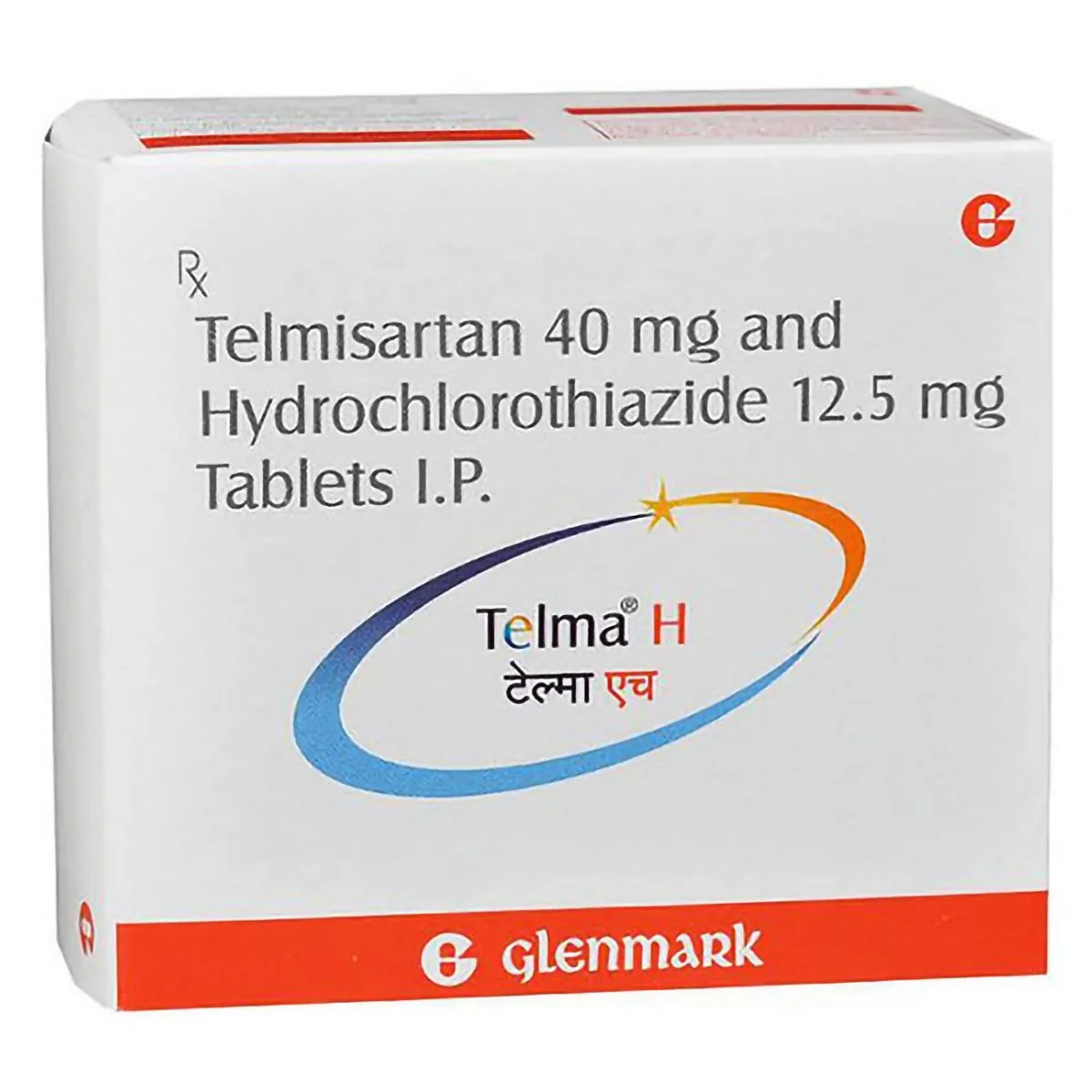
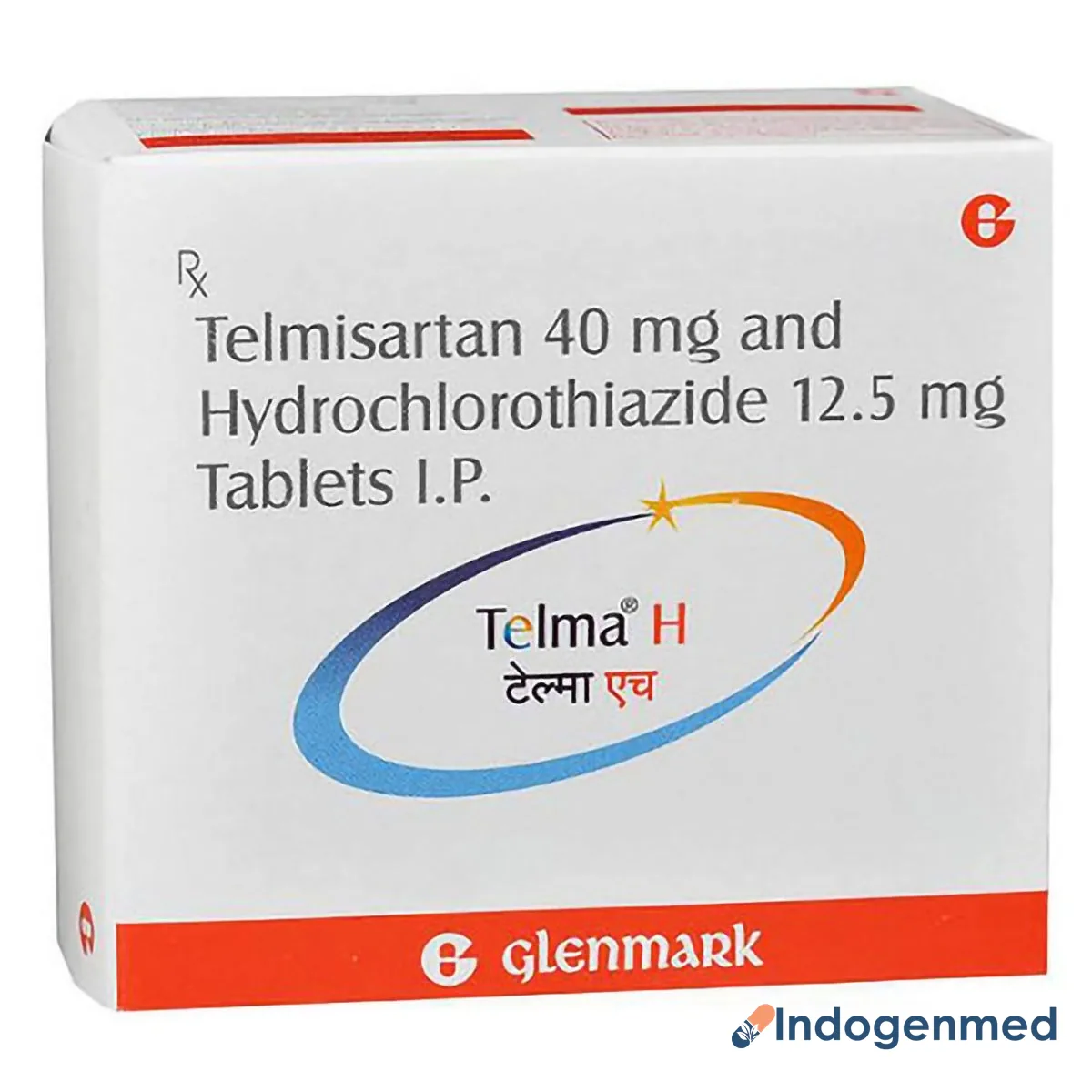
Description
What Is Telma H 40+12.5 mg Tablet?
Telma H 40+12.5 mg Tablet is a fixed-dose combination containing telmisartan 40 mg and hydrochlorothiazide (HCTZ) 12.5 mg. It combines an angiotensin II receptor blocker (ARB) with a thiazide diuretic to provide additive and complementary blood pressure lowering through two distinct mechanisms. This combination is well established in hypertension management guidelines as an effective option when monotherapy with either agent provides insufficient blood pressure control. The two active ingredients act on different physiological pathways — telmisartan blocks the renin-angiotensin-aldosterone system (RAAS) while HCTZ promotes urinary sodium and water excretion — producing a synergistic antihypertensive effect that is greater than either drug alone. Telma H is a branded Indian generic manufactured for IndoGenMed’s international market.
Mechanism of Action
Telmisartan 40 mg — Angiotensin II Receptor Blocker
Telmisartan is a selective, competitive antagonist of the angiotensin II type 1 (AT1) receptor. Angiotensin II is the principal effector hormone of the renin-angiotensin-aldosterone system (RAAS). By binding with high affinity to AT1 receptors on vascular smooth muscle, the adrenal gland, and the kidney, telmisartan prevents angiotensin II from exerting its pressor effects:
- Vasodilation: Blockade of AT1 receptors on vascular smooth muscle prevents angiotensin II-mediated vasoconstriction, reducing peripheral vascular resistance and lowering blood pressure
- Reduced aldosterone secretion: AT1 blockade at the adrenal cortex reduces aldosterone release, decreasing renal sodium and water retention
- Renal tubular effects: Telmisartan reduces angiotensin II-mediated sodium reabsorption in the proximal tubule, contributing modestly to natriuresis
- Unlike ACE inhibitors: Telmisartan does not inhibit ACE (kininase II), so bradykinin does not accumulate. This is why ARBs are associated with far lower rates of dry cough (the hallmark ACE inhibitor class effect) — ARB-associated cough rates are similar to placebo
- PPAR-γ partial agonism: Telmisartan has unique partial agonist activity at peroxisome proliferator-activated receptor gamma (PPAR-γ), a nuclear receptor regulating glucose and lipid metabolism. This property differentiates telmisartan from other ARBs and may confer modest metabolic benefits in patients with insulin resistance
Telmisartan has the longest half-life of any ARB (approximately 24 hours), enabling true once-daily dosing with consistent 24-hour blood pressure control, including during the early morning hours when sympathetic tone and cardiovascular risk are highest.
Hydrochlorothiazide 12.5 mg — Thiazide Diuretic
HCTZ acts primarily on the distal convoluted tubule of the kidney, where it inhibits the sodium-chloride cotransporter (NCC, encoded by SLC12A3). This inhibition reduces the reabsorption of sodium and chloride into the bloodstream:
- Initial effect: Increased urinary excretion of sodium and water → reduced plasma volume and cardiac output → lower blood pressure
- Chronic effect: With sustained use, plasma volume partially normalises but peripheral vascular resistance remains reduced — the sustained antihypertensive mechanism on long-term therapy
- Electrolyte effects: HCTZ increases urinary loss of potassium and magnesium (through secondary hyperaldosteronism), and reduces urinary calcium excretion (useful in patients with recurrent calcium oxalate stones)
- Complementarity with telmisartan: HCTZ-induced RAAS activation (a compensatory response to volume depletion) is blunted by telmisartan’s AT1 blockade, while telmisartan-related plasma potassium retention partially offsets HCTZ-induced potassium wasting — creating a pharmacologically complementary and metabolically balanced combination
Indications
- Essential hypertension in adults whose blood pressure is not adequately controlled on telmisartan monotherapy, HCTZ monotherapy, or any other single antihypertensive agent
- Step-up therapy: For patients already stabilised on telmisartan 40 mg and HCTZ 12.5 mg administered as separate tablets, Telma H provides equivalent therapy in a single convenient tablet
- Hypertension with metabolic syndrome or mild insulin resistance: The PPAR-γ activity of telmisartan and its metabolically neutral or slightly beneficial profile make it a preferred ARB in patients with metabolic comorbidities
- Cardiovascular risk reduction in hypertension: RAAS blockade with ARBs reduces the risk of stroke, myocardial infarction, and progression to heart failure in patients with hypertension and additional risk factors, as demonstrated in outcome trials including ONTARGET
Note: Telmisartan as monotherapy has an approved indication for cardiovascular risk reduction in patients who are unable to take ACE inhibitors (ONTARGET trial), but this combination product is specifically indicated for hypertension management, not standalone cardiovascular risk reduction.
Dosage and Administration
- Usual dose: One Telma H 40+12.5 mg tablet once daily
- Timing: May be taken at any time of day, with or without food — telmisartan absorption is not affected by meals; HCTZ absorption is modestly reduced by food but not clinically significantly
- Administration: Swallow whole with water; do not crush or chew
- Consistency: Take at the same time each day for consistent 24-hour blood pressure control
- Maximum dose (telmisartan component): 80 mg telmisartan once daily (available as a higher-strength combination tablet); do not exceed 80 mg telmisartan per day
- HCTZ component ceiling: 12.5–25 mg HCTZ per day is the standard antihypertensive dose; higher doses do not substantially increase blood pressure lowering but markedly increase electrolyte disturbance risk
Dose Adjustment
- Renal impairment: HCTZ is contraindicated in severe renal impairment (eGFR <30 mL/min/1.73 m²) as efficacy is lost and volume and electrolyte disturbances become dangerous. Telmisartan can be used in renal impairment but requires careful monitoring of renal function and electrolytes; renal function may decline when RAAS blockade is initiated in patients with renovascular hypertension or low-flow states
- Hepatic impairment: Telmisartan is primarily eliminated by biliary excretion; it is contraindicated in severe hepatic impairment (Child-Pugh C). In mild-to-moderate hepatic impairment, telmisartan should be used with caution at lower doses. HCTZ is contraindicated in severe hepatic impairment due to risk of hepatic encephalopathy from electrolyte disturbance
- Elderly patients: No dose adjustment of telmisartan is required. HCTZ should be used with caution in elderly patients due to increased risk of orthostatic hypotension, hyponatraemia, and falls
- Renal artery stenosis: Bilateral renal artery stenosis or stenosis of a single functioning kidney is a contraindication — RAAS blockade in this setting causes sharp reduction in glomerular filtration pressure and may precipitate acute kidney injury
- Volume depletion: Correct volume and sodium depletion before initiating therapy; first-dose hypotension is more likely in volume-depleted patients, particularly those on high-dose diuretics
Contraindications
- Hypersensitivity to telmisartan, hydrochlorothiazide, sulphonamide-derived drugs (HCTZ is a sulphonamide derivative), or any excipient
- Pregnancy — absolutely contraindicated in the second and third trimesters: ARBs cause foetotoxicity identical to ACE inhibitors (oligohydramnios, foetal renal failure, neonatal anuria, foetal limb contractures, craniofacial deformities, neonatal death). Discontinue Telma H as soon as pregnancy is confirmed
- Breastfeeding — telmisartan passes into breast milk in animals; HCTZ passes into human breast milk; use is not recommended during breastfeeding
- Severe hepatic impairment or biliary obstruction (telmisartan contraindicated — dependent on biliary elimination)
- Severe renal impairment (eGFR <30 mL/min/1.73 m²) — HCTZ loses efficacy and electrolyte/volume risks become severe
- Refractory hypokalaemia, hypercalcaemia, or hyponatraemia — HCTZ will worsen these
- Concomitant use with aliskiren in patients with diabetes or renal impairment — dual RAAS blockade with aliskiren is contraindicated due to markedly increased risk of hypotension, hyperkalaemia, and renal failure
- Concomitant use with another ARB or ACE inhibitor (dual RAAS blockade) is contraindicated in patients with diabetic nephropathy; strongly discouraged in all other patients due to increased adverse events without additional benefit (ONTARGET trial)
- Anuria
Warnings and Precautions
Foetal Toxicity
When pregnancy is detected, Telma H must be discontinued immediately. Drugs acting on the renin-angiotensin system cause oligohydramnios, which can result in foetal limb contractures, delayed lung development, craniofacial deformation, and neonatal renal failure or death. These effects are most severe in the second and third trimesters; first-trimester exposure carries a lower but non-zero risk. All women of childbearing potential must use effective contraception during treatment.
Hypotension
Symptomatic hypotension may occur at initiation, particularly in volume-depleted or sodium-depleted patients (e.g., those on high-dose diuretics, on a low-salt diet, or after vomiting/diarrhoea). Patients at risk should be observed for 1–2 hours after the first dose. Transient hypotension is not an absolute contraindication to continuation; once haemodynamically stable, therapy can usually be continued at a lower dose.
Renal Function and Electrolytes
Telmisartan can reduce glomerular filtration in patients whose renal perfusion pressure depends on RAAS activity — particularly those with bilateral renal artery stenosis, severe heart failure, or volume depletion. Renal function and serum electrolytes (potassium, sodium, creatinine) should be monitored at baseline, 1–4 weeks after initiation, and periodically thereafter. HCTZ causes urinary potassium wasting; though telmisartan partially offsets this via aldosterone reduction, clinically significant hypokalaemia can still occur, especially with inadequate dietary potassium.
Hyperkalaemia
Despite HCTZ’s potassium-wasting effect, telmisartan’s aldosterone-suppressing action can cause hyperkalaemia, particularly in patients with renal impairment, diabetes, or those taking potassium-sparing diuretics, potassium supplements, or NSAIDs. Regular potassium monitoring is recommended.
Metabolic Effects of HCTZ
At 12.5 mg, HCTZ-related metabolic effects are dose-dependent and generally modest compared with higher doses. Nevertheless, patients should be monitored for: hyperuricaemia (and gout exacerbation), hyperglycaemia (caution in diabetes — HCTZ may worsen glycaemic control), hyperlipidaemia, and photosensitivity reactions. HCTZ is not recommended in patients with severe symptomatic gout.
Angioedema
Angioedema (swelling of face, lips, tongue, throat) has been reported rarely with telmisartan and other ARBs. While far less common than with ACE inhibitors, it remains a serious class-effect risk. Patients with a history of angioedema with any agent should be monitored carefully. Any episode of angioedema requires permanent discontinuation.
Adverse Effects
- Common (1–10%): Dizziness, headache, fatigue, nasopharyngitis, back pain, upper respiratory tract infection, diarrhoea, nausea, elevated serum creatinine
- Telmisartan-specific: Hyperkalaemia (particularly with renal impairment), rare angioedema, renal function decline in high-risk patients
- HCTZ-specific: Hypokalaemia, hyponatraemia, hyperuricaemia, hyperglycaemia, photosensitivity, hypomagnesaemia, orthostatic hypotension (particularly in elderly patients)
- Uncommon: Rash, pruritus, oedema, palpitations, dry mouth, increased liver enzymes
- Rare: Severe skin reactions (toxic epidermal necrolysis — HCTZ class association), acute pulmonary oedema (non-cardiogenic, HCTZ idiosyncratic), cholestatic jaundice (telmisartan rare)
Drug Interactions
- NSAIDs (including selective COX-2 inhibitors): Reduce antihypertensive effect of telmisartan + HCTZ and may cause acute kidney injury, particularly in elderly, volume-depleted, or renally impaired patients — the same “triple whammy” risk seen with ACE inhibitors (RAAS blocker + diuretic + NSAID → AKI). Avoid regular NSAIDs; if unavoidable, monitor renal function and blood pressure
- Potassium-sparing diuretics (spironolactone, eplerenone, amiloride, triamterene), potassium supplements: Increased risk of hyperkalaemia when combined with telmisartan; use only under close electrolyte monitoring
- Other antihypertensives and vasodilators: Additive blood pressure lowering; monitor for hypotension
- Lithium: Both telmisartan and HCTZ reduce lithium renal clearance, increasing plasma lithium levels and risk of lithium toxicity; lithium plasma levels must be monitored frequently during co-administration
- Digoxin: HCTZ-induced hypokalaemia increases sensitivity to digoxin and risk of digoxin toxicity; maintain serum potassium within normal range
- Antidiabetic agents (insulin, sulphonylureas): HCTZ may attenuate glycaemic control, potentially requiring dose adjustment of antidiabetic therapy
- Allopurinol: HCTZ-induced hyperuricaemia may antagonise the effect of allopurinol; hypersensitivity reactions to allopurinol may be more frequent with concurrent thiazide use
- Colestyramine / colestipol: Reduce HCTZ absorption; administer Telma H at least 1 hour before or 4–6 hours after these bile acid sequestrants
- Pressor amines (e.g., adrenaline/epinephrine): HCTZ may reduce pressor response; of limited clinical significance
- Non-depolarising muscle relaxants (e.g., tubocurarine): HCTZ may enhance their effect
- Aliskiren: Contraindicated in diabetic or renally impaired patients; dual RAAS blockade increases hypotension, hyperkalaemia, and renal failure risk
Use in Special Populations
Pregnancy: Absolutely contraindicated in second and third trimesters (foetotoxicity — see Contraindications). Should be avoided in first trimester and discontinued as soon as pregnancy is detected. Women planning pregnancy should be switched to a suitable alternative antihypertensive before conception.
Breastfeeding: Not recommended. Alternative antihypertensives compatible with breastfeeding (e.g., methyldopa, labetalol, nifedipine) should be used.
Paediatric patients: Telma H is not indicated in children; safety and efficacy have not been established in patients under 18 years.
Elderly patients (≥65 years): No dose adjustment of telmisartan is required. HCTZ requires caution due to higher risk of electrolyte disturbance, orthostatic hypotension, and renal impairment in elderly patients. Blood pressure targets in frail elderly patients may be less aggressive to avoid overtreating and hypotension-related falls.
Renal impairment: Contraindicated in severe renal impairment (eGFR <30) due to HCTZ component. Telmisartan is biliary-eliminated and may be used in renal impairment; however, the combination is not suitable below eGFR 30. Monitor renal function and electrolytes regularly in moderate renal impairment.
Hepatic impairment: Telmisartan is contraindicated in severe hepatic impairment and should be used with caution in mild-to-moderate impairment (maximum 40 mg telmisartan recommended in hepatic impairment). HCTZ is contraindicated in severe hepatic impairment.
Storage
Store Telma H 40+12.5 mg Tablets below 30°C in a dry place, protected from light and moisture. Store in the original blister packaging until use. Keep out of the reach and sight of children. Do not use after the expiry date printed on the outer carton or blister.
Related Products
- Lipril 10 mg Tablets (lisinopril 10 mg — ACE inhibitor, an alternative RAAS-blocking antihypertensive)
- Lipvas 40 mg Tablets (atorvastatin 40 mg — high-intensity statin, frequently co-prescribed for cardiovascular risk reduction in hypertensive patients)
References
- DailyMed. Telmisartan and hydrochlorothiazide tablets — prescribing information. U.S. National Library of Medicine. Available at: https://dailymed.nlm.nih.gov/dailymed/
- MedlinePlus. Telmisartan and Hydrochlorothiazide. U.S. National Library of Medicine. Available at: https://medlineplus.gov/druginfo/meds/a606010.html
- Mayo Clinic. Telmisartan And Hydrochlorothiazide (Oral Route) — Description and Brand Names. Available at: https://www.mayoclinic.org/
- Electronic Medicines Compendium (EMC). Micardis Plus 40 mg/12.5 mg tablets — Summary of Product Characteristics. Available at: https://www.medicines.org.uk/emc/
- Yusuf S, et al. Telmisartan, ramipril, or both in patients at high risk for vascular events. N Engl J Med. 2008;358(15):1547–1559. (ONTARGET trial)
Reviews
There are no reviews yet.