Description
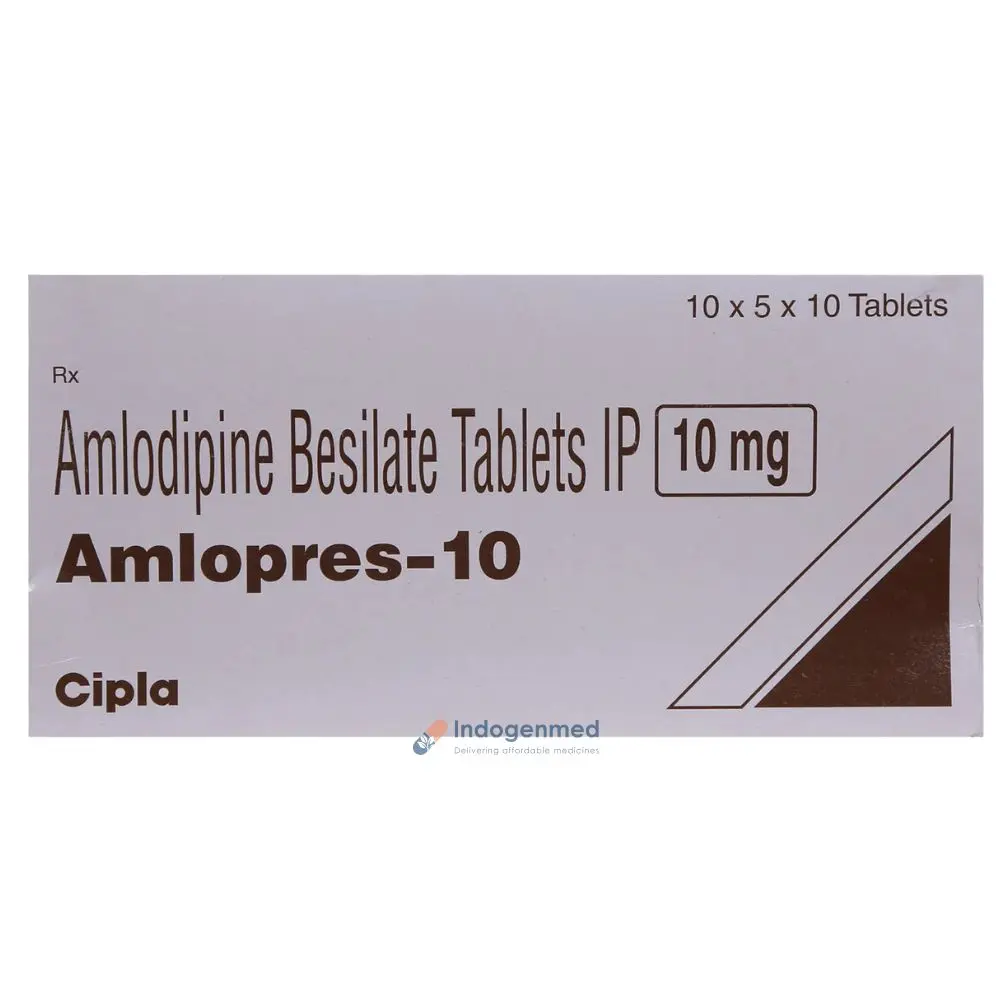
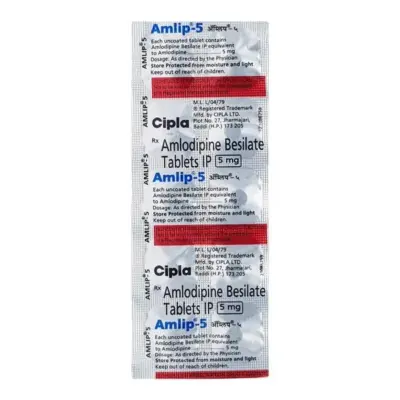
Amlopres 10 Mg Tablets — Amlodipine Besylate 10 mg
Amlopres 10 Mg Tablets contain amlodipine besylate equivalent to 10 mg amlodipine, the maximum approved daily dose of this long-acting dihydropyridine calcium channel blocker. Manufactured by Cipla Ltd., the 10 mg formulation is prescribed when the standard 5 mg dose has not achieved adequate blood pressure control or angina prophylaxis after a trial period of 7 to 14 days. At 10 mg, amlodipine delivers its maximum antihypertensive and anti-anginal effect. Clinical trials consistently show that most patients with angina pectoris — including those with vasospastic angina — require the 10 mg dose for optimal symptom relief. Because adverse effects such as peripheral oedema are dose-dependent, Amlopres 10 is typically used only after titration from the 5 mg strength or as the starting dose in patients with severe hypertension requiring substantial blood pressure reduction.
Composition
Each film-coated tablet of Amlopres 10 contains:
- Amlodipine besylate equivalent to amlodipine 10 mg (active ingredient)
- Microcrystalline cellulose, dibasic calcium phosphate anhydrous, sodium starch glycolate, and magnesium stearate (inactive excipients)
Amlodipine besylate (CAS 111470-99-6) is the benzenesulphonate salt of amlodipine. Its molecular formula as the besylate salt is C20H25ClN2O5·C6H6O3S, with a molecular weight of 567.1 g/mol. The free base amlodipine is classified under ATC code C08CA01 and belongs to the dihydropyridine subclass of selective calcium channel blockers acting predominantly on vascular smooth muscle.
Mechanism of Action
Amlodipine is a third-generation dihydropyridine L-type calcium channel antagonist that selectively inhibits the inward movement of calcium ions through voltage-gated calcium channels in vascular smooth muscle and, to a lesser extent, cardiac muscle cells. Calcium influx through L-type channels is the primary trigger for smooth muscle contraction. By binding to the alpha-1 subunit of the channel complex and stabilising it in the closed (inactivated) state, amlodipine prevents the calcium-dependent phosphorylation of myosin light chains, the final step in smooth muscle contraction.
At the vascular level, the principal effect is sustained arteriolar vasodilation: peripheral vascular resistance falls, systolic and diastolic blood pressure decrease proportionally, and cardiac afterload is reduced. Because amlodipine has a 100- to 1000-fold greater affinity for smooth muscle than cardiac muscle, it produces very little negative inotropy or chronotropy. At the 10 mg dose this vascular selectivity remains preserved, distinguishing amlodipine from non-dihydropyridine calcium channel blockers (verapamil, diltiazem) which significantly depress myocardial function and conduction at therapeutic doses.
In patients with angina pectoris, the 10 mg dose achieves maximum reduction in myocardial oxygen demand through reduced afterload and, in coronary artery disease, improved coronary blood flow through coronary vasodilation. In vasospastic (Prinzmetal) angina, the 10 mg dose effectively prevents pathological coronary artery spasm. Large randomised controlled trials — particularly CAMELOT (10 mg amlodipine vs enalapril vs placebo in confirmed CAD) — demonstrated that the 10 mg dose significantly reduced the need for revascularisation procedures and hospitalisation for angina over 24 months of treatment.
Beyond blood pressure lowering, amlodipine at the 10 mg dose has demonstrated meaningful anti-atherosclerotic effects in the PREVENT and CAMELOT trials: a significant reduction in the progression of carotid intima-media thickness and coronary atherosclerosis measured by intravascular ultrasound. These pleiotropic effects are attributed to reduction of oxidative stress, inhibition of vascular smooth muscle proliferation and migration, and improvement of endothelial function.
Pharmacokinetics
| Parameter | Value |
|---|---|
| Oral bioavailability | 64–90% (absolute; food has no effect) |
| Time to peak plasma concentration (Tmax) | 6–12 hours after dose |
| Plasma protein binding | ~93% (predominantly albumin) |
| Volume of distribution | ~21 L/kg (extensive tissue distribution) |
| Metabolism | Hepatic CYP3A4/5 — ~90% converted to inactive pyridine metabolites; negligible first-pass effect despite complete hepatic conversion |
| Elimination half-life (t½) | 30–50 hours; up to 56 hours in hepatic impairment or elderly |
| Excretion | Urinary: ~10% unchanged + ~60% inactive metabolites; faecal route minor |
| Time to steady state | 7–8 days of once-daily dosing |
| Dose linearity | AUC increases proportionally from 2.5 to 10 mg; pharmacokinetics are linear across the therapeutic range |
| Renal impairment | Not significantly altered; usual dose applies; drug is not dialysable |
| Hepatic impairment | Clearance reduced; AUC increases ~40–60%; avoid 10 mg until tolerance to lower doses confirmed |
| Elderly patients | AUC ~40% higher than younger adults; titrate cautiously |
At the 10 mg dose, steady-state peak plasma concentrations are approximately 24 ng/mL (range 16–36 ng/mL). The linear pharmacokinetics across the 2.5–10 mg dose range mean that plasma levels at 10 mg are approximately twice those at 5 mg, consistent with the doubling in antihypertensive effect. The extended half-life (30–50 hours) means that blood pressure lowering persists through the entire 24-hour dosing interval and even during occasional missed doses, providing a buffer against missed-dose hypertension spikes — a property relevant to adherence management.
Uses of Amlopres 10 Mg Tablets
- Hypertension uncontrolled on 5 mg amlodipine: Step-up therapy for patients whose blood pressure remains above target after 7–14 days on 5 mg amlodipine. The 10 mg dose achieves the full antihypertensive ceiling for this drug class.
- Severe or high-risk hypertension: May be used as an initiation dose in patients with severe hypertension (stage 2) where rapid blood pressure reduction is clinically warranted, with appropriate monitoring for adverse effects.
- Chronic stable angina: The 10 mg dose is the most effective for angina prophylaxis. Most patients in key angina trials required 10 mg to achieve a clinically significant reduction in anginal frequency and exercise-induced ischaemia.
- Vasospastic (Prinzmetal) angina: Prevention of coronary vasospasm. The 10 mg dose provides maximum coronary vasodilation for spasm-prone segments.
- Coronary artery disease: Reduction of revascularisation procedures and angina hospitalisation in confirmed CAD patients, as demonstrated in CAMELOT using the 10 mg dose.
- Combination antihypertensive therapy: At 10 mg amlodipine plus an ACE inhibitor or ARB, some trials (e.g., ACCOMPLISH) show superior cardiovascular outcome benefit over diuretic-based combinations, particularly in high-risk patients.
Dosage and Administration
| Indication / Population | Recommended Dose | Notes |
|---|---|---|
| Hypertension (adults, inadequate response to 5 mg) | 10 mg once daily | Maximum approved dose; do not exceed |
| Chronic stable angina or CAD (adults) | 5–10 mg once daily | Most angina patients require 10 mg for effective prophylaxis |
| Vasospastic angina | 5–10 mg once daily | 10 mg preferred; titrate from 5 mg if tolerated |
| Elderly / hepatic impairment | Start at 2.5 mg → 5 mg before 10 mg | Titrate slowly; use 10 mg only if lower doses are tolerated and adequate effect not achieved |
| Renal impairment | Usual dose (10 mg if clinically indicated) | PK not significantly altered by renal failure |
| Paediatric (6–17 years, hypertension) | Maximum 5 mg once daily | Doses above 5 mg/day in children not studied |
Amlopres 10 tablets should be swallowed whole with a glass of water. They may be taken with or without food — bioavailability is unaffected by meals. Once-daily dosing is appropriate given the 30–50-hour half-life. When initiating at 10 mg without prior dose titration in a non-elderly, non-hepatic-impaired patient with severe hypertension, the first dose should ideally be taken in the evening to allow blood pressure reduction to occur during sleep and prevent symptomatic hypotension during early waking hours. Patients should be warned about dizziness and ankle swelling, which are more common at this dose, particularly during the first two weeks of treatment.
Side Effects
Very common and dose-dependent (10 mg):
- Peripheral oedema: The most common adverse effect of the 10 mg dose, occurring in approximately 10.8% of patients overall and significantly more in women (14.6% vs 5.6% in men). Oedema is characteristically pitting and dependent (ankles and lower legs) and results from disproportionate arteriolar dilation without compensatory venous constriction. It does not indicate heart failure. Management options include dose reduction, elevation of the legs, or addition of an ACE inhibitor or ARB, which tend to attenuate amlodipine-induced oedema.
- Flushing: Hot flushes or facial redness due to cutaneous vasodilation, more prominent in the first days. Usually diminishes with continued use.
- Palpitations: Awareness of heartbeat at initiation; not associated with arrhythmia.
- Dizziness and postural hypotension: Blood pressure reduction may cause light-headedness on standing, particularly in volume-depleted or elderly patients. Patients should be cautioned to rise slowly from a seated or lying position.
Common (>1%):
- Headache, fatigue, nausea, abdominal pain, somnolence — incidence rates are not substantially greater than with the 5 mg dose and approximate placebo rates in controlled trials.
Uncommon:
- Gingival hyperplasia, insomnia, mood changes, visual disturbances, tinnitus, urinary frequency, alopecia, pruritus — reported individually in a small percentage of patients.
Rare but clinically significant:
- Worsening angina or myocardial infarction — may occur at initiation in patients with severe obstructive CAD. The risk is higher with rapid-onset dihydropyridines; the slow-onset kinetics of amlodipine substantially reduce but do not eliminate this risk.
- Severe hypotension — particularly in patients with severe aortic stenosis or concurrently using other vasodilators or PDE5 inhibitors.
- Jaundice, hepatitis, elevated liver enzymes — post-marketing hepatic reactions; liver function should be monitored in susceptible patients.
- Gynaecomastia — post-marketing reports with long-term use.
Precautions and Warnings
- Hepatic impairment: At 10 mg, patients with hepatic impairment may have AUC values 60% or more above those in healthy subjects. Initiate at 2.5 mg and titrate through 5 mg before considering 10 mg. Close monitoring for adverse effects is essential.
- Severe aortic stenosis: Systemic vasodilation from the 10 mg dose can precipitate haemodynamic decompensation. The 10 mg dose is particularly risky in this setting; avoid unless absolutely necessary with specialist supervision.
- Hypotension monitoring: Blood pressure should be measured at day 7–14 after any dose increase. For the first 10 mg dose, home blood pressure monitoring for the first 48 hours is advisable in elderly or frail patients.
- Heart failure: Although PRAISE-1 and PRAISE-2 did not show worsened mortality with amlodipine in heart failure patients, the 10 mg dose has not been specifically tested in patients with severely reduced ejection fraction. Use cautiously and only if blood pressure control is the primary goal.
- Pregnancy: FDA Category C. Animal studies show potential embryotoxicity at high doses; use only if clearly necessary.
- Lactation: Excreted in breast milk. A clinical risk-benefit decision should be made regarding continuing therapy or breastfeeding.
Drug Interactions
- Diltiazem (CYP3A4 inhibitor): Increases amlodipine AUC by approximately 60%. If amlodipine is used at 10 mg with diltiazem, significant hypotension and oedema may occur; reduce amlodipine dose or choose an alternative.
- Strong CYP3A4 inhibitors (ketoconazole, itraconazole, ritonavir, clarithromycin): May increase amlodipine 10 mg plasma levels substantially. Blood pressure monitoring is essential; dose reduction should be considered.
- CYP3A4 inducers (rifampicin, carbamazepine, phenytoin, St. John’s Wort): May reduce amlodipine levels and antihypertensive efficacy. Blood pressure should be re-monitored whenever these agents are started or stopped.
- Sildenafil and PDE5 inhibitors: Both independently lower blood pressure. The combination at the 10 mg amlodipine dose carries a higher risk of symptomatic hypotension than at 5 mg. Patients should be counselled to avoid strenuous activity immediately after PDE5 inhibitor use.
- Simvastatin: Do not exceed 20 mg/day simvastatin when combined with amlodipine at any dose, to reduce rhabdomyolysis risk. Switch to atorvastatin or rosuvastatin if higher statin doses are needed.
- Cyclosporine and tacrolimus: Amlodipine may increase their blood levels by CYP3A4 competition. Monitor trough levels closely, particularly after amlodipine dose adjustments.
- Additive antihypertensive agents: ACE inhibitors, ARBs, beta-blockers, diuretics all increase blood pressure lowering. This is usually intended (combination therapy), but requires titration and monitoring, especially at the 10 mg dose level.
- No significant interaction: Atorvastatin, digoxin, warfarin, cimetidine, aluminium/magnesium antacids, ethanol.
Contraindications
- Known hypersensitivity to amlodipine, any dihydropyridine calcium channel blocker, or any excipient in the formulation.
- Severe hypotension (systolic BP <90 mmHg).
- Cardiogenic shock.
- Haemodynamically significant aortic stenosis.
- Unstable angina (except vasospastic angina, where amlodipine is specifically indicated).
Storage
- Store below 30°C in a dry place, protected from light and moisture.
- Keep in original packaging until time of use.
- Keep out of reach and sight of children.
- Do not use after the expiry date stated on the carton or blister.
Related Products
- Amlopres 2.5 Tablet — Amlodipine 2.5 mg, the initiation dose for elderly, hepatic-impaired, or frail patients
- Amlopres 5 Tablet — Amlodipine 5 mg, the standard adult starting dose, titrated to 10 mg if needed
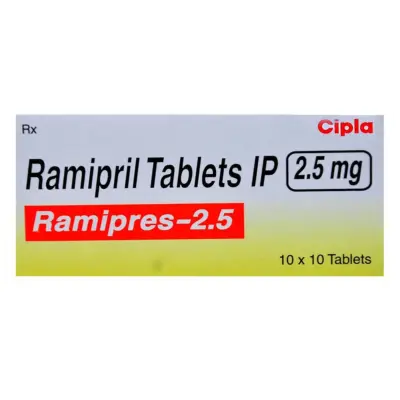
- Ramipres 2.5 Tablet — Ramipril 2.5 mg, an ACE inhibitor commonly combined with amlodipine in hypertension management
- Cosart 50 Tablet — Losartan 50 mg, an ARB antihypertensive used as an alternative or combination partner with amlodipine
- Hipres 50 Tablet — Metoprolol 50 mg, a beta-blocker frequently used alongside amlodipine in angina or high-risk hypertension
- Venpres 40 Tablet — Telmisartan 40 mg, an ARB with proven cardiovascular outcome benefits in combination with amlodipine
References
- DailyMed. Amlodipine Besylate Tablets — Prescribing Information. U.S. National Library of Medicine. Available at: https://dailymed.nlm.nih.gov/dailymed/drugInfo.cfm?setid=a1d358b5-c206-463a-a364-18551da8c4e6
- MedlinePlus. Amlodipine. U.S. National Library of Medicine. Available at: https://medlineplus.gov/druginfo/meds/a692044.html
- StatPearls. Amlodipine. National Center for Biotechnology Information, U.S. National Library of Medicine. PMID: NBK519508. Available at: https://www.ncbi.nlm.nih.gov/books/NBK519508/
- Abernethy DR. Clinical pharmacokinetics of amlodipine. Clin Pharmacokinet. 1992 Jan;22(1):22–31. PMID: 1532771.
- Nissen SE, Tuzcu EM, Libby P, et al. Effect of antihypertensive agents on cardiovascular events in patients with coronary disease and normal blood pressure: the CAMELOT study. JAMA. 2004;292(18):2217–2225. PMID: 15536108.
- ALLHAT Officers and Coordinators. Major outcomes in high-risk hypertensive patients randomized to calcium channel blocker vs diuretic. JAMA. 2002;288(23):2981–97. PMID: 12479763.
- Mayo Clinic. Amlodipine (Oral Route) — Side Effects. Available at: https://www.mayoclinic.org/drugs-supplements/amlodipine-oral-route/side-effects/drg-20061784
- UK Electronic Medicines Compendium (EMC). Amlodipine 10 mg Tablets — Summary of Product Characteristics. Available at: https://www.medicines.org.uk/emc/product/101602/smpc
Reviews
There are no reviews yet.