Description
What Is Dicorate ER 750 mg Tablets?
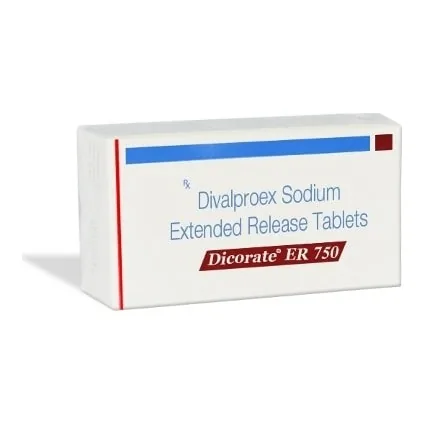
Dicorate ER 750 mg Tablets contain sodium valproate 750 mg in an extended-release (ER) formulation. Sodium valproate is a broad-spectrum antiepileptic drug (AED) belonging to the valproate class, used as a first-line agent in idiopathic generalised epilepsies, as a mood stabiliser in bipolar disorder, and for migraine prophylaxis. The 750 mg ER strength occupies a clinically important position in the Dicorate ER range: it is a convenient higher-dose tablet that allows once-daily dosing at 750 mg for patients who require this dose level, or twice-daily dosing at 1500 mg/day without requiring more than two tablets. It reduces tablet burden compared to using two 500 mg tablets when targeting 1500 mg/day regimens.
Dicorate is a leading brand of sodium valproate in South and Southeast Asia. The ER formulation provides sustained drug release over approximately 18–24 hours, reducing peak-to-trough plasma fluctuations relative to immediate-release preparations, which improves tolerability (particularly gastrointestinal adverse effects) and permits simpler dosing schedules. For adult patients whose optimised valproate dose is 750 mg/day or 1500 mg/day — both common maintenance levels — the 750 mg tablet offers the most tablet-efficient dosing in the Dicorate ER range.
Mechanism of Action
Sodium Channel Modulation
Sodium valproate inhibits voltage-gated sodium channels in a use-dependent (frequency-dependent) manner, stabilising their inactivated conformation and limiting the rapid repetitive neuronal firing that initiates and sustains seizure activity. This mechanism is especially important for controlling tonic-clonic (grand mal) seizures and focal seizure discharges, while physiological lower-frequency neuronal activity is relatively preserved.
GABA Enhancement
Valproate increases brain concentrations of gamma-aminobutyric acid (GABA), the principal inhibitory neurotransmitter in the CNS, by inhibiting two key catabolic enzymes — GABA transaminase (GABA-T) and succinic semialdehyde dehydrogenase (SSADH). It also potentiates postsynaptic GABA receptor activity. The cumulative increase in GABAergic inhibitory tone suppresses abnormal neuronal excitability in seizure-generating and seizure-propagating circuits.
T-type Calcium Channel Blockade
Valproate blocks thalamic T-type (low-threshold) calcium channels, disrupting the thalamo-cortical oscillatory rhythms that underlie absence (petit mal) seizures. This mechanism accounts for valproate’s broad-spectrum activity across generalised epilepsy subtypes, including absence seizures — a property not shared by many other AEDs.
Histone Deacetylase (HDAC) Inhibition
Valproate inhibits class I and II histone deacetylase enzymes, increasing histone acetylation and altering gene expression in neuronal tissue. This epigenetic mechanism contributes to its neuroprotective and mood-stabilising effects and is implicated in the reproductive toxicity of valproate. The HDAC inhibitory action is an area of active research in oncology and neurological conditions beyond epilepsy.
Indications
- Generalised epilepsies (first-line): Sodium valproate is the first-choice agent for idiopathic generalised epilepsies including tonic-clonic, absence, myoclonic, and atonic seizures. The 750 mg ER tablet is particularly suited to adult patients maintained on 750 mg/day (once-daily) or 1500 mg/day (twice-daily) regimens.
- Juvenile myoclonic epilepsy (JME): First-line treatment for JME, the most prevalent generalised epilepsy in young adults. Many JME patients achieve optimal seizure control at 1000–2000 mg/day; the 750 mg tablet enables efficient 1500 mg/day dosing with just two tablets per day.
- Focal (partial) seizures: Effective as monotherapy or adjunctive therapy for focal seizures with or without secondary generalisation. Higher doses (1500–2500 mg/day) are sometimes required for refractory focal seizures.
- Bipolar disorder: Sodium valproate is an established first-line mood stabiliser for acute manic and mixed episodes, and for long-term maintenance therapy in bipolar I disorder. Target plasma levels for bipolar disorder (50–125 mcg/mL) may require 750–2000 mg/day; the 750 mg tablet accommodates regimens up to 1500 mg/day without tablet fragmentation.
- Migraine prophylaxis: Valproate 500–1000 mg/day is guideline-recommended for frequent or disabling migraine. For patients requiring 750 mg/day, the 750 mg tablet enables single once-daily dosing with no tablet splitting required.
Dosage and Administration
Epilepsy in adults — initiation: Start at 500–600 mg/day; increase by 200–500 mg every 3–7 days based on response. Usual maintenance: 1000–2000 mg/day; some patients require up to 2500 mg/day. For patients whose optimal maintenance dose is 750 mg/day, one 750 mg ER tablet once daily is the simplest regimen. For patients requiring 1500 mg/day, one 750 mg ER tablet twice daily is the most convenient two-tablet option.
Epilepsy — target serum levels: Therapeutic reference range: 50–100 mcg/mL (trough). Check serum levels 2–4 days after any dose change, always at trough immediately before the next dose.
Bipolar disorder (acute mania): Loading (inpatient): 20–30 mg/kg/day; standard outpatient initiation: 500–750 mg/day, increasing to target plasma levels of 50–125 mcg/mL. For patients titrated to 750 mg/day, the 750 mg ER tablet supports once-daily maintenance dosing in bipolar disorder.
Bipolar disorder (maintenance): Continue at the dose that achieved response. Usual maintenance range 1000–2000 mg/day; monitor levels every 3–6 months. For the 750 mg/day maintenance level, one tablet once daily suffices.
Migraine prophylaxis: 750 mg/day is a recognised intermediate prophylactic dose, achievable with one 750 mg ER tablet once daily. Full efficacy assessment requires 2–3 months of treatment.
Renal impairment: No mandatory dose adjustment; however, the free fraction of valproate is increased due to reduced protein binding, so total levels may underestimate effect. Monitor clinically and consider free valproate levels if toxicity suspected.
Hepatic impairment: Contraindicated in significant hepatic disease.
Elderly: Increased sensitivity to CNS effects; initiate at lower doses and titrate more gradually; use 125 mg or 250 mg ER tablets for initiation; the 750 mg tablet is appropriate only after a stable, well-tolerated maintenance dose is established.
Administration: Swallow ER tablets whole — do not crush, break, chew, or split; breaking the ER tablet destroys the sustained-release matrix and causes dose-dumping with risk of acute toxicity. Take with food to minimise gastrointestinal adverse effects. Take at the same time(s) each day.
Contraindications
- Hepatic disease or significant hepatic dysfunction — including personal or family history of severe hepatic dysfunction, particularly drug-related
- Urea cycle disorders (UCDs) — risk of fatal hyperammonaemic encephalopathy; screen for UCDs before initiating if clinically suspected
- Mitochondrial disorders caused by POLG mutations (Alpers-Huttenlocher syndrome and related POLG disorders) — high risk of acute liver failure; contraindicated in confirmed POLG carriers and in children under 2 years with suspected POLG disorders
- Porphyria
- Pregnancy — highest teratogenic risk of any licensed AED; must not be used in women of childbearing potential without a Pregnancy Prevention Programme (PPP) with effective contraception
- Hypersensitivity to sodium valproate, valproic acid, or any excipient
Warnings and Precautions
Teratogenicity — Critical Reproductive Risk
Sodium valproate carries a 10–11% risk of major congenital malformations in infants exposed in utero (versus 2–3% background rate), including neural tube defects (spina bifida ~2–3%), cardiac defects, cleft palate, and limb abnormalities. Additionally, 30–40% of children exposed in utero develop neurodevelopmental impairments — autism spectrum disorder, intellectual disability, ADHD, and language delay — which are dose-dependent and irreversible. The 750 mg dose is in the higher range of doses commonly encountered in clinical practice, and teratogenic risk increases with dose. Valproate must never be prescribed to a woman of childbearing potential without full informed consent, documented counselling, and strict adherence to a Pregnancy Prevention Programme (PPP) including annual specialist review and highly effective contraception.
Hepatotoxicity
Fatal hepatic failure has been reported, with the highest incidence during the first 6 months of treatment. Children under 3 years on polypharmacy AED regimens with concurrent metabolic disorders are at greatest risk. Measure baseline LFTs before starting therapy and repeat regularly during the first 6 months. Instruct patients and carers to report malaise, weakness, anorexia, jaundice, or oedema immediately.
Pancreatitis
Acute pancreatitis, including fatal cases, has occurred with valproate regardless of dose. Patients developing severe abdominal pain with nausea or vomiting require urgent evaluation for pancreatitis.
Hyperammonaemia
Hyperammonaemic encephalopathy (lethargy, confusion, altered consciousness) may arise without hepatic dysfunction, particularly in combination with topiramate or when UCDs are unmasked. Measure serum ammonia if neurological deterioration occurs unexpectedly.
Adverse Effects
- Very common (≥10%): Tremor (fine postural tremor, dose-related — higher doses increase risk), nausea/vomiting (reduced with ER formulation compared to immediate-release), weight gain (mean 4–6 kg), alopecia (reversible; zinc supplementation may help)
- Common (1–10%): Drowsiness, dizziness, headache, ataxia, thrombocytopenia, prolonged bleeding time, elevated liver transaminases (usually transient), asymptomatic hyperammonaemia
- Less common (0.1–1%): Peripheral oedema, cognitive impairment, memory difficulties, confusion, rash, reversible Parkinsonism, Fanconi-type syndrome in children
- Rare (<0.1%): Fatal hepatotoxicity, pancreatitis, agranulocytosis, aplastic anaemia, encephalopathy without hepatic disease, Stevens-Johnson syndrome
Drug Interactions
Lamotrigine — Critical Interaction
Valproate inhibits UGT1A4-mediated glucuronidation of lamotrigine, approximately doubling lamotrigine’s half-life and plasma concentrations. Lamotrigine initiated in patients already taking valproate must start at half the standard dose and follow the valproate-specific titration schedule in the product information to avoid Stevens-Johnson syndrome and toxic epidermal necrolysis. This is one of the most clinically significant drug interactions in epilepsy pharmacotherapy.
Enzyme-Inducing AEDs
Carbamazepine, phenytoin, phenobarbitone, and primidone (CYP2C9 inducers) accelerate valproate metabolism, reducing plasma levels by 25–50%. Higher valproate doses may be required when these agents are co-administered; levels should be re-checked when they are added or withdrawn.
Carbapenem Antibiotics
Carbapenems (meropenem, imipenem, ertapenem, doripenem) dramatically and rapidly reduce valproate plasma levels (commonly 60–100% within hours), through multifactorial mechanisms. Life-threatening seizures can result from this interaction. Alternative antibiotics should be used wherever possible; if carbapenems are essential, intensive valproate monitoring is mandatory.
Aspirin
High-dose aspirin (not low-dose antiplatelet doses) displaces valproate from plasma proteins and inhibits hepatic beta-oxidation, significantly elevating free drug levels. Avoid high-dose aspirin in patients on valproate.
Topiramate
Combination of valproate and topiramate increases the risk of symptomatic hyperammonaemia and encephalopathy. Monitor neurological status and serum ammonia in patients receiving this combination.
Storage
Store Dicorate ER 750 mg Tablets below 30°C in a dry place, protected from moisture and light. Keep in the original blister pack until use. Store out of reach of children. Do not use after the expiry date printed on the pack.
Related Products
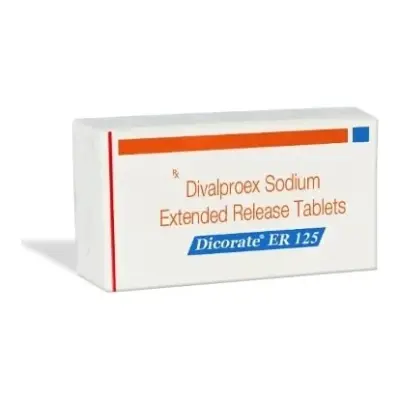
- Dicorate ER 125 mg Tablets (Sodium Valproate 125 mg ER — lowest dose for paediatric initiation and titration)
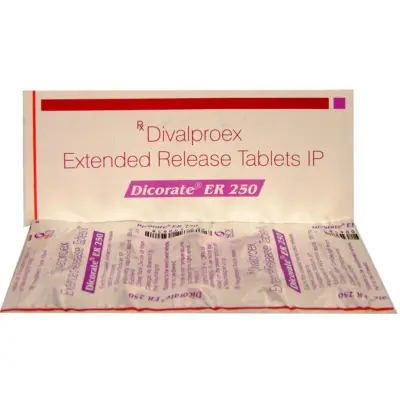
- Dicorate ER 250 mg Tablets (Sodium Valproate 250 mg ER — paediatric and titration dose)
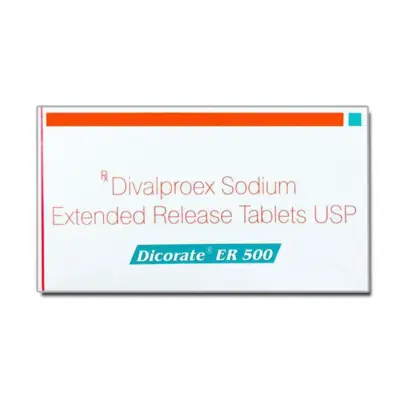
- Dicorate ER 500 mg Tablets (Sodium Valproate 500 mg ER — standard adult maintenance unit dose)
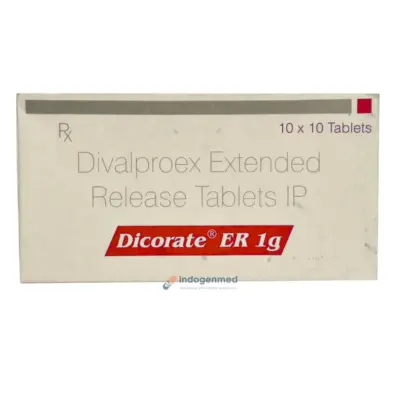
- Dicorate ER 1000 mg Tablets (Sodium Valproate 1000 mg ER — high-dose once-daily option for adult epilepsy)
References
- DailyMed. Valproic acid/sodium valproate — prescribing information. U.S. National Library of Medicine. Available at: https://dailymed.nlm.nih.gov/dailymed/
- MedlinePlus. Valproic Acid. U.S. National Library of Medicine. Available at: https://medlineplus.gov/druginfo/meds/a682412.html
- Mayo Clinic. Valproic Acid (Oral Route). Available at: https://www.mayoclinic.org/
- Perucca E. Pharmacological and therapeutic properties of valproate: a summary after 35 years of clinical experience. CNS Drugs. 2002;16(10):695–714. PMID: 12269861
- Electronic Medicines Compendium (EMC). Sodium Valproate 750 mg prolonged-release tablets — Summary of Product Characteristics. Available at: https://www.medicines.org.uk/emc/
Reviews
There are no reviews yet.