Description
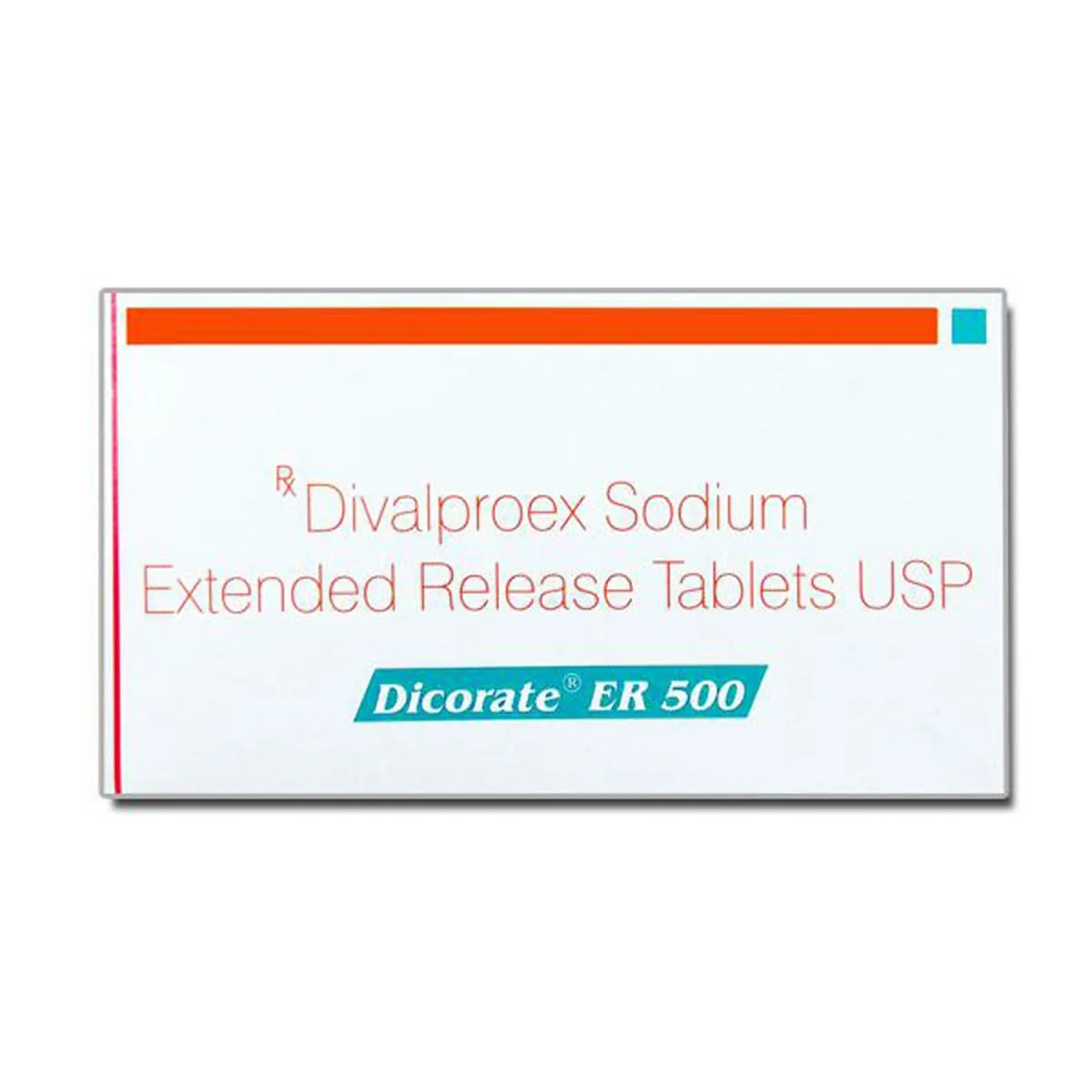
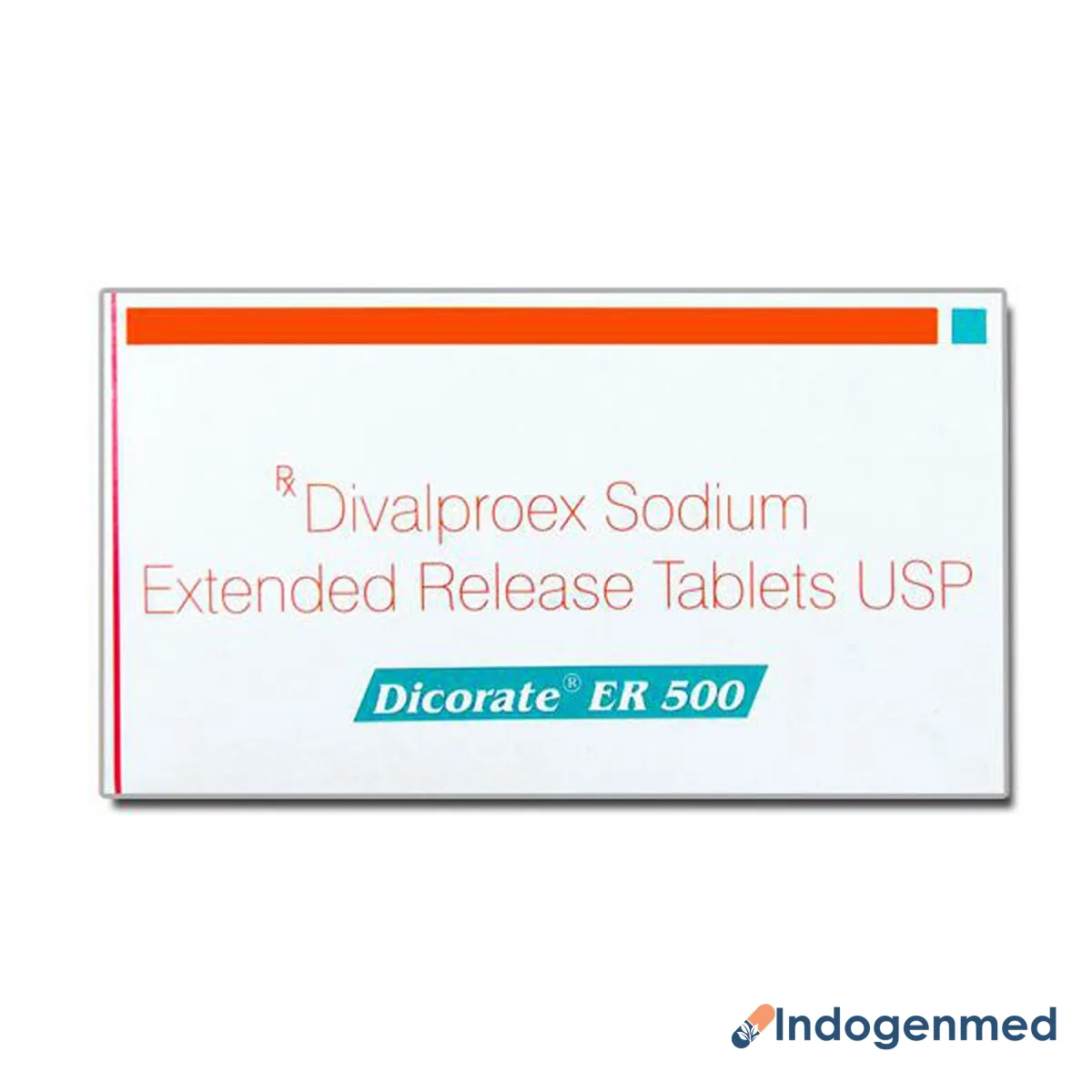
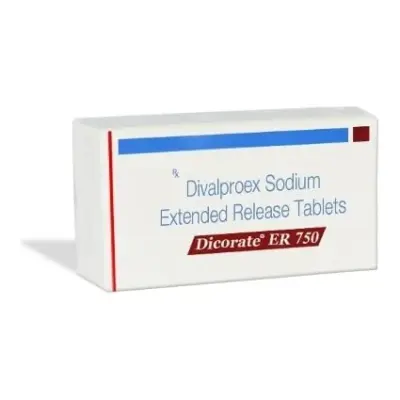
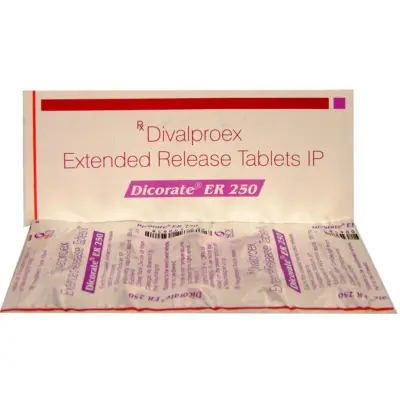
Dicorate ER 500 mg Tablets — Divalproex Sodium High-Dose Extended-Release for Epilepsy, Bipolar Disorder, and Migraine Prophylaxis
Dicorate ER 500 mg tablets contain divalproex sodium 500 mg in an extended-release (ER) formulation. This is the highest standard extended-release strength of divalproex available in the Dicorate ER range and represents the workhorse dose for adult patients with established epilepsy, bipolar disorder, or chronic migraine who require the full therapeutic plasma valproate levels for clinical efficacy. Divalproex sodium is a co-ordination compound of sodium valproate and valproic acid (1:1 molar ratio) that dissociates to release valproate upon oral administration. The extended-release 500 mg formulation reduces dosing frequency compared with immediate-release preparations — typically enabling once-daily or twice-daily administration — and produces a flatter plasma concentration curve, reducing peak-related adverse effects (nausea, sedation, tremor) that are more pronounced with immediate-release valproate. Dicorate ER 500 mg is manufactured by Sun Pharmaceutical Industries Ltd. and is widely prescribed for maintenance therapy in patients who have already been initiated and titrated on lower divalproex doses.
Mechanism of Action
Valproate’s antiepileptic, mood-stabilising, and migraine-preventive effects arise from a combination of mechanisms operating simultaneously at different levels of neuronal function. The primary mechanisms include: voltage-gated sodium channel blockade — valproate stabilises the inactivated state of sodium channels, limiting high-frequency repetitive neuronal firing, the electrophysiological hallmark of seizure generation and spreading; T-type calcium channel inhibition — suppressing the low-threshold calcium currents in thalamic relay neurons that drive generalised spike-wave discharges in absence epilepsy; enhanced brain GABA neurotransmission — through inhibition of GABA-transaminase and succinic semialdehyde dehydrogenase, reducing GABA catabolism and raising synaptic GABA levels, reinforcing inhibitory tone throughout the brain; and inhibition of histone deacetylases (HDACs) — an epigenetic mechanism that alters gene transcription patterns in neural tissue, contributing to long-term neuroprotective and neuroplastic effects relevant in mood disorders and potentially in migraine. At the 500 mg ER dose, plasma valproate concentrations in adults typically contribute meaningfully to achieving target trough levels of 50–100 micrograms/mL during maintenance therapy.
Clinical Indications
Epilepsy — maintenance therapy: Divalproex ER 500 mg is used for maintenance treatment of multiple epilepsy types, including idiopathic generalised epilepsies (juvenile myoclonic epilepsy, childhood absence epilepsy, tonic-clonic seizures on awakening), Lennox-Gastaut syndrome, and as adjunctive therapy for focal-onset seizures. Adult patients typically require total daily doses of 1000–2500 mg; a 500 mg ER tablet taken once or twice daily is a convenient component of such regimens. For patients on 1000 mg/day maintenance, a single 500 mg ER tablet twice daily achieves the full dose in just two daily administrations. Valproate is a first-line monotherapy for idiopathic generalised epilepsy in adults and adolescents, achieving seizure freedom in a high proportion of well-selected patients.
Bipolar disorder — acute mania and maintenance: Divalproex 500 mg ER is used for the treatment of acute manic or mixed episodes in bipolar disorder and for maintenance of mood stability to prevent recurrent manic, mixed, or depressive episodes. Plasma valproate levels of 50–125 micrograms/mL are targeted for mood stabilisation. The FDA has approved divalproex ER for the treatment of acute manic episodes associated with bipolar disorder in adults. It is frequently used in combination with atypical antipsychotics for acute mania and as monotherapy or combination maintenance therapy. The 500 mg ER tablet supports twice-daily maintenance dosing with less fluctuation in plasma drug levels compared with immediate-release formulations.
Migraine prophylaxis: Divalproex sodium extended-release is an FDA-approved option for the prevention of migraine headaches in adults. At doses of 500–1000 mg/day, divalproex reduces migraine frequency and severity. Its mechanism in migraine prevention may relate to GABAergic stabilisation of trigeminovascular excitability and inhibition of central sensitisation processes involved in migraine chronification. Clinical trials have demonstrated significant reductions in migraine frequency compared with placebo. It is considered a first-tier option in patients with concurrent epilepsy and migraine, and a second-tier option in those without epilepsy when first-line preventives (topiramate, beta-blockers, amitriptyline) have failed or are contraindicated.
Dosing and Plasma Level Monitoring
Divalproex ER 500 mg tablets should be swallowed whole and must not be crushed, split, or chewed, as disrupting the extended-release matrix converts the preparation to immediate-release and risks dose-dumping. Tablets are taken once or twice daily with food to minimise GI adverse effects. Therapeutic drug monitoring (TDM) is an important adjunct to clinical management: trough plasma valproate levels of 50–100 micrograms/mL are targeted for epilepsy; for bipolar disorder, some clinicians target 75–125 micrograms/mL during acute episodes. Renal function and electrolytes are not routinely a concern for valproate dosing, but liver function tests, complete blood count, and coagulation parameters should be monitored at initiation and periodically thereafter.
Adverse Effects
At maintenance doses, common adverse effects include tremor (dose-dependent, may respond to dose reduction or propranolol), weight gain (often gradual and significant over time), alopecia (thinning or loss of hair, often reversible), sedation, and gastrointestinal symptoms. The extended-release formulation reduces peak-related nausea compared to immediate-release valproate. Clinically important metabolic effects include hyperammonaemia (may cause encephalopathy — ammonia levels should be checked in patients with unexplained cognitive changes on valproate) and pancreatitis (rare but serious). Thrombocytopenia and platelet dysfunction have been reported; platelet counts should be monitored pre-surgery or in cases of unexplained bruising. Polycystic ovary syndrome and hyperandrogenism have been associated with valproate use in women. Hepatotoxicity, while most common in children under two, has been reported at all ages and requires monitoring. Teratogenicity risk applies equally at the 500 mg dose as at all valproate doses — no dose is considered safe in pregnancy.
Contraindications and Drug Interactions
Valproate is contraindicated in pregnancy due to major teratogenic risk; in patients with known hepatic disease or significant hepatic dysfunction; in those with urea cycle disorders (risk of fatal hyperammonaemic encephalopathy); and in patients with known hypersensitivity. Carbapenems (meropenem, imipenem, ertapenem) dramatically reduce valproate plasma levels by 60–100% — this combination should be avoided or if unavoidable, valproate levels monitored very closely with dose adjustment. Lamotrigine levels are doubled by valproate co-administration (valproate inhibits lamotrigine glucuronidation); lamotrigine must be started at half the usual dose and titrated more slowly when combined with valproate.
References
- MedlinePlus (US National Library of Medicine). Divalproex. Available at: medlineplus.gov
- US Food and Drug Administration. Depakote ER (divalproex sodium) Prescribing Information. Available at: fda.gov
- Mayo Clinic. Divalproex (Oral Route). Available at: mayoclinic.org
- Glauser T, et al. ILAE treatment guidelines: evidence-based analysis of antiepileptic drug efficacy and effectiveness as initial monotherapy for epileptic seizures and syndromes. Epilepsia. 2006;47(7):1094–1120. PubMed PMID: 16886973.
- Bowden CL, et al. Efficacy of divalproex vs lithium and placebo in the treatment of mania. JAMA. 1994;271(12):918–924. PubMed PMID: 8120960.
Reviews
There are no reviews yet.