Description
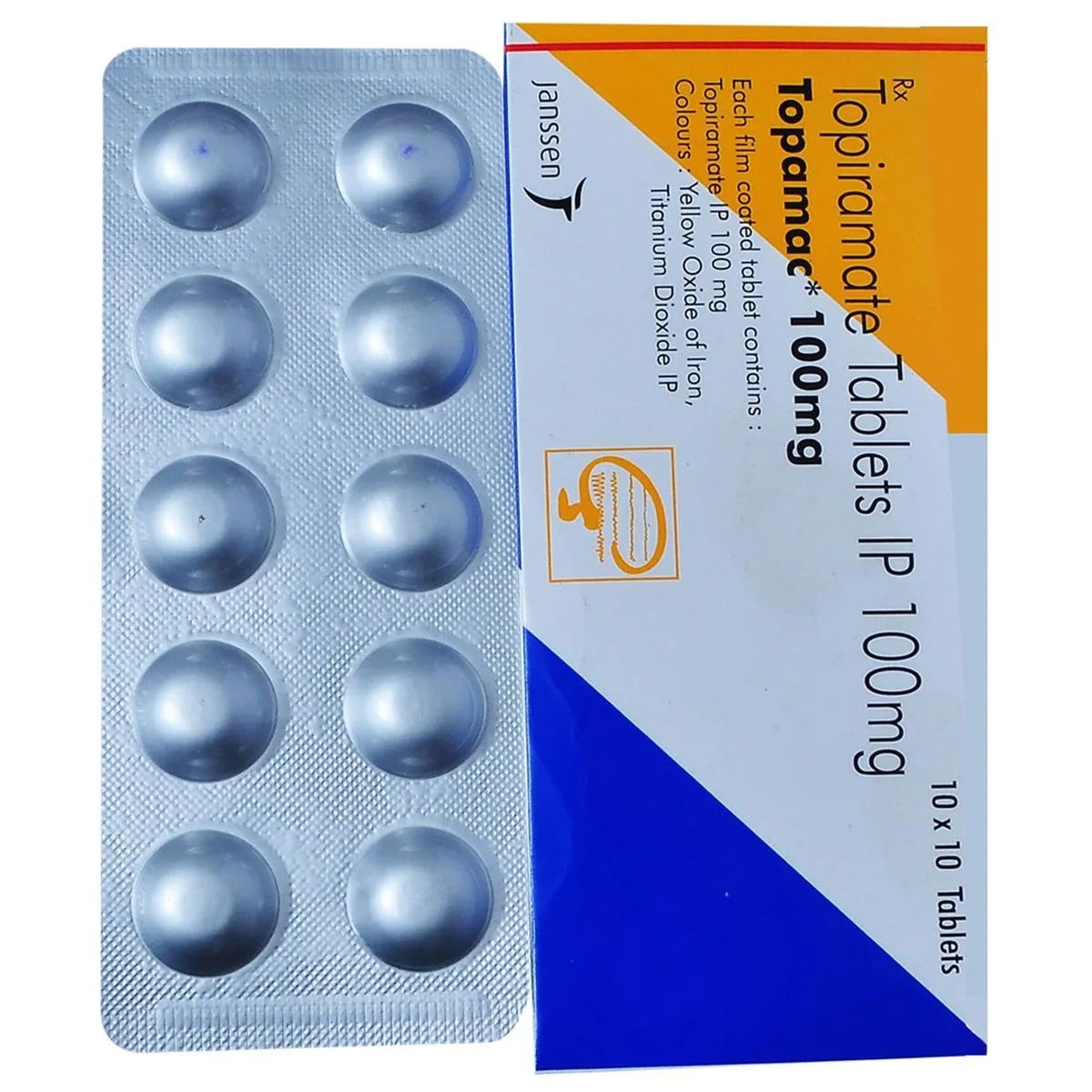
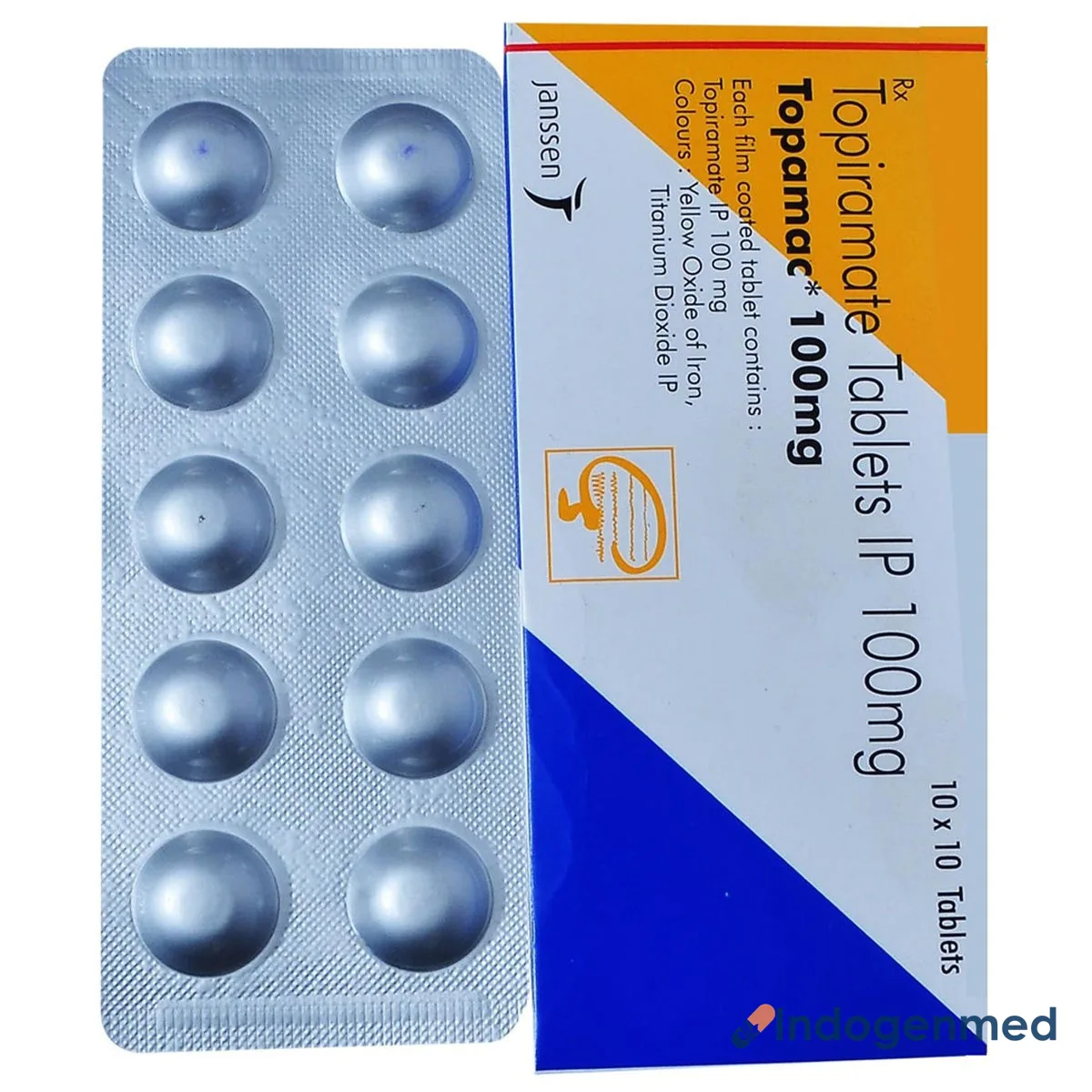
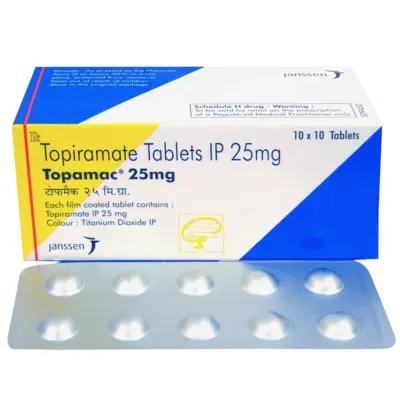
Topamac 100 Mg Tablet — Topiramate 100 mg for Epilepsy and Migraine Prevention
Topamac 100 Mg Tablet contains topiramate 100 mg as its active ingredient. Topiramate carries the ATC code N03AX11 and belongs to the class of sulfamate-substituted monosaccharide anticonvulsants. It was first approved in 1996 and is now one of the most widely used antiepileptic drugs globally, prescribed both for seizure control and for the preventive treatment of migraine headache in adults. Topamac 100 Mg Tablet is used at a dose stage that follows initial low-dose titration, representing a standard maintenance or adjunctive therapeutic dose for adults with epilepsy. It is also used in the titration schedule for migraine prophylaxis. Because topiramate has multiple mechanisms of action and a broad side-effect profile, careful dose titration and regular clinical monitoring are essential for safe and effective use.
Composition of Topamac 100 Mg Tablet
Each film-coated tablet of Topamac 100 Mg contains:
- Topiramate — 100 mg (active ingredient)
- Excipients (typical): lactose monohydrate, pregelatinised starch, microcrystalline cellulose, sodium starch glycolate, magnesium stearate; film coat: hypromellose, titanium dioxide, polyethylene glycol, yellow iron oxide (colour may vary by manufacturer)
Note on lactose: Each Topamac 100 Mg Tablet contains approximately 115–123 mg of lactose monohydrate per tablet. Patients with rare hereditary galactose intolerance, total lactase deficiency, or glucose-galactose malabsorption should not use this medicine.
Topiramate is a sulphur-containing monosaccharide derivative. Its chemical formula is C₁₂H₂₁NO₈S and its molecular weight is 339.36 g/mol. The drug is classified as a broad-spectrum antiepileptic agent, with activity extending to both partial-onset and generalised seizure types as well as migraine prevention.
Mechanism of Action
The precise mechanism by which topiramate exerts its antiepileptic and antimigraine effects is not fully understood, but it is thought to involve multiple complementary actions:
- Sodium channel blockade: Topiramate produces a state-dependent blockade of voltage-gated sodium channels, reducing the sustained repetitive firing of neurons that underlies seizure propagation. This is similar in principle to the mechanism of carbamazepine and phenytoin, but topiramate’s sulphamate structure gives it additional mechanisms not shared by those agents
- GABA-A receptor potentiation: Topiramate enhances the activity of gamma-aminobutyric acid (GABA) at GABA-A receptors, increasing chloride ion influx into neurons and thereby promoting inhibitory neurotransmission. Importantly, this potentiation is distinct from the mechanism of benzodiazepines and barbiturates, meaning topiramate can be effective in patients with inadequate response to those drug classes
- Glutamate receptor antagonism: Topiramate antagonises kainate and AMPA subtypes of ionotropic glutamate receptors, reducing excitatory neurotransmission. It has no significant effect on NMDA-type glutamate receptors at clinically relevant concentrations
- Carbonic anhydrase inhibition: Topiramate weakly inhibits certain isoenzymes of carbonic anhydrase (CA-II and CA-IV). This action is not considered a major contributor to its antiseizure activity, but it is responsible for some side effects including metabolic acidosis and an increased risk of kidney stones
- Antimigraine mechanism: The specific mechanism of migraine prevention is unknown, but inhibition of cortical spreading depression (a proposed trigger for migraine aura and headache), combined with central inhibitory effects on trigeminal pain pathways, is likely involved
Pharmacokinetics
| Parameter | Value / Detail |
|---|---|
| Oral absorption | Rapid and well-absorbed; at least 81% of a 100 mg dose absorbed; food has no clinically significant effect on absorption |
| Tmax | 2–3 hours; Cmax approximately 1.5 µg/mL after 100 mg single dose in healthy subjects |
| Protein binding | Low: 13–17%; not significantly displaced by other highly protein-bound drugs |
| Volume of distribution | 0.55–0.80 L/kg; lower in females (attributed to differences in body fat composition) |
| Metabolism | Approximately 20% metabolised in healthy volunteers; up to 50% with enzyme-inducing AEDs. Six metabolites identified, each <3% of excreted radioactivity; none has significant anticonvulsant activity |
| Elimination half-life | Approximately 21 hours after multiple twice-daily dosing |
| Steady state | Reached in 4–8 days with normal renal function |
| Elimination | Primarily renal; at least 81% of dose eliminated in urine; approximately 66% excreted unchanged within 4 days. Plasma clearance 20–30 mL/min |
| Linearity | Linear pharmacokinetics over the 100–400 mg dose range; low intersubject variability |
| Renal impairment | Clearance reduced significantly when CLcr ≤70 mL/min; use half the usual dose with caution |
| Hepatic impairment | Clearance reduced approximately 26% in moderate to severe impairment; use with caution |
| Plasma monitoring | Not required for routine clinical management of topiramate therapy |
Uses of Topamac 100 Mg Tablet
Topamac 100 Mg Tablet is indicated for the following conditions:
- Epilepsy — monotherapy: Treatment of partial-onset seizures (with or without secondary generalisation) and primary generalised tonic-clonic seizures in adults and children over 6 years of age
- Epilepsy — adjunctive therapy: As an add-on treatment for partial-onset seizures, primary generalised tonic-clonic seizures, and seizures associated with Lennox-Gastaut syndrome, in adults, adolescents, and children aged 2 years and above
- Migraine prophylaxis: Preventive treatment of migraine headache in adults, after careful evaluation of possible alternative treatments. Topamac is not indicated for the acute treatment of migraine attacks
Important limitations: Topiramate is not indicated for migraine prevention in children, as safety and efficacy in paediatric migraine prophylaxis have not been established. The 100 mg tablet strength is used in titration schedules and as a maintenance or adjunctive dose; initial therapy almost always begins at 25 mg/day and is slowly escalated.
Dosage and Administration
| Indication / Population | Starting Dose | Titration | Maintenance / Maximum |
|---|---|---|---|
| Epilepsy monotherapy — adults | 25 mg at night for week 1 | Increase by 25–50 mg/day at 1–2 week intervals, in two divided doses | Initial target: 100–200 mg/day; maximum 500 mg/day (up to 1,000 mg/day in refractory cases) |
| Epilepsy monotherapy — children >6 years | 0.5–1 mg/kg at night for week 1 | Increase by 0.5–1 mg/kg/day at 1–2 week intervals, in two divided doses | Initial target: ~100 mg/day (~2 mg/kg/day for ages 6–16) |
| Epilepsy adjunctive — adults | 25–50 mg at night for week 1 | Increase by 25–50 mg/day at weekly or biweekly intervals, in two divided doses | Usual: 200–400 mg/day in two divided doses; 200 mg/day was lowest effective dose in trials |
| Epilepsy adjunctive — children ≥2 years | 25 mg at night (or 1–3 mg/kg/day) for week 1 | Increase by 1–3 mg/kg/day at 1–2 week intervals, in two divided doses | Total: 5–9 mg/kg/day in two divided doses; up to 30 mg/kg/day has been studied |
| Migraine prophylaxis — adults | 25 mg at night for week 1 | Increase by 25 mg/day at 1-week intervals (longer if not tolerated) | 100 mg/day in two divided doses; some benefit at 50 mg/day; maximum 200 mg/day |
| Renal impairment (CLcr ≤70 mL/min) | Half the usual starting dose | Use caution; slower titration | Half the usual maintenance dose |
| Haemodialysis | As per dose for renal impairment | — | Give supplemental dose (~half daily dose) on dialysis days, split at start and end of session |
Administration notes:
- Topamac 100 Mg Tablets should not be broken or crushed — swallow whole with water
- Can be taken with or without food — meals do not affect absorption
- Take in two divided doses, approximately 12 hours apart, for all indications at maintenance doses
- Never stop abruptly: Always taper topiramate slowly to reduce the risk of seizure worsening. In adults with epilepsy, reduce by 50–100 mg weekly; for migraine, reduce by 25–50 mg weekly
- Plasma concentration monitoring is not required for routine management
- Maintain adequate fluid intake throughout treatment to reduce the risk of kidney stones
Side Effects
Very common side effects (≥1 in 10 patients):
- Nasopharyngitis (upper respiratory tract infection)
- Depression
- Paraesthesia — tingling or pins-and-needles sensation, particularly in the hands and feet; a characteristic and very common effect of topiramate
- Somnolence (drowsiness), dizziness
- Weight decrease — topiramate causes clinically significant weight loss in many patients, which is considered both a side effect and, in some contexts, a therapeutic benefit
- Fatigue
Common side effects (≥1 in 100 patients):
- Decreased appetite, anorexia, anaemia
- Psychiatric: insomnia, anxiety, confusion, aggression, irritability, mood changes
- Cognitive: memory impairment, difficulty with word-finding, bradyphrenia (slowness of thought) — sometimes described as “cognitive slowing”; can require dose reduction
- Tremor, coordination difficulties, nystagmus, abnormal taste, hypoaesthesia, speech disturbances
- Blurred vision, diplopia
- Nausea, diarrhoea, vomiting, constipation, dry mouth
- Hair loss (alopecia), rash
- Kidney stones (nephrolithiasis), increased urinary frequency
- Pyrexia, asthenia, gait disturbance
Serious side effects (seek immediate medical attention):
- Acute myopia with secondary angle-closure glaucoma: Usually occurs within one month of initiation. Presents with sudden onset of decreased visual acuity and/or eye pain. Requires urgent discontinuation of topiramate and prompt ophthalmological assessment. Untreated, it can cause permanent vision loss
- Hyperammonaemic encephalopathy: Rare but serious. Risk is increased when used with valproic acid. Presents as unexplained lethargy, altered mental status, or new cognitive impairment. Measure serum ammonia if suspected
- Hyperchloraemic metabolic acidosis: Due to carbonic anhydrase inhibition. Can cause fatigue, anorexia, and may worsen bone demineralisation. Monitor serum bicarbonate especially in children, those on a ketogenic diet, or those with pre-existing renal or metabolic disease
- Stevens-Johnson syndrome / Toxic epidermal necrolysis: Rare severe skin reactions. Discontinue immediately if suspected
- Suicidal ideation and behaviour: All antiepileptic drugs carry a small increased risk of suicidal thoughts and behaviour. Patients and carers should be alert to any new or worsening depression, unusual mood changes, or suicidal thoughts; seek medical advice promptly
- Oligohidrosis and hyperthermia: Reduced sweating with elevated body temperature, especially in children during hot weather. Monitor temperature and sweat production
- Visual field defects: Can occur independently of intraocular pressure changes
Precautions and Warnings
- Pregnancy — MAJOR TERATOGEN: Topiramate causes major congenital malformations and foetal growth restriction. Registry data show a 4.3–9.5% rate of major malformations with monotherapy, compared to 1.4–3.0% in non-AED reference groups. Cleft lip and palate and hypospadias are specifically noted. Small for gestational age rates are approximately 18% versus 5% in controls. Some data suggest increased risk of neurodevelopmental disorders (autism, intellectual disability, ADHD). Topiramate is contraindicated in pregnancy for migraine prophylaxis. For epilepsy, it should not be used in pregnancy unless no suitable alternative exists
- Pregnancy Prevention Programme (PPP): Women of childbearing potential must use highly effective contraception while on topiramate and for at least 4 weeks after stopping. Annual review is required. A pregnancy test before initiation and during treatment is recommended. Patients must receive a Patient Guide and complete an Annual Risk Awareness Form
- Contraceptives: At topiramate doses above 200 mg/day, efficacy of oral hormonal contraceptives containing ethinylestradiol may be reduced. Use a barrier method in addition and report any change in menstrual pattern
- Cognitive effects: Topiramate can cause word-finding difficulty, memory problems, and mental slowing. These effects are dose-dependent and may improve with dose reduction. Advise patients to avoid driving or operating machinery until they know how topiramate affects them
- Renal stones: Maintain adequate hydration throughout treatment. Avoid other carbonic anhydrase inhibitors (e.g., acetazolamide) and agents that promote stone formation (e.g., high-dose vitamin C)
- Suicidality: All AEDs carry a class warning. Topiramate-treated patients had a 0.5% rate of suicide-related events versus 0.2% on placebo in clinical trials. Monitor closely, particularly in patients with pre-existing mood disorders or psychiatric history
- Mood and behaviour: Increased rates of depression, anxiety, and aggressive behaviour. Paediatric patients may be particularly affected
- Bone health: Long-term use may reduce bone mineral density, particularly in children. Consider calcium and vitamin D supplementation with prolonged therapy
- Abrupt withdrawal: Increases the risk of breakthrough seizures. Always taper gradually unless medical emergency requires rapid discontinuation
Drug Interactions
| Drug / Class | Nature of Interaction | Clinical Consequence / Management |
|---|---|---|
| Phenytoin | Topiramate inhibits CYP2C19; phenytoin may also affect topiramate levels (variable) | Phenytoin levels may rise in some patients. Monitor for phenytoin toxicity; adjust phenytoin dose if needed. Phenytoin reduces topiramate levels when added |
| Carbamazepine | Enzyme induction by carbamazepine reduces topiramate plasma levels by approximately 40% | May need higher topiramate dose during carbamazepine co-treatment; topiramate levels rise when carbamazepine is withdrawn |
| Valproic acid | No significant change in topiramate levels, but combination increases risk of hyperammonaemia and hypothermia | Monitor for signs of encephalopathy (lethargy, confusion). Consider serum ammonia if unexplained CNS changes occur |
| Oral hormonal contraceptives | Topiramate reduces ethinylestradiol AUC, particularly at doses ≥200 mg/day | Contraceptive failure risk. Use barrier method in addition to hormonal contraception. Report breakthrough bleeding |
| Hydrochlorothiazide (HCTZ) | HCTZ increases topiramate AUC by approximately 29% | Topiramate dose reduction may be needed. Monitor serum potassium (additive hypokalaemia risk) |
| Lithium | Topiramate may affect lithium levels (mechanism unclear) | Monitor serum lithium levels when topiramate is added or withdrawn |
| Antidiabetics (metformin, pioglitazone, glibenclamide) | Topiramate may affect glycaemic control | Monitor blood glucose when topiramate is added or withdrawn; adjust antidiabetic doses if needed |
| Digoxin | Topiramate decreases digoxin AUC by approximately 12% | Monitor digoxin levels and clinical effect when topiramate is started or stopped |
| Warfarin | Decreased INR has been reported | Monitor INR closely when starting or stopping topiramate; anticoagulant dose may need adjustment |
| Alcohol and CNS depressants | Additive CNS depression | Avoid concurrent use; topiramate alone can impair alertness, and combination markedly worsens cognitive function |
| Other carbonic anhydrase inhibitors (acetazolamide, zonisamide) | Additive carbonic anhydrase inhibition | Avoid; increased risk of metabolic acidosis and kidney stones |
| Risperidone | Adverse events reported more frequently with combination | Monitor carefully; consider dose adjustments |
| St John’s Wort | Possible reduced topiramate efficacy (not formally studied) | Avoid concurrent use; advise patients to inform prescriber before taking herbal products |
Contraindications
Topamac 100 Mg Tablet must NOT be used in patients with:
- Hypersensitivity to topiramate or any excipient in the formulation (including lactose in patients with galactose intolerance)
- Pregnancy — contraindicated for migraine prophylaxis in all pregnant women. For epilepsy, contraindicated in pregnancy unless no suitable alternative exists
- Women of childbearing potential unless all conditions of the Pregnancy Prevention Programme are met and highly effective contraception is used
Storage Instructions
- Store below 25°C in a cool, dry place
- Keep in the original packaging (blister pack or bottle) to protect from moisture
- If dispensed in a bottle: keep the bottle tightly closed; do not remove the desiccant canister included in the bottle and do not swallow it
- Keep all medicines out of reach of children
- Do not use after the expiry date printed on the pack
- Shelf life: 3 years from date of manufacture
Related Products
Patients managing epilepsy or migraine may also benefit from these related medicines available on IndoGenMed:
- Topamac 25 Mg Tablet (Topiramate 25 mg) — the starting dose tablet used during initial titration before escalating to the 100 mg maintenance dose
- Dizone 250 Mg Tablet (Disulfiram 250 mg) — used in alcohol dependence management, another area where specialist neurological/psychiatric guidance is essential
- Montair Plus Tablet (Montelukast + Levocetirizine) — for patients with allergic rhinitis who also experience headache or migraine-associated nasal congestion
- Amlopres 5 Tablet (Amlodipine 5 mg) — calcium channel blocker also used as an alternative preventive agent for migraine in some patients
- Ramipres 2.5 Tablet (Ramipril 2.5 mg) — cardiovascular medicine commonly co-prescribed in patients with both epilepsy and hypertension
References
- Janssen-Cilag Ltd. Topamax 100 mg Tablets — Summary of Product Characteristics. Electronic Medicines Compendium (EMC). Last updated 03 July 2024. Available at: https://www.medicines.org.uk/emc/product/1977/smpc
- MedlinePlus. Topiramate. U.S. National Library of Medicine. Available at: https://medlineplus.gov/druginfo/meds/a697012.html
- U.S. Food and Drug Administration. Topiramate Tablets — Full Prescribing Information. DailyMed. Available at: https://dailymed.nlm.nih.gov/dailymed/drugInfo.cfm?setid=1b847969-2124-4350-94b0-ef5ba707673b
- Landmark Trial: Reife R, et al. Topiramate as adjunctive therapy in refractory partial epilepsy: a pooled analysis of double-blind controlled trials. Epilepsia. 1995;36(Suppl 3):S77. doi:10.1111/j.1528-1157.1995.tb06011.x
- Landmark Trial: Silberstein SD, et al. Topiramate in migraine prevention: results of a large controlled trial. Arch Neurol. 2004;61(4):490–495. doi:10.1001/archneur.61.4.490. PubMed PMID: 15096395
- Hernandez-Diaz S, et al. Fetal growth and risk of stillbirth with antiepileptic drugs. JAMA Neurology. 2017. doi:10.1001/jamaneurol.2017.0556
- Glenmark Pharmaceuticals Europe Ltd. Topiramate Glenmark 25mg, 50mg, 100mg and 200mg film-coated tablets — SmPC. EMC. Updated 25 June 2024. Available at: https://www.medicines.org.uk/emc/product/9923/smpc
Reviews
There are no reviews yet.