Description
What Is Dicorate ER 125 mg Tablets?
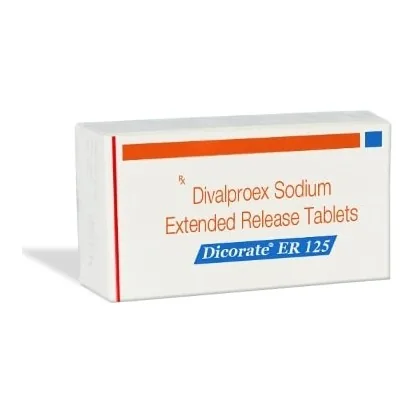
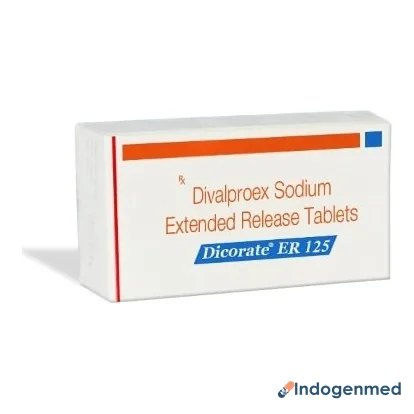
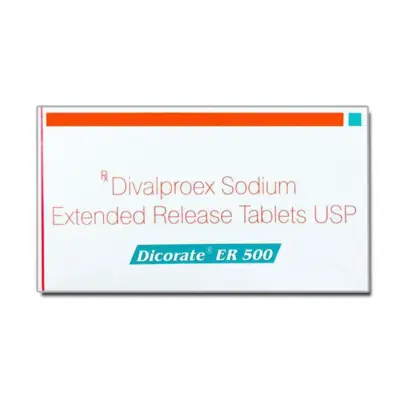
Dicorate ER 125 mg Tablets contain sodium valproate 125 mg in an extended-release (ER) formulation. Sodium valproate is the sodium salt of valproic acid, a broad-spectrum antiepileptic drug (AED) used in the management of epilepsy, bipolar disorder, and migraine prophylaxis. The extended-release formulation provides smoother plasma concentration profiles compared to immediate-release preparations, reducing peak-related adverse effects and allowing more convenient once- or twice-daily dosing.
Dicorate is a well-established brand of sodium valproate manufactured for the South and Southeast Asian markets. The 125 mg strength is a low-dose preparation, most commonly used in paediatric epilepsy dosing, as an initiation dose in adults who are sensitive to antiepileptic medications, and as a component of dose titration regimens. It is also employed where precise dose increments are required when managing seizure thresholds or tolerability.
Valproic acid was first introduced as an antiepileptic agent in the 1960s and remains one of the most widely prescribed AEDs globally. Its broad spectrum of activity — effective against both generalised and partial seizures — combined with its mood-stabilising properties makes it a cornerstone agent across neurology and psychiatry.
Mechanism of Action
Sodium Channel Modulation
Sodium valproate inhibits voltage-gated sodium channels in a use-dependent manner, stabilising the inactivated state of the channel. This reduces the frequency of neuronal firing, particularly suppressing the rapid, sustained high-frequency discharges that characterise epileptic activity, while having a comparatively lesser effect on normal, low-frequency neuronal signalling.
GABA Enhancement
Valproate enhances inhibitory GABAergic neurotransmission through multiple mechanisms. It inhibits GABA transaminase (the enzyme responsible for GABA degradation) and succinic semialdehyde dehydrogenase, thereby increasing brain GABA concentrations. It also potentiates postsynaptic GABA receptor responses. The resulting increase in GABAergic inhibition reduces neuronal excitability across the central nervous system.
T-type Calcium Channel Blockade
Valproate inhibits T-type (low-voltage-activated) calcium channels, which are involved in the generation of rhythmic thalamic oscillations underlying absence (petit mal) seizures. This mechanism contributes to valproate’s specific efficacy in absence epilepsy.
Histone Deacetylase (HDAC) Inhibition
Valproate inhibits HDAC enzymes, leading to histone acetylation and altered gene expression. This epigenetic mechanism contributes to its neuroprotective properties and mood-stabilising effects in bipolar disorder, though it also underlies some of its teratogenic risks. The HDAC inhibitory activity has generated research interest in oncology and neurodegenerative disease.
Indications
- Epilepsy — generalised seizures: Sodium valproate is a first-line agent for idiopathic generalised epilepsies, including tonic-clonic (grand mal), absence (petit mal), myoclonic, and atonic seizures. It is effective as monotherapy across the generalised epilepsy spectrum.
- Epilepsy — partial (focal) seizures: Sodium valproate is effective in partial (focal) seizures with or without secondary generalisation, though it is not typically the first choice compared to agents with higher specificity for focal epilepsy.
- Juvenile myoclonic epilepsy (JME): Sodium valproate is the first-line treatment for JME, one of the most common epilepsy syndromes in young adults; it controls myoclonus, absence seizures, and tonic-clonic seizures in this condition.
- Bipolar disorder (manic episodes and maintenance): Sodium valproate is an established mood stabiliser indicated for the acute management of manic and mixed episodes in bipolar I disorder and for long-term maintenance to prevent recurrence of mood episodes.
- Migraine prophylaxis: Valproate is indicated for the prevention of migraine headaches in adults; it reduces attack frequency when taken regularly (not for acute migraine treatment).
Dosage and Administration
Epilepsy in adults: Start at 5–10 mg/kg/day in divided doses (usually 400–600 mg/day for most adults); increase at weekly intervals by 5–10 mg/kg/day until seizures are controlled or tolerability limits further increases. Maintenance doses typically range from 1000–2000 mg/day; some patients require up to 2500 mg/day. For the ER formulation, once- or twice-daily dosing is usually sufficient.
Epilepsy in children: The 125 mg ER tablet facilitates precise paediatric dosing. Start at 10–15 mg/kg/day and increase by 5–10 mg/kg/day at weekly intervals; usual maintenance 20–30 mg/kg/day. Doses above 40 mg/kg/day require close clinical and laboratory monitoring.
Bipolar disorder (manic episodes): Loading dose strategy: 20–30 mg/kg/day for rapid mania control in acute inpatient settings; standard initiation: 500–750 mg/day in divided doses, targeting serum valproate levels of 50–125 mcg/mL. Titrate based on clinical response and tolerability.
Migraine prophylaxis: Start at 250 mg twice daily (immediate-release) or 500–1000 mg/day (ER); target dose 1000 mg/day. Assess efficacy after 2–3 months of treatment.
Renal impairment: Protein binding of valproate is reduced in renal impairment, increasing free drug fraction; total serum levels may underestimate pharmacological effect. Monitor free valproate levels where possible. No specific dose reduction is mandated, but titrate carefully.
Hepatic impairment: Valproate is extensively hepatically metabolised; use is contraindicated in significant hepatic impairment. Even in mild hepatic disease, start at the lowest dose and monitor liver function closely.
Elderly: Start at the lowest available dose (125 mg) and titrate slowly; reduced albumin and altered distribution increase free drug exposure. Monitor for toxicity signs including sedation and tremor.
Administration: Swallow ER tablets whole — do not crush, break, or chew, as this destroys the extended-release mechanism and causes dose-dumping. May be taken with or without food; taking with food reduces gastrointestinal side effects. Take at the same time(s) each day to maintain consistent plasma levels.
Contraindications
- Hepatic disease or significant hepatic dysfunction — including personal or family history of severe hepatic dysfunction, particularly drug-related
- Known urea cycle disorders (UCDs) — valproate can precipitate fatal hyperammonaemic encephalopathy in patients with undiagnosed UCDs; test for UCDs before initiating if clinical suspicion exists
- Known mitochondrial disorders caused by POLG mutations (e.g. Alpers-Huttenlocher syndrome) — valproate is associated with acute liver failure and death in these patients; it is contraindicated in patients <2 years with suspected POLG-related disorders and in confirmed POLG mutation carriers
- Porphyria
- Pregnancy (unless no suitable alternative exists) — sodium valproate has the highest teratogenic risk of any AED; it causes neural tube defects, cognitive impairment in children exposed in utero, and neonatal withdrawal; it must not be used in women of childbearing potential without a Pregnancy Prevention Programme (PPP) in place
- Hypersensitivity to valproic acid, sodium valproate, or any excipient
Warnings and Precautions
Teratogenicity and Reproductive Risk (Valproate Embryopathy)
Sodium valproate is associated with a 10–11% risk of major congenital malformations (neural tube defects — spina bifida in up to 2–3%; cardiac, urogenital, skeletal malformations) and neurodevelopmental impairment in up to 30–40% of children exposed in utero, including autism spectrum disorder, reduced IQ, and language delay. These risks are dose-dependent. Valproate must not be prescribed to women of childbearing potential without a Pregnancy Prevention Programme (PPP), which includes contraception and regular review. Women who become pregnant on valproate must discuss risks and alternatives with a specialist urgently — abrupt discontinuation may also carry risks. Prescribers must adhere to local regulatory requirements regarding valproate prescribing in females.
Hepatotoxicity
Fatal hepatotoxicity has been reported with sodium valproate, usually within the first 6 months of treatment. Risk is highest in children under 3 years, particularly those with metabolic or neurological disorders, those on polypharmacy AED regimens, and those with congenital metabolic abnormalities. Liver function tests should be performed before starting therapy and during the first 6 months. Patients should be warned to report symptoms of hepatotoxicity (jaundice, nausea, anorexia, oedema) immediately.
Pancreatitis
Acute pancreatitis, including fatal cases, has been reported rarely with sodium valproate. The risk appears higher in children. Patients who develop severe abdominal pain, nausea, or vomiting should be evaluated for pancreatitis.
Hyperammonaemia
Valproate can elevate ammonia levels without concurrent hepatic dysfunction. Hyperammonaemic encephalopathy — confusion, altered consciousness, lethargy — has been reported, particularly when valproate is combined with topiramate. Measure ammonia if unexplained neurological deterioration occurs.
Adverse Effects
- Very common (≥10%): Nausea, vomiting, diarrhoea (early in treatment, usually improves), tremor, weight gain, alopecia (hair loss — usually reversible, may be dose-related)
- Common (1–10%): Drowsiness/sedation, headache, dizziness, ataxia, thrombocytopenia, prolonged bleeding time, transient liver enzyme elevation, hyperammonaemia (usually asymptomatic)
- Less common (0.1–1%): Peripheral oedema, confusion, memory impairment, Fanconi syndrome (in children), rash, Parkinsonism/extrapyramidal effects (usually reversible)
- Rare (<0.1%): Fatal hepatotoxicity, pancreatitis, agranulocytosis, Stevens-Johnson syndrome, toxic epidermal necrolysis, encephalopathy
Drug Interactions
Other Antiepileptic Drugs
Valproate inhibits the metabolism of lamotrigine (CYP/glucuronidation): lamotrigine doses must be halved when added to valproate to prevent toxic rash (including Stevens-Johnson syndrome). Carbamazepine and phenytoin increase valproate metabolism (enzyme induction), reducing plasma levels and potentially causing seizure breakthrough. Valproate displaces phenytoin from plasma proteins, causing transient increases in free phenytoin despite potentially lowering total levels. Topiramate combined with valproate increases the risk of hyperammonaemia and encephalopathy.
Aspirin
Aspirin displaces valproate from plasma protein binding and inhibits valproate metabolism, markedly increasing free valproate concentrations. High-dose aspirin should be avoided in patients on valproate; particular caution in children (also due to Reye’s syndrome risk).
Carbapenem Antibiotics
Carbapenems (meropenem, imipenem, ertapenem) dramatically reduce serum valproate levels (by up to 60–100%) through inhibition of intestinal absorption and enhanced renal/metabolic clearance. This combination can precipitate seizures; alternative antibiotics should be used wherever possible in patients on valproate.
CNS Depressants
Additive CNS depression with alcohol, benzodiazepines, opioids, antipsychotics, and other sedating medications. Use with caution; monitor for excessive sedation.
Storage
Store Dicorate ER 125 mg Tablets below 30°C in a dry place, protected from light and moisture. Keep in the original blister pack until use. Store out of reach of children. Do not use after the expiry date printed on the pack.
Related Products
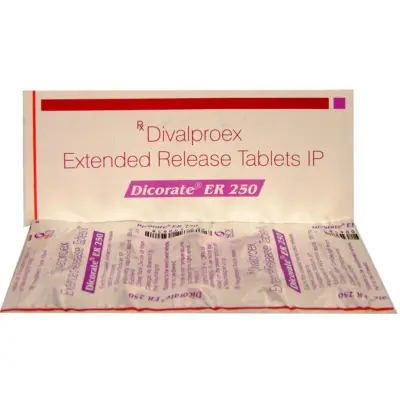
- Dicorate ER 250 mg Tablets (Sodium Valproate 250 mg ER — antiepileptic and mood stabiliser)
- Dicorate ER 500 mg Tablets (Sodium Valproate 500 mg ER — standard maintenance dose for epilepsy and bipolar)
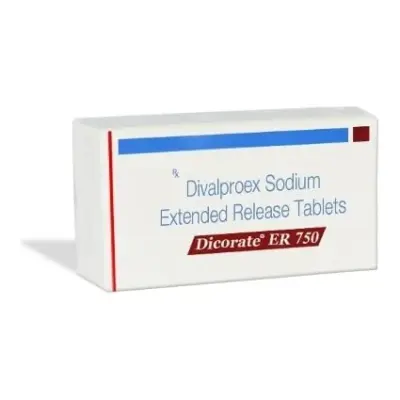
- Dicorate ER 750 mg Tablets (Sodium Valproate 750 mg ER — higher dose for epilepsy and mood stabilisation)
- Cardace 10 mg Tablets (Ramipril — ACE inhibitor for hypertension and cardiovascular risk reduction)
References
- DailyMed. Valproic acid/sodium valproate — prescribing information. U.S. National Library of Medicine. Available at: https://dailymed.nlm.nih.gov/dailymed/
- MedlinePlus. Valproic Acid. U.S. National Library of Medicine. Available at: https://medlineplus.gov/druginfo/meds/a682412.html
- Mayo Clinic. Valproic Acid (Oral Route). Available at: https://www.mayoclinic.org/
- Perucca E. Pharmacological and therapeutic properties of valproate: a summary after 35 years of clinical experience. CNS Drugs. 2002;16(10):695–714. PMID: 12269861
- Electronic Medicines Compendium (EMC). Sodium Valproate extended-release tablets — Summary of Product Characteristics. Available at: https://www.medicines.org.uk/emc/
Reviews
There are no reviews yet.