
Description
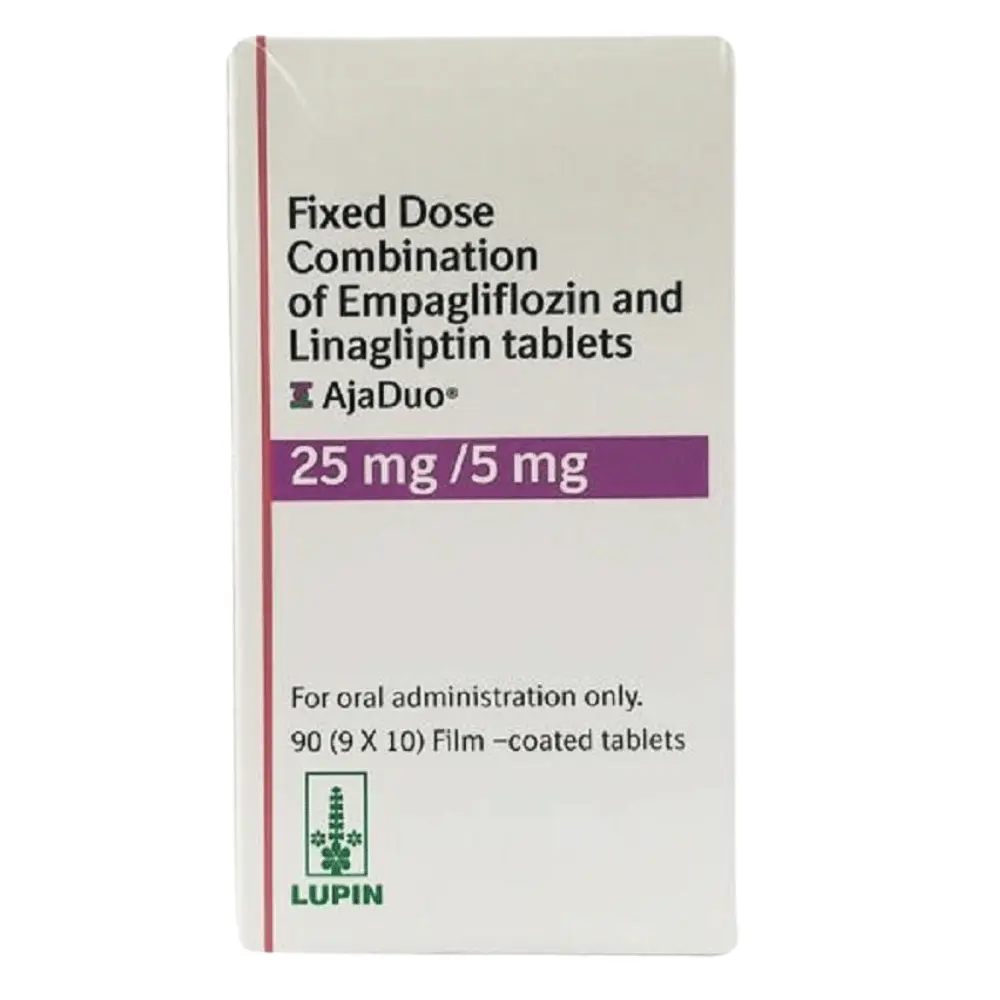
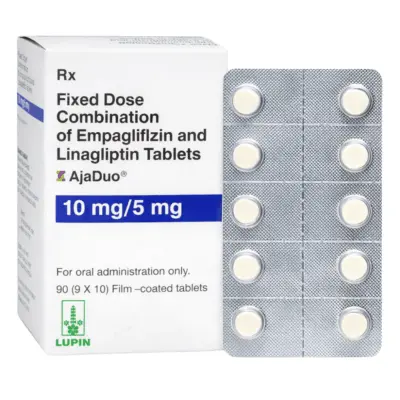
Ajaduo 25mg/5mg Tablet is a fixed-dose oral prescription anti-diabetic medication marketed by Boehringer Ingelheim. Each film-coated tablet contains two active pharmaceutical ingredients:
-
Empagliflozin: 25 mg
-
Linagliptin: 5 mg
Ajaduo provides a dual-action mechanism by combining a sodium-glucose co-transporter-2 (SGLT2) inhibitor (empagliflozin) with a dipeptidyl peptidase-4 (DPP-4) inhibitor (linagliptin). It is prescribed under specialist medical supervision (such as an endocrinologist, diabetologist, or physician) as an adjunct to diet and exercise to improve blood sugar control in adult patients with Type 2 Diabetes Mellitus.
The 25mg/5mg strength represents the maximum daily dose formulation, suited for patients requiring stronger glycemic lowering and who have adequate kidney filtration.
Quick Product Fact Sheet
| Feature | Details |
| Brand Name | Ajaduo 25mg/5mg Tablet |
| Active Ingredients | Empagliflozin (25 mg) + Linagliptin (5 mg) |
| Marketer / Manufacturer | Boehringer Ingelheim (co-promoted globally with Eli Lilly as Glyxambi) |
| Therapeutic Class | Anti-diabetic combination agent |
| Pharmacological Classes | SGLT2 Inhibitor + DPP-4 Inhibitor |
| Dosage Form | Film-coated oral tablet |
| Standard Adult Dose | One tablet taken orally once daily in the morning |
| Dietary Rule | Taken with or without food |
| Packaging | Strip or blister pack of 10 tablets |
How Ajaduo 25mg/5mg Works
Ajaduo addresses multiple physiological defects in Type 2 Diabetes by combining two distinct, complementary pathways that work together to lower both fasting and post-meal (postprandial) blood glucose.
                  [AJADUO 25mg/5mg TABLET]
                             │
         ┌───────────────────┴───────────────────┐
         ▼                                       ▼
[EMPAGLIFOZIN (25mg) - SGLT2 INHIBITOR]   [LINAGLIPTIN (5mg) - DPP-4 INHIBITOR]
         │                                       │
• Acts in proximal renal tubules         • Slows breakdown of GLP-1 and GIP
• Blocks glucose & sodium reabsorption   • Glucose-dependent insulin increase
• Flushes ~78g glucose/day in urine      • Suppresses glucagon from liver
• Promotes mild osmotic diuresis         • Controls post-meal glucose spikes
• Lowers systolic blood pressure         • Zero intrinsic hypoglycemia risk
         │                                       │
         └───────────────────┬───────────────────┘
                             ▼
     [DUAL COMPLEMENTARY CONTROL: FASTING + POST-MEAL GLUCOSE]
     [A1c Reduction + Weight Benefit + Cardiovascular Protection]
1. Empagliflozin Component (SGLT2 Inhibition)
-
Renal Glucose Clearance: Empagliflozin blocks the SGLT2 transporters in the kidneys. This prevents filtered sugar from being reabsorbed back into the bloodstream, directing approximately 64 to 78 grams of excess glucose per day into the urine.
-
Insulin-Independent Action: Because it works directly through the kidneys, empagliflozin lowers blood glucose without relying on the pancreas or peripheral insulin sensitivity.
-
Hemodynamic and Caloric Benefits: The excretion of glucose carries calories out of the body (promoting mild weight loss) and causes mild osmotic diuresis, which helps reduce blood pressure and cardiac preload.
2. Linagliptin Component (DPP-4 Inhibition)
-
Incretin Hormone Preservation: Incretin hormones (GLP-1 and GIP) are naturally released by the gut after eating to stimulate insulin secretion. The body’s DPP-4 enzyme normally destroys these hormones within minutes.
-
Prolonged Incretin Action: Linagliptin inhibits the DPP-4 enzyme, prolonging active GLP-1 and GIP levels.
-
Glucose-Dependent Insulin Release: In the presence of elevated blood sugar, higher incretin levels trigger the pancreas to release more insulin while suppressing excessive glucagon release from the liver.
-
Low Hypoglycemia Profile: Because linagliptin only stimulates insulin release when blood sugar is elevated, it carries an exceptionally low risk of causing hypoglycemia on its own.
Approved Clinical Indications
Ajaduo 25mg/5mg Tablet is indicated for adult patients (18 years of age and older) in the following clinical scenarios:
-
Type 2 Diabetes Mellitus Management: Used to improve glycemic control when diet and exercise alone, or treatment with metformin, empagliflozin monotherapy, or linagliptin monotherapy, do not provide adequate blood sugar control.
-
Cardiovascular Risk Reduction: For patients with type 2 diabetes and established cardiovascular disease, the empagliflozin component reduces the risk of cardiovascular death and hospital admission for heart failure.
-
Dual Fixed-Dose Replacement: As a once-daily single tablet for patients already stabilized on individual tablets of empagliflozin 25 mg and linagliptin 5 mg.
Limitations of Use
-
Not for the treatment of Type 1 Diabetes Mellitus due to the risk of diabetic ketoacidosis.
-
Not indicated for treating Diabetic Ketoacidosis (DKA).
-
Not initiated for blood sugar control in patients with an estimated glomerular filtration rate (eGFR) below 30 mL/min/1.73 m², as empagliflozin requires renal filtration to excrete glucose.
Standard Dosage and Administration Guidelines
Ajaduo 25mg/5mg must be taken strictly as prescribed by your doctor.
Standard Administration Schedule
-
Recommended Dose: One tablet taken orally once daily.
-
Preferred Timing: Take in the morning. The empagliflozin component promotes mild osmotic diuresis (increased urination); taking it in the morning prevents waking up at night to urinate.
-
With or Without Food: Can be taken with or without meals. Taking it with breakfast can help minimize mild initial digestive sensitivity.
-
Swallow Whole: Swallow the tablet whole with a full glass of water. Do not chew, crush, split, or dissolve the tablet.
-
Missed Dose Protocol: If you miss a dose, take it as soon as you remember that day. If you do not remember until the following morning, skip the missed tablet and resume your regular daily schedule. Never take two tablets on the same day.
Renal Thresholds & Dosing Adjustments
Before starting Ajaduo 25mg/5mg, baseline kidney function (eGFR) must be verified. While linagliptin is cleared primarily through the liver and bile and needs no renal dose adjustment, the empagliflozin component depends on kidney filtration for its glycemic efficacy.
| Kidney Function (eGFR) | Clinical Directives for Ajaduo 25mg/5mg |
| eGFR 60 mL/min/1.73 m² or higher | Standard dose: One 25mg/5mg tablet once daily in the morning. |
| eGFR 30 to 59 mL/min/1.73 m² | The maximum 25 mg empagliflozin component is generally not recommended; clinicians typically switch to the lower Ajaduo 10mg/5mg strength. |
| eGFR less than 30 mL/min/1.73 m² | Contraindicated / Not recommended for glycemic control due to insufficient renal glucose filtration. |
| Dialysis / End-Stage Kidney Disease | Contraindicated. |
Potential Side Effects & Clinical Management
Most patients tolerate Ajaduo well, but awareness of both components’ potential adverse reactions is important.
Common Side Effects
-
Genital Fungal Infections: Yeast infections (vulvovaginitis in women, balanitis in men) caused by sugar excretion in urine. Managed with good personal hygiene, hydration, and standard topical or oral antifungals.
-
Urinary Tract Infections (UTIs): Mild to moderate bacterial bladder infections.
-
Upper Respiratory Symptoms: Nasopharyngitis (stuffy nose, sore throat) linked to the DPP-4 inhibitor component.
-
Increased Urination: Mild polyuria during the first few weeks as the body adjusts to fluid excretion.
-
Mild Digestive Upset: Nausea, loose stools, or flatulence.
Serious Warnings & Class Precautions
| Serious Adverse Event | Warning Signs | Action Required |
| Euglycemic Diabetic Ketoacidosis (euDKA) | Nausea, vomiting, severe stomach pain, unusual fatigue, deep/rapid breathing, with normal or only slightly high blood sugar (<250 mg/dL). | Stop Ajaduo immediately. Seek emergency hospital evaluation; requires IV fluids, dextrose, and insulin. |
| Acute Pancreatitis | Severe, persistent upper abdominal pain that radiates to the back, often accompanied by vomiting. | Linked to DPP-4 inhibitors. Discontinue Ajaduo immediately; do not restart if pancreatitis is confirmed. |
| Necrotizing Fasciitis of the Perineum (Fournier’s Gangrene) | Severe pain, tenderness, redness, or swelling in the genital or groin area with fever or chills. | Rare surgical emergency. Stop medicine, start broad-spectrum IV antibiotics, and seek immediate surgical care. |
| Severe Joint Pain (Arthralgia) | Disabling, persistent pain in joints without obvious swelling. | Class effect of DPP-4 inhibitors. Usually resolves upon stopping the drug. |
| Bullous Pemphigoid | Blistering skin erosions or large fluid-filled skin lesions. | Discontinue Ajaduo; requires dermatological assessment. |
Precautions & Medical Monitoring
Patients taking Ajaduo 25mg/5mg require periodic lab tests to ensure efficacy and detect metabolic shifts early:
| Monitoring Parameter | Recommended Frequency | Clinical Purpose |
| Glycated Hemoglobin (HbA1c) | Baseline, then every 3 months | Assesses long-term glycemic control. |
| Kidney Function (eGFR & Creatinine) | Baseline, then at least annually (every 3 to 6 months if eGFR is borderline) | Evaluates kidney filtration to confirm continued eligibility for the 25 mg dose. |
| Blood Pressure & Fluid Volume | Routine clinic visits | Monitors for excessive volume depletion or postural hypotension, particularly in older adults. |
| Lipid Profile | Baseline and periodic | SGLT2 inhibitors can cause small, benign increases in LDL and HDL cholesterol. |
| Daily Foot Checks | Daily home inspection | Routine preventive care for diabetic foot ulcers and skin integrity. |
Drug Interactions & Substance Precautions
-
Insulin and Sulfonylureas (e.g., Glimepiride, Gliclazide): While Ajaduo has a low intrinsic risk of hypoglycemia, combining it with insulin or sulfonylureas increases the risk of low blood sugar. Your doctor may lower the dose of your insulin or sulfonylurea when starting Ajaduo.
-
Diuretics (Water Pills like Furosemide or Hydrochlorothiazide): Co-administration can increase fluid loss, raising the risk of dehydration, low blood pressure, and acute kidney stress.
-
Strong CYP3A4 / P-gp Inducers (Rifampin, Carbamazepine, St. John’s Wort): These accelerate the clearance of linagliptin, reducing its therapeutic effectiveness. Alternative companion agents may be advised.
-
Alcohol: Limit or avoid alcohol. Heavy alcohol consumption, combined with calorie restriction, significantly raises the risk of diabetic ketoacidosis and hypoglycemia.
-
Urine Glucose Tests: SGLT2 inhibitors cause sugar to appear in the urine. Urine glucose dipstick tests will always show positive results and should not be used to track diabetes control; blood glucose testing is required.
Special Clinical Protocols: Surgery & Acute Illness
The “Sick Day” Rule and Planned Surgeries
During acute physical stressors—such as high fevers, severe infections, vomiting, diarrhea, or major surgeries requiring prolonged fasting—the body produces excess ketones. Taking an SGLT2 inhibitor under these conditions increases the risk of euglycemic diabetic ketoacidosis.
-
Planned Surgery Protocol: Stop taking Ajaduo at least 3 days prior to major scheduled operations or procedures requiring prolonged fasting.
-
Acute Illness Protocol: Temporarily hold your Ajaduo tablet if you develop severe illness with dehydration (such as food poisoning or pneumonia).
-
Resuming Therapy: Only resume taking Ajaduo once normal food and fluid intake have fully returned and kidney function is stable.
Special Population Guidance
| Subpopulation | Clinical Assessment & Prescribing Directives |
| Pregnancy (Not Recommended) | Ajaduo is not recommended during the second and third trimesters of pregnancy due to animal data showing potential kidney developmental toxicity from empagliflozin. Insulin is the preferred agent for blood sugar control during pregnancy. |
| Breastfeeding (Contraindicated) | Avoid use while nursing. It is unknown whether empagliflozin or linagliptin passes into human milk, and potential risks to infant renal development exist. |
| Geriatric Patients (65 Years and Older) | Elderly individuals are more sensitive to volume depletion, dizziness upon standing, and kidney impairment. Blood pressure and hydration should be checked regularly. |
| Pediatric Use | Safety and effectiveness of Ajaduo have not been established in patients under 18 years of age. |
| Liver Disease | Safe in mild to moderate hepatic impairment. Use caution in severe liver disease. |
Storage and Handling Protocols
-
Store tablets at room temperature between 20°C and 25°C (68°F to 77°F). Temporary excursions between 15°C and 30°C (59°F to 86°F) are acceptable.
-
Keep in the original blister packaging in a dry place to protect from moisture and high heat.
-
Keep strictly out of reach of children and domestic pets.
Frequently Asked Questions (FAQs)
Q1: What is the main difference between Ajaduo 10mg/5mg and Ajaduo 25mg/5mg?
Both strengths contain the same 5 mg dose of linagliptin. The difference lies in the empagliflozin component (10 mg versus 25 mg). The 25mg/5mg strength provides stronger glucose removal through the kidneys for patients who need additional HbA1c lowering and have robust kidney filtration (eGFR 60 mL/min/1.73 m² or higher).
Q2: Will Ajaduo cause me to lose weight?
Yes, many patients experience a modest weight loss (typically 2 to 3 kg over several months). This occurs because the empagliflozin component eliminates sugar—and therefore calories—directly into your urine. However, Ajaduo is not a dedicated weight-loss drug and should only be used to treat type 2 diabetes.
Q3: Can Ajaduo cause low blood sugar (hypoglycemia)?
When taken alone or with metformin, Ajaduo rarely causes low blood sugar. Empagliflozin works through kidney filtration and linagliptin only triggers insulin release when blood sugar is elevated. However, if you take Ajaduo together with insulin or a sulfonylurea (like glimepiride), the risk of hypoglycemia increases, and your doctor may adjust those companion doses.
Q4: How can I avoid yeast infections while taking Ajaduo?
Because Ajaduo continuously removes excess sugar through your urine, yeast can grow more easily in the genital area. Drink plenty of water throughout the day, maintain good daily personal hygiene, wear breathable cotton underwear, and avoid holding your urine for prolonged periods.
Medical Disclaimer
This clinical guide is strictly for educational, informational, and onboarding documentation purposes and must not replace individualized medical advice, clinical diagnosis, or professional treatment. Always consult a qualified endocrinologist, diabetologist, or healthcare provider before initiating, modifying, or discontinuing any anti-diabetic medication.
References
-
U.S. Food and Drug Administration (FDA):GLYXAMBI (empagliflozin and linagliptin) Tablets Full Prescribing Information.
-
National Center for Biotechnology Information (NCBI):StatPearls Review: Empagliflozin/Linagliptin Dual SGLT2 and DPP-4 Inhibition in Type 2 Diabetes.
-
European Medicines Agency (EMA):Glyxambi (empagliflozin / linagliptin) Summary of Product Characteristics (SmPC).
-
American Diabetes Association (ADA):Standards of Care in Diabetes: Pharmacologic Approaches to Glycemic Treatment.

Ryan Wilson –
The medications are genuine and affordable. Highly recommend!