Description
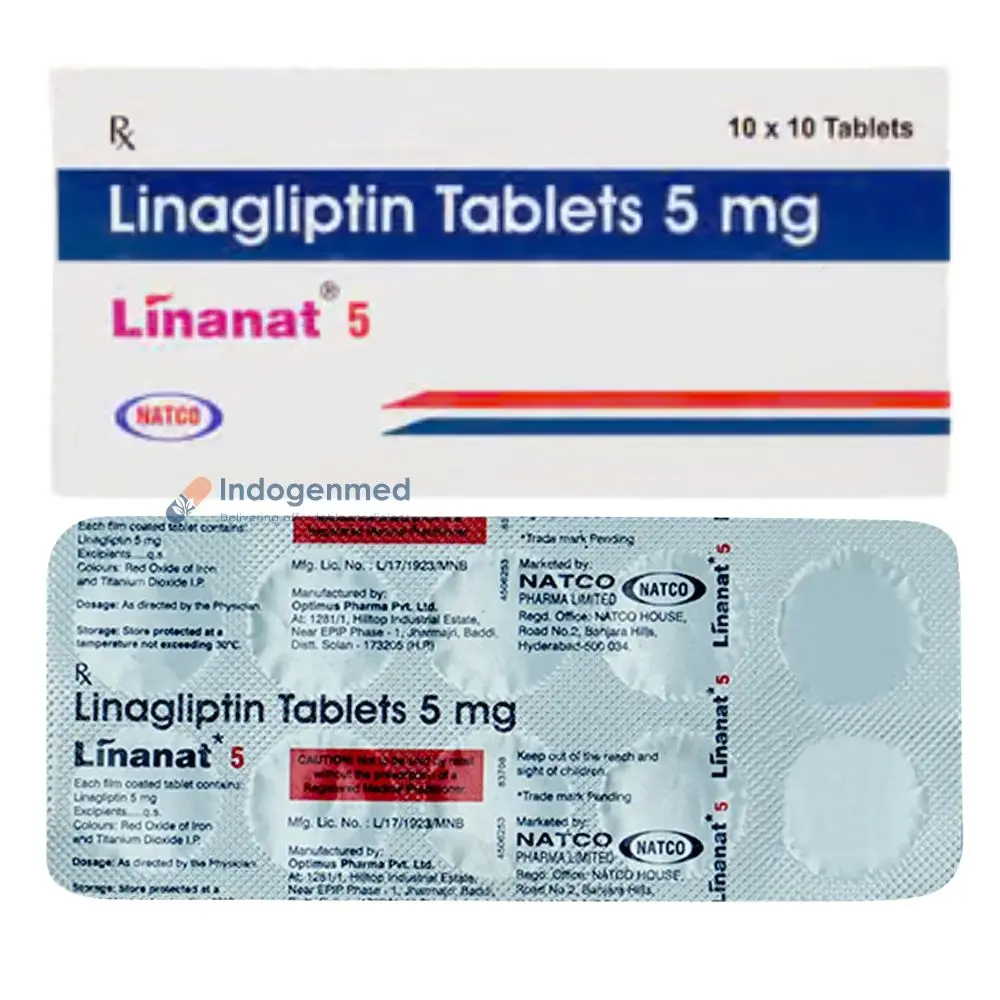
What Is Linanat 5 mg?
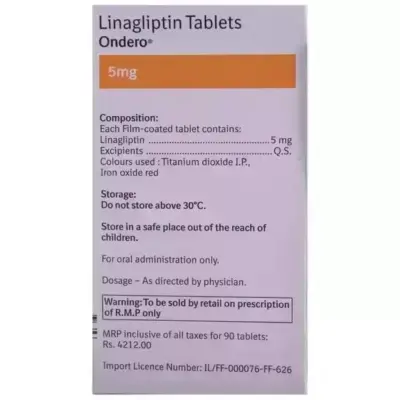
Linanat 5 mg is a branded oral antidiabetic tablet containing linagliptin 5 mg as its active ingredient. Linagliptin belongs to the dipeptidyl peptidase-4 (DPP-4) inhibitor class of medicines, commonly called “gliptins.” It is used in adults with type 2 diabetes mellitus to improve blood glucose control, either as monotherapy when diet and exercise alone are insufficient, or as part of combination therapy with other antidiabetic agents including metformin, sulphonylureas, or insulin.
Unlike many other oral antidiabetic drugs, linagliptin is eliminated almost entirely unchanged via the bile and gut, with less than 5% renal excretion. This unique pharmacokinetic profile makes Linanat 5 mg suitable for patients across all stages of chronic kidney disease (CKD) without dose adjustment, an important advantage in a population where renal impairment is common.
Linanat tablets are manufactured to international quality standards and provide a convenient once-daily oral dose that fits easily into a daily routine.
Mechanism of Action
Linagliptin exerts its glucose-lowering effect through selective and reversible inhibition of the enzyme dipeptidyl peptidase-4 (DPP-4). DPP-4 is responsible for the rapid degradation of incretin hormones — primarily glucagon-like peptide-1 (GLP-1) and glucose-dependent insulinotropic polypeptide (GIP) — which are released from the gut after a meal.
Incretin Enhancement
By blocking DPP-4, linagliptin prevents the breakdown of GLP-1 and GIP, raising their active plasma concentrations two- to three-fold. Elevated incretins then stimulate pancreatic beta cells to secrete insulin in response to rising blood glucose and simultaneously suppress glucagon release from alpha cells. Because this mechanism is strictly glucose-dependent, insulin secretion diminishes once blood glucose falls toward normal levels, making hypoglycaemia rare when linagliptin is used as monotherapy or combined with metformin.
Glucose-Dependent Regulation
The glucose-dependent nature of incretin-mediated insulin release is a key safety advantage of DPP-4 inhibitors compared with sulphonylureas. Sulphonylureas stimulate insulin secretion regardless of glucose levels and carry inherent hypoglycaemia risk; linagliptin’s action is essentially “off” at normal or low blood glucose concentrations, markedly reducing that risk.
DPP-4 Selectivity
Linagliptin is highly selective for DPP-4 over structurally related enzymes such as DPP-8 and DPP-9. This selectivity minimises off-target effects, contributing to the favourable tolerability profile observed in clinical trials.
Indications
Linanat 5 mg is indicated for:
- Type 2 diabetes mellitus in adults — to improve glycaemic control as an adjunct to diet and exercise
- Monotherapy — when metformin is not tolerated or is contraindicated
- Add-on to metformin — when metformin alone does not achieve adequate glycaemic control
- Add-on to a sulphonylurea plus metformin — in triple oral therapy when dual therapy is insufficient
- Add-on to insulin — with or without metformin, when insulin alone provides inadequate control
- Patients with renal impairment — including severe CKD (eGFR <30 mL/min/1.73 m²) and end-stage renal disease requiring dialysis, without dose adjustment
Linanat 5 mg is not indicated for type 1 diabetes mellitus or for the treatment of diabetic ketoacidosis.
Dosage and Administration
Standard adult dose: One tablet of Linanat 5 mg (linagliptin 5 mg) once daily, with or without food.
Renal impairment: No dose adjustment is required at any stage of renal impairment or in patients on dialysis. This distinguishes linagliptin from most other oral antidiabetic agents that require dose reduction or avoidance in advanced CKD.
Hepatic impairment: No dose adjustment is required in mild, moderate, or severe hepatic impairment, though clinical experience in severe hepatic impairment is limited.
Elderly patients: No dose adjustment based on age alone. As with all antidiabetic therapy, careful glycaemic monitoring is recommended in elderly patients to minimise hypoglycaemia risk, particularly when linagliptin is combined with a sulphonylurea or insulin.
Combination with insulin or sulphonylurea: When adding linagliptin to existing insulin or sulphonylurea therapy, a lower dose of the insulin or sulphonylurea may be needed to reduce hypoglycaemia risk.
Missed dose: Take as soon as remembered on the same day. Do not take two doses on the same day.
Swallow the tablet whole with a glass of water. No food restrictions apply.
Contraindications
- Hypersensitivity to linagliptin or any excipient, including serious reactions such as urticaria, angioedema, or anaphylaxis
- Type 1 diabetes mellitus
- Diabetic ketoacidosis
Warnings and Precautions
Pancreatitis
Post-marketing reports have described acute pancreatitis in patients taking DPP-4 inhibitors including linagliptin. Patients should be informed of the characteristic symptoms: persistent, severe abdominal pain often radiating to the back, sometimes accompanied by vomiting. If pancreatitis is suspected, Linanat should be discontinued immediately and appropriate investigation initiated. Linagliptin should not be restarted after confirmed pancreatitis. Use with caution in patients with a history of pancreatitis, though a causal relationship has not been definitively established.
Hypoglycaemia with Insulin or Sulphonylureas
When linagliptin is added to insulin or a sulphonylurea, hypoglycaemia risk increases. The dose of the insulin or sulphonylurea should be considered for reduction. Linagliptin as monotherapy or in combination with metformin does not by itself cause clinically meaningful hypoglycaemia.
Bullous Pemphigoid
Post-marketing reports have identified cases of bullous pemphigoid — a blistering autoimmune skin disorder — in patients taking DPP-4 inhibitors. If bullous pemphigoid is suspected, the drug should be discontinued and dermatological evaluation arranged.
Arthralgia
Severe and disabling arthralgia has been reported with DPP-4 inhibitors. Consider discontinuation if severe joint pain develops and no other cause is identified.
Heart Failure
Post-marketing surveillance and cardiovascular outcomes trial data for linagliptin (CARMELINA, CAROLINA) showed no increased risk of heart failure hospitalisation compared with placebo or glimepiride. Nonetheless, prescribers should monitor patients who have established heart failure, as the broader DPP-4 inhibitor class has been associated with possible heart failure risk in pharmacovigilance data.
Macrovascular Outcomes
No cardiovascular outcome benefit has been proven for linagliptin beyond glycaemic control. Glucose-lowering therapy should be part of a comprehensive cardiovascular risk reduction strategy.
Adverse Effects
Linagliptin is generally well tolerated. Common adverse effects include:
- Nasopharyngitis — the most frequently reported adverse effect in clinical trials
- Hypoglycaemia — primarily when combined with insulin or sulphonylurea
- Upper respiratory tract infection
- Urinary tract infection — slightly elevated incidence in some trials
- Cough — less common than with ACE inhibitors but reported
Uncommon or rare adverse effects include:
- Acute pancreatitis (rare; post-marketing reports)
- Angioedema and hypersensitivity reactions
- Bullous pemphigoid (rare; post-marketing)
- Severe arthralgia
- Rash or urticaria
Linagliptin does not cause weight gain, which differentiates it from sulphonylureas and insulin. It is weight-neutral, making it suitable for obese patients with type 2 diabetes.
Drug Interactions
Inducers of P-glycoprotein and CYP3A4
Linagliptin is a substrate of P-glycoprotein (P-gp) and CYP3A4. Co-administration with strong inducers of these pathways — most notably rifampicin — markedly reduces plasma exposure to linagliptin and may result in inadequate glycaemic control. If concurrent use with rifampicin or other strong inducers (e.g., carbamazepine, phenytoin, St John’s Wort) is unavoidable, an alternative antidiabetic therapy not dependent on these pathways should be considered.
Insulin and Sulphonylureas
Pharmacodynamic interaction: increased hypoglycaemia risk. Dose reduction of the insulin or sulphonylurea should be considered.
Metformin
No pharmacokinetic or pharmacodynamic interaction of clinical significance. The combination is widely used and well characterised.
Other Antidiabetic Agents
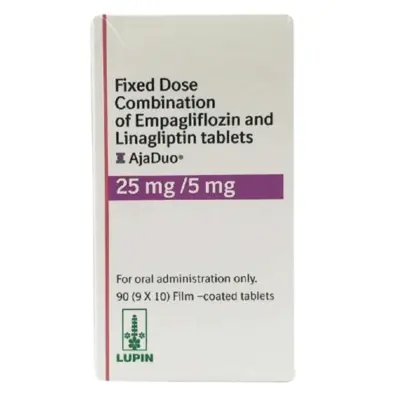
No clinically meaningful pharmacokinetic interactions have been identified with other common antidiabetic drugs including pioglitazone, glibenclamide, or empagliflozin.
Digoxin
Co-administration of linagliptin with digoxin slightly increased digoxin AUC by approximately 20%. This is not expected to be clinically significant at standard doses, but monitoring is advisable in patients on narrow-therapeutic-index digoxin.
Storage
Store Linanat 5 mg tablets at room temperature, below 25°C. Keep in the original blister or container, away from moisture and direct sunlight. Keep all medicines out of reach of children. Do not use after the expiry date printed on the packaging. Unused or expired medicines should be disposed of through authorised pharmaceutical waste collection; do not dispose of via wastewater or household waste.
Related Products
- Acamprol 333 mg Tablets (Acamprosate)
- Vomistop 10 mg Tablets (Domperidone)
- Minoz 100 mg Tablets (Minocycline)
References
- DailyMed. Tradjenta (linagliptin) tablets — prescribing information. U.S. National Library of Medicine. Available at: https://dailymed.nlm.nih.gov/dailymed/
- MedlinePlus. Linagliptin. U.S. National Library of Medicine. Available at: https://medlineplus.gov/druginfo/meds/a611005.html
- Mayo Clinic. Linagliptin (Oral Route) — Description and Brand Names. Available at: https://www.mayoclinic.org/
- Gallwitz B. Linagliptin for the treatment of type 2 diabetes. Advances in Therapy. 2013;30(2):81–101. PMID: 23397235
- Rosenstock J et al. Effect of linagliptin vs glimepiride on major adverse cardiovascular outcomes in patients with type 2 diabetes: the CAROLINA randomized clinical trial. JAMA. 2019;322(12):1155–1166. PMID: 31536101
Reviews
There are no reviews yet.