
Description
What are Betavert 16 Mg Tablets?
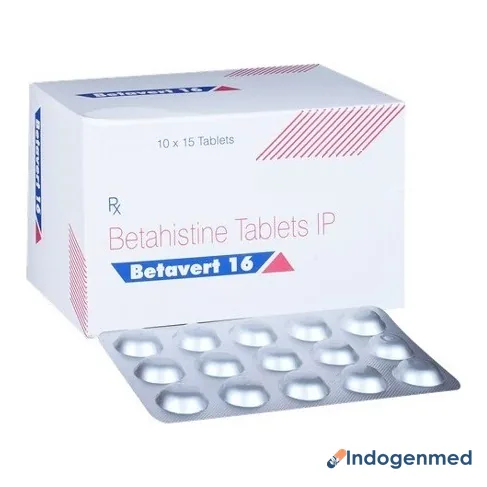
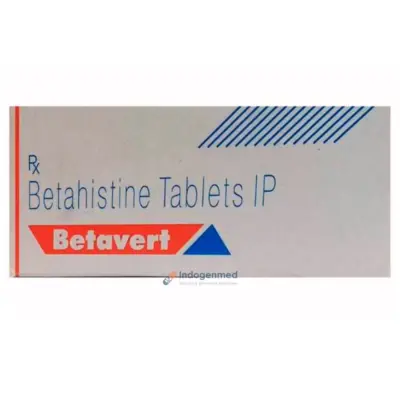
Betavert 16 Mg Tablets are oral tablets manufactured by Sun Pharmaceutical Industries Ltd., India’s largest pharmaceutical company. Each tablet contains 16 mg of Betahistine Dihydrochloride as the active ingredient. Betahistine is a histamine analogue that acts on receptors in the inner ear and central vestibular pathways to reduce the frequency and severity of vertigo attacks and the associated symptoms of tinnitus and hearing impairment.
Betavert 16 is indicated primarily for the long-term management of Ménière’s disease — a chronic inner ear disorder characterised by recurrent episodes of severe vertigo, fluctuating sensorineural hearing loss, tinnitus, and a sensation of pressure or fullness in the affected ear. It is also used for vestibular vertigo arising from other inner ear conditions. Each pack contains 10 tablets (1 strip).
The 16 mg tablet is the higher-strength tablet in the Betavert range. It allows the full recommended daily dose of betahistine to be achieved with fewer tablets per day compared to the lower-strength option, making it the preferred choice for most patients once the therapeutic dose has been established and tolerability confirmed.
Composition and Product Details
| Brand Name | Betavert 16 |
|---|---|
| Generic Name | Betahistine Dihydrochloride |
| Strength | 16 mg per tablet |
| Dosage Form | Oral tablet |
| Pack Size | 10 tablets (1 strip) |
| Manufacturer | Sun Pharmaceutical Industries Ltd., India |
| Therapeutic Class | Vestibular / Anti-vertigo Agent |
| Prescription Required | Yes |
About Sun Pharmaceutical Industries Ltd. and the Betavert Brand
Sun Pharmaceutical Industries Ltd. is India’s largest pharmaceutical company and one of the top five generic pharmaceutical companies in the world. Established in 1983 and headquartered in Mumbai, Sun Pharma operates in over 100 countries and manufactures a wide range of generic and branded medicines across neurology, cardiology, psychiatry, dermatology, diabetology, and other therapeutic areas.
Sun Pharma is listed on the Bombay Stock Exchange (BSE) and the National Stock Exchange (NSE) of India, and its products are approved by major regulatory bodies including the US FDA, the UK MHRA, the European EMA, and WHO-GMP authorities. The company maintains a reputation for quality and compliance across its global manufacturing network.
The Betavert brand is Sun Pharma’s betahistine product line, available in multiple strengths to support the individualised dosing requirements of long-term Ménière’s disease management. Betavert 16 Mg is the higher-strength tablet in this range, suitable for patients who have been titrated to a stable maintenance dose and for those whose clinical response requires the upper end of the betahistine dosing range.
How Betavert 16 Mg Works
Betahistine is a structural analogue of histamine that exerts its therapeutic effects through two well-characterised complementary mechanisms within the inner ear and vestibular system:
- H1 receptor agonism — improved inner ear microcirculation: Betahistine acts as a partial agonist at histamine H1 receptors on the smooth muscle of the blood vessels supplying the cochlea and labyrinth. This produces vasodilation and increases cochlear and labyrinthine blood flow. Improved perfusion of the inner ear helps to reduce the pathological accumulation of endolymph (inner ear fluid pressure) that is central to the symptoms of Ménière’s disease — fewer and less severe vertigo episodes correlate with reduced endolymphatic hydrops.
- H3 receptor antagonism — modulation of central vestibular neurotransmission: Betahistine acts as a potent antagonist at histamine H3 autoreceptors on histaminergic neurons in the hypothalamus and vestibular nuclei of the brainstem. Blocking H3 receptors increases histamine release and enhances histaminergic activity in the central vestibular pathways, which reduces the excessive activity of the vestibular nuclei that generates the perception of vertigo.
These two mechanisms — peripheral vasodilation in the inner ear reducing endolymphatic pressure, and central modulation of vestibular neurotransmission dampening the pathological signals that cause vertigo — act in concert to reduce both the frequency of acute vertigo attacks and the severity of chronic background symptoms including tinnitus and hearing impairment.
Betahistine is a maintenance medication, not a rapid rescue agent. It requires consistent daily use over weeks to months to produce its full clinical benefit. The 16 mg tablet achieves the same therapeutic effect as two Betavert 8 mg tablets taken at the same time, but in a single, more convenient tablet — reducing the number of tablets that need to be taken each day.
Betavert 16 Mg vs Betavert 8 Mg — Which Strength Is Right?
Both Betavert 8 Mg and Betavert 16 Mg contain the same active ingredient (betahistine dihydrochloride) and are manufactured by Sun Pharmaceutical Industries Ltd. The difference is the amount of betahistine per tablet:
- Betavert 8 Mg — the lower-strength tablet. Useful for treatment initiation or for patients who benefit from starting at the lower end of the therapeutic range and titrating upward. A typical starting regimen of 24 mg/day requires 3 tablets of Betavert 8 daily (one three times daily).
- Betavert 16 Mg — the higher-strength tablet. At the standard maintenance dose of 48 mg/day (the upper end of the recommended therapeutic range), only 3 tablets of Betavert 16 are required daily (one 16 mg tablet three times daily), versus 6 tablets of the 8 mg formulation. This makes Betavert 16 significantly more convenient for patients established on higher doses. At 24 mg/day (lower maintenance), only 1.5 tablets three times daily would be needed — in practice, Betavert 8 may then be more practical for lower doses.
Your prescribing physician will determine the most appropriate strength based on your therapeutic dose, tolerability, and convenience. Most patients are maintained on Betavert 16 once their optimal dose has been established.
Indications and Uses
Betavert 16 Mg Tablets are indicated for:
- Ménière’s disease: Long-term maintenance treatment to reduce the frequency and severity of Ménière’s syndrome symptoms — recurrent vertigo episodes, tinnitus, fluctuating sensorineural hearing loss, and the sensation of pressure or fullness in the affected ear.
- Vestibular vertigo: Symptomatic management of vertigo arising from labyrinthine disorders, including vestibular neuritis, labyrinthitis, and other vestibular conditions causing chronic or recurrent vertigo.
Betavert 16 is a maintenance therapy for long-term symptom reduction. It is not a fast-acting remedy for acute vertigo attacks, which may require separate symptomatic medication as directed by the physician.
Dosage and Administration
Dosing must be directed by the treating physician. Betavert 16 Mg Tablets should be taken with food to reduce the risk of nausea. Tablets are swallowed whole with water.
- Standard adult dose: 24–48 mg daily in divided doses. The most common regimen at maintenance is 16 mg three times daily (48 mg/day total), which represents the upper therapeutic dose used by many patients with established Ménière’s disease.
- Lower maintenance dose: Some patients are maintained at 24–32 mg/day; at these doses, the physician may use Betavert 8 for flexibility or split the Betavert 16 dose as appropriate.
- Frequency: Three times daily, ideally distributed evenly throughout the day — for example, with breakfast, lunch, and dinner.
- Duration: Long-term maintenance treatment. The NHS recommends a trial of at least 3 months before assessing therapeutic response; benefit typically continues to develop over months of sustained treatment.
Do not stop taking Betavert abruptly without medical advice. If you miss a dose, take it as soon as you remember unless it is close to the time of the next scheduled dose — do not double up. Your doctor will advise on dose adjustments or when treatment may be modified based on your individual response.
Special Populations
Elderly (≥65 years)
No specific dose adjustment is considered necessary in elderly patients based on available pharmacokinetic data. However, older patients should be monitored for tolerability — particularly gastrointestinal side effects and any exacerbation of existing conditions such as asthma or peptic ulcer disease. Starting at the lower end of the dose range is prudent in the elderly.
Renal Impairment
Limited data are available in severe renal impairment. Betahistine should be used with caution in patients with significantly impaired renal function, under close medical supervision with appropriate dose considerations.
Hepatic Impairment
Betahistine is metabolised by monoamine oxidase (MAO) enzymes; caution is warranted in severe hepatic impairment where drug metabolism may be altered. Specialist advice should be sought before use in patients with significant liver disease.
Paediatric Use
The safety and efficacy of betahistine in children and adolescents have not been established. Betavert 16 Mg is not recommended for patients under 18 years of age.
Pregnancy and Breastfeeding
There are insufficient clinical data to assess the safety of betahistine in pregnancy. Betahistine should be avoided during pregnancy unless the potential benefit clearly outweighs the risk. It is not known whether betahistine is excreted in human breast milk; breastfeeding is not recommended during treatment. Discuss all risks with your doctor before use if pregnant or breastfeeding.
Precautions and Warnings
- Phaeochromocytoma: Betahistine is contraindicated in patients with phaeochromocytoma (adrenal gland tumour secreting adrenaline), as betahistine’s histaminergic activity may provoke a life-threatening hypertensive crisis in this condition.
- Bronchial asthma: Betahistine has histamine-like activity and may theoretically promote bronchoconstriction at higher doses. Use with caution in patients with active or poorly controlled asthma, with close monitoring by a physician.
- History of peptic ulcer disease: As with histamine-related drugs, betahistine may stimulate gastric acid secretion; use with caution in patients with active or recent peptic ulcer disease. Taking tablets with food minimises gastrointestinal discomfort.
- Antihistamine medications: Concurrent use of H1-receptor antagonists (antihistamines such as cetirizine, loratadine, or chlorphenamine) may reduce the efficacy of betahistine through competitive receptor binding. Discuss this with your doctor if you require allergy medications.
- Hypersensitivity: Cases of hypersensitivity reactions, including skin rash, urticaria, and angioedema (swelling of the face, lips, or throat), have been reported. Discontinue and seek medical attention promptly if these occur.
- Driving and machinery: Ménière’s disease itself impairs driving safety through sudden, unpredictable vertigo attacks. Betahistine does not cause sedation, but the underlying condition is a significant safety concern. Discuss driving fitness with your physician.
Contraindications
- Phaeochromocytoma (adrenal medullary tumour) — risk of life-threatening hypertensive crisis
- Hypersensitivity to betahistine dihydrochloride or any excipient in the formulation
- Patients under 18 years of age — insufficient safety and efficacy data
Possible Side Effects
Common (may affect up to 1 in 10 users)
- Nausea
- Abdominal discomfort or dyspepsia
- Headache
Gastrointestinal side effects are the most commonly reported adverse effects of betahistine and are generally mild to moderate. Taking tablets with food significantly reduces the likelihood of nausea and stomach upset.
Uncommon
- Vomiting
- Bloating
- Skin rash
- Pruritus (itching)
Rare but Serious
- Hypersensitivity reactions including urticaria or angioedema — seek immediate medical attention
- Anaphylaxis (very rare) — severe allergic reaction with breathing difficulty, swelling, rapid heart rate; call emergency services immediately
- Bronchospasm in patients with asthma — seek medical attention without delay
Report any unexpected or severe side effects to your doctor or pharmacist promptly.
Drug Interactions
- Antihistamines (H1 receptor antagonists) (e.g., cetirizine, loratadine, diphenhydramine, chlorphenamine): Compete with betahistine at H1 receptors and may reduce its therapeutic efficacy. Avoid concurrent use where clinically possible; consult your doctor or pharmacist if allergy medication is required.
- MAO inhibitors (MAOIs) (e.g., phenelzine, tranylcypromine, selegiline): Betahistine is metabolised by MAO enzymes. Concurrent use with MAOIs may inhibit betahistine metabolism, increasing plasma concentrations and potentially enhancing effects and adverse reactions. This combination should be avoided.
- Theophylline and xanthine derivatives: No clinically significant interaction has been documented, but caution is warranted in asthmatic patients taking both.
- Alcohol: No specific pharmacokinetic interaction is documented, but alcohol can worsen balance and vestibular symptoms in patients with Ménière’s disease; limit consumption.
Related Neurological and Vestibular Products on IndoGenMed
IndoGenMed stocks a range of products for the management of vestibular conditions and Ménière’s disease:
- Betavert 8 Mg Tablets — The lower-strength betahistine tablet in the Betavert range by Sun Pharma, suitable for treatment initiation or for patients titrating to an optimal dose. Each strip contains 10 tablets at 8 mg betahistine per tablet.
Storage Instructions
- Store below 25°C in a cool, dry place away from direct sunlight and moisture
- Keep tablets in the original blister strip until use
- Store out of reach of children and pets
- Do not use tablets after the printed expiry date
- Do not store in a bathroom or near a sink where humidity is high
Frequently Asked Questions
Q: How is Betavert 16 Mg different from Betavert 8 Mg?
A: Both Betavert 8 Mg and Betavert 16 Mg contain the same active ingredient — betahistine dihydrochloride — manufactured by Sun Pharmaceutical Industries Ltd. The difference is the strength per tablet. At the recommended maintenance dose of 48 mg per day (the upper therapeutic range for many patients with Ménière’s disease), Betavert 16 Mg requires only 3 tablets daily (one three times daily), whereas the 8 mg tablet would require 6 tablets per day to achieve the same dose. This makes Betavert 16 Mg substantially more convenient for patients on established maintenance therapy. For patients starting treatment or requiring lower doses, Betavert 8 Mg may be more appropriate for flexible titration.
Q: How long should I take Betavert 16 Mg before judging whether it works?
A: Betahistine is not a fast-acting medication. Unlike antihistamines or anti-emetics that provide immediate relief from acute symptoms, betahistine works gradually by improving inner ear blood flow and modulating vestibular neurotransmission over time. Patients may begin to notice a reduction in the frequency or severity of vertigo episodes within a few weeks, but the NHS recommends giving betahistine a fair trial of at least 3 months before assessing effectiveness. Some patients continue to see improvement over 6 months or longer. Continue taking it consistently as prescribed even during periods when you feel well — stopping early may allow symptoms to return.
Q: Can Betavert 16 Mg be taken alongside antihistamines for allergies?
A: Antihistamines for allergies — such as cetirizine (Zyrtec), loratadine (Claritin), or chlorphenamine — work by blocking the histamine H1 receptors that betahistine needs to act on in the inner ear. Taking both simultaneously can reduce or nullify the effectiveness of betahistine. If you need to treat allergy symptoms while taking Betavert, speak to your doctor or pharmacist first, as they may be able to suggest an alternative approach that does not interfere with your Ménière’s disease management.
Q: Does Betavert 16 Mg cure Ménière’s disease?
A: No. Betahistine does not cure Ménière’s disease, which is a chronic condition. Betavert 16 Mg is a long-term maintenance medication that significantly reduces the frequency and severity of vertigo episodes and other symptoms including tinnitus and hearing impairment in many patients. The goal of treatment is symptom control and quality of life improvement rather than cure. A comprehensive management plan for Ménière’s disease may also include lifestyle modifications (particularly a low-sodium diet, reduced caffeine and alcohol intake, and stress management), vestibular rehabilitation exercises, and in some patients, interventional procedures. Your specialist will advise on the complete management strategy appropriate for your condition.
Q: What should I do if I miss a dose of Betavert 16 Mg?
A: If you miss a dose, take it as soon as you remember. However, if it is nearly time for your next scheduled dose, skip the missed dose and continue with your usual schedule. Do not take a double dose to compensate for a missed one. Consistent daily dosing is important for betahistine to maintain its therapeutic blood levels, but missing an occasional dose is unlikely to have a significant immediate effect. If you frequently forget doses, discuss strategies for improving adherence with your physician or pharmacist — for example, linking doses to regular daily activities such as meals.
References
- NHS. Betahistine. NHS.uk. Available at: https://www.nhs.uk/medicines/betahistine/
- MedlinePlus. Betahistine. U.S. National Library of Medicine. Available at: https://medlineplus.gov/druginfo/meds/a601204.html
- European Medicines Agency (EMA). Betahistine — European Public Assessment Report (EPAR). Available at: https://www.ema.europa.eu
- Lacour M, van de Heyning PH, Novotny M, Tighilet B. “Betahistine in the treatment of Ménière’s disease.” Neuropsychiatric Disease and Treatment. 2007;3(4):429–440.
- Committee for Medicinal Products for Human Use (CHMP). Guideline on clinical investigation of medicinal products for the treatment of Ménière’s disease. EMA/CHMP/EWP/75157/2016. Available at: EMA.europa.eu
Reviews
There are no reviews yet.