Description
What Is Cetcip-L 5 mg Tablets?
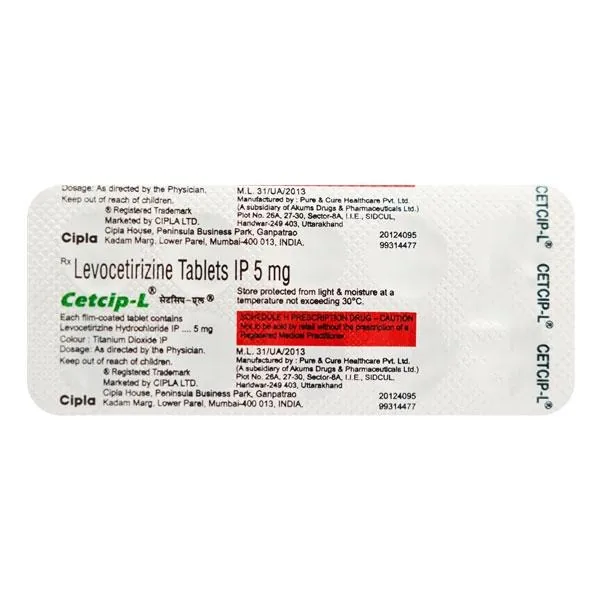
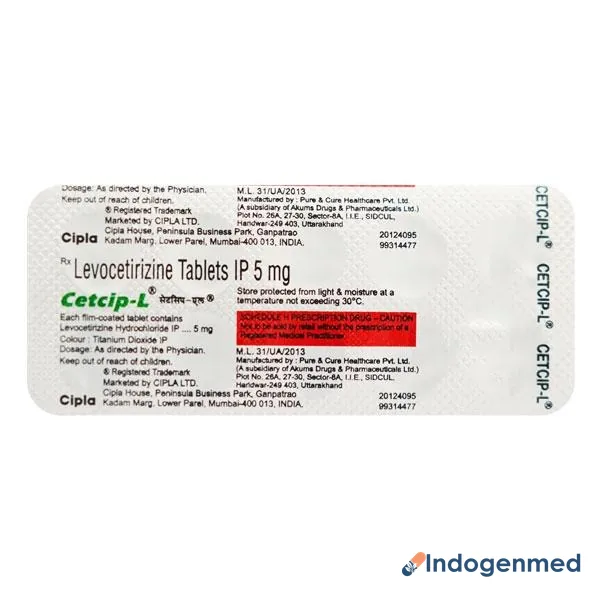
Cetcip-L 5 mg Tablets contain levocetirizine hydrochloride 5 mg per tablet. Levocetirizine is a second-generation antihistamine — specifically the R-enantiomer of cetirizine — with high affinity for peripheral H1 histamine receptors and minimal central nervous system penetration at recommended doses. It is classified as a non-sedating antihistamine, though sedation is possible at higher doses or in susceptible individuals.
Levocetirizine was developed as the pharmacologically active enantiomer of cetirizine. Because histamine H1 receptor binding activity resides predominantly in the R-enantiomer, levocetirizine achieves comparable therapeutic efficacy to cetirizine at half the dose (5 mg vs 10 mg). It has a rapid onset of action (within 1 hour), a long duration of effect allowing once-daily dosing, and a well-established safety profile across allergic rhinitis, chronic urticaria, and other histamine-mediated conditions. The brand name Cetcip-L distinguishes it as the levocetirizine (L-isomer) variant of the cetirizine family.
Mechanism of Action
Levocetirizine acts as a selective, competitive antagonist at peripheral H1 histamine receptors. It does not activate histamine receptors (it is a true receptor antagonist, not an inverse agonist in the classical sense, though it does suppress constitutive receptor activity). Its mechanism involves:
H1 Receptor Blockade
Histamine released from mast cells and basophils during allergic reactions binds to H1 receptors on vascular endothelium, smooth muscle, and sensory nerve endings, producing vasodilation, increased vascular permeability (oedema/wheal), smooth muscle contraction, and stimulation of sensory nerves (itch, sneezing). Levocetirizine competitively occupies H1 receptors, preventing histamine from binding and thereby blocking these effects. Its binding affinity for H1 receptors is approximately twice that of cetirizine.
Anti-inflammatory Properties
Beyond receptor blockade, levocetirizine has demonstrated anti-inflammatory properties in clinical studies, including:
- Reduction in ICAM-1 (intercellular adhesion molecule-1) expression on nasal epithelial cells, reducing inflammatory cell recruitment
- Inhibition of eosinophil migration into allergic tissue
- Decreased release of pro-inflammatory cytokines in allergic tissue
These effects may contribute to its efficacy in persistent allergic conditions beyond simple histamine-mediated symptoms.
CNS Penetration
Levocetirizine has relatively low CNS penetration compared to first-generation antihistamines (diphenhydramine, chlorphenamine), which freely cross the blood-brain barrier and cause sedation. The zwitterionic structure of levocetirizine at physiological pH limits brain penetration, contributing to its non-sedating profile at therapeutic doses. However, some CNS effects (drowsiness, fatigue) can occur, particularly in sensitive individuals and at higher doses.
Indications
- Allergic rhinitis — both seasonal (hay fever, pollen allergy) and perennial (house dust mite, pet dander, mould); relieves nasal symptoms including sneezing, rhinorrhoea, nasal pruritus, and nasal congestion, as well as associated ocular symptoms (itchy, watery eyes)
- Chronic spontaneous urticaria (CSU) — also known as chronic idiopathic urticaria; reduces the frequency and severity of wheals and associated itch; levocetirizine is a first-line agent for CSU
- Acute urticaria and angioedema — symptomatic relief of histamine-mediated skin reactions including acute allergic urticaria, insect bites, and drug rashes
- Atopic dermatitis (eczema) — adjunctive treatment to reduce itch and histamine-mediated components of eczematous flares
- Allergic conjunctivitis — itching and watering of the eyes associated with allergic triggers
Dosage and Administration
Adults and children ≥12 years: 5 mg (one tablet) once daily, taken in the evening. Evening dosing takes advantage of the circadian peak in histamine release during the night and reduces daytime drowsiness.
Children 6–11 years: 2.5 mg (half a 5 mg tablet) once daily in the evening. Note: paediatric liquid formulations (0.5 mg/mL oral solution) are preferred for young children requiring accurate dose measurement.
Children 2–5 years: 1.25 mg once daily — requires oral solution; the 5 mg tablet is not appropriate for this age group due to dose accuracy.
Renal impairment: Dose adjustment is required as levocetirizine is predominantly renally excreted (unchanged drug and metabolites):
- Mild (CrCl 50–80 mL/min): 5 mg once daily — no change
- Moderate (CrCl 30–50 mL/min): 5 mg every 48 hours (every other day)
- Severe (CrCl 10–30 mL/min): 5 mg every 72 hours (every 3 days)
- End-stage renal disease / dialysis (CrCl <10 mL/min): contraindicated
Hepatic impairment: No dose adjustment required for hepatic impairment alone (levocetirizine is not significantly hepatically metabolised). However, patients with both hepatic and renal impairment should follow the renal dosing guidance.
Elderly: No routine dose reduction required unless renal function is impaired. Assess renal function and apply the renal dosing schedule if applicable.
Administration: Swallow the tablet whole with water. May be taken with or without food. Consistent timing (preferably evening) improves symptom control overnight and the following morning.
Contraindications
- Hypersensitivity to levocetirizine, cetirizine, hydroxyzine, or any piperazine derivative
- End-stage renal disease (CrCl <10 mL/min) and patients undergoing haemodialysis
- Children aged <2 years with impaired renal function
Warnings and Precautions
Sedation and Psychomotor Impairment
Although levocetirizine is classified as non-sedating, drowsiness and fatigue have been reported, particularly at the start of treatment and in susceptible individuals. Patients should be cautioned about driving, operating machinery, or other activities requiring full alertness until they know how the drug affects them. The risk of sedation is increased by alcohol, CNS depressants, and in the elderly.
Renal Impairment
Levocetirizine is primarily renally eliminated. Drug accumulation in renal impairment leads to higher plasma concentrations and increased risk of adverse effects, particularly sedation. Renal function should be assessed before prescribing, and the dose interval extended according to CrCl (see Dosage section). Levocetirizine is contraindicated in end-stage renal failure.
Seizures
As with other antihistamines, levocetirizine should be used with caution in patients with a history of seizures, as antihistamines may lower the seizure threshold, particularly at higher doses.
Urinary Retention
Although levocetirizine has much less anticholinergic activity than first-generation antihistamines, caution is advised in patients with urinary retention risk factors (prostatic hypertrophy, bladder neck obstruction), particularly at higher doses.
Adverse Effects
- Very common (≥10%): Headache, somnolence/drowsiness (particularly at higher doses or in susceptible patients)
- Common (1–10%): Fatigue, dry mouth, nasopharyngitis (in clinical trials), nausea, dizziness
- Less common (0.1–1%): Abdominal pain, palpitations, visual disturbances, urinary retention (rare)
- Rare (<0.1%): Hypersensitivity reactions including angioedema, skin rash, urticaria; hepatitis; seizures (at high doses or in predisposed individuals); aggression or agitation (in children, rarely)
- Not known (frequency cannot be estimated): Suicidal ideation and behaviour have been reported with some antihistamines; causal relationship not established
Drug Interactions
CNS Depressants and Alcohol
Concurrent use of levocetirizine with CNS depressants (sedatives, anxiolytics, hypnotics, opioids, alcohol) increases sedation. Patients should be warned not to drink alcohol during treatment.
Other Antihistamines
Combining levocetirizine with other antihistamines (including topical antihistamines in large amounts) increases antihistamine side effects without meaningful additional therapeutic benefit. Avoid combination.
Renally Eliminated Drugs
Drugs that compete for renal tubular secretion (ritonavir and other antivirals) may reduce levocetirizine clearance and increase plasma concentrations. Monitor for adverse effects in patients on such combinations.
Theophylline
High-dose theophylline (400 mg/day) has been reported to reduce levocetirizine clearance by approximately 11%. This interaction is not clinically significant at standard doses but should be considered in patients on high-dose theophylline.
Storage
Store Cetcip-L 5 mg Tablets below 30°C in a dry place, protected from light and moisture. Keep in the original blister pack until use. Store out of the reach of children. Do not use after the expiry date printed on the pack.
Related Products
- Duvadilan Retards 40 mg Tablets (Isoxsuprine — peripheral vasodilator for vascular disease and tocolysis)
- Venpres 40 mg Tablets (Verapamil — calcium channel blocker for hypertension and arrhythmias)
- Rami-Race 5 mg Tablets (Ramipril — ACE inhibitor for hypertension and cardiovascular risk reduction)
- Ismo 20 mg Tablets (Isosorbide mononitrate — antianginal for stable angina and ischaemic heart disease)
References
- DailyMed. Levocetirizine dihydrochloride tablets — prescribing information. U.S. National Library of Medicine. Available at: https://dailymed.nlm.nih.gov/dailymed/
- MedlinePlus. Levocetirizine. U.S. National Library of Medicine. Available at: https://medlineplus.gov/druginfo/meds/a607056.html
- Mayo Clinic. Levocetirizine (Oral Route). Available at: https://www.mayoclinic.org/
- Zuberbier T, et al. The EAACI/GA²LEN/EDF/WAO guideline for the definition, classification, diagnosis and management of urticaria. Allergy. 2022;77(3):734–766. PMID: 35289741
- Electronic Medicines Compendium (EMC). Levocetirizine 5 mg tablets — Summary of Product Characteristics. Available at: https://www.medicines.org.uk/emc/
Reviews
There are no reviews yet.