Description
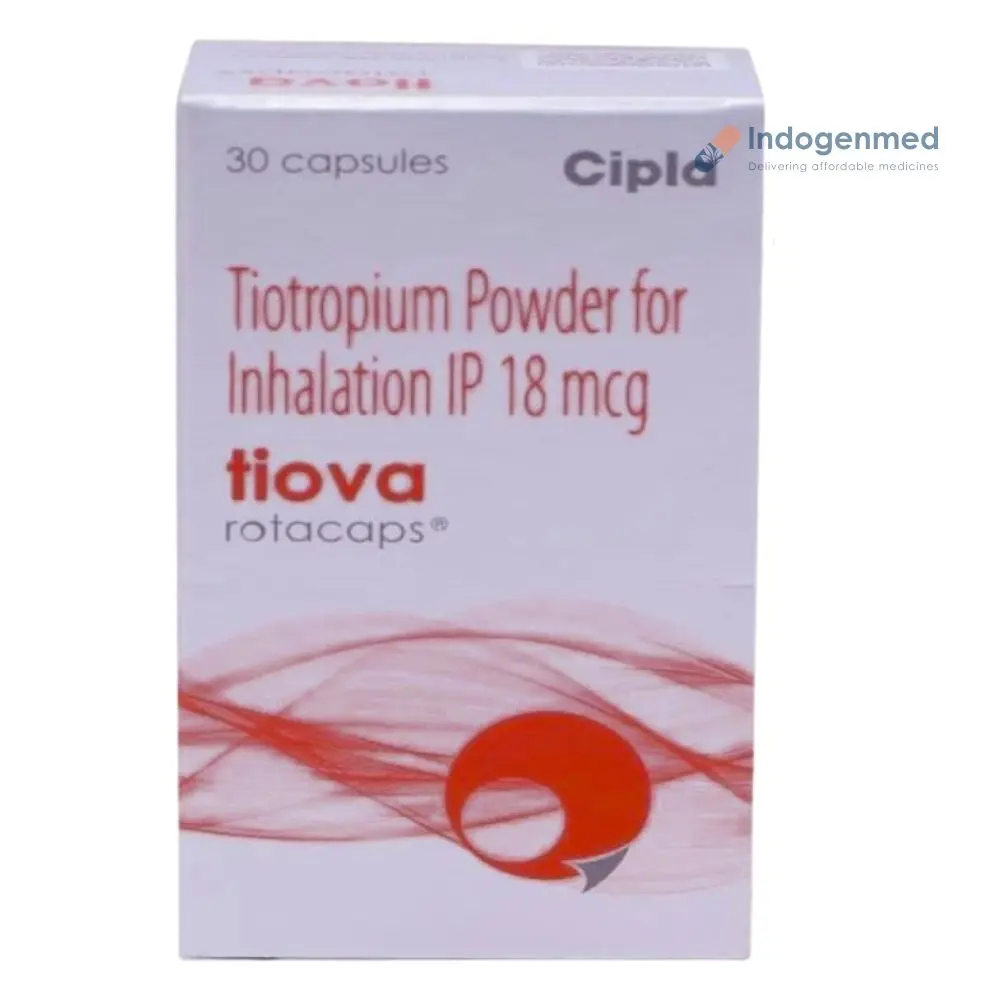
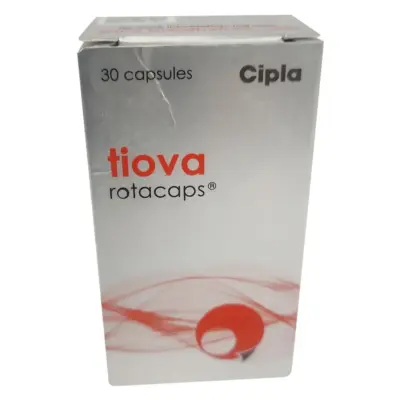
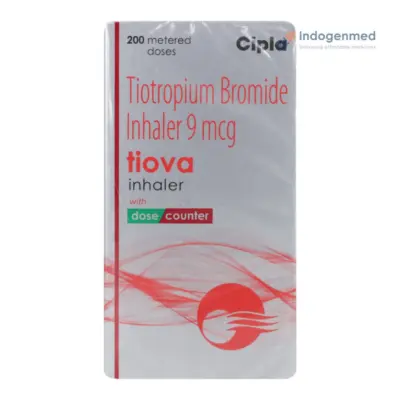
Tiova 18 MCG Multihaler 100 MDI — Tiotropium Bromide Inhaler for COPD
Tiova 18 MCG Multihaler 100 MDI is a long-acting muscarinic antagonist (LAMA) bronchodilator inhaler containing tiotropium bromide equivalent to 18 micrograms tiotropium per actuation, delivered via a metered-dose inhaler (MDI). Tiotropium is the most widely prescribed LAMA in the management of chronic obstructive pulmonary disease (COPD), and is included in every major COPD guideline — GOLD (Global Initiative for Chronic Obstructive Lung Disease), NICE, and Indian guidelines — as a cornerstone maintenance bronchodilator for all symptomatic COPD patients. Each pack contains 100 metered doses of tiotropium bromide, providing up to 100 days of once-daily dosing. By blocking muscarinic receptors in airway smooth muscle, tiotropium prevents acetylcholine-mediated bronchoconstriction, reduces dynamic hyperinflation, decreases exacerbation frequency, improves exercise tolerance, and reduces breathlessness. Tiova 18 MCG Multihaler is manufactured by Cipla Ltd, one of India’s largest pharmaceutical companies, and is marketed as a cost-effective alternative to the original HandiHaler formulation (Spiriva) with equivalent clinical outcomes when used correctly.
Composition of Tiova 18 MCG Multihaler
Each metered dose actuation delivers:
- Tiotropium bromide monohydrate equivalent to tiotropium 18 micrograms
- Propellant: HFA 134a (1,1,1,2-tetrafluoroethane)
- Excipients: anhydrous ethanol, purified water
Tiotropium bromide: Chemical name: (1α,2β,4β,5α,7β)-7-[(hydroxydi-2-thienylacetyl)oxy]-9,9-dimethyl-3-oxa-9-azoniatricyclo[3.3.1.0²,⁴]nonane bromide monohydrate. Molecular formula C₁₉H₂₂BrNO₄S₂·H₂O, molecular weight 490.4 g/mol. Tiotropium is a quaternary ammonium compound that is permanently ionised at physiological pH, conferring poor systemic absorption from the respiratory mucosa and low oral bioavailability — both contributing to its favourable safety profile with inhaled use.
Mechanism of Action
Tiotropium is a long-acting, selective muscarinic receptor antagonist (anticholinergic bronchodilator). Its pharmacological mechanism involves the following:
- Muscarinic receptor blockade: Tiotropium competitively blocks muscarinic acetylcholine receptors (M1, M2, M3) in airway smooth muscle and submucosal glands. The M3 receptors on bronchial smooth muscle and mucous glands are the primary pharmacological target — M3 stimulation by acetylcholine (released from parasympathetic postganglionic fibres) causes bronchoconstriction and mucus hypersecretion
- Kinetic selectivity for M3 over M2: Tiotropium dissociates from M3 receptors much more slowly than from M2 receptors (kinetic subtype selectivity). M2 receptors on parasympathetic nerve terminals act as autoreceptors that inhibit acetylcholine release — their blockade would increase ACh release and potentially attenuate bronchodilation. The much faster dissociation from M2 means functional M2 autoreceptor activity is preserved during tiotropium therapy, while M3-mediated bronchoconstriction remains blocked
- Smooth muscle relaxation: Blockade of M3 receptors prevents the intracellular IP₃/DAG cascade triggered by ACh binding, reducing intracellular calcium mobilisation and preventing smooth muscle contraction → sustained bronchodilation
- Reduction of mucus hypersecretion: M3 receptors on submucosal glands mediate mucus secretion. Tiotropium reduces pathological mucus hypersecretion in COPD, contributing to reduced airway obstruction independent of smooth muscle effects
- Duration of action: Due to slow M3 receptor dissociation kinetics (t½ of receptor dissociation ~35 hours in vitro), tiotropium provides bronchodilation lasting >24 hours, enabling once-daily dosing. Onset of bronchodilation is typically within 30 minutes of inhalation; peak effect at 1–3 hours
- Dynamic hyperinflation reduction: By reducing baseline airway resistance, tiotropium reduces air trapping, lung hyperinflation, and flattening of the diaphragm — which is a primary mechanism of exercise-related dyspnoea in COPD. This translates to improved exercise capacity even without large improvements in FEV₁
Pharmacokinetics
| Parameter | Value (Inhaled route) |
|---|---|
| Lung deposition (inhaled dose) | ~19% of metered dose reaches the lung (remainder deposited in oropharynx and swallowed) |
| Oral bioavailability (swallowed fraction) | <1% (due to quaternary ammonium structure and first-pass hydrolysis) |
| Systemic bioavailability (inhalation) | ~19% of inhaled dose is absorbed from the lung into systemic circulation |
| Protein binding | 72% |
| Volume of distribution | 32 L/kg (extensive tissue distribution) |
| Metabolism | Minor; CYP2D6 and CYP3A4 mediated oxidation; thienyl ring glucuronidation. Only ~25% of systemically absorbed drug is metabolised |
| Elimination half-life (terminal) | 5–6 days (once-daily inhalation at steady state) |
| Renal elimination | ~74% of systemically absorbed tiotropium excreted unchanged in urine; renal clearance 284 mL/min (exceeds GFR, indicating active tubular secretion) |
| Renal impairment | Use with caution in moderate-severe renal impairment (CrCl <50 mL/min); no specific dose adjustment recommended but monitor for side effects |
| Steady state | Achieved after 2–3 weeks of once-daily dosing; lung pharmacokinetics at steady state reflect long local tissue binding |
Uses of Tiova 18 MCG Multihaler
- COPD maintenance therapy — first-line bronchodilator: Tiova 18 MCG Multihaler is indicated for the maintenance treatment of bronchospasm in adults with COPD (chronic bronchitis, emphysema, or both). It is a recommended first-line pharmacological treatment in all GOLD groups (A, B, C, D) for symptomatic COPD patients. Regular once-daily use reduces dyspnoea, improves lung function (FEV₁), and reduces COPD exacerbation rates compared to placebo or short-acting bronchodilators alone
- Reduction of COPD exacerbations: The UPLIFT trial (N=5,993; 4-year RCT) demonstrated that tiotropium significantly reduces the risk of COPD exacerbations by approximately 14% and hospitalisations for exacerbations by approximately 14% compared to placebo. Regular use of tiotropium also reduces the need for rescue bronchodilator use
- Exercise intolerance in COPD: Tiotropium reduces dynamic hyperinflation during exercise, allowing patients to exercise longer before dyspnoea becomes limiting. Even in patients with relatively preserved FEV₁, the reduction in hyperinflation can produce substantial improvements in 6-minute walk distance and peak exercise capacity
- Combination therapy with LABA in COPD: Tiotropium is frequently combined with long-acting beta-2 agonists (LABAs — formoterol, salmeterol, indacaterol) in patients with more severe COPD or persistent symptoms on monotherapy. LAMA + LABA combination provides additive bronchodilation through complementary mechanisms and is superior to either agent alone in improving FEV₁ and reducing exacerbations in patients at high risk. Tiova 18 MCG Multihaler can be used alongside Foracort/Seretide/Budecort formulations
- Severe asthma (add-on therapy — specialist use): Tiotropium (specifically the Respimat formulation) has an indication as add-on maintenance therapy in adults with severe symptomatic asthma despite high-dose ICS/LABA treatment. While the MDI formulation is not specifically licensed for asthma, tiotropium adds bronchodilation through a mechanism complementary to beta-2 agonists and may be used off-label in selected severe asthma patients under specialist supervision
- Post-hospitalisation COPD stabilisation: Following hospital admission for acute COPD exacerbation, tiotropium has been shown to reduce rates of readmission and further exacerbations when started before or at hospital discharge, particularly in patients previously not receiving LAMA therapy
Dosage and Administration
| Indication / Patient Group | Dose | Frequency | Notes |
|---|---|---|---|
| COPD maintenance (adults) | 2 actuations (18 mcg tiotropium per actuation × 2 = 36 mcg total; some formulations deliver 18 mcg per 2 puffs depending on device — confirm label) | Once daily, same time each day | Always use with spacer; rinse mouth after use |
| Severe asthma (add-on, specialist) | As directed by specialist; typically 1–2 puffs once daily | Once daily | Under specialist supervision only |
| Elderly patients | No dose adjustment required | Once daily | Monitor for anticholinergic effects (urinary retention, constipation) |
| Renal impairment (CrCl <50 mL/min) | No dose reduction specified; use with caution | Once daily | Monitor for systemic anticholinergic effects as renal clearance is reduced |
| Hepatic impairment | No dose adjustment required | Once daily | Minor hepatic metabolism; hepatic impairment unlikely to alter exposure significantly |
MDI Inhaler technique (critical for effective lung delivery):
- Shake the inhaler well before each use
- Prime the inhaler before first use: actuate 2–3 times into the air away from the face
- Exhale fully (away from the inhaler mouthpiece) to empty your lungs
- Place the mouthpiece in your mouth and form a tight seal with your lips; do not cover the air vent
- Begin to breathe in slowly and deeply through your mouth, then press down on the canister at the start of inhalation
- Continue to breathe in slowly and deeply after actuating, then hold breath for 10 seconds (or as long as comfortable)
- Exhale slowly and rinse your mouth with water (spit it out — do not swallow) to minimise oropharyngeal deposition and reduce dry mouth/candida risk
- Use of a spacer device with MDI is strongly recommended — it reduces oropharyngeal deposition, reduces coordination requirements, and improves lung delivery by 20–30%
- Clean the mouthpiece weekly with a dry cloth
Side Effects
Common (affecting 1–10% of patients):
- Dry mouth: The most commonly reported side effect of tiotropium, occurring in up to 10–16% of patients in clinical trials. It is usually mild and decreases with continued use. Sipping water throughout the day, using sugar-free sweets or chewing gum, and good oral hygiene reduce its impact. Severe dry mouth may impair dental hygiene — regular dental review is recommended for patients on tiotropium
- Constipation: Related to reduction of gastrointestinal muscarinic activity; usually mild; adequate hydration and dietary fibre are helpful
- Urinary tract infections: Tiotropium reduces M3-mediated detrusor muscle activity, potentially causing urinary hesitancy or incomplete bladder emptying, predisposing to UTI — particularly in older male patients with underlying benign prostatic hyperplasia
- Sinusitis, upper respiratory tract infections: Increase in upper respiratory symptoms reported in some trials, though this may reflect the underlying COPD population’s susceptibility
Uncommon (affecting 0.1–1% of patients):
- Urinary retention: Can precipitate acute urinary retention in men with prostatic hypertrophy or bladder neck obstruction. Patients with these conditions should be monitored carefully; discontinue if urinary retention occurs
- Tachycardia and palpitations: Paradoxical vagolytic (heart rate-increasing) effect from systemic anticholinergic absorption, more likely at higher effective doses or in patients with impaired renal clearance
- Bronchospasm (paradoxical): Rare — inhaled anticholinergics can occasionally cause acute bronchospasm. If this occurs, discontinue immediately and use a rescue short-acting bronchodilator
- Blurred vision / narrow-angle glaucoma exacerbation: If MDI spray contacts the eyes, it can precipitate or worsen narrow-angle glaucoma through pupillary dilation. Patients with known narrow-angle glaucoma must be warned not to allow aerosol to enter the eyes; use a spacer to reduce aerosol dispersion
Rare but serious:
- Hypersensitivity reactions: Anaphylaxis, angioedema, urticaria, and skin rash have been reported; discontinue if hypersensitivity reaction occurs
- Atrial fibrillation: Some studies and post-marketing reports link tiotropium to small increases in atrial fibrillation risk, particularly in patients with underlying cardiovascular disease. Monitoring is warranted in susceptible patients
Precautions and Warnings
- Not for acute bronchospasm: Tiotropium is a maintenance bronchodilator and is NOT indicated for relief of acute bronchospasm or acute dyspnoea. For acute episodes, a short-acting bronchodilator (salbutamol/albuterol, ipratropium MDI) should be used as rescue medication. Never increase the tiotropium dose in response to worsening symptoms — seek medical advice
- Narrow-angle glaucoma: Tiotropium must be used with caution in patients with narrow-angle glaucoma (closed-angle glaucoma). Systemic absorption can dilate the pupil and trigger an acute glaucoma attack. If eye pain, blurred vision, or halos develop after initiating tiotropium, an immediate ophthalmology review is essential
- Urinary retention / prostatic hypertrophy: Use with caution in men with benign prostatic hyperplasia (BPH) or bladder neck obstruction. Anticholinergic effects can precipitate acute urinary retention — a urological emergency requiring catheterisation. Consider benefits vs risks and monitor urinary symptoms regularly
- Renal impairment: Tiotropium is largely renally cleared. In patients with moderate-to-severe renal impairment (CrCl <50 mL/min), systemic drug exposure is increased, and anticholinergic side effects (dry mouth, constipation, urinary retention) are more likely. Monitor carefully in this population
- Cardiovascular disease: Although tiotropium is generally well tolerated in COPD patients with stable cardiovascular disease, use with caution in patients with recent myocardial infarction (<6 months), unstable angina, or significant cardiac arrhythmias (particularly those requiring antiarrhythmic drugs). The UPLIFT trial showed no increase in cardiovascular mortality with tiotropium over 4 years; however, post-marketing data suggest a small increase in atrial fibrillation rates in susceptible patients
- Hypersensitivity to atropine / anticholinergics: Patients with known allergy to atropine or other anticholinergics should use tiotropium only under careful supervision, as cross-reactivity is possible
- Pregnancy and breastfeeding: No adequate human data are available. Animal reproductive toxicity studies did not reveal teratogenicity at clinical doses. Tiotropium should only be used in pregnancy if the potential benefit outweighs the risk. It is unknown whether tiotropium is excreted in human breast milk; not recommended in breastfeeding without specialist guidance
Drug Interactions
| Drug / Class | Interaction / Mechanism | Clinical Action Required |
|---|---|---|
| Other anticholinergic drugs (ipratropium, oxybutynin, tricyclic antidepressants, antihistamines) | Additive anticholinergic effects (dry mouth, urinary retention, constipation, tachycardia, confusion) when tiotropium is combined with other drugs with antimuscarinic activity | Avoid concurrent use with other inhaled anticholinergics (e.g., ipratropium). Use with caution with systemic anticholinergics; monitor for additive side effects |
| Long-acting beta-2 agonists (LABAs — formoterol, salmeterol, indacaterol) | Additive and complementary bronchodilator effect via different mechanisms (LAMA + LABA); no pharmacokinetic interaction | Beneficial combination in COPD; no dose adjustment required; standard GOLD guideline recommendation |
| CYP2D6 / CYP3A4 inhibitors (ketoconazole, clarithromycin, ritonavir) | May reduce tiotropium metabolism, potentially increasing systemic exposure; clinical significance is minimal given low systemic bioavailability of inhaled tiotropium | No dose adjustment required; monitor for anticholinergic side effects if strong inhibitors are co-prescribed |
| Drugs causing tachycardia (beta-agonists, methylxanthines, theophylline) | Tiotropium’s vagolytic effect (heart rate increase) may be additive with other tachycardic agents | Monitor heart rate in patients on combination therapy, particularly those with underlying cardiac disease |
Contraindications
Tiova 18 MCG Multihaler must NOT be used in:
- Patients with known hypersensitivity to tiotropium bromide, ipratropium, atropine, or any anticholinergic drug, or to any excipient of the formulation (including HFA propellant)
- Patients with hypersensitivity to ipratropium (structural analogue; cross-reactivity possible)
- Use as rescue therapy for acute bronchospasm — it is a maintenance-only medication; short-acting bronchodilators are required for acute relief
Storage Instructions
- Store below 25°C; protect from frost and direct sunlight
- Do not puncture, break, or burn the pressurised canister even when empty
- The MDI canister contains pressurised HFA propellant — do not expose to temperatures above 50°C (car gloveboxes, windowsills in summer)
- Keep the mouthpiece cap on when not in use to prevent foreign material entering the inhaler
- Keep out of sight and reach of children
- Do not use after the expiry date; check dose counter if present to track remaining doses
- The inhaler contains 100 metered doses; each day one dose (once-daily), so the inhaler provides approximately 100 days of treatment
Related Products
The following medicines on IndoGenMed are frequently prescribed alongside Tiova 18 MCG Multihaler or in the management of COPD and obstructive airway diseases:
- Foracort 200 Rotacaps (Budesonide 200 mcg + Formoterol 6 mcg) — ICS/LABA combination; prescribed alongside tiotropium (triple therapy: LAMA + LABA + ICS) in patients with severe COPD, frequent exacerbations, or eosinophilic inflammation
- Montair Plus Tablet (Montelukast + Levocetirizine) — leukotriene receptor antagonist/antihistamine combination; used in patients with concurrent allergic rhinitis and obstructive airway disease; relevant in patients with asthma-COPD overlap
- Levolin 1 Tablet (Levosalbutamol 1 mg) — short-acting beta-2 agonist rescue tablet; relevant for COPD patients who require additional bronchodilation relief and cannot use salbutamol inhalers effectively
- Budesal 0.5 mg Respules (Budesonide 0.5 mg/2 mL) — inhaled corticosteroid respule; used in conjunction with nebulised bronchodilators in COPD exacerbations and in patients needing nebulised ICS maintenance
- Taxim O DT 100 Tablet (Cefixime 100 mg) — third-generation oral cephalosporin antibiotic; used for bacterial exacerbations of chronic bronchitis in COPD patients where Haemophilus influenzae or Moraxella catarrhalis is suspected
References
- DailyMed (FDA). Spiriva HandiHaler (tiotropium bromide) — Full Prescribing Information. Available at: https://dailymed.nlm.nih.gov/dailymed/search.cfm?labeltype=all&query=tiotropium
- MedlinePlus (U.S. National Library of Medicine). Tiotropium Oral Inhalation. Available at: https://medlineplus.gov/druginfo/meds/a604018.html
- Tashkin DP, Celli B, Senn S, et al. A 4-year trial of tiotropium in chronic obstructive pulmonary disease. N Engl J Med. 2008;359(15):1543–1554. PubMed PMID: 18836213
- Global Initiative for Chronic Obstructive Lung Disease (GOLD). Global Strategy for the Diagnosis, Management, and Prevention of COPD 2024. Available at: https://goldcopd.org/2024-gold-report/
- Casaburi R, Mahler DA, Jones PW, et al. A long-term evaluation of once-daily inhaled tiotropium in chronic obstructive pulmonary disease. Eur Respir J. 2002;19(2):217–224. PubMed PMID: 11871363
- Mayo Clinic. Tiotropium (Inhalation Route) — Description and Brand Names, Before Using, Proper Use, Precautions, Side Effects. Available at: https://www.mayoclinic.org/drugs-supplements/tiotropium-inhalation-route/description/drg-20068289
- Barr RG, Bourbeau J, Camargo CA, Ram FS. Tiotropium for stable chronic obstructive pulmonary disease. Cochrane Database Syst Rev. 2005;(2):CD002876. PubMed PMID: 15846637

Reviews
There are no reviews yet.