Description
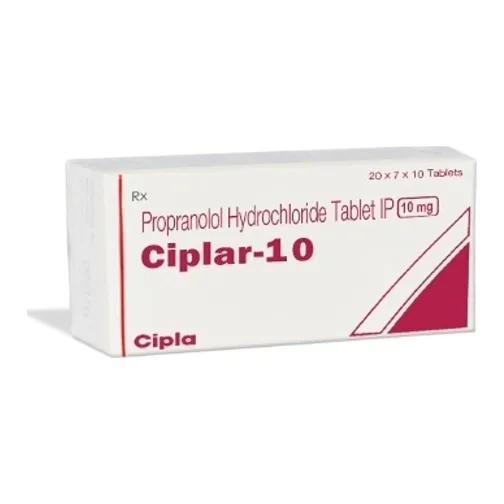
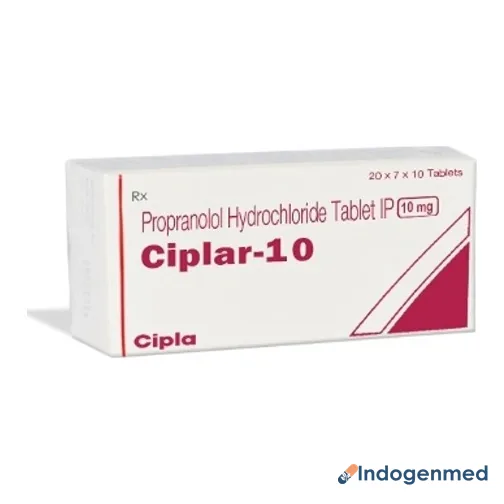
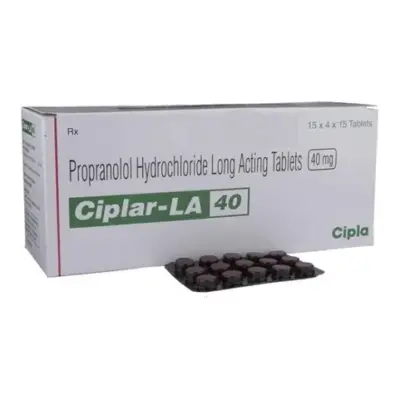
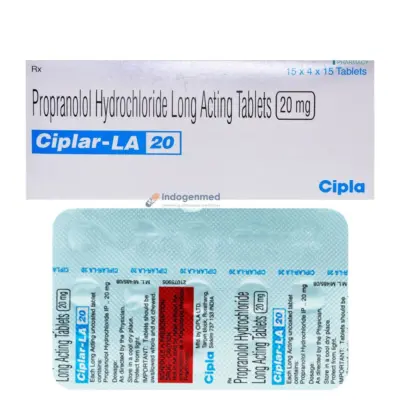
What Is Ciplar 10 mg Tablets?
Ciplar 10 mg Tablets contain propranolol hydrochloride 10 mg per tablet. Propranolol is a non-selective beta-adrenoceptor blocker (beta-blocker) — the first clinically successful beta-blocker, introduced in the 1960s and awarded the Nobel Prize in Medicine in 1988 for its discovery by Sir James Black. It blocks both beta-1 adrenoceptors (cardiac) and beta-2 adrenoceptors (vascular and bronchial) with equal affinity, distinguishing it from cardioselective agents such as atenolol and bisoprolol which prefer beta-1 receptors.
Propranolol has an exceptionally broad range of indications spanning cardiovascular disease, neurological conditions, endocrine disorders, and anxiety. It remains in routine use for hypertension, angina, arrhythmias, hyperthyroidism, essential tremor, migraine prophylaxis, and situational anxiety (performance anxiety), despite the development of newer, more selective beta-blockers for many of its cardiovascular uses. The 10 mg tablet allows low-dose initiation and careful titration, particularly important in conditions such as heart failure where beta-blockade must be introduced cautiously.
Mechanism of Action
Propranolol competitively antagonises catecholamines (adrenaline/epinephrine and noradrenaline/norepinephrine) at beta-adrenoceptors. It has no intrinsic sympathomimetic activity (ISA) — it is a pure antagonist, not a partial agonist. Its lipophilicity allows significant CNS penetration, contributing to its effects on migraine, anxiety, and essential tremor.
Cardiac Effects (Beta-1 Blockade)
- Negative chronotropy: Reduces resting and exercise-induced heart rate by blocking SA node sympathetic drive
- Negative dromotropy: Slows AV nodal conduction, prolongs PR interval — antiarrhythmic effect
- Negative inotropy: Reduces myocardial contractility and cardiac output — reduces oxygen demand, useful in angina and hypertrophic obstructive cardiomyopathy (HOCM)
- Antiarrhythmic (Class II): Via SA and AV node effects; also has membrane-stabilising (quinidine-like) properties at high doses
Vascular and Other Effects (Beta-2 Blockade)
- Peripheral vasoconstriction: Blocking beta-2–mediated vasodilation can initially raise peripheral vascular resistance; blood pressure reduction is achieved primarily through reduced cardiac output and central sympatholysis
- Bronchospasm risk: Beta-2 blockade in airways impairs bronchodilation — may precipitate bronchospasm in susceptible patients (asthma, COPD)
- Reduced renin release: Blocks beta-1–mediated renin secretion from the juxtaglomerular cells → reduced angiotensin II → antihypertensive effect
- CNS effects: High lipophilicity allows brain penetration → reduces central sympathetic outflow → anxiolytic, anti-tremor, antimigraine effects
Indications
- Hypertension — reduces blood pressure through decreased cardiac output and renin-angiotensin suppression; often used in combination with other agents
- Angina pectoris — reduces myocardial oxygen demand by lowering heart rate, contractility, and blood pressure; reduces anginal frequency and improves exercise tolerance
- Arrhythmias — supraventricular tachycardias (SVT), atrial fibrillation and flutter rate control, ventricular arrhythmias (particularly catecholamine-induced); Class II antiarrhythmic
- Post-myocardial infarction — reduces reinfarction risk and all-cause mortality when started within days of MI and continued long-term
- Heart failure with reduced ejection fraction (HFrEF) — when used at low starting doses (10 mg twice daily) with careful up-titration in clinically stable patients; reduces mortality and hospitalisations
- Hyperthyroidism — controls symptoms of sympathetic overactivation (tachycardia, tremor, sweating) while awaiting definitive treatment; also inhibits peripheral conversion of T4 to the active T3 hormone
- Essential tremor — reduces amplitude of action tremor of the hands; first-line pharmacotherapy for essential tremor
- Migraine prophylaxis — reduces migraine frequency and severity with regular use; mechanism unclear but may involve CNS effects and vasoregulation
- Anxiety and performance anxiety (situational use) — controls somatic symptoms of anxiety (palpitations, tremor, sweating) without sedation; widely used for situational anxiety (public speaking, examinations)
- Phaeochromocytoma — given alongside an alpha-blocker (never alone) to control tachycardia during pre-operative preparation
- Portal hypertension and oesophageal varices prophylaxis — reduces portal pressure by decreasing cardiac output and causing splanchnic vasoconstriction; used to prevent first bleed and re-bleed from oesophageal varices in cirrhosis
Dosage and Administration
Hypertension: 40–80 mg twice daily initially; usual maintenance dose 160–320 mg/day in divided doses.
Angina: 40–80 mg two to three times daily; most patients require 120–240 mg/day. Do not stop abruptly — taper over 1–2 weeks to avoid rebound angina.
Arrhythmias (oral): 10–40 mg three to four times daily; titrate to response and heart rate.
Post-MI: 40 mg four times daily for 2–3 days, then 80 mg twice daily long-term.
Heart failure (HFrEF): Start at 10 mg twice daily in clinically stable, euvolaemic patients; double the dose every 2 weeks as tolerated. Close monitoring for fluid retention, hypotension, and bradycardia is required throughout titration.
Hyperthyroidism: 10–40 mg three to four times daily to control symptoms; titrate to heart rate response.
Essential tremor: 40 mg twice daily initially; usual effective range 80–160 mg/day.
Migraine prophylaxis: 40–80 mg twice or three times daily; allow 4–6 weeks for full prophylactic effect.
Performance anxiety (situational): 40 mg as a single dose 1 hour before the stressful event; a test dose should be taken beforehand in a low-risk situation. Not for regular use as an anxiolytic.
Renal impairment: No dose adjustment required for mild-moderate renal impairment; propranolol is primarily hepatically metabolised. Use with caution in severe renal impairment due to potential metabolite accumulation.
Hepatic impairment: Propranolol undergoes extensive first-pass hepatic metabolism (oral bioavailability approximately 26%). In significant hepatic impairment, bioavailability increases substantially — start at the lowest dose (10 mg once or twice daily) and titrate very carefully.
Elderly: More susceptible to bradycardia, hypotension, and fatigue. Start at 10 mg twice daily and titrate slowly.
Important: Do not stop propranolol suddenly in patients with ischaemic heart disease or hypertension — abrupt withdrawal can precipitate rebound angina, myocardial infarction, or severe hypertension. Taper over at least 1–2 weeks.
Contraindications
- Asthma or severe COPD with significant reversibility — beta-2 blockade can precipitate fatal bronchospasm; this is an absolute contraindication
- Severe bradycardia (resting heart rate <50 bpm) or sick sinus syndrome without a pacemaker
- Second- or third-degree AV block without a pacemaker
- Decompensated heart failure (acute pulmonary oedema, cardiogenic shock) — propranolol must not be started until heart failure is clinically stable
- Cardiogenic shock
- Raynaud’s phenomenon or severe peripheral arterial disease — beta-2 blockade worsens peripheral ischaemia
- Phaeochromocytoma without concurrent alpha-blockade — using propranolol alone causes paradoxical hypertension (unopposed alpha stimulation)
- Hypersensitivity to propranolol or any excipient
Warnings and Precautions
Respiratory Disease
Propranolol is contraindicated in asthma. In patients with mild, stable COPD without reversibility, propranolol can be used with great caution if no alternative exists, but respiratory function must be carefully monitored. Cardioselective beta-blockers (bisoprolol, metoprolol) are strongly preferred in patients with any significant obstructive airway disease.
Abrupt Withdrawal
Abrupt discontinuation in patients with ischaemic heart disease or hypertension can precipitate rebound tachycardia, angina, myocardial infarction, or severe hypertension. Always taper the dose gradually over 1–2 weeks before stopping. Instruct patients never to run out of propranolol without seeking a prescription.
Diabetes and Hypoglycaemia
Propranolol can mask the tachycardia associated with hypoglycaemia (a warning symptom in diabetic patients on insulin or sulphonylureas) while allowing sweating to persist. It also impairs glycogenolysis, prolonging hypoglycaemia in insulin-dependent diabetics. Use with caution in insulin-dependent diabetes; cardioselective beta-blockers are preferred if a beta-blocker is needed.
Heart Failure — Cautious Initiation
When used for HFrEF, propranolol must be started at very low doses (10 mg twice daily) only in clinically stable, euvolaemic patients and titrated very slowly. Beta-blockers worsen acute decompensated heart failure and must never be started or continued through an acute decompensation episode.
Adverse Effects
- Very common (≥10%): Bradycardia, fatigue and reduced exercise tolerance
- Common (1–10%): Cold extremities (peripheral vasoconstriction), dizziness, hypotension, sleep disturbance (vivid dreams, insomnia — due to CNS penetration), nausea, constipation, impotence/sexual dysfunction
- Less common (0.1–1%): Bronchospasm (even in apparently non-asthmatic patients), Raynaud’s phenomenon, AV block, worsening heart failure, depression, hallucinations
- Rare (<0.1%): Severe hypoglycaemia, agranulocytosis, thrombocytopenia, skin reactions (psoriasis exacerbation, rash), alopecia
Drug Interactions
Calcium Channel Blockers
Verapamil and diltiazem combined with propranolol greatly increase the risk of bradycardia, AV block, and hypotension. Intravenous verapamil with propranolol is potentially fatal and absolutely contraindicated. Dihydropyridine CCBs (amlodipine, nifedipine) can be combined with propranolol with caution; monitor for hypotension.
Antiarrhythmics
Combining propranolol with other antiarrhythmics (amiodarone, digoxin, Class Ia agents) increases the risk of bradycardia and AV block. Amiodarone inhibits CYP2D6, increasing propranolol plasma levels significantly.
CYP2D6 Inhibitors
Propranolol is primarily metabolised by CYP2D6. Potent CYP2D6 inhibitors (fluoxetine, paroxetine, bupropion) can increase propranolol levels 2–5-fold, increasing the risk of bradycardia, hypotension, and fatigue. Monitor heart rate and blood pressure.
NSAIDs
Non-steroidal anti-inflammatory drugs can attenuate the antihypertensive effect of propranolol through prostaglandin-mediated sodium retention and renal vasoconstriction.
Insulin and Oral Hypoglycaemics
Propranolol can mask hypoglycaemia symptoms and prolong insulin-induced hypoglycaemia. Adjust monitoring frequency in patients with insulin-dependent diabetes.
Ergotamine
Combining propranolol with ergotamine (used for migraine) can enhance peripheral vasoconstriction, risking ischaemia. Avoid this combination.
Storage
Store Ciplar 10 mg Tablets below 25°C in a dry place, away from direct sunlight and moisture. Keep in original packaging. Store out of the reach of children. Do not use after the expiry date printed on the pack.
Related Products
- Venpres 40 mg Tablets (Verapamil — calcium channel blocker for hypertension, angina, and SVT)
- Rami-Race 5 mg Tablets (Ramipril — ACE inhibitor for hypertension, heart failure, and CV risk reduction)
- Ramipres 5 mg Tablets (Ramipril — ACE inhibitor for hypertension and post-MI protection)
- Ismo 20 mg Tablets (Isosorbide mononitrate — antianginal for stable angina)
References
- DailyMed. Propranolol hydrochloride tablets — prescribing information. U.S. National Library of Medicine. Available at: https://dailymed.nlm.nih.gov/dailymed/
- MedlinePlus. Propranolol. U.S. National Library of Medicine. Available at: https://medlineplus.gov/druginfo/meds/a682607.html
- Mayo Clinic. Propranolol (Oral Route). Available at: https://www.mayoclinic.org/
- Frishman WH. Beta-adrenergic blockers: a 50-year historical perspective. Am J Ther. 2008;15(6):565–76. PMID: 19127139
- Electronic Medicines Compendium (EMC). Propranolol 10 mg tablets — Summary of Product Characteristics. Available at: https://www.medicines.org.uk/emc/
Reviews
There are no reviews yet.