Description
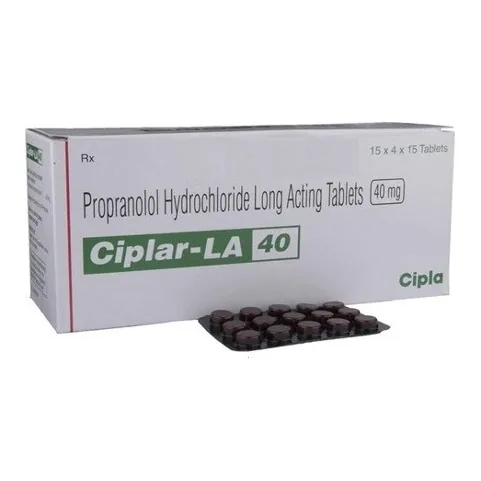
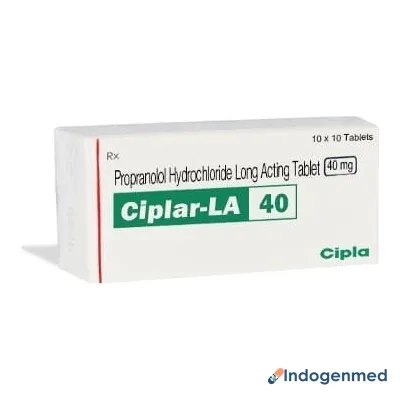
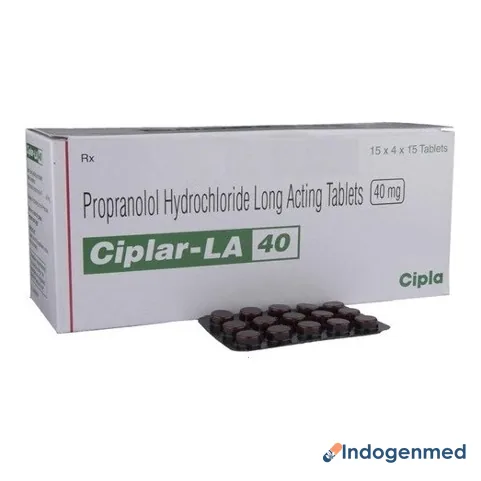
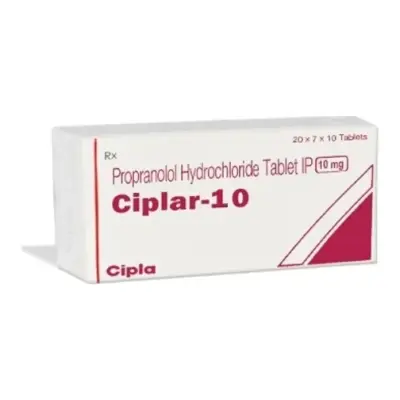
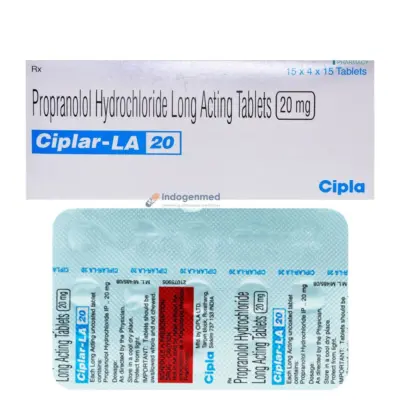
Ciplar LA 40 Mg Tablets
Ciplar LA 40 Mg Tablets contain propranolol hydrochloride 40 mg in a long-acting (LA) formulation. Propranolol is a non-selective beta-adrenergic receptor blocker used in the management of hypertension, angina, cardiac arrhythmias, heart failure, essential tremor, migraine prophylaxis, anxiety (palpitations and tremor), hyperthyroidism (symptom control), and portal hypertension. The long-acting formulation allows once-daily dosing, maintaining stable plasma levels across 24 hours.
Composition
| Active Ingredient | Strength |
|---|---|
| Propranolol Hydrochloride (Long Acting) | 40 mg per tablet |
About the Manufacturer
Ciplar LA is manufactured by Cipla Limited, one of India’s leading pharmaceutical companies headquartered in Mumbai, with a broad cardiovascular and specialty medicines portfolio. Cipla exports to regulated markets in Europe, the United States, and beyond.
Mechanism of Action
Propranolol is a non-selective competitive antagonist of beta-1 and beta-2 adrenergic receptors. By blocking beta-1 receptors in the heart, it reduces heart rate, myocardial contractility, blood pressure, and cardiac output. Beta-2 blockade causes bronchoconstriction and inhibits peripheral vasodilation. Propranolol also crosses the blood-brain barrier, contributing to its efficacy in migraine prophylaxis and anxiety. In portal hypertension, propranolol reduces portal blood flow by reducing cardiac output and causing splanchnic vasoconstriction.
Indications
- Hypertension
- Angina pectoris
- Cardiac arrhythmias (supraventricular tachycardias, atrial fibrillation rate control)
- Prophylaxis of migraine headaches
- Essential tremor
- Situational anxiety (palpitations, tremor — e.g. performance anxiety)
- Adjunct in management of hyperthyroidism / thyrotoxicosis (symptom control)
- Phaeochromocytoma (pre-operative, with alpha-blocker cover)
- Portal hypertension (prevention of variceal bleeding)
Dosage & Administration
- Swallow tablets whole; do not crush, chew, or split the long-acting capsule/tablet
- Can be taken with or without food; take at the same time each day
- Hypertension / Angina: 40–80 mg once daily (LA); may be increased up to 160 mg daily
- Migraine prophylaxis: 40–80 mg once daily (LA); up to 160 mg if needed
- Essential tremor: 40 mg twice daily (LA); may increase as needed
- Doses are individually titrated; always follow the prescribing physician’s instructions
- Never stop abruptly; taper gradually over 1–2 weeks
Special Populations
- Severe hepatic impairment: Propranolol is extensively metabolised by the liver; dose reduction required
- Renal impairment: No major dose adjustment generally required; monitor
- Elderly: May be more susceptible to bradycardia, hypotension, and heart block; start at lower doses
- Children: Used under specialist supervision for specific indications (e.g. arrhythmias, portal hypertension)
- Pregnancy: May be used when benefit outweighs risk; monitor neonates for bradycardia, hypoglycaemia, and respiratory depression
Precautions
- Contraindicated in bronchospastic disease (asthma) due to non-selective beta-2 blockade; use with caution in COPD
- Never stop abruptly in patients with ischaemic heart disease (risk of rebound angina and MI)
- May mask tachycardia of hypoglycaemia in diabetic patients; use with care
- Use with caution in patients with Raynaud’s phenomenon or peripheral vascular disease
- Patients with psoriasis: beta-blockers may exacerbate the condition
- Monitor heart rate and blood pressure during dose titration
Contraindications
- Hypersensitivity to propranolol or any excipient
- Asthma or severe reactive airways disease
- Cardiogenic shock, decompensated heart failure
- Symptomatic bradycardia (heart rate <45–50 bpm)
- Second- or third-degree AV block (without pacemaker)
- Sick sinus syndrome
- Severe hypotension
- Phaeochromocytoma (unless given with an alpha-blocker)
- Prinzmetal’s angina (risk of coronary vasospasm)
Side Effects
- Very common: Fatigue, bradycardia
- Common: Cold extremities, dizziness, sleep disturbances, nightmares, nausea
- Less common: Depression, impotence, Raynaud’s phenomenon
- Rare: Bronchospasm, AV block, heart failure exacerbation, hypoglycaemia in diabetics, dry eyes, skin rash, alopecia
Drug Interactions
- Verapamil (intravenous): Combined with propranolol may cause severe bradycardia and hypotension; avoid IV combination
- Antiarrhythmics (amiodarone, digoxin): Additive risk of bradycardia and AV block
- Antihypertensives and diuretics: Additive blood-pressure lowering; monitor closely
- NSAIDs: May reduce antihypertensive efficacy
- Insulin and oral hypoglycaemics: Beta-blockers may mask tachycardia of hypoglycaemia; monitor blood glucose
- Warfarin: Some interaction possible; monitor INR
- Rifampicin, smoking: May reduce propranolol plasma levels via CYP1A2 induction
Storage
Store below 30°C in a dry place, protected from light and moisture. Keep out of reach of children. Do not use after the expiry date printed on the pack.
Related Products
- Metolar XR 50 Mg Tablets – cardioselective beta-blocker (metoprolol) for hypertension
- Corbis 5 Mg Tablets – bisoprolol for hypertension and heart failure
- Calaptin 80 Mg Tablets – verapamil calcium channel blocker for arrhythmias
Frequently Asked Questions
- What is Ciplar LA 40 Mg used for?
- Ciplar LA 40 Mg is a long-acting propranolol tablet used for a wide range of conditions including high blood pressure, angina, heart rhythm problems, migraine prevention, essential tremor, and anxiety symptoms such as palpitations and shaking. It is also used in thyroid overactivity to control symptoms while definitive treatment is awaited.
- What does LA stand for in Ciplar LA?
- LA stands for Long-Acting. The tablet is specially formulated to release propranolol slowly over 24 hours, allowing once-daily dosing instead of the 2–4 times daily dosing required with standard propranolol tablets.
- Can I take Ciplar LA if I have asthma?
- No. Propranolol is a non-selective beta-blocker that blocks beta-2 receptors in the lungs as well as beta-1 receptors in the heart. This can trigger severe bronchospasm in people with asthma or significant reactive airway disease and can be life-threatening. If you have asthma, a cardioselective beta-blocker (such as metoprolol or bisoprolol) should be discussed with your doctor as an alternative.
- Can propranolol help with performance anxiety?
- Yes. Propranolol is widely used to reduce the physical symptoms of anxiety such as palpitations, rapid heartbeat, trembling, and sweating — symptoms commonly experienced during presentations, performances, or examinations. It is usually taken 30–60 minutes before the stressful event as a low dose of immediate-release propranolol (not the LA formulation) under medical guidance.
- What happens if I stop Ciplar LA suddenly?
- Stopping Ciplar LA abruptly — particularly in patients with angina or ischaemic heart disease — can cause a rebound effect: worsening chest pain, irregular heartbeat, and in rare cases a heart attack. Always taper the dose gradually over at least 1–2 weeks under medical supervision.
References
- NHS – Propranolol
- MedlinePlus – Propranolol
- FDA – Propranolol Hydrochloride Prescribing Information
- EMA – Propranolol-Containing Medicinal Products Assessment
Disclaimer: This page is for informational purposes only and does not constitute medical advice. Ciplar LA 40 Mg Tablets must be prescribed by a qualified healthcare professional. Never stop beta-blocker treatment without medical guidance; abrupt withdrawal can cause serious cardiovascular events.

Reviews
There are no reviews yet.