Description
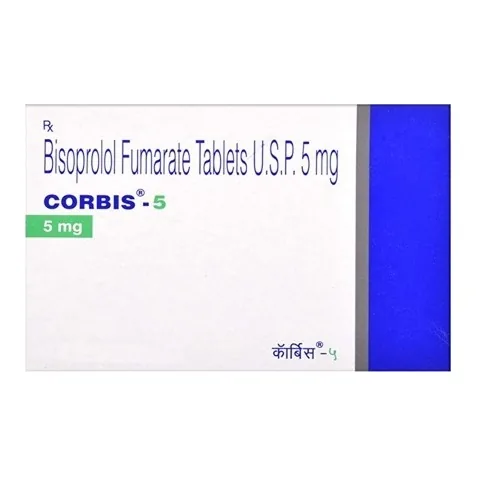
Corbis 5 Mg Tablets
Corbis 5 Mg Tablets contain bisoprolol fumarate 5 mg, a highly cardioselective beta-1 adrenoceptor blocker used in the management of heart failure, hypertension, and stable angina. Bisoprolol’s high selectivity for the beta-1 receptor means it has minimal effects on beta-2 receptors in the lungs and blood vessels, making it better tolerated in patients with mild airway disease compared with non-selective beta-blockers. Clinical trials (CIBIS-II) have demonstrated that bisoprolol reduces all-cause mortality, sudden cardiac death, and hospitalisation in patients with heart failure with reduced ejection fraction.
Composition
| Active Ingredient | Strength |
|---|---|
| Bisoprolol Fumarate | 5 mg per tablet |
About the Manufacturer
Corbis is manufactured by Sun Pharmaceutical Industries Limited, one of the world’s leading specialty generic pharmaceutical companies, headquartered in Mumbai, India. Sun Pharma has an extensive cardiovascular medicines portfolio and distributes to over 100 countries worldwide.
Mechanism of Action
Bisoprolol is a highly cardioselective competitive antagonist at the beta-1 adrenoceptor with no intrinsic sympathomimetic activity and no membrane-stabilising activity. By blocking cardiac beta-1 receptors, bisoprolol reduces sinus node automaticity (lowering heart rate), slows AV nodal conduction, and reduces myocardial contractility, thereby decreasing cardiac output and myocardial oxygen demand. In heart failure, prolonged beta-blockade reduces neurohormonal activation, reverses adverse cardiac remodelling, and improves left ventricular function over time. Bisoprolol has an approximate 1:75 beta-1/beta-2 selectivity ratio, the highest cardioselectivity of routinely used beta-blockers.
Indications
- Stable chronic heart failure with reduced ejection fraction (HFrEF, EF ≤35%) — in combination with ACE inhibitor/ARB and diuretics
- Hypertension — as monotherapy or in combination
- Stable angina pectoris
Dosage & Administration
- Swallow tablets whole (or half-tablet if scored) with water, with or without food
- Take once daily in the morning
- Heart failure initiation: Start at 1.25 mg once daily for 1 week; if tolerated, increase to 2.5 mg for 1 week, then 3.75 mg for 1 week, then 5 mg for 4 weeks, then 7.5 mg for 4 weeks, then target dose of 10 mg once daily
- Hypertension / Stable angina: 5–10 mg once daily; some patients may require up to 20 mg once daily
- Never stop abruptly — taper over at least 1–2 weeks
Special Populations
- Severe renal impairment (CrCl <20 mL/min) or severe hepatic impairment: Maximum 10 mg once daily; use with caution
- Elderly: Dose reduction not routinely needed; monitor for bradycardia and hypotension
- Diabetes: Cardioselective beta-blockers may still blunt some signs of hypoglycaemia (tachycardia); sweating may be preserved; monitor blood glucose
- Pregnancy: Beta-blockers may cause foetal bradycardia, growth retardation, and neonatal hypoglycaemia; use only if benefit outweighs risk
- Respiratory disease: Bisoprolol should be used with caution in patients with mild obstructive airway disease; it is contraindicated in bronchospastic disease and severe COPD
Precautions
- Bradycardia: initiate at low dose and titrate slowly; withhold if resting heart rate is below 60 bpm (heart failure) or 55 bpm (angina) before next dose increase
- Hypotension: common during initiation and up-titration in heart failure; ensure patients are euvolemic and not over-diuresed
- Respiratory: despite high cardioselectivity, bisoprolol can cause bronchoconstriction in susceptible patients; contraindicated in bronchospastic disease
- Anaesthesia: inform the anaesthetist before surgery; discuss whether to continue or taper perioperatively
- Phaeochromocytoma: use only with concurrent alpha-blockade to prevent paradoxical hypertension
- Psoriasis: beta-blockers may exacerbate psoriasis
Contraindications
- Acute decompensated heart failure requiring IV inotropic support
- Cardiogenic shock
- Second- or third-degree AV block (without functioning pacemaker)
- Sick sinus syndrome
- Sinoatrial block
- Symptomatic bradycardia (resting heart rate <60 bpm) or symptomatic hypotension
- Severe bronchial asthma or severe chronic obstructive pulmonary disease (COPD)
- Severe peripheral arterial occlusive disease or Raynaud’s syndrome
- Untreated phaeochromocytoma
- Metabolic acidosis
- Known hypersensitivity to bisoprolol or any excipient
Side Effects
- Very common: Fatigue, bradycardia
- Common: Dizziness, headache, hypotension, diarrhoea, constipation, nausea, cold or numb extremities, hypoglycaemia (in diabetics)
- Less common: Sleep disturbances, depression, visual disturbances, impotence, elevated triglycerides, elevated liver enzymes
- Rare: AV block, worsening heart failure, allergic rhinitis, hearing disturbances, bronchospasm, psoriasiform skin rash
Drug Interactions
- Antiarrhythmics (class I: flecainide, disopyramide; class III: amiodarone): Additive cardiac depressant effects (bradycardia, AV block); use with caution
- Calcium channel blockers (verapamil, diltiazem): Significant risk of bradycardia and AV block; IV verapamil or diltiazem with bisoprolol is contraindicated
- Digoxin: Additive slowing of AV conduction; monitor heart rate
- Insulin and oral antidiabetics: Enhanced hypoglycaemic effect and masked tachycardia; monitor blood glucose
- Antihypertensives, anaesthetic agents: Enhanced blood-pressure-lowering effect
- Sympathomimetics (adrenaline, isoprenaline): Mutual antagonism; may cause paradoxical hypertension with adrenaline
- Rifampicin: Induces bisoprolol metabolism, reducing plasma levels and efficacy
Storage
Store below 30°C in a dry place, protected from light and moisture. Keep tablets in the original packaging. Keep out of reach of children. Do not use after the expiry date printed on the pack.
Related Products
- Cardivas 25 Mg Tablets – carvedilol 25 mg non-selective beta-blocker for heart failure
- Cardivas 3.125 Mg Tablets – carvedilol initiation dose for heart failure
- Metolar XR 25 Mg Tablets – metoprolol extended-release 25 mg
- Valzaar 160 Mg Tablets – valsartan 160 mg for heart failure and hypertension
Frequently Asked Questions
- What is Corbis 5 Mg used for?
- Corbis 5 Mg is used to treat stable chronic heart failure with reduced ejection fraction (in combination with other heart failure medicines), hypertension (high blood pressure), and stable angina. It belongs to a class of medicines called beta-blockers and reduces the heart rate and workload of the heart.
- How is bisoprolol different from carvedilol for heart failure?
- Both bisoprolol (Corbis) and carvedilol (Cardivas) are guideline-recommended beta-blockers for heart failure with reduced ejection fraction. The key difference is that bisoprolol is highly cardioselective (mainly β1 blockade), while carvedilol is non-selective (blocks β1 and β2) and also blocks alpha-1 receptors, causing vasodilation. Bisoprolol is generally preferred in patients with mild obstructive airway disease, while carvedilol’s vasodilatory effect may be beneficial in patients with peripheral vascular disease. Both have been shown to reduce mortality in clinical trials.
- Can I take Corbis 5 Mg if I have asthma or COPD?
- Bisoprolol is contraindicated in patients with severe asthma or severe COPD. Despite its high cardioselectivity, bisoprolol can still cause bronchoconstriction in susceptible individuals. It is sometimes cautiously used under specialist supervision in patients with mild, stable airway disease who have no alternative, but this requires careful monitoring. If you have respiratory disease, discuss the risks and benefits with your doctor.
- What is the target dose of bisoprolol for heart failure?
- The recommended target dose for heart failure is 10 mg once daily. Treatment must be started at 1.25 mg once daily and increased gradually at weekly to fortnightly intervals (1.25 → 2.5 → 3.75 → 5 → 7.5 → 10 mg) under medical supervision. Reaching the highest tolerated dose — not necessarily the target dose — is the goal. Some patients tolerate only 5 mg or 7.5 mg, and this still confers meaningful benefit.
- Can I ever stop taking Corbis 5 Mg without tapering?
- No. Stopping bisoprolol abruptly can cause rebound increased heart rate, blood pressure, and risk of myocardial ischaemia, particularly in patients with coronary artery disease. If treatment needs to be stopped for any reason, the dose should be reduced gradually over at least 1–2 weeks. Always consult your doctor before making any changes to your beta-blocker treatment.
References
- NHS – Bisoprolol
- MedlinePlus – Bisoprolol
- FDA – Zebeta (Bisoprolol) Prescribing Information
- EMA – Bisoprolol Information
Disclaimer: This page is for informational purposes only and does not constitute medical advice. Corbis 5 Mg Tablets must be prescribed and monitored by a qualified healthcare professional. Never stop beta-blockers abruptly. Report any worsening breathlessness, excessive slowing of the heart, or significant dizziness to your doctor immediately.

Reviews
There are no reviews yet.