Description
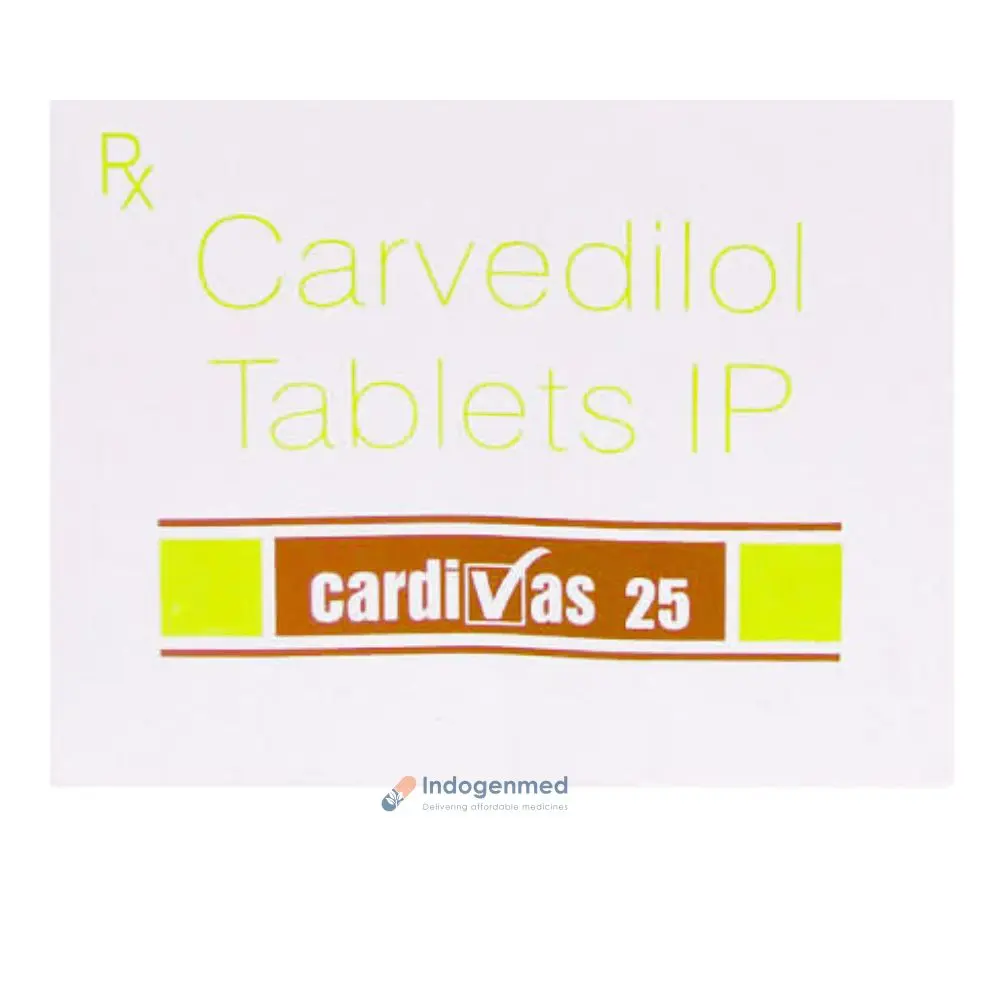
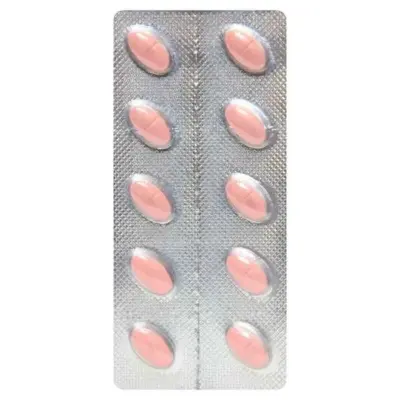
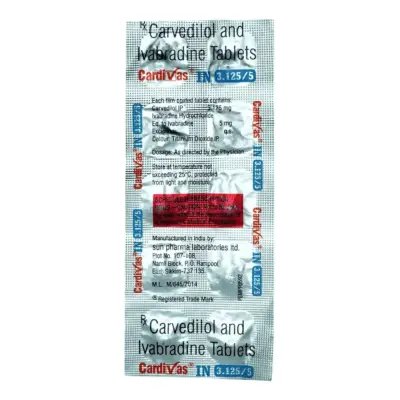
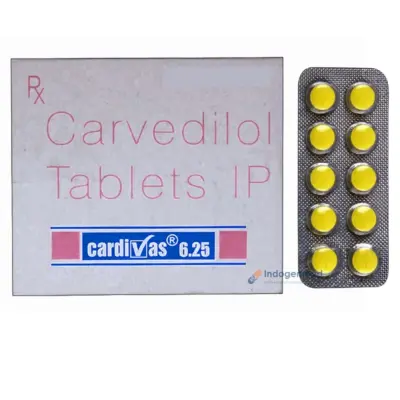
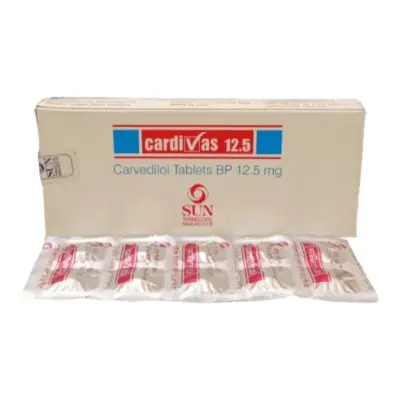
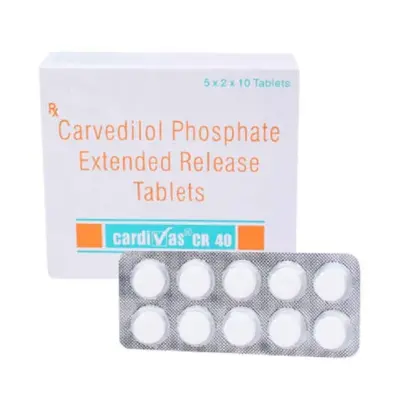
Cardivas 25 Mg Tablets
Cardivas 25 Mg Tablets contain carvedilol 25 mg, a non-selective beta-blocker with additional alpha-1 adrenoceptor blocking activity. This dual mechanism makes carvedilol particularly effective in the management of heart failure and left ventricular dysfunction following myocardial infarction, where it has been shown in landmark clinical trials (CAPRICORN, COPERNICUS, US Carvedilol Heart Failure Studies) to reduce mortality, hospitalisation, and disease progression. Carvedilol is also used in hypertension and stable angina pectoris.
Composition
| Active Ingredient | Strength |
|---|---|
| Carvedilol | 25 mg per tablet |
About the Manufacturer
Cardivas is manufactured by Sun Pharmaceutical Industries Limited, one of the world’s leading specialty generic pharmaceutical companies, headquartered in Mumbai, India. Sun Pharma has an extensive cardiovascular medicines portfolio and distributes to over 100 countries worldwide.
Mechanism of Action
Carvedilol is a non-cardioselective beta-blocker (blocks β1 and β2 adrenoceptors) and a selective alpha-1 adrenoceptor blocker. Beta-blockade reduces heart rate and myocardial contractility, decreasing myocardial oxygen demand. Alpha-1 blockade causes peripheral vasodilation, reducing afterload. Together these effects reduce cardiac workload and improve haemodynamic parameters. Carvedilol also has antioxidant properties and anti-proliferative effects on cardiac myocytes, contributing to its beneficial effects on cardiac remodelling in heart failure.
Indications
- Symptomatic heart failure (NYHA Class II–IV) — to reduce mortality and hospitalisation
- Left ventricular dysfunction (EF ≤40%) following acute myocardial infarction — to reduce mortality
- Hypertension — as monotherapy or in combination
- Stable angina pectoris
Dosage & Administration
- Swallow tablets whole with water, taken with food to reduce risk of orthostatic hypotension
- Heart failure: Start at 3.125 mg twice daily for 2 weeks; if tolerated, double the dose every 2 weeks up to a maximum of 25 mg twice daily (<85 kg) or 50 mg twice daily (>85 kg)
- Post-MI left ventricular dysfunction: Start at 6.25 mg twice daily, titrate to 25 mg twice daily over several weeks
- Hypertension: 12.5 mg once daily initially; may be increased to 25 mg once daily after 2 weeks
- Stable angina: 12.5–25 mg twice daily
- Never stop abruptly — taper gradually over 1–2 weeks to avoid rebound ischaemia
Special Populations
- Hepatic impairment: Contraindicated in severe hepatic impairment; use with caution in mild to moderate impairment
- Renal impairment: No dose adjustment generally required
- Elderly: May be more sensitive to hypotension and bradycardia; titrate slowly
- Diabetes: Beta-blockade may mask hypoglycaemia symptoms and impair glycaemic recovery; monitor blood glucose closely
- Pregnancy: Beta-blockers may cause foetal bradycardia, growth retardation, or neonatal hypoglycaemia; use only if benefit outweighs risk
Precautions
- Bradycardia: initiate at low doses and titrate slowly; monitor heart rate
- Hypotension: particular risk during up-titration and in dehydrated patients; take with food
- Reactive airway disease: carvedilol’s non-selective beta-blockade may worsen bronchospasm; use with extreme caution in asthma or COPD; contraindicated in bronchospastic conditions
- Peripheral vascular disease: may exacerbate symptoms
- Anaesthesia: inform the anaesthetist before surgery; carvedilol may interact with anaesthetic agents
- Contact lenses: carvedilol may reduce tear production; relevant for contact lens wearers
Contraindications
- Decompensated heart failure requiring IV inotropic therapy
- Clinically significant bronchospasm or severe asthma (risk of bronchospasm from beta-2 blockade)
- Second- or third-degree AV block, sick sinus syndrome (unless pacemaker in situ)
- Cardiogenic shock
- Severe hepatic impairment
- Known hypersensitivity to carvedilol or any excipient
Side Effects
- Very common: Dizziness, fatigue, bradycardia
- Common: Hypotension (especially postural), oedema, dyspnoea, diarrhoea, nausea, weight gain, visual disturbances
- Less common: Peripheral circulatory disturbances (cold extremities, claudication), mood changes, sleep disturbances
- Rare: AV block, worsening heart failure, allergic skin reactions, bronchospasm, hepatotoxicity
Drug Interactions
- CYP2D6 inhibitors (fluoxetine, paroxetine, quinidine, propafenone): Increase carvedilol plasma levels, risk of excessive bradycardia and hypotension
- Digoxin: Carvedilol increases digoxin levels by approximately 15%; monitor digoxin levels
- Insulin and oral antidiabetics: Beta-blockade may enhance hypoglycaemic effect and mask symptoms; monitor blood glucose
- Calcium channel blockers (verapamil, diltiazem): Additive cardiac depressant effects; risk of bradycardia and AV block
- Anaesthetic agents: Enhanced hypotensive and negative chronotropic effects; inform anaesthetist
- Rifampicin: Induces carvedilol metabolism, reducing plasma levels by approximately 70%
Storage
Store below 30°C in a dry place, protected from light and moisture. Keep tablets in the original packaging. Keep out of reach of children. Do not use after the expiry date printed on the pack.
Related Products
- Cardivas 3.125 Mg Tablets – lower starting dose of carvedilol
- Corbis 5 Mg Tablets – bisoprolol 5 mg beta-blocker
- Metolar XR 25 Mg Tablets – metoprolol extended-release 25 mg
- Valzaar 160 Mg Tablets – valsartan 160 mg for heart failure and hypertension
Frequently Asked Questions
- What is Cardivas 25 Mg used for?
- Cardivas 25 Mg is used to treat heart failure, left ventricular dysfunction after a heart attack, hypertension (high blood pressure), and stable angina. It belongs to a class of medicines called beta-blockers and also blocks alpha-1 receptors to cause vasodilation, reducing the workload on the heart.
- Why should Cardivas be taken with food?
- Taking carvedilol with food slows its absorption and reduces the risk of a sudden drop in blood pressure (orthostatic hypotension), particularly during early treatment or dose increases. Always take Cardivas with a meal unless your doctor advises otherwise.
- Can I stop taking Cardivas suddenly?
- No. Stopping carvedilol abruptly can cause a rebound increase in heart rate, blood pressure, and risk of angina or heart attack, particularly in patients with coronary artery disease. If you need to stop, your doctor will reduce the dose gradually over 1–2 weeks. Never stop Cardivas without medical advice.
- Can Cardivas 25 Mg be used in patients with diabetes?
- Yes, but with caution. Beta-blockers can mask some symptoms of hypoglycaemia (low blood sugar) such as a fast heart rate, while other symptoms such as sweating may be preserved. Patients with diabetes taking insulin or sulphonylureas should monitor their blood glucose more closely when starting or adjusting carvedilol.
- How is Cardivas different from other beta-blockers like metoprolol or bisoprolol?
- Cardivas (carvedilol) is a non-selective beta-blocker — it blocks both β1 and β2 receptors — and also blocks alpha-1 receptors, causing vasodilation. Metoprolol and bisoprolol are cardioselective (mainly β1 blockade) with no alpha-blocking effect. Carvedilol’s dual mechanism is considered advantageous in heart failure, where vasodilation reduces cardiac afterload and the antioxidant properties of carvedilol may offer additional cardioprotective benefits.
References
- NHS – Carvedilol
- MedlinePlus – Carvedilol
- FDA – Coreg (Carvedilol) Prescribing Information
- EMA – Carvedilol Information
Disclaimer: This page is for informational purposes only and does not constitute medical advice. Cardivas 25 Mg Tablets must be prescribed and monitored by a qualified healthcare professional. Never stop beta-blockers abruptly. Report any worsening symptoms to your doctor immediately.


Reviews
There are no reviews yet.