Description
What Is Cardivas 12.5 mg Tablets?
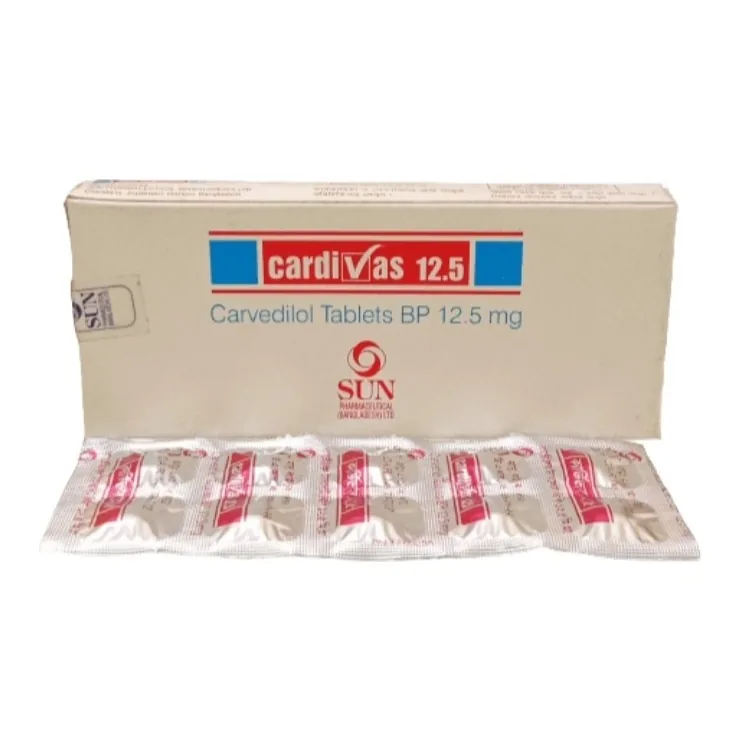
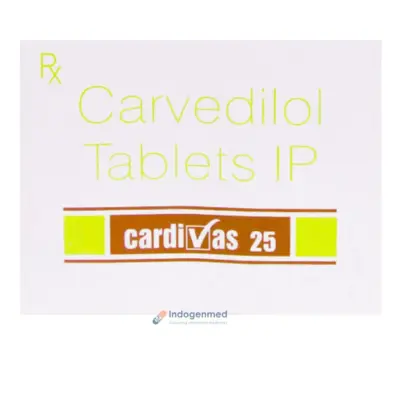
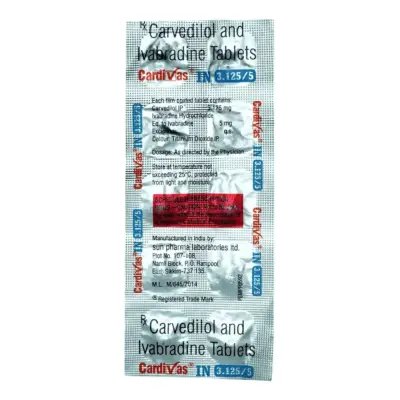
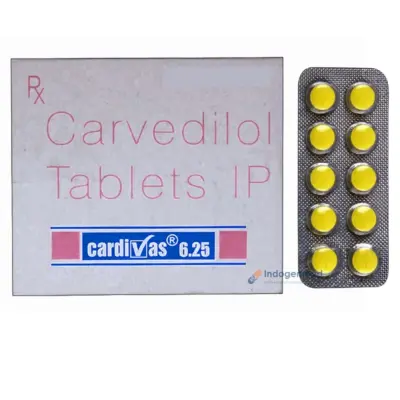
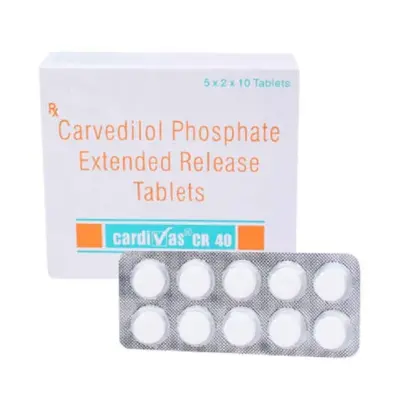
Cardivas 12.5 mg Tablets contains carvedilol 12.5 mg per tablet, manufactured by Sun Pharmaceutical Industries Ltd. Carvedilol is a non-selective beta-adrenoceptor blocker with additional alpha-1 adrenoceptor blocking activity. This dual mechanism makes carvedilol pharmacologically distinct from pure beta-blockers: while standard beta-blockers reduce heart rate and cardiac output, carvedilol additionally dilates peripheral blood vessels by blocking alpha-1 receptors in vascular smooth muscle, thereby reducing afterload without the compensatory peripheral vasoconstriction seen with cardioselective agents.
Carvedilol is one of a small number of drugs that have been shown in large randomised controlled trials to reduce mortality in patients with stable, symptomatic chronic heart failure. It is therefore a cornerstone of guideline-directed medical therapy (GDMT) for heart failure with reduced ejection fraction (HFrEF). Beyond heart failure, it is used in hypertension, stable angina pectoris, and left ventricular dysfunction following acute myocardial infarction. The 12.5 mg tablet is a mid-range dose in the standard upward titration schedule used in heart failure management, where therapy is initiated at 3.125 mg twice daily and doubled at 2-week intervals as tolerated.
Mechanism of Action
Non-Selective Beta-Adrenoceptor Blockade
Carvedilol blocks beta-1 and beta-2 adrenoceptors with approximately equal potency (non-selective beta-blockade) without intrinsic sympathomimetic activity (ISA) and without significant membrane-stabilising activity at therapeutic concentrations. Beta-1 blockade at the sinoatrial node reduces heart rate (negative chronotropy), and at the atrioventricular node slows conduction (negative dromotropy). Beta-1 blockade in ventricular myocardium reduces myocardial contractility and oxygen demand. In heart failure, sustained sympathetic activation and elevated catecholamines cause direct myocardial toxicity, beta-receptor downregulation, adverse cardiac remodelling, and ventricular arrhythmias. Beta-blockade with carvedilol interrupts this cycle: by preventing catecholamine-driven damage, it allows reverse remodelling — improvement in ventricular geometry, increase in ejection fraction, and reduction in wall stress — over months of continued therapy.
Alpha-1 Adrenoceptor Blockade
Carvedilol is also a competitive antagonist at alpha-1 adrenoceptors in vascular smooth muscle. Alpha-1 blockade causes arterial and venous vasodilation, reducing both systemic vascular resistance (afterload) and venous return (preload). The vasodilatory property is clinically important in several ways: in hypertension it contributes to blood pressure reduction without reflex tachycardia (blunted by simultaneous beta-blockade); in heart failure it reduces afterload and may improve forward cardiac output; and it mitigates the peripheral vasoconstriction that pure beta-blockers can cause in some patients, reducing the risk of cold extremities.
Antioxidant Properties
Carvedilol and its metabolites have antioxidant properties not shared by most other beta-blockers, including an ability to scavenge reactive oxygen species (ROS) and inhibit lipid peroxidation. Whether these properties contribute meaningfully to clinical benefit in patients remains uncertain, but they have been proposed as a possible additional mechanism by which carvedilol improves outcomes in heart failure beyond haemodynamic effects.
Indications
Chronic Heart Failure
Cardivas 12.5 mg is indicated as an adjunct to ACE inhibitors (or ARBs), diuretics, and optionally digoxin in patients with stable symptomatic chronic heart failure of ischaemic or non-ischaemic aetiology and reduced ejection fraction (HFrEF, LVEF ≤40%). Large trials including COPERNICUS and CAPRICORN demonstrated significant reductions in all-cause mortality (approximately 35% relative risk reduction) and cardiovascular hospitalisation with carvedilol in this setting.
Hypertension
Carvedilol is an effective antihypertensive agent used as monotherapy or in combination with other antihypertensives. Its dual mechanism (beta-blockade + vasodilation) provides blood pressure lowering comparable to other beta-blockers with a more favourable metabolic profile.
Stable Angina Pectoris
Carvedilol reduces myocardial oxygen demand through heart rate reduction and afterload reduction, alleviating anginal symptoms in patients with stable coronary artery disease.
Post-Myocardial Infarction Left Ventricular Dysfunction
Carvedilol is indicated to reduce cardiovascular mortality in clinically stable patients with left ventricular ejection fraction ≤40% following acute MI who have survived the acute phase and are haemodynamically stable.
Dosage and Administration
Heart failure: Initiate at 3.125 mg twice daily for 2 weeks. If tolerated, increase to 6.25 mg twice daily, then 12.5 mg twice daily, then 25 mg twice daily at minimum 2-week intervals. Target dose: 25 mg twice daily (patients <85 kg) or 50 mg twice daily (patients ≥85 kg with severe heart failure, under specialist supervision). The 12.5 mg tablet is used at the intermediate titration step (12.5 mg twice daily) and as a component of higher doses. Always take with food to reduce the risk of orthostatic hypotension.
Hypertension: 12.5 mg once daily for 2 days, then 25 mg once daily. If needed, increase at 2-week intervals up to 50 mg daily in single or divided doses.
Angina: 12.5–25 mg twice daily.
Contraindications
- Decompensated heart failure requiring IV inotropes — carvedilol can precipitate acute decompensation; stabilise first.
- Clinically significant bradycardia (heart rate <50 bpm) or sick sinus syndrome without a functioning pacemaker.
- Second or third degree atrioventricular block without a pacemaker.
- Severe hepatic impairment (carvedilol is extensively hepatically metabolised).
- Severe reactive airway disease — bronchial asthma or a history of bronchospasm (non-selective beta-blockade can precipitate severe bronchospasm; not all COPD patients are excluded, but severe reactive airway disease is a contraindication).
- Cardiogenic shock.
- Hypersensitivity to carvedilol or any excipient.
Warnings and Precautions
Worsening heart failure during up-titration: Fluid retention or worsening heart failure can occur during dose escalation. Increase diuretics before increasing carvedilol; do not up-titrate if the patient has dyspnoea at rest or signs of acute decompensation.
Bradycardia: Symptomatic bradycardia requiring dose reduction can occur, particularly at higher doses. Reduce carvedilol if resting heart rate falls below 55 bpm and the patient is symptomatic.
Hypotension: Postural hypotension is more common during initiation and up-titration. Take doses with food; have the patient sit or lie down if dizziness occurs.
Diabetes: Beta-blockade masks the tachycardia of hypoglycaemia; sweating remains. Use with caution in patients prone to hypoglycaemia. Additionally, carvedilol may modestly increase insulin resistance in susceptible individuals.
Peripheral vascular disease: May exacerbate symptoms of peripheral arterial insufficiency. The vasodilatory alpha-1 component partially mitigates this compared to pure beta-blockers.
Adverse Effects
- Very common (≥1/10): Dizziness, fatigue, bradycardia (in heart failure population).
- Common (≥1/100): Oedema, hypotension, orthostatic hypotension, hyperglycaemia, weight gain, reduced libido, visual disturbance, headache, nausea, diarrhoea, dyspepsia, cold extremities, impaired peripheral circulation.
- Uncommon (≥1/1000): Bronchospasm (may be life-threatening in susceptible individuals), AV block, syncope, claudication.
- Rare: Thrombocytopenia, elevated transaminases, urinary retention (alpha-1 blockade effect in males with prostatic hypertrophy).
Drug Interactions
- Verapamil and diltiazem (non-dihydropyridine calcium channel blockers): Combined negative chronotropic and dromotropic effects risk severe bradycardia and AV block; this combination generally requires specialist supervision and monitoring.
- Other antihypertensives and vasodilators: Additive blood pressure lowering; adjust doses to prevent symptomatic hypotension.
- Digoxin: Both agents slow AV conduction; monitor heart rate and ECG in patients receiving both.
- CYP2D6 inhibitors (fluoxetine, paroxetine, quinidine): Carvedilol is metabolised significantly by CYP2D6; inhibitors increase carvedilol plasma concentrations and may intensify pharmacological effects.
- Rifampicin: CYP inducer that substantially reduces carvedilol AUC (~70%); co-administration may result in therapeutic failure.
- Clonidine: Do not stop carvedilol before clonidine in a patient receiving both — withdrawal rebound hypertension can be severe. Taper clonidine first.
- MAO inhibitors: Do not use with or within 14 days of MAO inhibitors; risk of hypertensive crisis.
- Insulin and oral antidiabetics: Enhanced glucose-lowering effect with masking of hypoglycaemia signs; monitor blood glucose more closely.
Storage
Store below 30°C in a cool, dry place away from direct sunlight and moisture. Keep in original packaging. Keep out of reach of children. Do not use after the expiry date printed on the carton.
Related Products
Patients with heart failure commonly require concurrent diuretic therapy for fluid management; Glycomet GP 2 mg Tablets (glipizide + metformin) may be indicated in those with concomitant type 2 diabetes. For patients requiring acid suppression alongside cardiovascular medication regimens, Razo D 30/20 mg Tablets (rabeprazole + domperidone) provides gastroprotective support. For patients with concurrent dyslipidaemia as part of their cardiovascular risk profile, Tonact TG 160 mg Tablets (atorvastatin + fenofibrate) addresses mixed lipid abnormalities.
References
- U.S. Food and Drug Administration / DailyMed. Carvedilol Tablets — Prescribing Information (Coreg). National Library of Medicine. Available at: https://dailymed.nlm.nih.gov
- National Library of Medicine MedlinePlus. Carvedilol. Available at: https://medlineplus.gov/druginfo/meds/a697042.html
- Mayo Clinic. Carvedilol (Oral Route) — Description and Brand Names. Available at: https://www.mayoclinic.org
- Electronic Medicines Compendium (EMC). Carvedilol 12.5 mg Tablets — Summary of Product Characteristics. Available at: https://www.medicines.org.uk/emc
- Packer M, et al. Effect of carvedilol on survival in severe chronic heart failure (COPERNICUS). N Engl J Med. 2001;344(22):1651–1658. PubMed PMID: 11386263
Reviews
There are no reviews yet.