Description
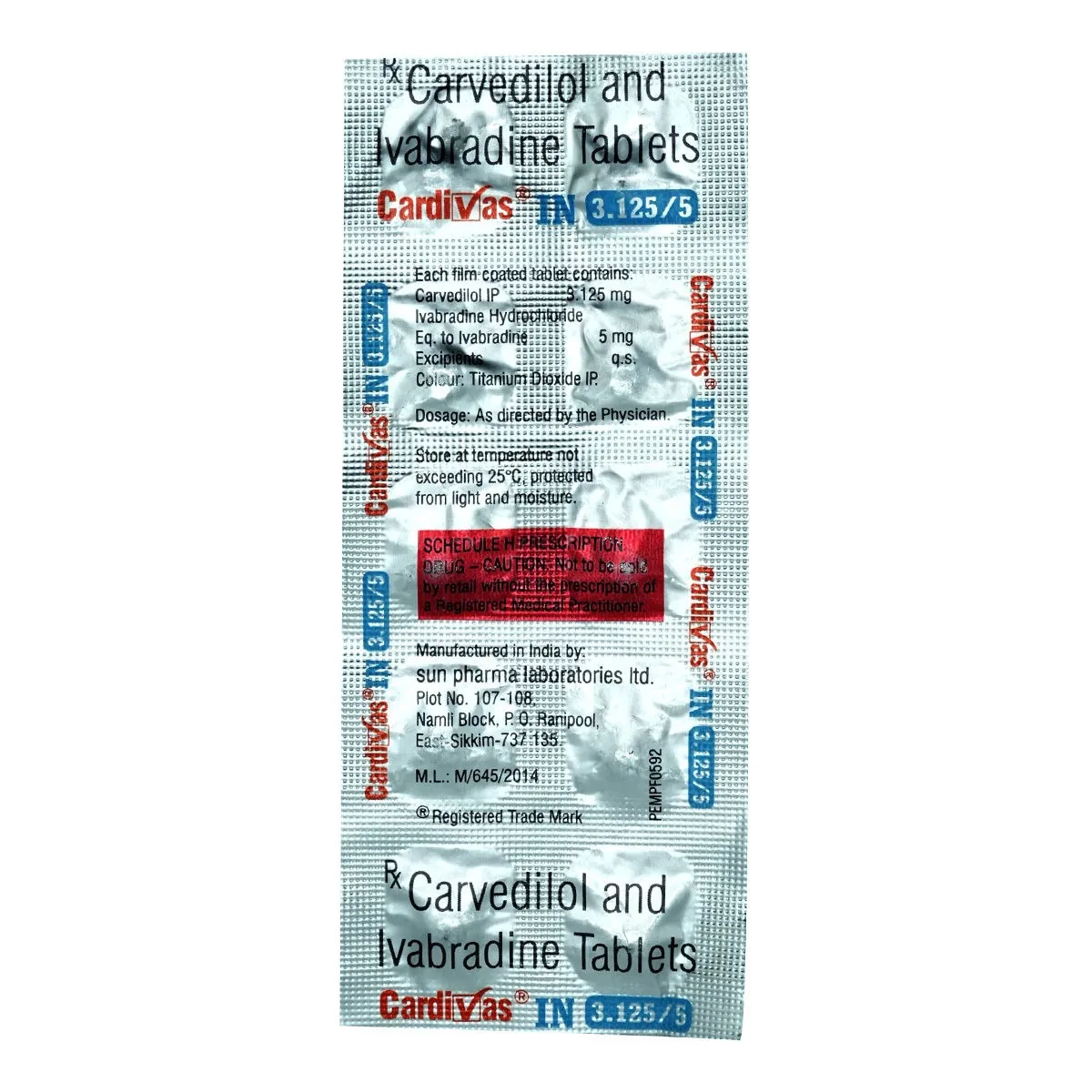
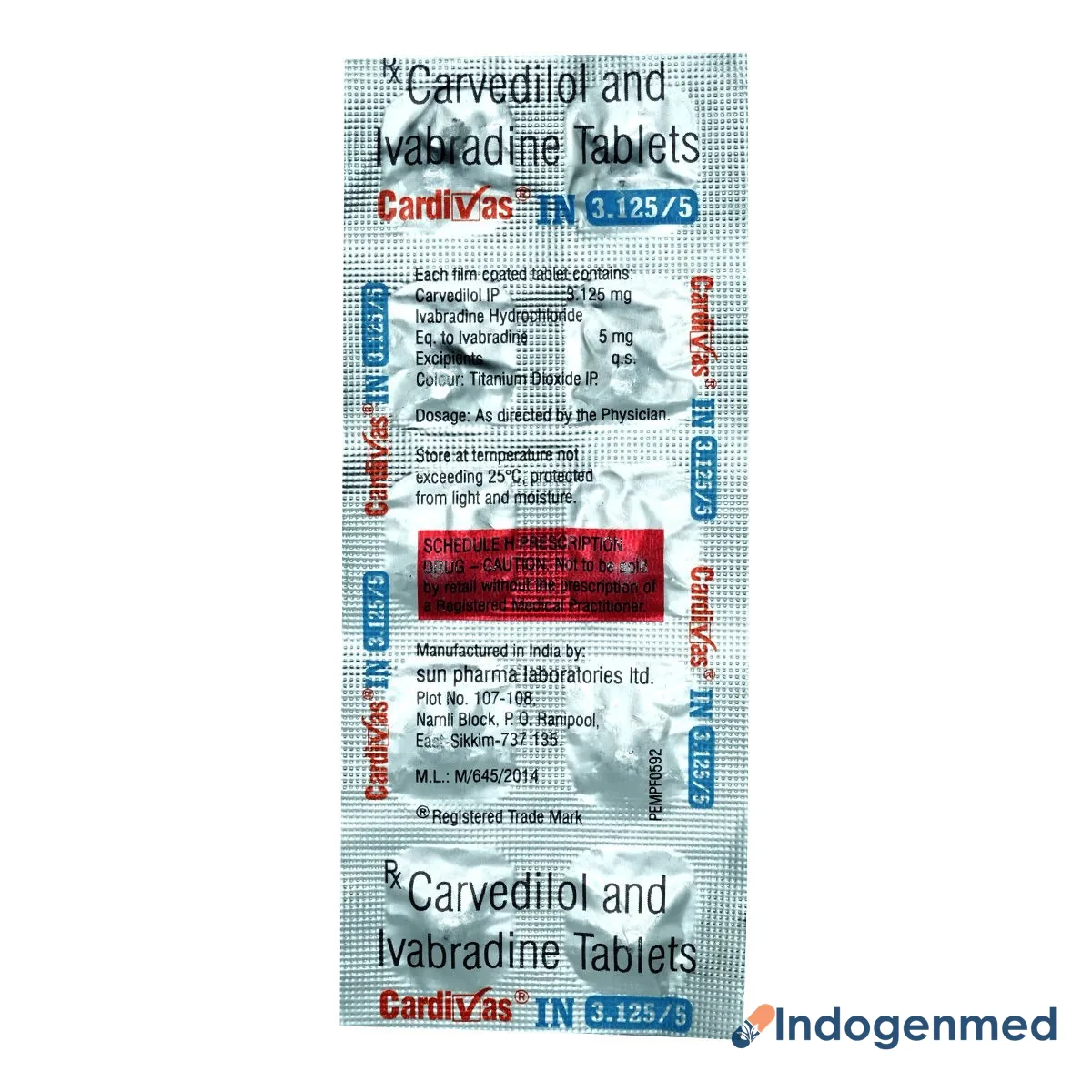
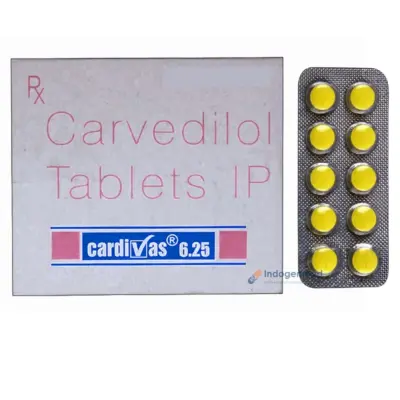
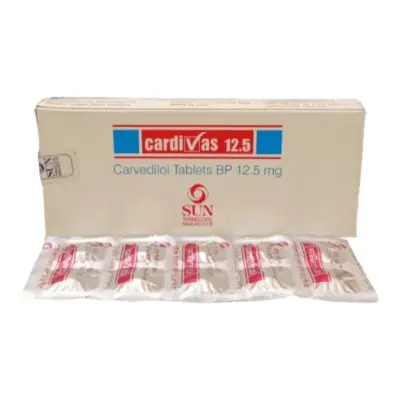
Cardivas 3.125 Mg Tablets
Cardivas 3.125 Mg Tablets contain carvedilol 3.125 mg, the standard initiation dose of this dual-action alpha-1 and non-selective beta-blocker for patients with heart failure. All clinical guidelines recommend starting carvedilol at 3.125 mg twice daily and titrating slowly over weeks to months toward the target dose, as this minimises haemodynamic instability during initiation. Carvedilol has demonstrated mortality benefit in heart failure across landmark trials (US Carvedilol Studies, COPERNICUS, CAPRICORN) and remains a cornerstone of guideline-directed medical therapy for heart failure with reduced ejection fraction.
Composition
| Active Ingredient | Strength |
|---|---|
| Carvedilol | 3.125 mg per tablet |
About the Manufacturer
Cardivas is manufactured by Sun Pharmaceutical Industries Limited, one of the world’s leading specialty generic pharmaceutical companies, headquartered in Mumbai, India. Sun Pharma has an extensive cardiovascular medicines portfolio and distributes products to over 100 countries worldwide.
Mechanism of Action
Carvedilol is a non-cardioselective beta-adrenoceptor blocker (blocking β1 and β2 receptors) with additional selective alpha-1 adrenoceptor blocking activity. Beta-1 blockade reduces heart rate, myocardial contractility, and renin release, reducing cardiac oxygen demand and neurohormonal activation. Beta-2 blockade (avoided by cardioselective agents) has the downside of potential bronchoconstriction. Alpha-1 blockade causes peripheral vasodilation, reducing afterload. Carvedilol also has antioxidant and anti-apoptotic properties that contribute to its beneficial effects on cardiac remodelling in heart failure. At the low 3.125 mg starting dose, cardiovascular effects are minimal while tolerability is established before titration.
Indications
- Heart failure (NYHA Class II–IV) — initiation of treatment (3.125 mg twice daily starting dose)
- Left ventricular dysfunction (EF ≤40%) following acute myocardial infarction — initiation dose
- Hypertension — may also be initiated at 12.5 mg once daily
- Stable angina pectoris
Dosage & Administration
- Swallow tablets whole with water, taken with food to reduce risk of orthostatic hypotension
- Heart failure initiation: 3.125 mg twice daily for at least 2 weeks; if tolerated, double the dose every 2 weeks up to a maximum of 25 mg twice daily (<85 kg) or 50 mg twice daily (>85 kg)
- Post-MI LV dysfunction: 3.125–6.25 mg twice daily initially, titrating toward 25 mg twice daily over weeks
- Up-titration is guided by heart rate, blood pressure, and symptoms — do not rush titration
- Never stop abruptly — taper gradually over 1–2 weeks to avoid rebound ischaemia or worsening heart failure
Special Populations
- Hepatic impairment: Contraindicated in severe hepatic impairment; use with caution in mild to moderate
- Renal impairment: No significant dose adjustment required
- Elderly: May be more sensitive to hypotension; titrate slowly and monitor carefully
- Diabetes: Beta-blockade may mask hypoglycaemic symptoms and impair glycaemic recovery; monitor blood glucose
- Pregnancy: Beta-blockers may cause foetal bradycardia, growth retardation, or neonatal hypoglycaemia; use only if benefit outweighs risk
Precautions
- Bradycardia: initiate at 3.125 mg; monitor heart rate before and during up-titration; withhold dose if resting heart rate is below 55 bpm
- Hypotension: particular risk during the first few doses and during up-titration; take with food
- Reactive airway disease: non-selective beta-blockade may worsen bronchospasm; carvedilol is contraindicated in bronchospastic conditions
- Fluid retention: worsening oedema may occur during initiation; ensure patients are optimally decongested before starting
- Anaesthesia: inform the anaesthetist before surgery; carvedilol may interact with anaesthetic agents
Contraindications
- Decompensated heart failure requiring IV inotropic support
- Clinically significant bronchospasm or severe asthma
- Second- or third-degree AV block, sick sinus syndrome (without pacemaker)
- Cardiogenic shock
- Severe hepatic impairment
- Known hypersensitivity to carvedilol or any excipient
Side Effects
- Very common: Dizziness, fatigue, bradycardia
- Common: Hypotension (especially postural), oedema, dyspnoea, diarrhoea, nausea
- Less common: Cold extremities, visual disturbances, mood changes, sleep disturbances
- Rare: AV block, allergic skin reactions, bronchospasm, hepatotoxicity
Drug Interactions
- CYP2D6 inhibitors (fluoxetine, paroxetine, quinidine): Increase carvedilol plasma levels; risk of excessive bradycardia and hypotension
- Digoxin: Carvedilol increases digoxin levels by approximately 15%; monitor digoxin levels
- Insulin and oral antidiabetics: Enhanced hypoglycaemic effect; monitor blood glucose
- Calcium channel blockers (verapamil, diltiazem): Additive cardiac depressant effects; risk of bradycardia and AV block; monitor closely
- Rifampicin: Reduces carvedilol plasma levels by approximately 70%
Storage
Store below 30°C in a dry place, protected from light and moisture. Keep tablets in the original packaging. Keep out of reach of children. Do not use after the expiry date printed on the pack.
Related Products
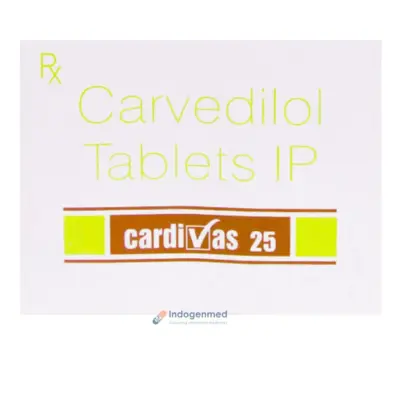
- Cardivas 25 Mg Tablets – higher-dose carvedilol for maintenance therapy
- Corbis 5 Mg Tablets – bisoprolol 5 mg for heart failure and hypertension
- Metolar XR 25 Mg Tablets – metoprolol extended-release 25 mg
- Valzaar 160 Mg Tablets – valsartan 160 mg for heart failure and hypertension
Frequently Asked Questions
- Why does carvedilol for heart failure need to be started at such a low dose?
- Patients with heart failure often have an already-stressed cardiovascular system that is highly dependent on sympathetic nervous system support. Starting carvedilol at 3.125 mg twice daily allows the heart and blood vessels to adapt gradually to beta-blockade without sudden haemodynamic compromise. Up-titration over weeks to months allows tolerance to develop while monitoring for bradycardia, hypotension, or worsening fluid retention before each dose increase.
- How long does it take to reach the target dose of carvedilol?
- The target dose for most heart failure patients is 25 mg twice daily (or 50 mg twice daily for patients over 85 kg). Starting at 3.125 mg twice daily and doubling the dose every 2 weeks — if tolerated — the target dose could theoretically be reached in 8–10 weeks. In practice, many patients need slower titration, and reaching the highest tolerated dose (not necessarily the target dose) is the goal.
- What should I do if I feel dizzy or faint after starting Cardivas 3.125 Mg?
- Dizziness and postural hypotension (a drop in blood pressure when standing up) are common when starting or increasing the dose of carvedilol. Take the tablet with food and avoid sudden changes in posture (stand up slowly from sitting or lying). If symptoms are severe, contact your doctor — your dose may need to stay at its current level for longer before the next increase.
- Can I take Cardivas 3.125 Mg if I have asthma?
- No. Carvedilol is a non-selective beta-blocker and blocks beta-2 receptors in the lungs, which can cause bronchospasm and severely worsen asthma or other obstructive airway conditions. It is contraindicated in patients with bronchospastic conditions. If you have asthma, discuss alternative heart failure medicines with your doctor — cardioselective beta-blockers such as bisoprolol are sometimes used with caution in stable, mild asthma under specialist supervision.
- How is Cardivas 3.125 Mg different from Cardivas 25 Mg?
- Both tablets contain carvedilol — the same medicine — but at different doses. Cardivas 3.125 Mg is the starting dose used when initiating treatment for heart failure or post-MI left ventricular dysfunction. It is prescribed to minimise cardiovascular side effects at the beginning of therapy. Cardivas 25 Mg is a maintenance or target dose used once titration is complete and the patient is established on treatment.
References
- NHS – Carvedilol
- MedlinePlus – Carvedilol
- FDA – Coreg (Carvedilol) Prescribing Information
- EMA – Carvedilol Information
Disclaimer: This page is for informational purposes only and does not constitute medical advice. Cardivas 3.125 Mg Tablets must be prescribed and monitored by a qualified healthcare professional experienced in heart failure management. Never stop carvedilol abruptly. Report any worsening symptoms to your doctor immediately.


Reviews
There are no reviews yet.