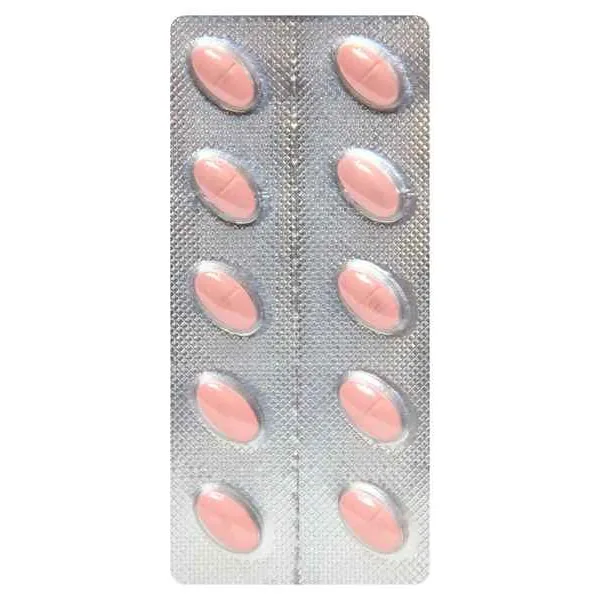
Description
Cosart 50 Mg Tablet — Losartan Potassium 50 mg for Hypertension and Renal Protection
Cosart 50 Mg Tablet contains losartan potassium 50 mg as its active ingredient. Losartan belongs to the pharmacological class of angiotensin II receptor blockers (ARBs), also called sartans, with ATC code C09CA01. It was the first orally active ARB to reach clinical practice and remains one of the most widely prescribed antihypertensive agents worldwide. Unlike ACE inhibitors, losartan selectively blocks the angiotensin II type 1 (AT1) receptor without inhibiting the angiotensin-converting enzyme, which means it does not cause the bradykinin-mediated dry cough that affects up to 15% of patients on ACE inhibitors. The 50 mg tablet is the standard starting and maintenance dose for most adults, providing effective 24-hour blood pressure control with once-daily dosing. Beyond blood pressure lowering, losartan has demonstrated specific protective effects on the kidney in patients with type 2 diabetes and nephropathy, as well as reduced rates of stroke and cardiovascular mortality in hypertensive patients with left ventricular hypertrophy.
Composition of Cosart 50 Mg Tablet
Each film-coated tablet of Cosart 50 Mg contains:
- Losartan potassium — 50 mg (active ingredient)
- Excipients (typical): microcrystalline cellulose, lactose monohydrate, pregelatinised starch, magnesium stearate, hydroxypropyl cellulose; film coat: hypromellose, titanium dioxide, polyethylene glycol, yellow iron oxide
Losartan potassium has the molecular formula C₂₂H₂₂ClKN₆O and a molecular weight of 461.0 g/mol. It is a white to off-white crystalline powder, freely soluble in water and methanol. The potassium salt form ensures good water solubility and reliable oral bioavailability compared with the free acid form. Losartan is a prodrug that is partially converted in the liver to its pharmacologically active carboxylic acid metabolite E-3174, which is 10–40 times more potent as an AT1 receptor antagonist than the parent compound.
Mechanism of Action
The renin-angiotensin-aldosterone system (RAAS) is central to blood pressure regulation and cardiovascular homeostasis. When blood pressure falls or sodium delivery to the distal tubule is reduced, the kidney secretes renin, which converts angiotensinogen to angiotensin I. Angiotensin-converting enzyme (ACE) then converts angiotensin I to angiotensin II, the principal effector molecule of the RAAS.
Angiotensin II acts on two receptor subtypes — AT1 and AT2. AT1 receptor activation mediates the pathological effects: vasoconstriction, aldosterone release (causing sodium and water retention), sympathetic nervous system stimulation, vascular smooth muscle cell proliferation, and cardiac hypertrophy. AT2 receptor activation generally opposes these effects, promoting vasodilation and anti-proliferative signalling.
Losartan and its active metabolite E-3174 selectively and competitively block the AT1 receptor with high affinity. By blocking AT1, losartan:
- Prevents angiotensin II-mediated vasoconstriction, lowering peripheral vascular resistance and thereby reducing blood pressure
- Reduces aldosterone secretion, promoting sodium and water excretion and decreasing fluid retention
- Reduces sympathetic outflow activated by angiotensin II
- Inhibits angiotensin II-driven smooth muscle and cardiac myocyte hypertrophy, contributing to regression of left ventricular hypertrophy and reduction of arterial stiffness
- Reduces intraglomerular pressure by dilating the efferent arteriole of the glomerulus, which protects the kidney from hyperfiltration-related injury
- Unlike ACE inhibitors, does not block bradykinin degradation; therefore does not cause accumulation of bradykinin, which is responsible for the cough and angio-oedema seen with ACE inhibitors (though angio-oedema is still possible with ARBs, it is markedly less common)
- E-3174, the active metabolite, also has mild uricosuric properties — it inhibits uric acid reabsorption in the renal tubule. This makes losartan the only ARB with a clinically meaningful uric acid-lowering effect, which may be beneficial in hypertensive patients with hyperuricaemia or gout
Pharmacokinetics
| Parameter | Losartan (parent) | E-3174 (active metabolite) |
|---|---|---|
| Oral bioavailability | Approximately 33% (extensive first-pass metabolism) | Formed in liver; systemic AUC about 4× greater than parent |
| Tmax | 1 hour | 3–4 hours |
| Protein binding | >98%, mainly albumin | >99%, mainly albumin |
| Volume of distribution | 34 L | 12 L |
| Metabolism | Hepatic: CYP2C9 (primary) and CYP3A4 convert ~14% of oral dose to E-3174; remainder to inactive metabolites | Further metabolised to inactive glucuronide conjugates |
| Elimination half-life | 1.5–2 hours | 6–9 hours (responsible for sustained 24-h antihypertensive effect) |
| Elimination route | Biliary (60%) and renal (35%) | Biliary (50%) and renal (40–50%) |
| Effect of food | Not significantly affected | Not significantly affected |
| Renal impairment | Plasma AUC increased approximately 2-fold in severe impairment; not removed by haemodialysis | AUC increases modestly; dose reduction not required based on renal function alone |
| Hepatic impairment | AUC increased approximately 5-fold in cirrhosis; consider starting at 25 mg | E-3174 formation reduced; total pharmacological effect may be less predictable |
| CYP2C9 poor metabolisers | Conversion to E-3174 markedly reduced (~2% conversion vs 14% in extensive metabolisers); antihypertensive effect may be reduced | Lower E-3174 levels |
Uses of Cosart 50 Mg Tablet
- Hypertension (high blood pressure): The primary indication. Cosart 50 Mg is used for the treatment of essential hypertension in adults and in paediatric patients aged 6 years and older. It effectively reduces both systolic and diastolic blood pressure. Once-daily dosing is sufficient due to the long half-life of the active metabolite E-3174, which maintains AT1 blockade throughout the 24-hour dosing interval. The antihypertensive effect is typically evident within one week of initiating treatment and maximal after three to six weeks. Cosart 50 Mg may be used as monotherapy or in combination with other antihypertensive agents, particularly thiazide diuretics such as hydrochlorothiazide
- Renal protection in type 2 diabetes with nephropathy: Losartan has robust clinical trial evidence (the RENAAL trial, PMID 11565518) showing that it reduces the rate of progression of diabetic nephropathy — specifically, it significantly reduces the combined endpoint of doubling of serum creatinine, end-stage renal disease requiring dialysis or transplantation, and all-cause mortality in patients with type 2 diabetes, hypertension, and established nephropathy (proteinuria ≥300 mg/day). This renoprotective effect is considered to be partly independent of blood pressure lowering, attributable to reduction of intraglomerular pressure via efferent arteriolar dilation
- Reduction of stroke risk in hypertensive patients with left ventricular hypertrophy (LVH): The LIFE trial (PMID 11888022) demonstrated that losartan was superior to atenolol in reducing the composite endpoint of cardiovascular morbidity and mortality (stroke, myocardial infarction, cardiovascular death) in hypertensive patients with electrocardiographically confirmed left ventricular hypertrophy, despite similar blood pressure reduction. This benefit was driven primarily by a significantly lower rate of stroke with losartan
- Heart failure: Losartan is used in patients with heart failure who are intolerant of ACE inhibitors, particularly due to ACE inhibitor-induced cough. The ELITE II trial demonstrated that losartan and captopril had similar effects on survival in elderly heart failure patients, establishing losartan as an effective alternative in this population
- Hyperuricaemia and gout in hypertensive patients: The mild uricosuric effect of losartan’s active metabolite E-3174 makes losartan a preferred ARB in hypertensive patients with elevated serum uric acid, gout, or metabolic syndrome, as it may modestly reduce serum uric acid levels (typically by 0.5–1.0 mg/dL)
Dosage and Administration
| Indication / Population | Starting Dose | Usual Maintenance Dose | Notes |
|---|---|---|---|
| Hypertension — adults | 50 mg once daily | 50 mg once daily; may increase to 100 mg once daily | Most patients controlled at 50 mg. If inadequate response after 3–6 weeks, increase to 100 mg/day or add hydrochlorothiazide 12.5–25 mg |
| Hypertension with volume depletion (diuretic use, low-sodium diet) | 25 mg once daily | 50 mg once daily when stable | Start at 25 mg to avoid first-dose hypotension; monitor closely |
| Hypertension with hepatic impairment | 25 mg once daily | 50 mg once daily if tolerated | CYP2C9 metabolism reduced; monitor blood pressure and renal function |
| Diabetic nephropathy (type 2 diabetes) | 50 mg once daily | 100 mg once daily (target dose in RENAAL trial) | May add hydrochlorothiazide; aim for target blood pressure <130/80 mmHg in diabetic nephropathy |
| LVH — stroke risk reduction | 50 mg once daily | 100 mg once daily; may add hydrochlorothiazide 12.5 mg | As per LIFE trial protocol; monitor for regression of LVH with ECG at 6-monthly intervals |
| Heart failure (ACE inhibitor-intolerant) | 12.5–25 mg once daily | 50 mg once daily; maximum 150 mg/day in selected patients | Titrate slowly; monitor blood pressure, renal function, and serum potassium |
| Paediatric hypertension (6–17 years, weight ≥20 kg) | 0.7 mg/kg once daily (up to 50 mg) | Up to 1.4 mg/kg/day (maximum 100 mg) | Use oral suspension in children unable to swallow tablets; not recommended in children <6 years or with eGFR <30 mL/min/1.73 m² |
| Renal impairment | No initial dose adjustment required | 50–100 mg once daily as per indication | Monitor eGFR and potassium closely, especially at initiation and after dose increase |
Administration notes:
- Take once daily at a consistent time, with or without food
- Swallow tablets whole with water
- The antihypertensive effect may diminish toward the end of the 24-hour dosing interval in some patients; check pre-dose (trough) blood pressure to verify adequate coverage. If trough blood pressure is inadequately controlled, twice-daily dosing (25 mg twice daily) is preferable to increasing to 100 mg once daily in some cases
- If a dose is missed, take it as soon as remembered unless it is close to the time of the next dose; never double the next dose
- Do not discontinue losartan abruptly in patients being treated for heart failure or diabetic nephropathy; rebound increase in blood pressure or deterioration in renal function may occur
Side Effects
Common (affecting ≥1 in 100 patients):
- Dizziness: Particularly postural or orthostatic dizziness during the first days of treatment or after dose increases. More prominent in patients who are volume-depleted or on concomitant diuretics. Usually transient and resolves with continued therapy
- Hyperkalaemia (elevated serum potassium): Occurs due to reduction in aldosterone-mediated renal potassium excretion. Risk is higher in patients with renal impairment, diabetes, concurrent use of potassium-sparing diuretics, or potassium supplements
- Renal impairment: Some initial rise in serum creatinine and blood urea nitrogen (BUN) is expected at treatment initiation due to efferent arteriolar dilation — this represents haemodynamic adjustment, not drug-induced nephrotoxicity, and stabilises within 1–2 weeks. However, significant or progressive deterioration requires dose reduction or drug discontinuation
- Upper respiratory tract infections, nasal congestion, sinusitis
- Back pain, muscle cramps
- Fatigue, asthenia
- Hypoglycaemia (reported in diabetic patients — monitor blood glucose closely)
Uncommon (affecting ≥1 in 1,000 patients):
- Anaemia (reported particularly in patients with diabetic nephropathy)
- Insomnia, sleep disturbances
- Palpitations, tachycardia
- Orthostatic hypotension (symptomatic low blood pressure on standing), especially in volume-depleted patients
- Diarrhoea, dyspepsia, abdominal pain
- Urticaria, rash, pruritus
- Liver enzyme elevations (transient, usually clinically insignificant)
Rare but serious adverse effects:
- Angio-oedema: Swelling of the face, lips, tongue, throat, or larynx — potentially life-threatening if the airway is involved. Much less common than with ACE inhibitors (estimated 0.1% with ARBs vs 0.1–0.7% with ACE inhibitors). Patients with a history of angio-oedema with ACE inhibitors may be at increased risk with ARBs. Discontinue immediately and seek emergency medical care if suspected
- Acute kidney injury: May occur in patients with bilateral renal artery stenosis, single functioning kidney with renal artery stenosis, or severe volume depletion. Occurs due to loss of angiotensin II-mediated efferent arteriolar tone needed to maintain glomerular filtration pressure in these conditions
- Severe hypotension: More likely in patients with congestive heart failure, volume depletion from diuretics, or those starting concomitant antihypertensive therapy. The first dose in susceptible patients should be given under close supervision
- Hepatitis and cholestasis: Rare cases of losartan-associated liver injury reported; monitor LFTs if symptoms of liver dysfunction develop
Important: Unlike ACE inhibitors, losartan does NOT commonly cause dry cough. If a patient who has been switched from an ACE inhibitor develops cough while on losartan, an alternative cause (such as respiratory infection or cardiac failure) should be investigated before attributing it to the drug.
Precautions and Warnings
- Pregnancy — ABSOLUTE CONTRAINDICATION in second and third trimesters: Drugs that act directly on the RAAS, including ARBs, can cause fetal and neonatal morbidity and death when administered during the second and third trimesters of pregnancy. Effects include fetal renal dysfunction, oligohydramnios, neonatal limb contractures, craniofacial deformities, hypoplastic lung development, and neonatal death. Losartan must be discontinued as soon as pregnancy is detected. First-trimester exposure carries a lower but non-zero risk. Women of childbearing potential should be informed of the risk and should use reliable contraception
- Renal artery stenosis: Bilateral renal artery stenosis or stenosis of a single functioning kidney is a relative contraindication. The efferent arteriolar dilation produced by AT1 blockade can precipitate acute renal failure in this setting by eliminating the compensatory increase in glomerular filtration pressure. Assess renal function carefully in patients with known or suspected renovascular disease
- Hyperkalaemia monitoring: Check serum potassium before starting losartan and periodically during treatment, especially in patients with renal impairment, diabetes, or on potassium-sparing diuretics, ACE inhibitors, or potassium supplements. The combination of losartan + ACE inhibitor + aldosterone antagonist (triple RAAS blockade) is generally avoided due to high risk of severe hyperkalaemia and acute kidney injury
- Volume and salt depletion: Patients with volume depletion (from vomiting, diarrhoea, excessive sweating, diuretic therapy, low-sodium diet) or salt depletion are at risk of symptomatic hypotension. Correct dehydration and volume depletion before starting losartan, or begin at 25 mg. If a patient becomes volume-depleted while on losartan, consider temporarily withholding the drug
- Renal function monitoring: Check baseline serum creatinine, eGFR, and electrolytes before starting, at two to four weeks after starting or after any dose increase, and at regular intervals (at least annually in stable patients, more frequently in those with renal impairment or heart failure)
- Hepatic impairment: Losartan is extensively metabolised by CYP2C9 in the liver. In patients with moderate-to-severe hepatic impairment or cirrhosis, plasma levels of both losartan and E-3174 are substantially altered. Begin at 25 mg once daily and titrate cautiously with close monitoring
- Heart failure: Hypotension, renal dysfunction, and hyperkalaemia are more likely in heart failure patients. Start at low doses (12.5–25 mg) and titrate slowly under close supervision, monitoring blood pressure, renal function, and electrolytes at each step
- Elderly patients: Elderly patients are more sensitive to the hypotensive effects of antihypertensive agents. Start at standard doses (50 mg) but monitor for hypotension and falls. Renal function may decline with age; monitor creatinine and eGFR regularly
- Driving and machine operation: Dizziness may occur, particularly at treatment initiation. Patients should be cautious about driving or operating machinery until their response to losartan is established
- Breastfeeding: It is not known whether losartan is excreted in human breast milk. Animal studies have shown that losartan is excreted in rat milk. Breastfeeding is not recommended during losartan treatment
Drug Interactions
| Drug / Class | Interaction | Clinical Action Required |
|---|---|---|
| Potassium-sparing diuretics (spironolactone, eplerenone, amiloride, triamterene) | Additive hyperkalaemia risk | Monitor serum potassium closely; avoid combination in patients with renal impairment unless specific clinical indication exists |
| ACE inhibitors (enalapril, ramipril, lisinopril) | Dual RAAS blockade — additive hypotension, hyperkalaemia, and acute kidney injury risk. Combination not generally recommended except in specific heart failure protocols | Avoid routine dual RAAS blockade. If combination unavoidable, monitor blood pressure, renal function, and electrolytes very closely |
| Aliskiren (direct renin inhibitor) | Triple RAAS blockade with ACE inhibitor — high risk of hyperkalaemia, hypotension, and renal failure | Contraindicated in patients with diabetes or renal impairment (eGFR <60 mL/min/1.73 m²). Avoid in all other patients |
| NSAIDs (ibuprofen, naproxen, diclofenac, indomethacin) | Reduce antihypertensive effect of losartan; increase risk of acute kidney injury, especially in elderly or volume-depleted patients | Use with caution; monitor blood pressure and renal function. Avoid regular NSAID use; use paracetamol for analgesia where possible |
| CYP2C9 inhibitors (fluconazole, amiodarone, miconazole) | Inhibit conversion of losartan to E-3174; may reduce antihypertensive and organ-protective effects | Monitor blood pressure response; may need dose increase if therapeutic response diminishes |
| CYP3A4 inducers (rifampicin, carbamazepine, St. John’s Wort) | Increase losartan clearance; may reduce plasma levels and antihypertensive effect | Monitor blood pressure; may need higher losartan doses during and after co-administration |
| Lithium | ARBs reduce renal lithium clearance, increasing plasma lithium levels and risk of lithium toxicity | Monitor lithium levels closely if losartan is started, stopped, or dose-changed; adjust lithium dose as needed |
| Antihypertensive agents (calcium channel blockers, beta-blockers, diuretics) | Additive blood pressure lowering; beneficial in combination therapy but may cause excessive hypotension | Monitor blood pressure, especially during initiation of combination therapy; adjust doses as needed |
| Potassium supplements | Additive hyperkalaemia risk | Monitor serum potassium; avoid routine supplementation unless hypokalaemia documented |
| Heparin (including low-molecular-weight heparin) | May increase serum potassium — compounded by losartan’s potassium-raising effect | Monitor potassium in patients receiving heparin and losartan concurrently |
Contraindications
Cosart 50 Mg Tablet must NOT be used in:
- Patients with known hypersensitivity to losartan potassium or any excipient
- Pregnancy (second and third trimesters): Losartan is teratogenic and fetotoxic; can cause fetal death, oligohydramnios, and limb deformities. Contraindicated from the second trimester onwards; use in the first trimester should be avoided where possible
- Severe hepatic impairment: Due to substantially impaired CYP2C9-mediated metabolism and unpredictable drug exposure
- Concomitant use with aliskiren in patients with diabetes or renal impairment (eGFR <60 mL/min/1.73 m²) — high risk of serious adverse events
- Patients with bilateral renal artery stenosis or renal artery stenosis of a single functioning kidney (risk of acute renal failure)
- Breastfeeding (insufficient evidence of safety; losartan excreted in rat milk)
Storage Instructions
- Store below 30°C in a dry place, away from direct sunlight and moisture
- Store in the original blister or container
- Keep all medicines out of reach of children
- Do not use after the expiry date printed on the outer carton
- Shelf life: typically 3 years
Related Products
The following medicines on IndoGenMed are frequently co-prescribed or considered alongside Cosart 50 Mg Tablet in the management of hypertension, cardiovascular risk, and related conditions:
- Amlopres 2.5 Tablet (Amlodipine 2.5 mg) — a calcium channel blocker commonly combined with losartan for enhanced blood pressure lowering, particularly in patients with angina or high cardiovascular risk
- Amlopres 5 Tablet (Amlodipine 5 mg) — standard starting dose of amlodipine; widely co-prescribed with ARBs as a fixed or flexible combination for hypertension
- Amlopres 10 Mg Tablets (Amlodipine 10 mg) — the maximum amlodipine dose for patients needing more intensive calcium channel blocker coverage alongside losartan
- Ramipres 2.5 Tablet (Ramipril 2.5 mg) — an ACE inhibitor sometimes used as an alternative or alongside losartan in heart failure management; generally avoid dual RAAS blockade in hypertension
- Montair Plus Tablet (Montelukast + Levocetirizine) — may be co-prescribed in hypertensive patients with allergic rhinitis or asthma where beta-blockers or ACE inhibitors are avoided
References
- Merck Sharp & Dohme Ltd. Cozaar 25 mg, 50 mg, 100 mg Film-Coated Tablets — Summary of Product Characteristics. Electronic Medicines Compendium (EMC). Last updated 2023. Available at: https://www.medicines.org.uk/emc/product/4832/smpc
- MedlinePlus (U.S. National Library of Medicine). Losartan. Available at: https://medlineplus.gov/druginfo/meds/a695008.html
- DailyMed (FDA). Losartan Potassium Tablets — Full Prescribing Information. Available at: https://dailymed.nlm.nih.gov/dailymed/search.cfm?labeltype=all&query=losartan+potassium+tablet
- Brenner BM, Cooper ME, de Zeeuw D, et al. Effects of losartan on renal and cardiovascular outcomes in patients with type 2 diabetes and nephropathy (RENAAL). N Engl J Med. 2001;345(12):861–869. PubMed PMID: 11565518
- Dahlöf B, Devereux RB, Kjeldsen SE, et al. Cardiovascular morbidity and mortality in the Losartan Intervention For Endpoint reduction in hypertension study (LIFE). Lancet. 2002;359(9311):995–1003. PubMed PMID: 11888022
- Pitt B, Poole-Wilson PA, Segal R, et al. Effect of losartan compared with captopril on mortality in patients with symptomatic heart failure (ELITE II). Lancet. 2000;355(9215):1582–1587. PubMed PMID: 10821361
- Mayo Clinic. Losartan (Oral Route) — Description and Brand Names, Before Using, Proper Use, Precautions, Side Effects. Available at: https://www.mayoclinic.org/drugs-supplements/losartan-oral-route/description/drg-20067341
Reviews
There are no reviews yet.